

Privacy Film for Windows: A Practical UK Guide
You've probably noticed the problem before you've named the solution. A new house faces your kitchen, a bathroom window sits at pavement level, or a neighbour's landing looks directly into your bedroom. You want daylight, but leaving the glass uncovered feels uncomfortable, and closing the curtains all day makes the room feel unnecessarily dark.
Privacy film for windows can screen views without replacing the glass. Depending on the type, it can blur shapes, add a pattern, reduce glare, reject solar energy, or create a reflective daytime barrier. The important qualification is that “privacy film” doesn't describe one single result. A frosted film can provide dependable privacy around the clock, while a reflective film's one-way effect depends on which side of the glass is brighter.
Your choice should start with the room and the time of day, not with the most dramatic-looking sample. The following guide explains what each film can and can't do, how renters and landlords should approach installation, and how to match the product to a real UK home.
What Privacy Film for Windows Actually Does
A sheet of film applied to glass can change how clearly people see through the pane. Some products scatter light, some reflect it, and others absorb part of it through tinting. That means the film may solve a privacy problem while also changing the room's brightness, glare, heat and appearance.
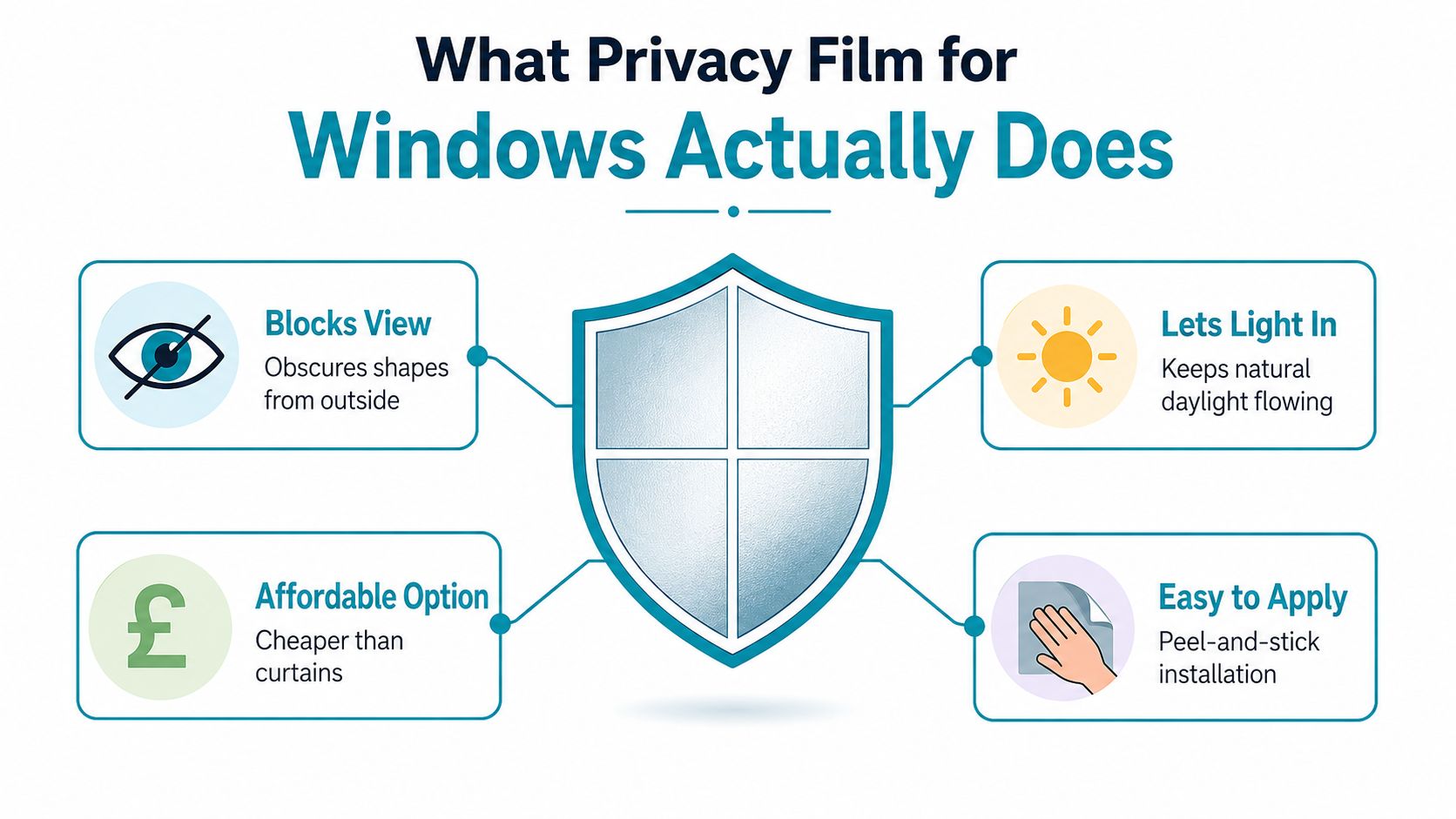
Start by deciding what you're trying to achieve:
- Visual screening: You want passers-by or neighbours to see less detail.
- Consistent privacy: You need the pane to remain private after dark, when lights are on indoors.
- Daylight retention: You want privacy without turning the room into a permanently shaded space.
- Solar and glare control: You're dealing with a sunny kitchen, conservatory or office screen.
- Decoration: You want the appearance of etched, patterned or coloured glass.
Frosted and patterned films usually scatter light. You'll see softened brightness and indistinct shapes rather than a clear view, so they're generally more predictable than reflective products. Reflective and tinted films depend more heavily on the relationship between indoor and outdoor light. They may perform strongly during the day, then provide much less privacy when the room is lit in the evening.
Most domestic films are fitted to the inside face of the glass. Specialist exterior-grade products are available for some conservatory roofs and unusual glazing, but the pane and film must be compatible. Double glazing, low-emissivity coatings, textured glass and sealed units all deserve a check before ordering.
Practical rule: Decide whether your hardest privacy moment is a bright afternoon, a dark evening, or both. The answer often determines the film type immediately.
Privacy film is only one part of a window upgrade. If you're also replacing or repairing a traditional sash window, it helps to understand related hardware, such as the mechanism explained in this Neasden Hardware sash lock guide, before you choose a finish for the glass.
How Light Transmission Shapes Day and Night Privacy
A film's visible light transmission, often shortened to VLT, indicates how much visible light passes through it. A higher transmission generally keeps the room brighter, but it may leave more of the view available. A lower transmission can strengthen screening, although it can also make the window feel darker.
One UK privacy-film datasheet gives a useful real-world reference. Tested on 3 mm clear float glass, the specified frosted/privacy film reports 18% visible light transmission, 80% total solar energy rejected, 99% UV rejection and 83% glare reduction according to the product datasheet. Those figures describe one product specification, not every film on the market, but they show how privacy and solar control can sit within the same product.
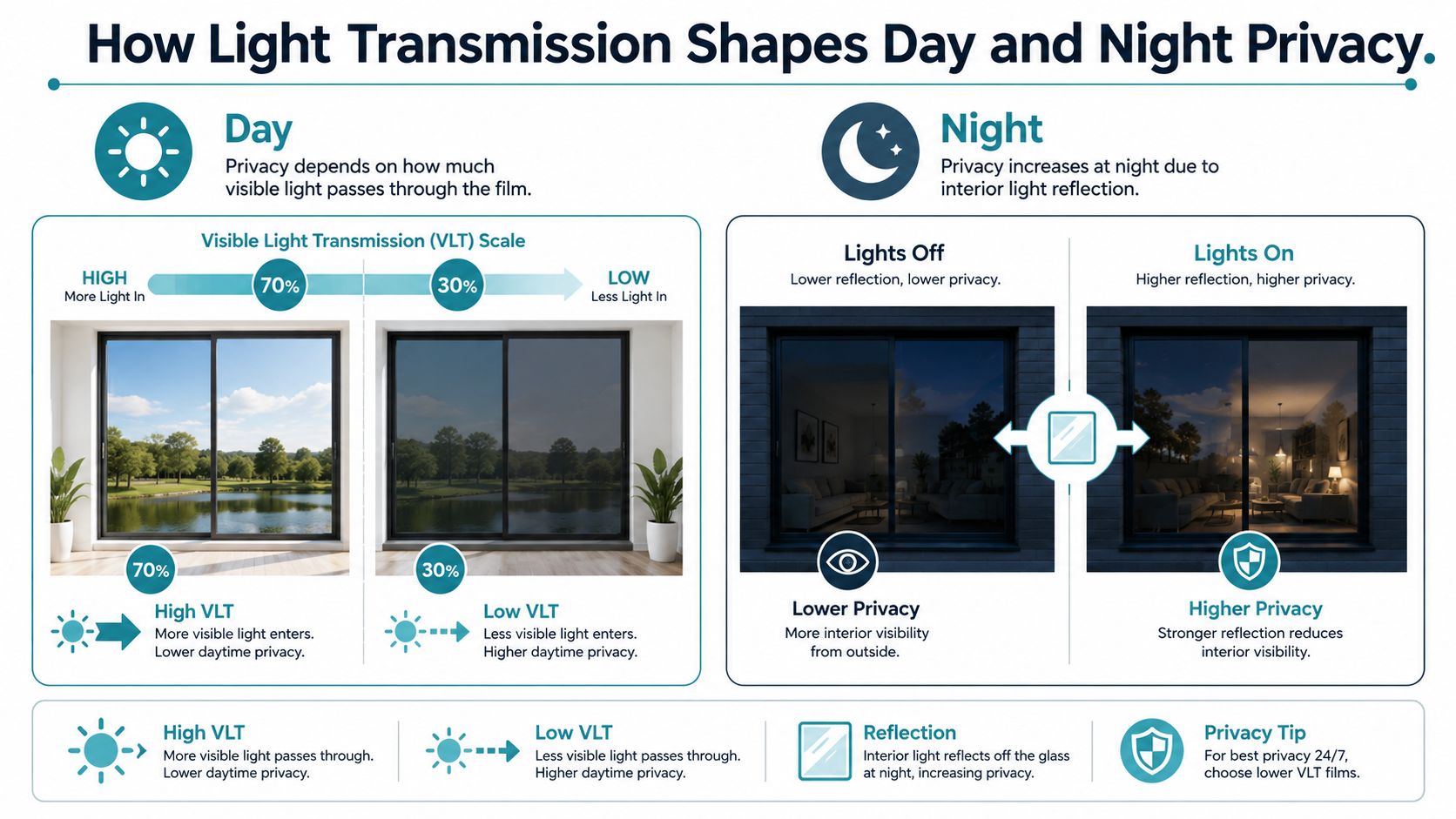
Daylight creates the one-way effect
Reflective film works by using a difference in brightness. In daylight, the exterior is usually brighter than the room, so the outside-facing surface appears reflective to someone looking in. You may still retain a view out, depending on the film and the lighting balance.
That effect is strongest when the window faces a bright garden, road or neighbouring elevation. It's less dependable in a shaded courtyard, at dusk, or whenever strong interior lighting competes with the exterior.
Evening lighting changes the result
Once the room is brighter than outside, the reflective effect can reverse. Someone outside may see into the room, while you see more reflection on the inside of the pane. Blinds, curtains or a second privacy layer may still be needed after dark.
Frosted and etched-effect films don't rely on that brightness difference. They diffuse the image through the glass, which makes them the safer choice for a bathroom, cloakroom or street-facing room needing privacy at all hours.
If you're comparing film with permanent glazing, this guide to homeowner's privacy glass options is useful because it illustrates the wider difference between applied film and obscure glass. The practical question is simple: do you want to preserve a view at some times, or remove clear visibility altogether?
The Main Types of Privacy Film Explained
Film types overlap, but they don't solve the same problem. A frosted film may be the right answer for a bathroom, while a reflective film may suit a sunny office where you still want to look out during the day.
Frosted and etched effects
Frosted film creates a soft, translucent finish similar to sandblasted glass. It's a dependable option for bathrooms, cloakrooms, sidelights and overlooked ground-floor panes. Etched-effect designs look more like decorative glass, so they work well when privacy needs to sit alongside a polished interior style.
Patterns and tints
Patterned film can use stripes, dots, geometric shapes or decorative motifs. Privacy depends on how much of the pane is covered and how large the clear gaps are. A narrow band across eye level may be enough for a front door sidelight, but it won't offer the same screening as a full frosted pane.
Tinted film reduces brightness and glare and can add a grey, bronze or coloured tone. Darker glass isn't automatically more private, especially if the image remains clear through the film.
Reflective and smart options
Reflective film creates a mirror-like exterior under suitable daylight. The UK datasheet cited above reports 80% total solar energy rejection, 83% glare reduction and 99% UV rejection for its specified product, so solar control can be an important secondary benefit. The one-way privacy effect still depends on the light balance, particularly after dark.
Switchable smart film changes between transparent and opaque states using power. It offers control for meeting rooms, bathrooms or multi-use spaces, but it needs electrical work and usually sits at a much higher budget than basic frosted or static-cling film.
| Film type | Typical appearance | Best suited to | Key trade-off |
|---|---|---|---|
| Frosted | Even, translucent white finish | Bathrooms and 24/7 privacy | Reduces the clear view in both directions |
| Etched-effect | Fine decorative glass appearance | Offices and stylish internal glazing | More decorative designs may cost more |
| Patterned | Stripes, dots or motifs | Sidelights and feature windows | Privacy varies across the pattern |
| Tinted | Grey, bronze or coloured glass | Glare and brightness control | Tint alone may not provide dependable privacy |
| Reflective | Mirror-like from the brighter side | Daytime street or neighbour screening | Privacy weakens when indoor light dominates |
| Switchable | Clear or opaque on demand | Premium flexible spaces | Requires power and specialist installation |
For visual examples across several styles, this comparison of window films for privacy can help you compare appearance before ordering. Always test a sample against your actual glass, from both sides and at the times when privacy matters most.
Static Cling Versus Adhesive Film
For a tenant, the main question isn't only “Which film looks best?” It's “What can I remove without arguing about the deposit?”
Static-cling film uses no glue. You wet the glass, position the sheet, press out the water and can usually lift it again if the first attempt isn't straight. That makes it practical for rented flats, student accommodation and short-term lets where the installation needs to be reversible.
Its limits matter. Static cling generally performs poorly on textured or patterned glass because it needs a smooth surface to sit flat. Humid bathrooms and warm conservatories can also encourage edges to lift. The material may be thinner than adhesive stock, so the visual effect and light control can be less substantial.
Adhesive film bonds to the pane for a more permanent finish. It's usually the better route for an owner-occupier, landlord or business that wants a clean installation to remain in place. Removal takes more care, often involving gentle heat, soapy water and time, and there's a risk of disturbing an existing low-emissivity coating if the glass and film haven't been checked.
| Factor | Static Cling Film | Adhesive Film |
|---|---|---|
| Fitting | Can be repositioned during application | Needs accurate placement first time |
| Removal | Usually lifts away without solvent | May need gentle heat and residue cleaning |
| Rental suitability | Strong choice for temporary privacy | Needs landlord or agreement checks |
| Surface compatibility | Best on smooth, clean glass | More tolerant, but still needs compatibility checks |
| Long-term finish | Can lift in humid conditions | Cleaner permanent bond |
| Reuse | May be reusable if kept clean | Generally treated as a permanent installation |
For a renter-focused explanation of the removable option, see this guide to static-cling film for windows. Whichever type you choose, keep the packaging and installation instructions, and photograph the uncovered window before fitting. That gives you a clear record when the tenancy ends.
Measuring, Ordering and Installing Privacy Film
Accurate measuring prevents the two most common first-time mistakes, ordering too little material and trying to force a sheet into the rubber bead.
Measure the visible glass, not the full frame. Take the width and height at three points because older windows and timber frames aren't always perfectly square. Use the smallest measurement, then allow a small clearance inside the gasket so the film doesn't crease or push against the bead.
Order for the actual pane
Cut-to-size film reduces trimming, while a roll can be more flexible for several windows. Check whether the product is supplied as adhesive or static cling, confirm its compatibility with the glazing, and read the stated application conditions before you begin. A small offcut is useful for practising on a less visible pane.
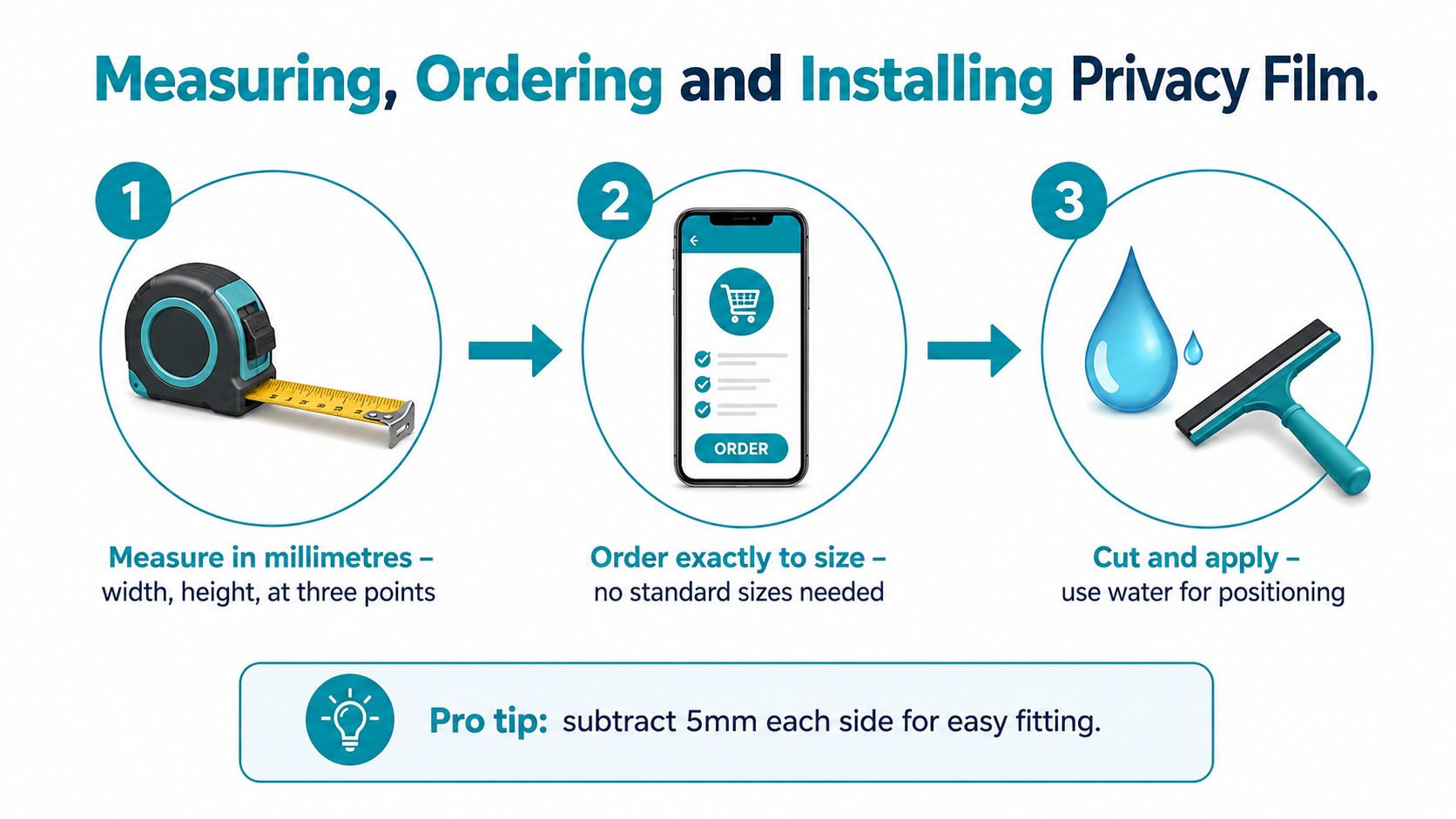
Apply it patiently
Clean the glass thoroughly with isopropyl alcohol or vinegar, then mist it with soapy water. Peel away the liner, place the film on the wet pane, and use a squeegee from the centre towards the edges. Trim with a sharp blade, keeping the cut just inside the gasket rather than pressing into the rubber.
Dust, pet hair and dry glass cause most bubbles and creases. Work in a calm, clean room and avoid rushing the positioning stage. A practical fitting walkthrough is available in this guide to installing window privacy film.
For a large pane, awkward access or a high-quality reflective finish, professional fitting can be sensible. UK professional installation commonly costs £40 to £80 per m², as described in the supplied installation guidance, but the final price depends on access, film choice and the shape of the glazing. Get a written quote that separates film, labour and any preparation work.
Matching Film Types to Common UK Rooms
A bathroom window and a conservatory roof may both need “privacy film”, but they create different technical demands. The bathroom needs privacy when the light is on at night. The conservatory may need glare and solar control while you still want to see the garden.
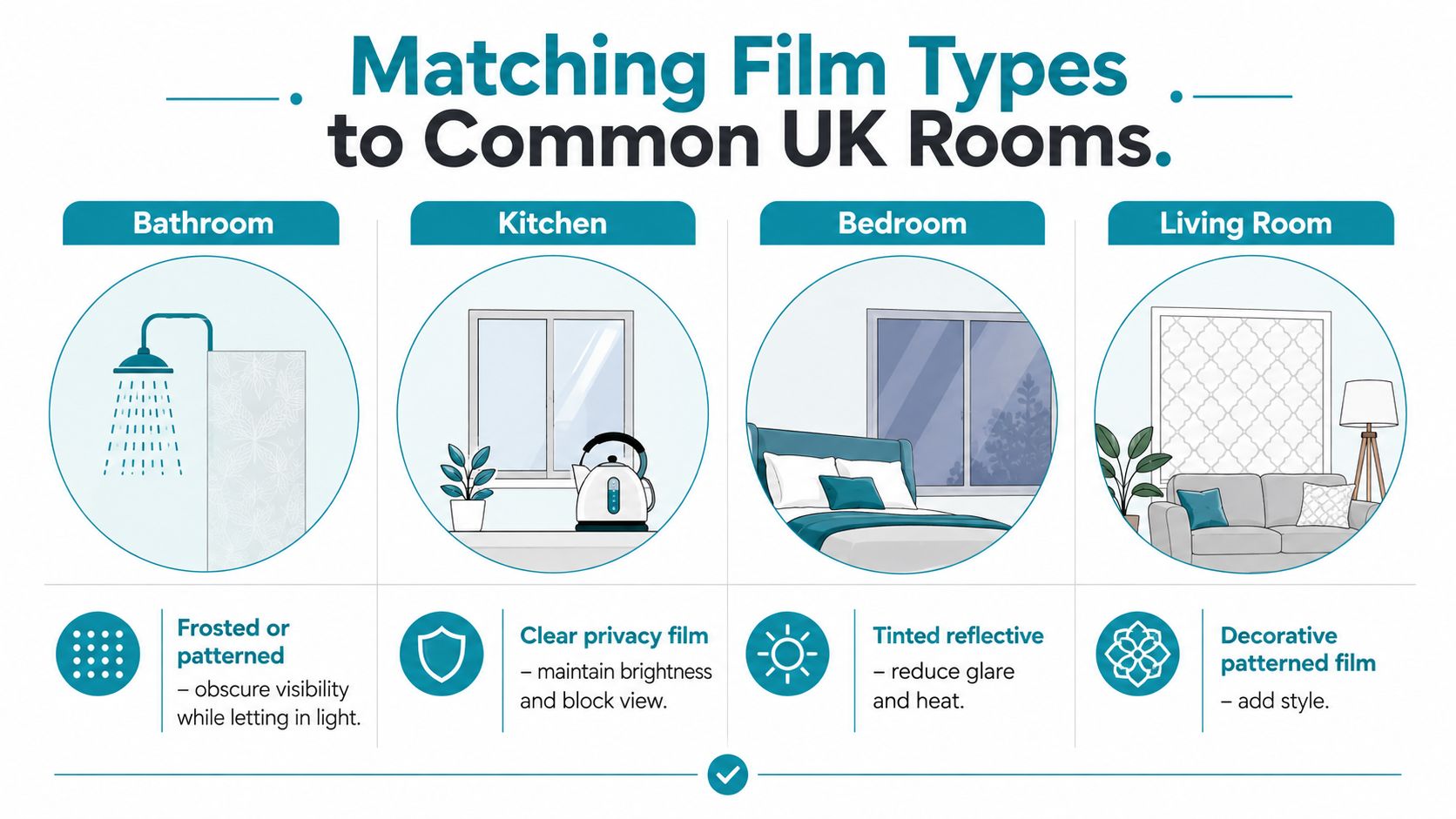
Bathroom and cloakroom
Choose frosted, opaque or tightly patterned film for a bathroom overlooked by a footpath or neighbouring property. A lower section on a sash window can preserve the upper view while screening eye level, but only if the remaining clear area doesn't reveal silhouettes.
A ground-floor WC often benefits from full-pane frosting. It lets daylight through without relying on the time of day, which is important when the room is used in the evening.
Bedroom and front room
A bedroom facing a road or neighbouring semi usually needs dependable privacy after dark. Opaque or frosted film gives that certainty. Reflective film can work for daytime screening if you accept that curtains or blinds may still be needed when the bedroom lights are on.
Street-level front rooms need a more careful balance. A mid-level patterned film can block casual views while preserving some daylight, whereas a reflective product may suit a sunny elevation where glare is also a nuisance.
Office and spare room
For a home office used for video calls, an etched-look film can soften the background without making the room feel closed in. If the window faces a bright sky or neighbouring wall, a translucent finish can also reduce the distracting contrast behind a screen.
A sample is especially valuable here. Check what colleagues or visitors can see through the glass, rather than judging the film only from a close-up.
Kitchen and conservatory
South-facing kitchens and conservatories often need glare and heat management as much as privacy. A lighter tint or solar-control film can be suitable where you want to retain the outside view, but it won't guarantee night-time screening.
The deciding factor is the direction and strength of light, not just the room label. A north-facing kitchen may need privacy but little solar control, while an east- or west-facing room can need both.
Care, Lifespan and UK Legal Considerations
Treat maintenance and removal as part of the purchase decision. Film is exposed to sunlight, condensation, fingerprints and repeated cleaning, so an unsuitable cleaner or rough cloth can spoil the finish even when the glass underneath remains perfect.
Use a soft microfibre cloth or a clean rubber squeegee with mild, non-abrasive cleaner. Avoid scouring pads, blades used directly on the film and ammonia-based products, which can damage the polyester surface or shorten its useful service. Wipe gently rather than scrubbing at marks.
Plan for eventual replacement
The supplied UK guidance describes typical replacement windows of five to fifteen years, depending on sun exposure and film quality. Treat that as a planning range rather than a guarantee. Strong sunlight, poor installation, edge lifting and unsuitable cleaning can all reduce service life.
The datasheet for one UK privacy film lists a 10-year warranty and a 50 µm single-ply PET construction with acrylic adhesive in its published specification. Warranty terms vary, so check whether they require approved installation and whether they cover peeling, fading or discolouration.
Check permission before fitting
Renters should read the tenancy agreement and ask the landlord or agent before applying adhesive film. A removable static cling may be treated as a minor alteration, but an agreement can still require consent, especially where the window is visible externally or the installation changes the appearance of the property.
Leasehold flats may have additional rules from the freeholder or management company. Internal fitting rarely raises planning concerns, but listed buildings and conservation areas can have stricter controls, particularly where a reflective or coloured finish changes the external appearance.
Static cling normally comes away more easily than adhesive film. For adhesive stock, gentle heat can soften the bond, followed by careful peeling and residue removal with a glass-safe cleaner. Don't use a scraper aggressively on coated glazing, and ask for written permission if restoration could affect the glass or frame.
Choosing the Right Film and Quick Answers
Use this decision path at the counter:
- Need genuine 24/7 privacy? Choose frosted, etched-effect, patterned or opaque film.
- Need daytime screening plus glare or heat control? Consider reflective or tinted film, but plan a night-time blind or curtain where necessary.
- Want temporary privacy in a rented home? Start with static cling on smooth glass.
- Want a lasting finish in your own property? Adhesive film offers the more permanent route.
- Want privacy on demand and can accommodate electrical work? Switchable film provides adjustable opacity at a premium.
Does privacy film block UV and reduce fading?
Some products do. The specified UK datasheet discussed earlier reports 99% UV rejection, but that figure belongs to that particular film and test configuration, not automatically to every privacy product. Check the technical sheet if protecting flooring, furniture or artwork matters.
Does it work on textured or patterned glass?
Static cling needs a smooth, clean surface and may lift or leave visible gaps on textured glass. Adhesive products can be more suitable, but the installer or supplier should confirm compatibility before you buy.
Can it go on uPVC conservatory roof panels?
Only use a product designed for the specific panel material and installation position. Conservatory roofs can receive strong sunlight and heat, and not every domestic film is suitable for exterior fitting or plastic glazing. Ask the supplier to confirm the substrate and warranty position.
What does a standard bathroom window cost?
A typical UK supply-and-fit price depends on the pane size, access, film finish and whether the installer must remove existing material. The supplied guidance places professional fitting at £40 to £80 per m², so request a measured quotation rather than relying on a generic bathroom-window price.
Quote My Wall offers removable window privacy clings and frosted window privacy films for applications where you want daylight with reduced visibility. Visit Quote My Wall to compare suitable designs, check the application details and choose a film that matches your room and tenancy requirements.