

Fairy Bedroom Accessories: A Practical UK Styling Guide
You've bought the bedding, found a canopy you love and filled an online basket with fairy lights, toadstools and tiny woodland creatures. Then you pause. Will the room still suit your child next year, are the lights safe beside a bed, and will those charming accessories look magical or become clutter?
A successful fairy bedroom isn't created by covering every surface in glitter. It comes from a calm base, a few well-chosen focal pieces and removable details that can change as your child grows. UK families already spend heavily on children's rooms. Independent research found an average pre-birth spend of £853 on nursery furniture, décor and soft furnishings, followed by refreshes of about £900 every two years, with total spending exceeding £5,300 before age 10 (HomeOwners Alliance research). That makes adaptable fairy bedroom accessories a much better investment than a full themed refit every few years.
Planning Your Fairy Bedroom Before You Buy
Treat the room as a styling project, not a shopping spree. Start with a quick survey: measure the floor, note the position of existing furniture, check the ceiling height if you're considering a canopy and identify the nearest mains sockets. A beautiful light strand is no use if its cable has to cross a walking route.
Build a brief before building a basket
Choose three decisions before buying anything:
- The base: cream, soft white, pale sage or another quiet colour for walls and larger furniture.
- The focal point: usually the bed wall, canopy or a single mural.
- The changeable layer: bedding, decals, cushions, throws and small ornaments.
This prevents the bargain-bin effect, where every item has a different shade of pink and another competing fairy motif. I'd put more of the budget into the pieces your child uses daily, especially bedding, a comfortable rug and a well-made canopy. Keep quick-change details inexpensive and removable.
Plan for the child's age now, but also for the next stage. A nursery can take a gentle woodland approach with soft colours and simple shapes. An older child may want a reading nook, a dressing area or more display space. Don't build the entire scheme around one character or a babyish print if the furniture can stay in place while the décor changes.
Put safety and storage on the plan
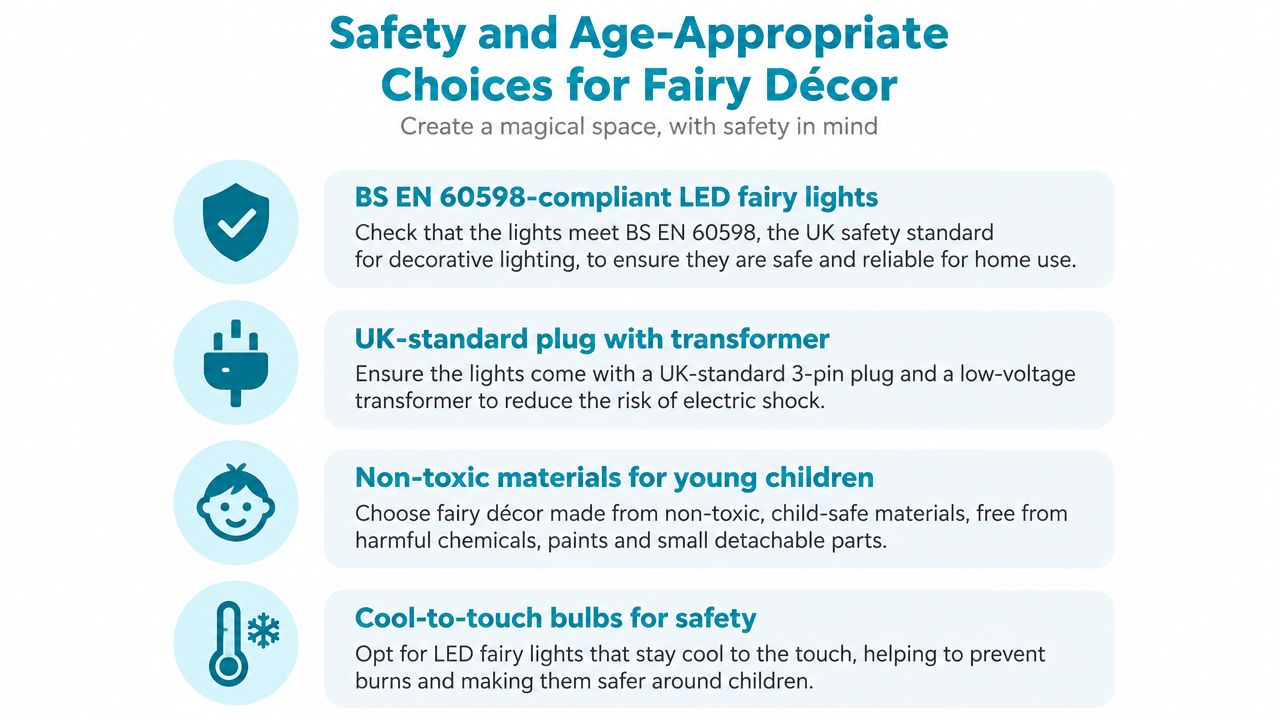
For plug-in lighting, check the product carries a UKCA or CE mark and uses a fused BS 1363 UK plug. Keep the socket, transformer and cable route in mind before choosing where the lights will go. Electrical products should always be installed and used according to the manufacturer's instructions.
Storage deserves equal attention. Fairy themes naturally attract collections of figures, play silks, costume jewellery and tiny treasures. Add baskets, labelled boxes or a low shelf from the start, otherwise the accessories will spill across the floor and the room will stop feeling restful.
Practical rule: Choose the room's palette and focal wall first. Buy fairy accessories only when you can explain exactly where each one will live.
UK parents are already embracing imaginative children's rooms. Houzz UK reported that 61% of parents use themed rooms, while 23% prioritise inspirational or educational décor (Houzz UK findings). The demand is there, but a clear brief is what turns a theme into a room.
The Core Fairy Bedroom Accessories Worth Buying
Five categories do most of the visual work. Buy these in the right order and you won't need dozens of small decorations to make the theme obvious.
Start with the bed
A canopy frames the bed instantly. Hoop, wall-mounted and ceiling-hung styles can all work, but choose lightweight, breathable polyester or cotton rather than heavy fabric. The canopy should soften the room, not become a dust trap or a climbing aid.
Lighting comes next. Warm-white LED fairy lights create the most convincing glow, particularly around a canopy hoop, shelf or bedhead. For everyday use, a USB strand or a properly installed plug-in set is more practical than constantly replacing batteries. A paper star or moon lantern can provide one stronger focal shape, but don't hang it where a child can pull it down.
Bedding should carry the main fairy motif. Use a hero-print duvet with a plain throw and one or two textured cushions in supporting colours. This gives you an easy refresh route. Replace the cover when your child changes taste, rather than replacing the whole room.
Add the walls and floor
Removable wall decals are the sensible choice for rented homes and fast-changing bedrooms. Trees, arches, stars and toadstools can create a storybook backdrop without committing you to a permanent mural. See these fairy wall stickers for a practical starting point, then check the surface, adhesive instructions and removal method before ordering.
A washable rug anchors the scheme and makes the room feel finished. Choose a low-pile style that won't catch on toy wheels or become difficult to vacuum. For further inspiration on arranging the bed, cushions and throws, these bed decoration ideas from Tip Top Furniture are useful beyond fairy themes.
| Accessory | What to Look For | Watch Out For |
|---|---|---|
| Canopy | Breathable fabric, secure fixing, washable construction | Loose cords, heavy fabric or reachable hanging loops |
| Fairy lights | LED bulbs, clear instructions, suitable UK plug or USB connection | Damaged wires, loose batteries or cables across walkways |
| Wall decals | Removable adhesive, non-toxic materials, smooth application | Rough walls, lifting corners or placement above a bed |
| Bedding | Washable fabric, comfortable handle, one strong print | Too many competing motifs and hard-to-wash trims |
| Rug | Washable or easy-care surface, stable backing | Slipping, shedding fibres and deep pile near toys |
Prioritise canopy, lighting and bedding because your child sees and touches them every day. Decals, lanterns and figurines should support the scheme, not dominate it.
Colour Palettes and Layering for a Cohesive Look
Fairy bedrooms look polished when three elements repeat: a quiet base, one hero colour and a small metallic or pastel accent. The simplest UK-friendly combination is soft sage green, dusty pink and brushed gold, softened with cream and white.
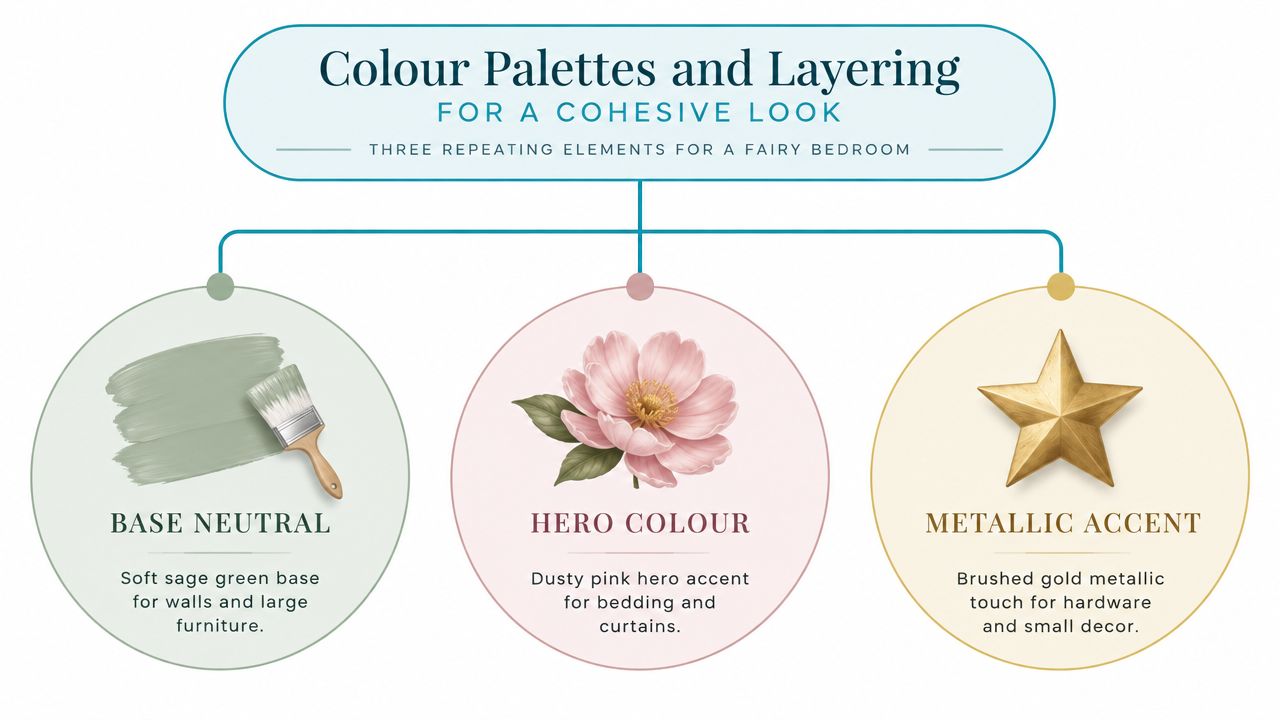
Use the base on walls and larger furniture, the hero colour on bedding and curtains, and the metallic accent on handles, picture frames or small decorative details. Don't spread gold across every surface. A little brushed metal catches the light and feels enchanted. Too much turns the room into a themed display.
Layer texture instead of repeating motifs
The room needs softness, but it doesn't need a fairy printed on every item. Pair a smooth duvet with a quilted throw, a knitted cushion and a soft rug. A plain cream layer gives patterned bedding somewhere to rest. Pale blue can also cool the scheme without making it feel less magical, particularly through small textile additions such as baby blue cushions.
Lighting affects the palette. Warm-white LEDs flatter dusty pinks and keep sage feeling grounded. Cool white can make cream walls look stark and can drain warmth from pastel accessories, so choose the colour temperature deliberately rather than accepting whatever comes in the box.
A workable small-room example
In a 3m by 3m box room, paint three walls cream and use sage on the bed wall. Add a dusty pink duvet, a cream knitted throw, two cushions with gold thread and a cream rug with a pink border. Wrap warm fairy lights loosely around the canopy hoop, keeping the cable and switch inaccessible to the child.
Keep decals to one feature wall. A cluster of trees or an arched fairy doorway can provide the storybook moment, while the other walls remain calm. This approach is particularly useful because 49% of parents surveyed by Houzz used white as a dominant colour, ahead of blue at 42%, grey at 35% and pink at 24% (Houzz UK colour findings). Neutral surroundings make removable fairy bedroom accessories easier to change without repainting everything.
DIY and Upcycling With Vinyl Wraps and Stencils
DIY makes sense when the furniture is structurally sound and the surface is simple. It doesn't make sense when a damaged chest needs extensive repair or when the finished piece must withstand rough daily use without maintenance.
Choose the right project
An old wardrobe or chest of drawers can take on a fairy look with a pastel, pearl or iridescent vinyl wrap. Clean and degrease the surface, remove handles, measure each panel and apply the film slowly with a felt squeegee. Work from the centre outwards so air bubbles can be pushed towards the edge.
Removable vinyl works well for a magical wall scene. Use trees, stars, mushrooms or fairy silhouettes instead of painting an entire mural. It's faster to reverse, especially in a rented home, but it still needs a smooth, clean surface and careful removal.
Stencils suit plain curtains, storage boxes and lampshades. Use a small amount of fabric paint, test on an unseen section and avoid placing painted areas where they'll rub constantly. A thrifted mirror or lamp base can be transformed with chalk paint, though electrical parts must never be painted or obstructed.
Buy ready-made for safety-critical items. DIY for surfaces you can inspect, remove and repair.
Compare effort, finish and reversibility
| Project | Ready-Made Cost | DIY Cost | Durability | Easy to Refresh |
|---|---|---|---|---|
| Wardrobe finish | Higher upfront purchase | Vinyl, tools and preparation | Depends on surface and adhesive | High with removable wrap |
| Fairy wall scene | Higher for a finished mural | Decal or stencil materials | Good when correctly applied | Very high with removable vinyl |
| Printed curtains | Simple to buy | Paint, stencil and testing time | Variable with washing | Moderate |
| Decorative mirror | Ready to display | Second-hand base and paint | Good if prepared properly | Moderate |
| Lamp base | Safer as a complete product | Paint and careful masking | Variable | Moderate |
Compare the cost per square metre of wrap with a replacement flat-pack unit, but include your time and the condition of the furniture. Permanent adhesive may last longer, while removable film gives you a cleaner exit when the theme changes. For commercial-style applications, understanding how professionals apply UV DTF wraps for business can help you appreciate the importance of surface preparation, pressure and edge finishing, although children's furniture still needs materials intended for the relevant surface and use.
For UK-specific furniture projects, vinyl wrap for furniture offers another route to a new look without buying replacement furniture. Keep the tools basic: a sharp craft knife, squeegee, masking tape, measuring tape and a hairdryer for gentle shaping around edges. Don't stretch the film aggressively, and don't wrap a surface that's damp, dusty or flaking.
Safety and Age-Appropriate Choices for Fairy Décor
Fairy décor must be charming from the doorway and safe at close range. Lights, canopies and small ornaments deserve a stricter check than cushions or bedding.
Make lighting the first safety check
Choose extra-low-voltage LED lights where possible. For mains-powered sets, look for a UK 3-pin plug and fuse, keep plugs and transformers indoors, and follow the manufacturer's instructions. Outdoor-rated lights need an appropriate IP code, but that doesn't automatically make them suitable for a child's bedroom.
Electrical Safety First advises switching lights off when they're unattended and highlights the importance of using the correct product for the setting (UK lighting safety guidance). Inspect the cable, plug, controller and bulbs before use. Don't use a set with exposed wires, cracked insulation or a hot transformer.
Never place lights where a child can pull them into the bed, wrap them around their body or chew the cable. Keep the transformer ventilated and away from fabric. Avoid placing a canopy directly over a cot, particularly for a baby, unless the product is specifically designed and installed for that use.
Remove reachable hazards
Wall decals aren't toys. Apply them only to smooth, clean surfaces, never directly above a cot or bed where peeling could create a hazard, and inspect lifting edges regularly. UK nursery decal guidance also warns against placing decals near radiators, because heat can soften adhesive and encourage peeling (children's room decal safety guidance).
Small fairy figurines, weighted charms and light-up decorations belong out of reach of babies and toddlers. Check age ratings, remove button-battery products from accessible areas and secure tall shelving to the wall. Keep cords, ribbons and hanging loops away from sleeping spaces.
For bedding and rugs, choose washable materials and look for recognised textile safety certifications such as OEKO-TEX or an equivalent standard. Wash new textiles before use, especially when they'll sit against a child's skin. Safety isn't decorative, but it should shape every purchase.
Where to Buy and a Final Refresh Checklist
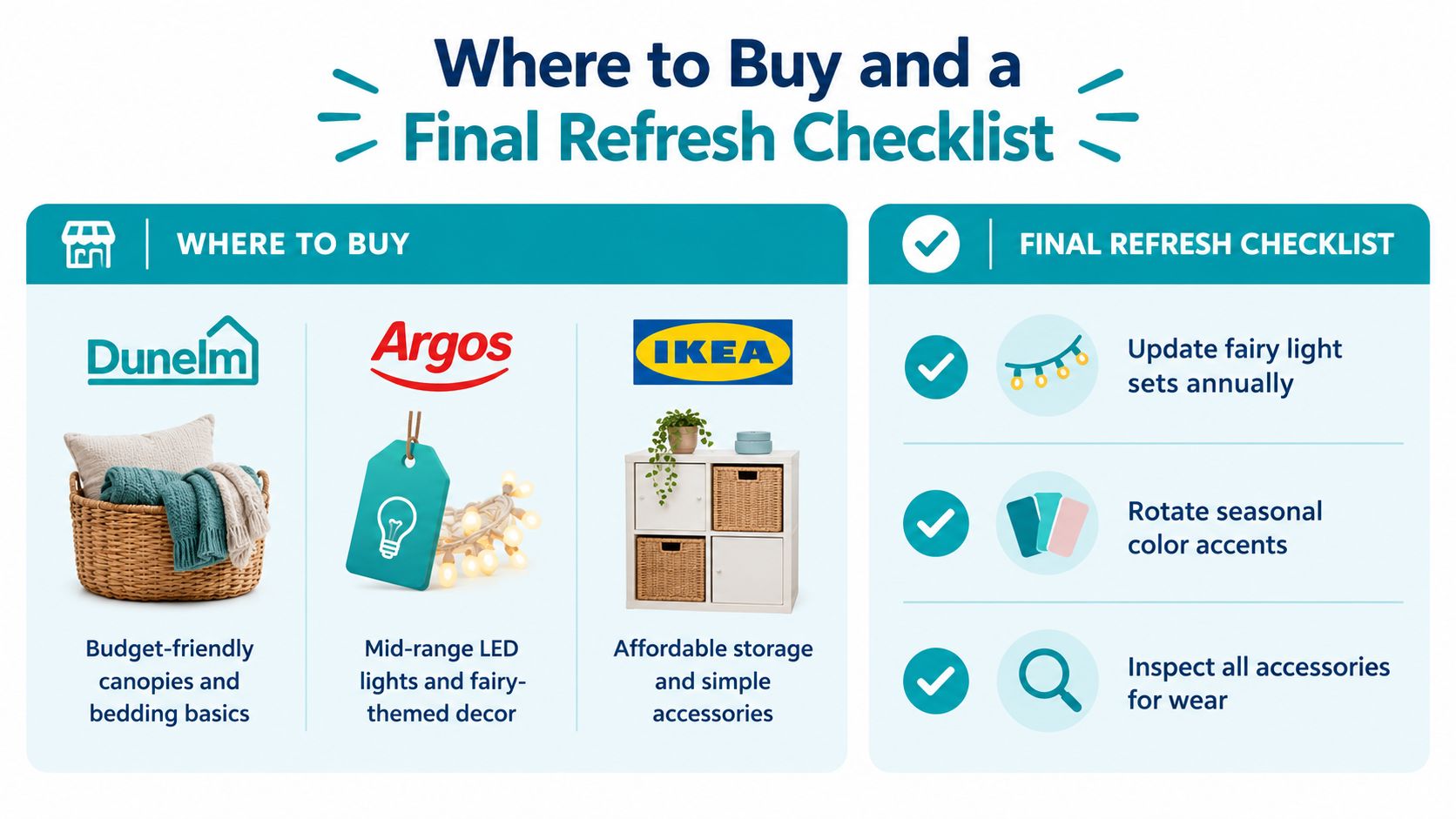
Buy the core pieces from retailers with clear product information and straightforward returns. Dunelm, Argos and IKEA are useful for practical staples such as bedding, storage, canopies and basic lighting. Their ranges change, so measure before visiting and check the product details rather than relying on a styled photograph.
For handmade or personalised pieces, Etsy and Notonthehighstreet offer custom name plaques, fairy prints and made-to-order details. Small UK print shops can also produce bespoke wall murals, but ask about application instructions, material safety and removal before ordering. B&M, Home Bargains and TK Maxx are useful for inexpensive accent purchases, although quality varies and electrical products need especially careful checking.
Shop by the job, not by the theme
Use specialist suppliers for the parts that need a precise finish. 3M, D-C-Fix and WrapDirect are relevant starting points for vinyl wrap and stencil materials. Keep the theme flexible by buying one strong focal item, then using bedding, decals and textiles to adjust the room seasonally.
UK demand for children's décor is established rather than purely novelty-driven. A consumer survey found that 30.3% of consumers had bought children's home products in the previous 12 months, with soft furnishings and decorative accessories among the key categories (UK children's home-product survey). That recurring buying habit suits a refresh strategy: replace a cover or decal when needed, instead of replacing sound furniture.
Check the room before your child moves back in
- Test and secure lighting: Check the cable, plug, transformer and fixing points, then switch lights off when the room is unattended.
- Anchor the canopy: Confirm that fixings are sound and that fabric and cords can't be pulled into the sleeping area.
- Smooth the decals: Press down every edge, remove bubbles and move any decal that's close to heat or above the bed.
- Wash textiles: Wash bedding, throws and rugs according to their care labels before use.
- Remove loose small items: Keep figurines, charms and battery-powered decorations away from children who can place objects in their mouths.
- Schedule small refreshes: Rotate cushions, throws and removable vinyl details as tastes change, while keeping the neutral base and main furniture.
A fairy bedroom should feel magical without becoming fragile. Choose safe LED lighting, breathable bed textiles, removable wall details and storage that can handle real family life. Quote My Wall offers removable wall stickers, nursery designs, children's bedroom prints and furniture vinyl wraps for quick theme changes. Browse Quote My Wall to choose a fairy wall treatment or adaptable wrap before you commit to a full repaint.