

Window Privacy Film Non Adhesive: The Renter-Friendly Guide
You're standing in front of a bathroom window, and the view goes straight to the neighbour's kitchen or the pavement outside. You want privacy, but you don't want to lose your deposit, fight with sticky residue, or discover the film won't peel off when you move out. That's exactly where window privacy film non adhesive earns its place, because it solves the privacy problem without turning the glass into a permanent project.
The practical appeal is simple. Non-adhesive films use static cling and a little water rather than glue, so they're built for renters, short lets, and anyone who likes to change a room without committing to it. Independent product testing notes one non-adhesive window sticker blocked 96% of UV rays while staying removable and reusable, and product guidance commonly notes quality films can block 95% to 98% of UV rays as well, which helps explain why the category keeps getting more attention in home décor and retrofit work (Accio privacy window film trends, Accio window film privacy best sellers).
The key concern for UK homes isn't whether the film looks clever in a product photo. It's whether it comes off cleanly, stays put in a damp bathroom, and survives the inventory check when you hand back the keys. If those are your worries too, this guide will keep the focus there.
Why Renters and Homeowners Are Switching to Non-Adhesive Privacy Film
A bathroom window that looks straight into a neighbour's kitchen, a front room at pavement level, or a home office facing the street can make a room feel exposed very quickly. The usual worry is practical, because anything fixed to the glass might leave a mess behind when it is time to move out.
Non-adhesive window privacy film answers that worry by acting like a fitted layer rather than a permanent finish. It grips flat glass with static cling and water, so there is no glue hardening into the pane and no scraping job later on. That makes it a sensible option for renters, short lets, and homes that want privacy for a period of time without treating the window as a permanent project.
Why the category suits UK homes
UK homes are a natural fit for this kind of film because so many people live with flats, shared boundaries, and windows that feel close to public view. Market coverage from a 2025 overview also pointed to rising interest in phrases such as “static cling window film” and “one way privacy window film”, with a peak in August 2025 and an average rating of 4.4 alongside a search volume of 106. That does not describe a huge market, but it does show active interest in removable options, as outlined in Accio privacy window film trends.
Practical rule: if the privacy problem might change with the season, your tenancy, or your family's needs, removable film usually suits the job better than a permanent change to the glass.
People also switch because the film gives them flexibility. You can cover only the section of glass you need, test a pattern before committing to the whole pane, and peel it away later without redoing the window. That is why many UK buyers see it as a temporary upgrade that still looks neat, not a compromise. For homeowners thinking about comfort and heat control as well as privacy, guides on Phoenix home cooling solutions show how window treatments are often chosen for one room first, then extended once the result is clear.
How Static-Cling Window Film Works
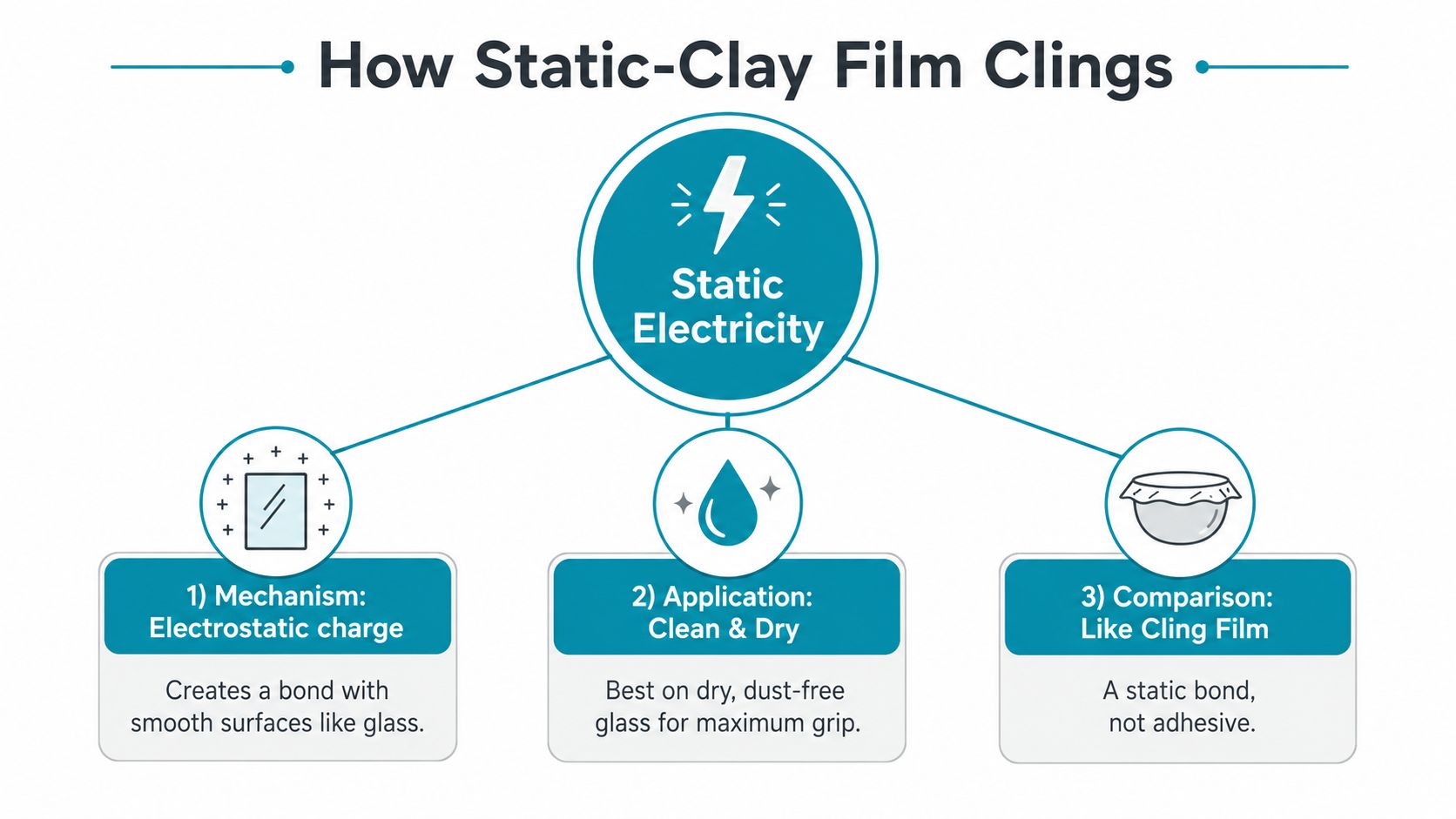
Static-cling film can sound a bit magical until you've handled it once. It does not glue itself to the glass. It holds through a mix of smooth material, clean surface contact, and a thin layer of water that helps you position it properly. The effect is a bit like cling film gripping a bowl, except the “bowl” is your window and the fit only settles properly when the glass is spotless.
The sheet is usually made from a smooth vinyl surface. On clean glass, that backing can lie flat enough to stay put through physical attraction rather than adhesive chemistry. The water used during fitting matters because it gives you time to slide the film, push out air, and line up the edges before the cling takes hold.
For a renter, that is the practical appeal. You get privacy without treating the pane as a permanent project, and you can remove the film later if your tenancy changes or you want the room to look different. For a fuller explanation of how the material behaves on windows, see this guide to static-cling film for windows.
Static cling versus glue
The main difference from adhesive film is what happens after you press it down. Adhesive products use a backing that bonds to the pane and stays there, which is why they tend to feel firmer and more permanent. Static cling stays a physical bond, so you can lift it, adjust it, and remove it without treating the window like a fixed alteration.
That difference matters in everyday use. If you are fitting film on a damp day, the water you spray on the glass is doing two jobs, it helps the film move into place and it helps you smooth out trapped air. A spotless pane still matters, because dust interrupts the contact points and gives the edges somewhere to lift.
Clean glass is not a polite suggestion here. It is the difference between a film that settles properly and one that keeps curling at the corners.
Humidity is another reason installation guides mention bathrooms and kitchens so often. Glass in those rooms can already be surrounded by moisture, and that changes how forgiving the fit feels. For a UK renter, the useful takeaway is simple. Static cling works best when the glass is prepared carefully, not when you try to press it onto a dirty or greasy pane.
Adhesive Versus Non-Adhesive Privacy Film at a Glance
The easiest way to choose is to compare what each type does well in the situations that matter. If you want something to stay fixed for years and cope with stubborn moisture, adhesive film has the edge. If you want a cleaner exit, easier repositioning, and less chance of a deposit dispute, non-adhesive film is usually the safer bet.
A useful detail comes from technical product data. A decorative static-cling film datasheet lists visible light transmission at 65% on average and UV transmission as low as 1% to 20%, while a privacy-grade adhesive film reports 43% visible light transmission with an acrylic adhesive backing (static-cling film datasheet). In plain terms, the non-adhesive option tends to preserve more daylight, while adhesive systems can lean harder into privacy.
Side-by-side comparison
| Factor | Non-Adhesive (Static Cling) | Adhesive Film |
|---|---|---|
| Deposit safety | Better for rentals and temporary changes | More likely to feel permanent |
| Daylight | Usually keeps more natural light | Can reduce light more strongly |
| Privacy | Good for diffusing sightlines | Often stronger for full-time privacy |
| Repositioning | Can be lifted and adjusted | Usually harder to correct once set |
| Removal | Designed to come off cleanly | May need more effort to remove |
| Bathroom steam | Can work well if fitted carefully | Often better for harsher, long-term moisture |
| Appearance changes | Easy to swap for a new look | Better when you want one finish to stay |
A simple way to think about it is this, adhesive film behaves more like a long-term fixture, while non-adhesive film behaves more like a well-chosen removable layer. That difference matters in family homes too, especially where a room may need to change from nursery to study to guest room over time.
If you're also comparing privacy solutions for heat and glare, the broader logic is similar to the advice in Phoenix home cooling solutions, where the right choice depends on whether you care more about permanence, sunlight control, or ease of removal. For most UK renters, the removal question usually comes first.
The Best Rooms and Situations for Non-Adhesive Film
The best uses are the ones where you need privacy, but you don't want to sacrifice flexibility. Ground-floor rooms, rented bathrooms, and spaces that may be redecorated soon all suit window privacy film non adhesive because the job is practical first and decorative second. That balance is why it keeps showing up in lived-in homes rather than just showrooms.
Room by room, what works best
Bathrooms usually need the strongest privacy, so frosted styles are the most forgiving choice. They blur sightlines while still letting daylight in, which matters in small UK bathrooms that can feel gloomy fast.
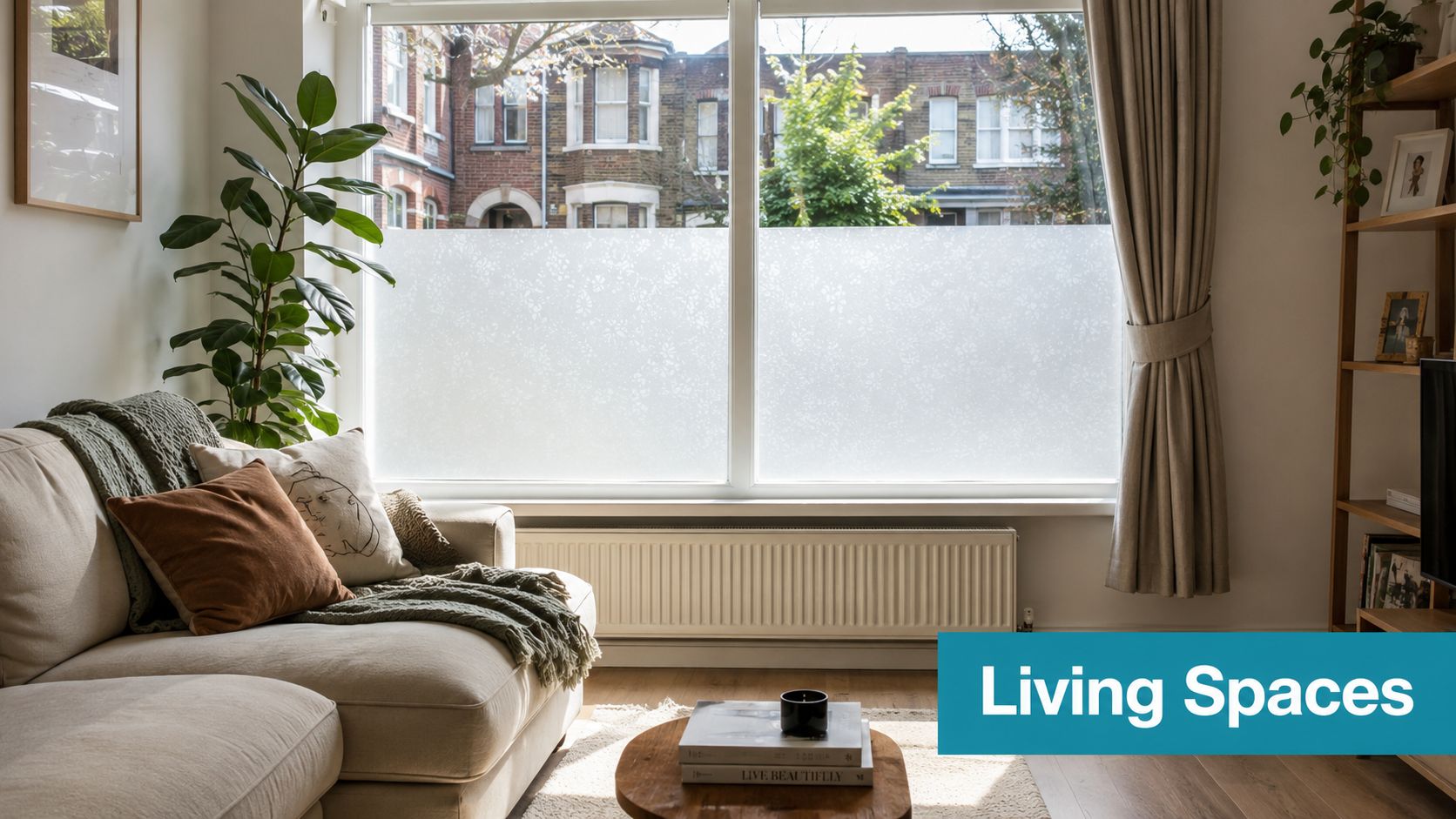
Front rooms and hallways are a different problem. You often want some privacy but you don't want the space to feel shut in, so partial patterns or lighter frosted designs keep the room bright while softening the view from outside. That's where decorative film looks more like part of the interior scheme than an afterthought.
Nurseries and children's rooms suit removable film for a different reason, the room's needs change. A playful motif can work now, then disappear when the layout changes or the child gets older. That makes the film feel like a short-term decorating layer rather than a permanent compromise.
Matching the room to the finish
- Bathrooms: choose full frosted coverage for the strongest visual privacy.
- Street-facing living rooms: look for patterned or lighter frosted film that keeps daylight flowing.
- Home offices: use a finish that cuts distraction without turning the room cave-dark.
- Nurseries: pick decorative motifs that fit the room now, not just something neutral.
- Rental hallways: choose a style that upgrades the look without dominating the space.
The main buying rule is simple, the more exposed the room feels, the more opaque the finish should be. The more you depend on daylight, the more you should lean towards a translucent or patterned design rather than a heavy blackout look. For style-led options that fit the rest of a home instead of looking like office stock, Quote My Wall's frosted window film guide is a useful starting point.
Choosing the Right Opacity, Pattern and Size for Your Window
Many first-timers get stuck here, because film is sold with words that sound similar but behave differently on glass. Frosted means light is softened and details are blurred. Opaque means much less visibility through the pane. Patterned means the film does privacy work while also adding a visible design. One-way-look styles are usually best where light and viewing angles work in your favour, often on brighter, south-facing windows.
Measure the glass itself, not the full frame, then check whether the film you're buying can be trimmed on the pane. Going a touch oversized is safer than going too small, because you can trim the edges once it's in position. If a design has a repeat pattern, a wider pane needs extra care so the motif doesn't look awkward when it crosses the middle.
A simple measuring habit that saves hassle
Measure twice, cut once still applies here, but with film the better rule is measure the glass, add a little room for trimming, then finish the edge on the pane.
That approach matters because a too-small sheet is impossible to disguise. A slightly oversized sheet can be made neat with a blade and a steady hand. On large windows, especially in a rental where you may only get one good chance at the fit, that extra margin removes a lot of stress.
If you want one supplier to cover a few different rooms, look for a broad design library rather than a single-purpose film. That way you can choose a frosted style for the bathroom, a softer pattern for a hallway, and a child-friendly print for a nursery without mixing very different visual styles. Quote My Wall's range across vinyl and prints is useful in that sense because it lets one home keep a consistent look without forcing every window to match.
The last decision is practical, not decorative. If privacy is the first priority, choose denser coverage. If daylight is the first priority, choose a translucent finish and accept that you're softening the view rather than erasing it completely.
Installing Non-Adhesive Privacy Film Without Bubbles
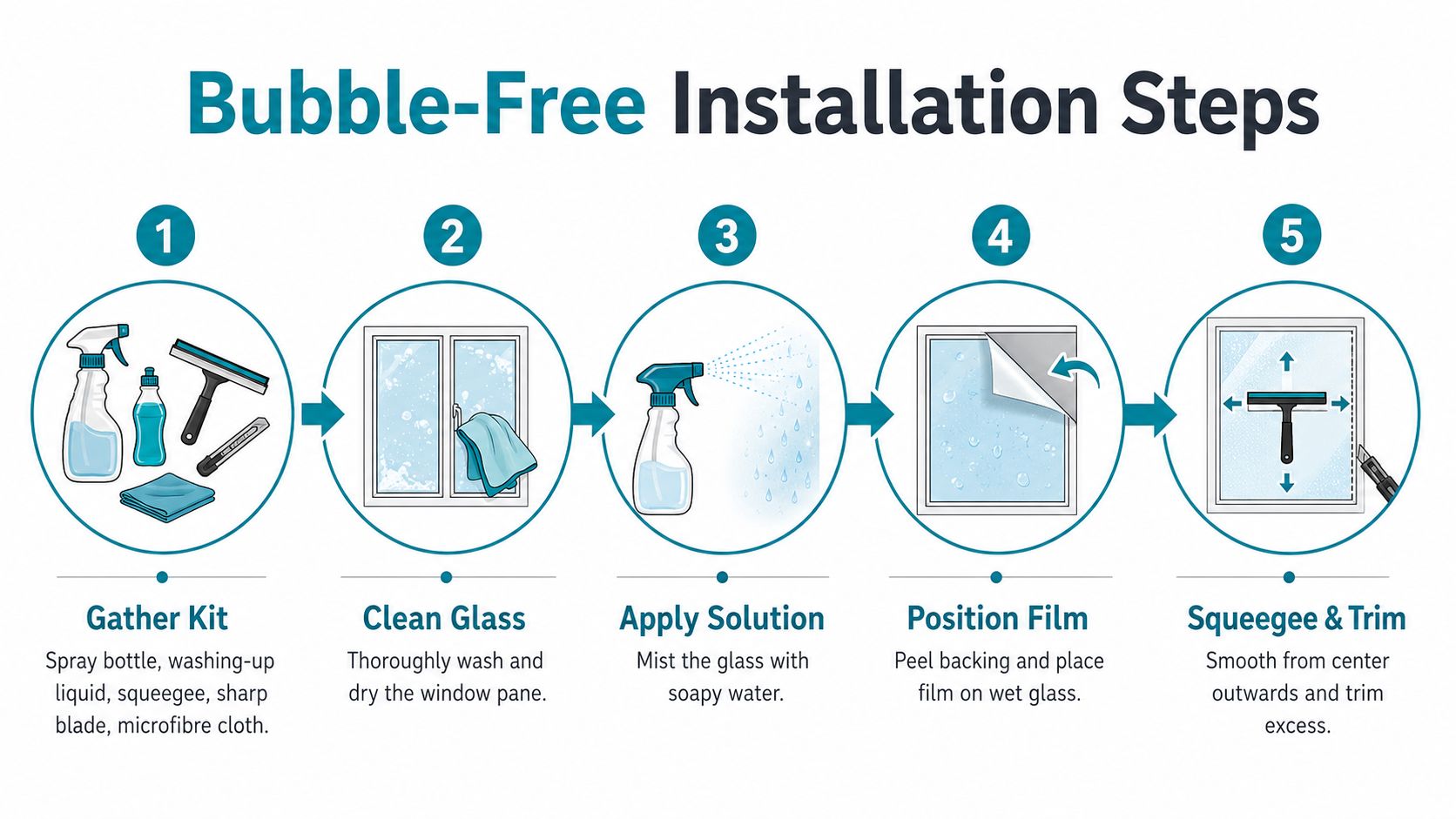
A good installation feels calm, not heroic. You need a spray bottle, washing-up liquid, a squeegee or credit card, a sharp blade, and a microfibre cloth. If that sounds like a lot, it helps to remember that the process is forgiving, because static cling gives you room to lift and reset where adhesive film often doesn't.
The cleanest method is the one many in rented homes can manage on a Saturday afternoon. Clean the glass first, and clean it properly. Dust at the sill or grease from fingerprints will show up later as bubbles or lifted edges, which is exactly the sort of thing an inventory clerk notices.
A steadier way to fit it
Start by misting the pane with soapy water, then peel the backing and place the film on the wet glass. That wet surface is what buys you time, because you can nudge the sheet into alignment before the cling settles.
From there, work from the centre outwards with firm strokes. A squeegee is best, but a wrapped credit card can work if you move slowly and keep pressure even. Trim the excess only after the film has settled a little, because rushing the corners is how neat jobs turn into ragged ones.
- Gather the right kit: spray bottle, washing-up liquid, squeegee, sharp blade, microfibre cloth.
- Prep the glass fully: remove dust, grease, and any dried residue.
- Use light misting: too much liquid can make the film float instead of grip.
- Place and adjust: lift and re-lay sections until the alignment feels right.
- Trim carefully: follow the edge of the glass once the sheet is sitting flat.
For a more detailed walkthrough of the fitting process, Quote My Wall's installation guide is handy. The important idea is that the film should feel manageable, not unforgiving, because a renter-friendly product needs to survive human error as much as glass cleaning.
Looking After, Cleaning and Removing the Film Later
The worry most renters don't say out loud is the one that matters most, will it come off cleanly when it's time to leave. That's where static-cling film separates itself from adhesive systems. It's designed to be removed, so you shouldn't be fighting glue residue or scraping at a permanently bonded edge.
Day-to-day care is straightforward. Use a soft cloth and mild soapy water, then leave abrasive pads, ammonia-based sprays, and sharp fingernails at the edge alone. Those are the quickest ways to scratch the surface or weaken the corners, and scratched film is harder to tidy up than a clean pane ever was.
What removal should look like
Quote My Wall notes its vinyl is rated to last at least five years interiorly, and that gives a useful sense of what a quality indoor film can handle over time. In a real rental, that still means condensation, repeated cleaning, and the odd lifted corner need attention, especially around double-glazed windows and bathroom glass.
When it's time to take it down, warm the corner gently with a hairdryer, peel slowly at a low angle, and use a tiny drop of soapy water if any edge resists. That gives you the best chance of removing the film in the way an inventory clerk prefers, steadily, without tearing or leaving sticky traces behind. If you want a practical reference on what damaged tinted glass can involve, the scratched tinted window repair guide is a useful reminder that prevention is much easier than repair.
Remove it like you're preserving the glass for the next person, not forcing the room back to blank at speed.
The final advantage is simple. A well-fitted static-cling film should peel away without behaving like permanent adhesive, which is exactly why it suits tenants, family homes, and anyone who wants the freedom to change their windows without starting over.
If you want a renter-friendly way to make glass private without committing to permanent adhesive, take a look at Quote My Wall. You'll find designs and vinyl options that suit bathrooms, hallways, nurseries, and other awkward UK windows, with the kind of removable finish that makes moving out far less stressful.