

Vinyl Wrap vs Paint for Walls and Furniture
You're standing in a tired 1990s galley kitchen, staring at chipped doors, greasy edges and a colour that looked acceptable when the cupboards were new. Or perhaps you're renting a flat with magnolia walls and a deposit riding on returning everything to its original state. The obvious answer has always been paint, but vinyl wrap gives you a second route that changes more than the colour. It affects how the surface handles steam, how much disruption you'll tolerate, and whether you can reverse the work later.
The right choice in a vinyl wrap vs paint decision isn't just the cheaper quote. Preparation, daily cleaning, edge wear, lifespan and the hidden labour of doing a poor job twice matter just as much. For a busy UK household, a finish that looks good on installation day means little if it fails around the kettle, oven or door handles.
The Choice Every Renovator Faces
Steam clouds the kitchen, greasy hands work the handles and family life catches every weak edge. That is the test for vinyl wrap vs paint, especially on kitchen doors, furniture and busy household surfaces. A finish that looks excellent under showroom lighting still has to survive cleaning, heat and daily knocks.
A repaint usually means removing doors, sanding, priming and applying several coats. The method is familiar, but it is not effortless. Grease must be removed properly, damaged areas need filling, and drying time adds disruption. Rush the preparation or choose the wrong paint system, and the finish can fail around handles, joints and edges.
Vinyl wrap changes the process without removing the preparation. The installer needs a sound, smooth, clean substrate. Silicone, loose paint, wax, grease and damaged laminate can all prevent proper adhesion. The film also needs accurate trimming and heat-forming around corners. Poor fitting can lead to lifting where hands and cleaning cloths make the most contact.
Practical rule: Choose the finish for the abuse the surface will receive, not for how impressive a sample looks under showroom lighting.
Wrap has the stronger case for reversibility. A tenant can change a kitchen or decorated wardrobe without permanently altering the original finish, then remove the film before leaving. A landlord can update tired surfaces without committing to one colour indefinitely. Paint becomes part of the surface, so changing it normally means sanding and repeating the coating process.
Cost needs a little care. UK cost guides place a full vehicle wrap at roughly £1,200 to £5,000, while a comparable professional repaint is often around £2,700 to £6,000 or more, depending on size, materials and complexity, according to UK vehicle wrapping cost guidance. Vehicle figures do not provide a direct kitchen quote, but they illustrate why lower-entry cosmetic changes and reversibility matter in the wider wrap market.
For kitchens and furniture, the substrate decides the outcome. Wrap suits sound, relatively smooth fronts, quick visual changes and rental-friendly work. Paint is the smarter call for damaged plaster, intricate period details and surfaces likely to need repeated repair. Choose for the room's steam, edge wear and maintenance demands, not for a blanket claim that one material always wins.
Vinyl Wrap and Paint at a Glance
Steam from the kettle, greasy fingerprints and repeated wiping expose the difference between a showroom sample and a working kitchen. Paint usually costs less to start, while vinyl wrap offers faster transformation, greater reversibility and more decorative surface effects. The figures below use UK furniture and refurbishment guidance, not generic overseas estimates.
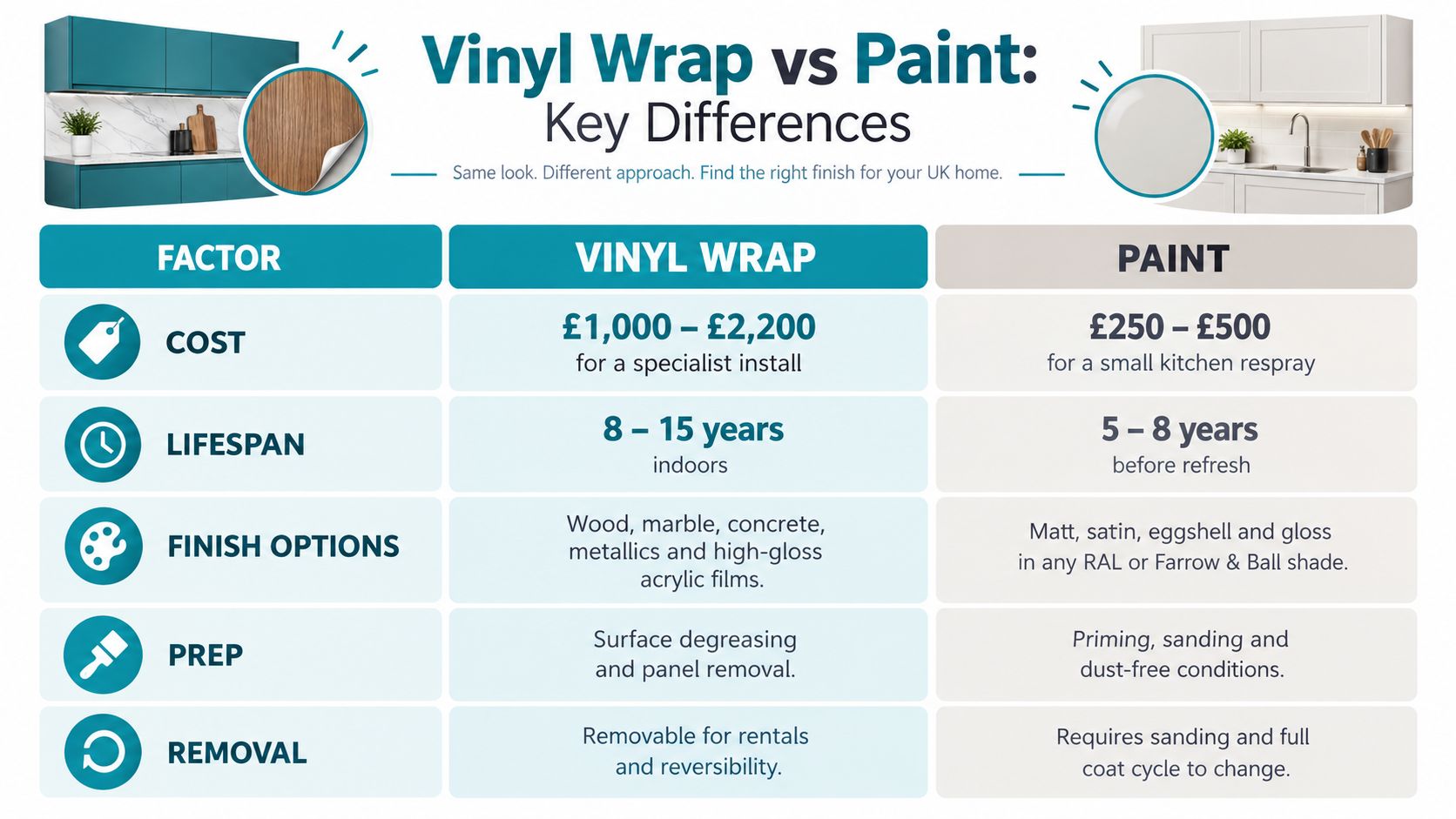
| Factor | Vinyl Wrap | Paint |
|---|---|---|
| Cost | UK kitchen wrapping is typically quoted at £2,000 to £4,500, with a single wrapped door around £50 to £250. UK kitchen wrapping prices | Often starts lower, but preparation, priming, sanding and drying add labour. |
| Lifespan | High-quality furniture vinyl can provide a 5 to 10 year service life when properly installed. | Hand-painted finishes are commonly cited at 2 to 5 years, while sprayed finishes are often placed at 4 to 7 years on cabinetry. |
| Finish options | Wood grain, marble, concrete, metallic, matt and high-gloss effects. | Matt, satin, eggshell and gloss, with a much broader choice of custom-mixed colours. |
| Preparation | Degreasing, removing silicone and stabilising the substrate. Doors and panels may need to come off. | Degreasing, sanding, filling, priming, masking and controlled drying conditions. |
| Maintenance | Usually wipe-clean, with results depending on film grade, edge protection and installation quality. | Easy to clean while sound, but chips and touch-ups can remain visible. |
| Removal | Can be removed, making it useful for rentals and reversible updates. | Removing it means sanding, stripping or covering the existing coating. |
| Heat and moisture | Some UK architectural products state wipe-clean performance and heat resistance up to 70°C. UK vinyl product information | Results depend heavily on the paint system, substrate and exposure. |
| Environmental considerations | Removability can reduce repeated surface preparation, but film disposal and material composition still matter. | Modern formulations can reduce emissions, but repainting uses fresh coatings and preparation materials. |
A single door or drawer front is a manageable wrap job. A full kitchen adds many edges, handles, hinges and awkward junctions, so installation quality matters more as the project grows. UK guides show the difference between £50 to £250 for one wrapped door and £2,000 to £4,500 for a full kitchen. That makes wrap suitable for a targeted update, while a complete refurbishment needs a closer look at labour and access.
Paint wins on colour flexibility. Choose it for a precise shade in a period room, nursery or adjoining wall, because matching and refreshing the colour is straightforward. Wrap wins for a material effect such as marble, timber or brushed metal without replacing the underlying panel.
The service-life figures require realistic expectations. Professional wrap can offer a 5 to 10 year service life, but preparation, film quality, steam, moisture and exposed edges decide whether it reaches that range. A kitchen beside a boiling kettle and busy family worktop is a tougher test than a lightly used sideboard in a spare room. For rental properties, removal may outweigh a modest difference in price. For damaged plaster, detailed period joinery or surfaces likely to need repeated filling, paint is the smarter call.
Upfront Cost and Long-Term Value
A low paint quote can become an expensive finished job. The decorator may need to move furniture, protect worktops, remove doors, degrease surfaces, sand imperfections, prime exposed areas and apply several coats. The coating is only part of the bill. Preparation and labour often decide the actual cost.
For a full wrap, UK vehicle cost guides place vinyl at roughly £1,200 to £5,000, compared with approximately £2,700 to £6,000 or more for professional repainting. Vinyl commonly undercuts paint by around 30 to 50% in quoted UK jobs, particularly for partial changes. The UK cost comparison shows the wider value argument, but kitchen pricing must be judged separately. Cabinet count, panel shape, access and edge detail change the total.
Furniture comparison guidance places professional wrapping at £300 to £700, against £400 to £900 or more for professional painting. DIY wrapping is listed at £80 to £200, while DIY painting is £50 to £150. The furniture wrap versus paint comparison gives wrap a 5 to 10 year service life, compared with 2 to 5 years for hand-painted finishes and 4 to 7 years for sprayed cabinetry.
| Option | Upfront Cost UK Kitchen | Typical Lifespan | Approx. Cost Per Year |
|---|---|---|---|
| Professional vinyl wrap | Professional pricing varies by kitchen size and specification. Full kitchen wrapping is commonly placed at £2,000 to £4,500. | 5 to 10 years for high-quality furniture vinyl. | Judge the written lifespan and warranty alongside the quote, not the headline price alone. |
| Professional paint | Often lower for a straightforward repaint, but preparation and the coating system affect the final figure. | 2 to 5 years for hand-painted cabinetry, 4 to 7 years for sprayed finishes. | A shorter cycle can mean repeated labour, masking and disruption. |
The wrap premium can pay back in time saved. There is no drying gap between coats, less sanding dust across the kitchen and no permanent colour commitment, which matters in a rental. A damaged door or drawer front can also be replaced individually instead of restarting the whole coating process.
Steam, wet hands and busy family worktops expose weak edges quickly, so a cheap installation is false economy. Wrap is the stronger choice when existing panels are sound, the change needs to happen quickly and rental reversibility matters. Paint is smarter for a small room, single wall, damaged plaster or detailed joinery that needs filling and repeated touch-ups.
Prep and Application Compared
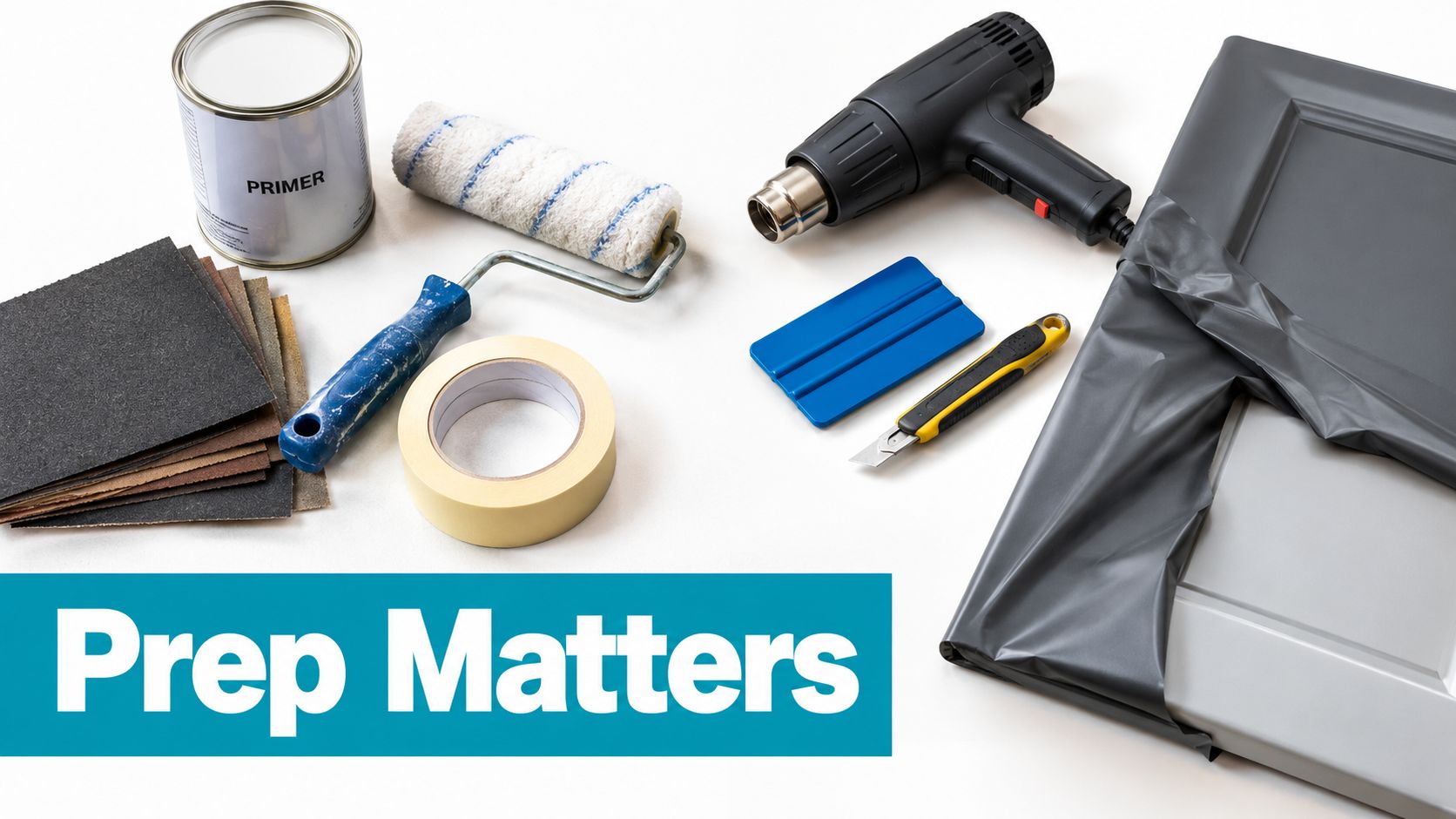
Both methods fail when preparation is treated as a nuisance. Paint needs a clean, stable surface, while vinyl needs an even smoother and more consistently degreased one. If the substrate is peeling, swollen or contaminated, neither finish will rescue it for long.
For paint, the sequence normally includes cleaning, sanding loose areas, filling dents, priming bare patches, masking adjacent surfaces and applying the chosen coating. Drying and curing windows interrupt the work, so a kitchen that looks small can consume far more time than expected. Anyone wanting a deeper technical explanation of preparation should read this guide to durable paintwork preparation, particularly the sections on cleaning, abrasion and adhesion.
Vinyl removes the drying stage but adds precision. The installer degreases the panel, removes old silicone where necessary, takes off handles and doors, checks the edges, then applies the film with controlled pressure and heat. A heat gun helps the material conform around corners, but too much heat can distort the film or weaken the finish. A sharp trimming blade is essential, and one slip can mark the panel underneath.
| Step | Paint | Vinyl Wrap |
|---|---|---|
| Clean | Remove grease, dust and residue. | Degrease thoroughly because adhesive exposes contamination quickly. |
| Repair | Fill dents, sand flaking areas and prime repairs. | Stabilise loose paint, repair chips and smooth any texture that could show through. |
| Remove fittings | Mask or remove handles, hinges and trim. | Remove handles and panels wherever possible for cleaner edges. |
| Apply | Roll or spray multiple coats with drying time between them. | Position film, remove backing gradually, squeegee out air and heat-form corners. |
| Correct mistakes | Sand back runs, nibs or poor coverage and recoat. | Lift and reposition early, otherwise replace the panel section. |
| Finish | Allow the coating to cure before heavy use. | Seal vulnerable edges and refit hardware without pinching the film. |
DIYers commonly underestimate corners, end panels and the reverse side of doors. A flat drawer front is forgiving. A detailed cabinet profile is not. The vinyl wrap application guide is useful for understanding the practical sequence before you buy material, but don't mistake a simple panel demonstration for a whole-kitchen installation.
Durability, Cleaning, and Repairs
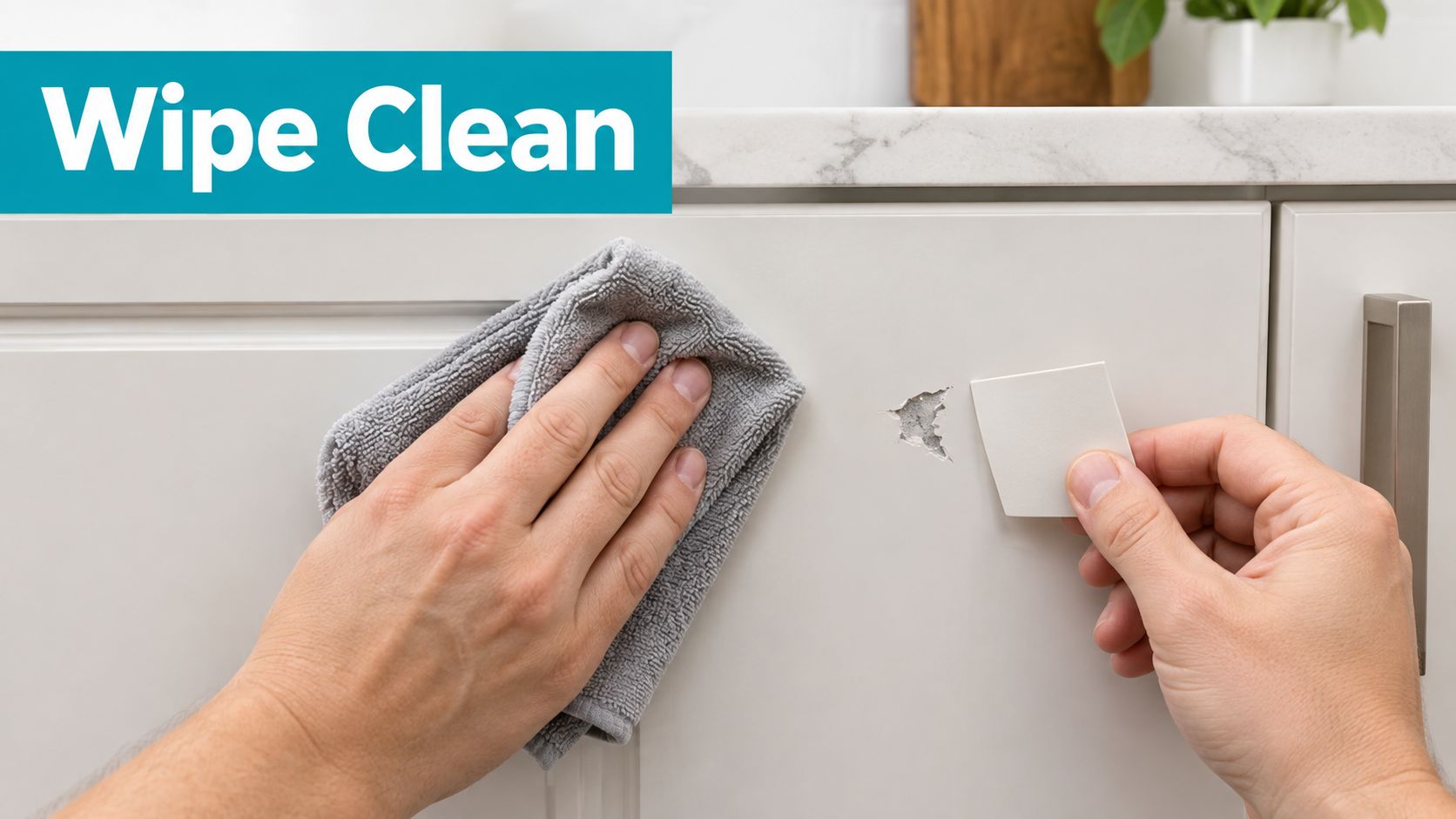
Family kitchens expose weak finishes quickly. Painted surfaces clean well once fully cured, but repeated scrubbing can dull the sheen and make touch-up areas visible. Vinyl usually wipes clean more easily after splashes, fingerprints and food marks. Use a mild cleaner and avoid abrasive pads, especially near film edges.
Steam needs proper attention. Kettles, dishwashers, ovens and boiling pans repeatedly push moisture towards nearby doors and end panels. Some furniture vinyl is described as wipe-clean and heat resistant up to 70°C, while selected systems are promoted as resistant to moisture, stains, abrasion and UV exposure. The product information for furniture vinyl shows why film suits busy kitchens, but the specification for the exact product still decides whether it is appropriate beside a hob, sink or dishwasher.
Wrap normally fails at the edge before the centre. Worktop junctions, handles, sink units and corners take constant contact. Once a corner or seam lifts, moisture and dirt can get underneath. Paint fails differently. It chips, scuffs or loses adhesion, and a neat repair often requires feathering, sanding and repainting a wider area so the patch does not stand out.
| Condition | Paint Performance | Vinyl Wrap Performance |
|---|---|---|
| Food splashes | Wipes clean if the coating is sound, but scrubbing can mark delicate finishes. | Usually wipes clean with a damp cloth and mild soap. |
| Steam and condensation | Poor preparation or unsuitable paint can blister, soften or peel. | Offers better moisture resistance on suitable products, but exposed edges remain vulnerable. |
| Door handles | Can become shiny, chipped or dirty through repeated contact. | Film can wear or lift around the grip area if trimmed poorly. |
| Deep scratch | Requires filling, sanding, colour matching and recoating. | A damaged panel or section can often be replaced with matching material. |
| Local touch-up | Colour and sheen may not match the aged surrounding finish. | A replacement piece can blend more consistently when the same film remains available. |
| Damaged substrate | Paint can cover minor repairs after proper preparation. | Film shows dents and texture, so repairs must happen first. |
Rental reversibility also favours wrap on sound, smooth doors. It can update the room without permanently coating the original finish, provided removal is suitable for that substrate. That advantage disappears when poor adhesion causes early lifting or when steam repeatedly reaches unsealed edges.
For a family kitchen, choose wrap for smooth, stable doors where quick cleaning and reversibility matter. Specify a film suited to the room's heat and moisture, and insist on clean, sealed edges. Choose paint for panels that need filling, sanding or repeated colour matching. Film will not hide movement, dents or structural defects, and repainting a whole run may be less work than replacing several damaged wrapped panels.
Environmental Impact and Future Trends
Vinyl is not automatically the greener choice. It uses manufactured material, and disposal becomes an issue when the film reaches the end of its useful life. Paint also carries an environmental cost through fresh tins, masking materials, cleaning products and repeated preparation, especially when a finish needs refreshing rather than repairing.
Wrap has a stronger case when it extends the life of a sound panel and keeps the original surface reversible. The next refurbishment may then avoid some sanding, filler and replacement material. A poor-quality film that lifts quickly removes that benefit because the panel needs wrapping again.
For furniture specifically, vinyl furniture wraps can extend furniture life through upcycling, keeping a usable carcass in service instead of sending it towards disposal. That only counts as a gain when the substrate is sound and the wrap lasts.
UK product development is moving beyond the shortcut that vinyl means plastic while paint means fumes. This UK-focused overview of environmental developments in vinyl wrapping discusses recyclable liners, lower-emission manufacturing, phthalate-free formulations and PET-based films as emerging options. These features may improve a product's profile, but they do not make every installation low impact.
The greener finish is often the one you install properly, keep in service and do not replace prematurely.
Paint can be the better environmental choice for a single wall or repairable plaster, particularly when a durable water-based system meets the brief and leftover paint can be reused. Wrap suits a sound kitchen or furniture piece that would otherwise be discarded, especially when the original surface needs to remain reversible.
Ask the supplier about film composition, liner disposal, take-back arrangements and expected service life. Treat “eco” as a starting point, not proof. Material choice, installation quality, maintenance and replacement frequency decide the impact.
Which Option Fits Your Project Best
Choose vinyl when the surface is smooth, the change needs to be quick and reversing the decision matters. That makes it a strong candidate for rental kitchen doors, laminate wardrobes, bathroom vanities and furniture carcasses that are structurally sound but visually dated.
A tenant shouldn't permanently repaint a landlord's kitchen without written permission. A removable film can offer a more controlled update, but the installer still needs to confirm that removal won't pull weak paint or damaged laminate from the substrate. Test a discreet area first, keep the original hardware safe and photograph the surface before installation.
Furniture upcycling also suits wrap well. A flat-pack bookcase, sideboard, desk or drawer front can take on a timber, stone, metallic or solid-colour effect without the sanding and drying associated with a full paint system. For readers weighing paint instead, a practical guide to how to pick furniture paint can help match the coating to the material, use and desired sheen.
Paint remains the better tool for walls and damaged surfaces. Plaster has hairline cracks, repairs and texture that adhesive film can highlight rather than hide. A nursery may need a particular low-emission emulsion and a precisely matched colour. Period rooms with mouldings, skirtings and uneven profiles also favour a brush and roller because paint follows those details more naturally.
| Project | Best Option | Why |
|---|---|---|
| Rental kitchen doors | Vinyl wrap | Reversible appearance change, provided the substrate is sound and the tenancy allows it. |
| Smooth laminate wardrobe | Vinyl wrap | Covers a dated finish with decorative effects and avoids permanent repainting. |
| Family kitchen with sound flat doors | Vinyl wrap | Handles wipe-clean maintenance and offers a fast visual change, with careful edge detailing. |
| Cracked plaster wall | Paint | Repairs and fills the substrate before creating a new finish. |
| Nursery or children's bedroom | Paint for whole walls, vinyl for accents | Paint gives broad colour control, while removable decals or panels suit limited decorative areas. |
| Period room with mouldings | Paint | Brushes and rollers handle profiles, repairs and custom colour matching better. |
| Upcycled sideboard or desk | Either, vinyl for effects | Paint suits repairable timber, while wrap suits smooth panels and marble, wood or metallic finishes. |
| Exterior masonry | Paint | Wrap isn't the practical choice for exposed, porous masonry. |
For a single statement wall, cupboard interior or accent panel, a removable vinyl panel can be more sensible than committing to a full redecoration. Quote My Wall offers self-adhesive vinyl products for walls and furniture, so it's one option for a targeted decorative update rather than a full professional kitchen-wrapping installation. If you're covering cabinet fronts yourself, this guide to how to cover kitchen cabinets gives the job a more realistic starting point.
My final verdict is simple. Pick vinyl wrap for smooth cabinetry, speed, decorative effects and reversibility. Pick paint for plaster, repairs, whole rooms, period detail and custom colour matching. In a high-use kitchen, neither finish excuses poor preparation, but wrap is usually the smarter choice when the existing doors are sound and the household wants less disruption.
If you're updating a smooth cabinet, wardrobe, wall or furniture panel, visit Quote My Wall to browse removable vinyl options for targeted changes. Choose the surface first, measure carefully, and use vinyl where reversibility and a clean decorative transformation matter most.