

Stickers of Dogs Ideas Styles and Where to Use Them
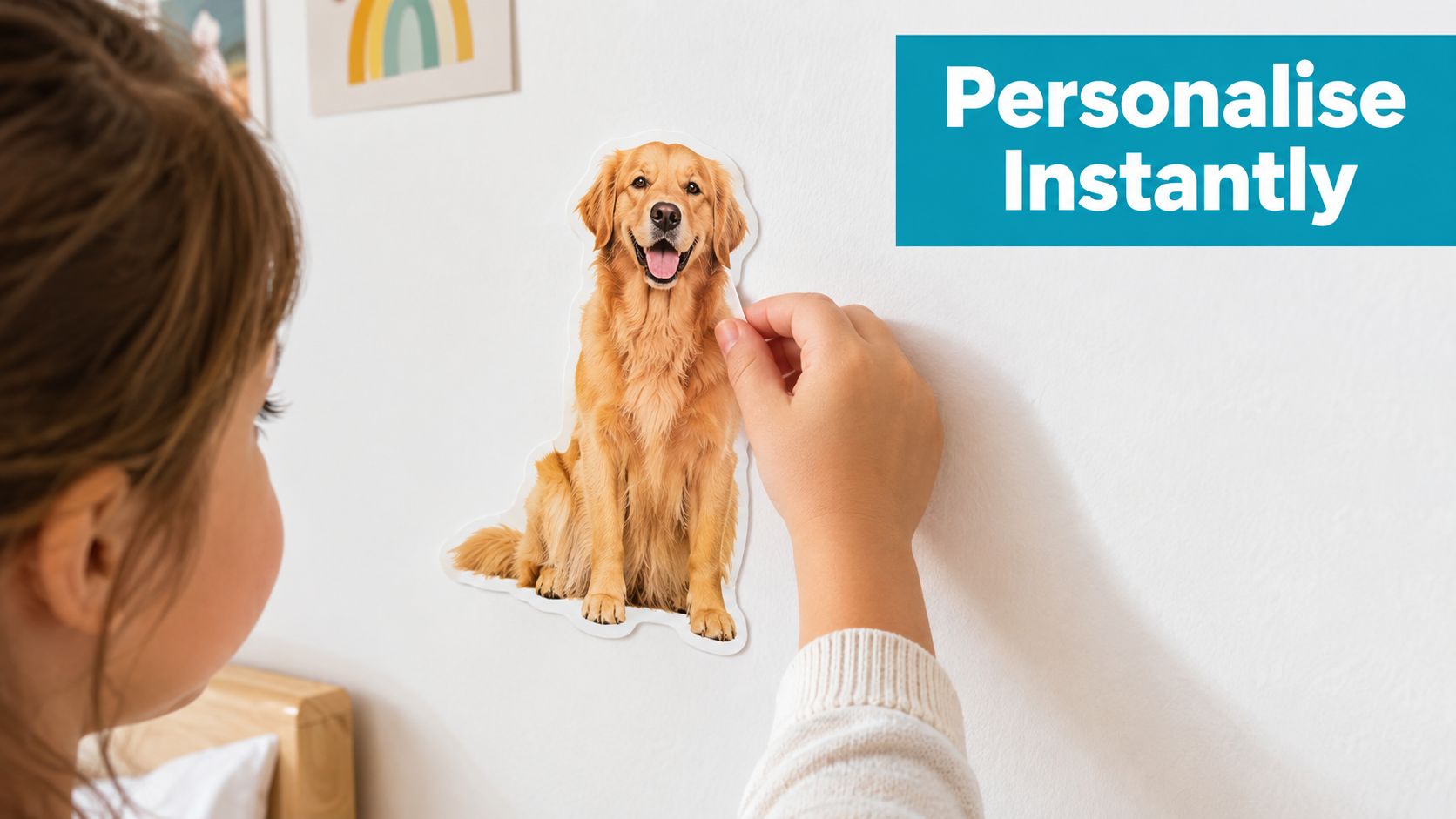
You're standing in a child's bedroom with a blank wall, a favourite dog breed in mind and no wish to commit to wallpaper. Perhaps you're renting, refreshing a nursery before a new arrival, or trying to make a plain laptop, wardrobe door or car window feel more personal. Stickers of dogs offer a quick way to add character without bringing paint tins, drills or a full room redesign into the house.
Introduction to Stickers of Dogs and Why They Work So Well
Dogs already have a familiar place in British visual culture. The Kennel Club was founded in 1873, and a 2024 Kennel Club exhibition described antique advertising and related objects dating from the mid-19th century as evidence of the way pet culture influenced marketing in Britain, as recorded in this history of dog imagery and stamps. Dog stickers feel natural in that setting because they build on a long tradition of using dogs to express affection, identity and everyday companionship.
They also solve a practical decorating problem. A painted mural can take preparation, drying time and confidence with a brush. Wallpaper creates a stronger commitment. A vinyl dog decal, by comparison, can turn a small area above a cot, a reading corner or a cupboard door into a focal point while leaving the rest of the room calm.
The choice isn't limited to large wall graphics. You'll find illustrated dogs, breed portraits, paw-print borders, name labels, window decals, laptop stickers and signs for dog-friendly businesses. UK retail activity reflects that variety. Etsy UK search pages show more than 1,000 relevant results for pet sticker sheets, while marketplace examples include dog products around £3.29 on eBay UK and £4.99 from a UK sticker retailer, demonstrating a broad, fragmented category rather than one dominant product type. Those examples can be viewed through UK dog sticker marketplace listings.
A small design decision with a large visual effect
A single sitting spaniel can soften a nursery. A bold terrier silhouette can sharpen a modern hallway. A repeated paw pattern can make storage boxes look organised rather than purely practical.
The safest way to choose is to follow a simple order:
- Start with the mood: Decide whether the room needs softness, energy, humour or a clean graphic accent.
- Choose the material: Removable vinyl suits temporary decor, while permanent vinyl works better for long-term contact surfaces.
- Check the surface: Painted plaster, glass, wood, plastic and fabric each need a different approach.
- Set the scale: Match the sticker to the viewing distance and the furniture around it.
- Add personal details: Consider a breed, name, colour palette or short phrase only after the basic placement works.
What Stickers of Dogs Are and How They Transform a Space
Think of a dog sticker as small-scale wallpaper with a single idea. Instead of covering an entire wall, it places one character, outline or pattern exactly where you want visual interest. That makes it useful for homes where a full decorative treatment would feel too busy, too expensive or too difficult to reverse.
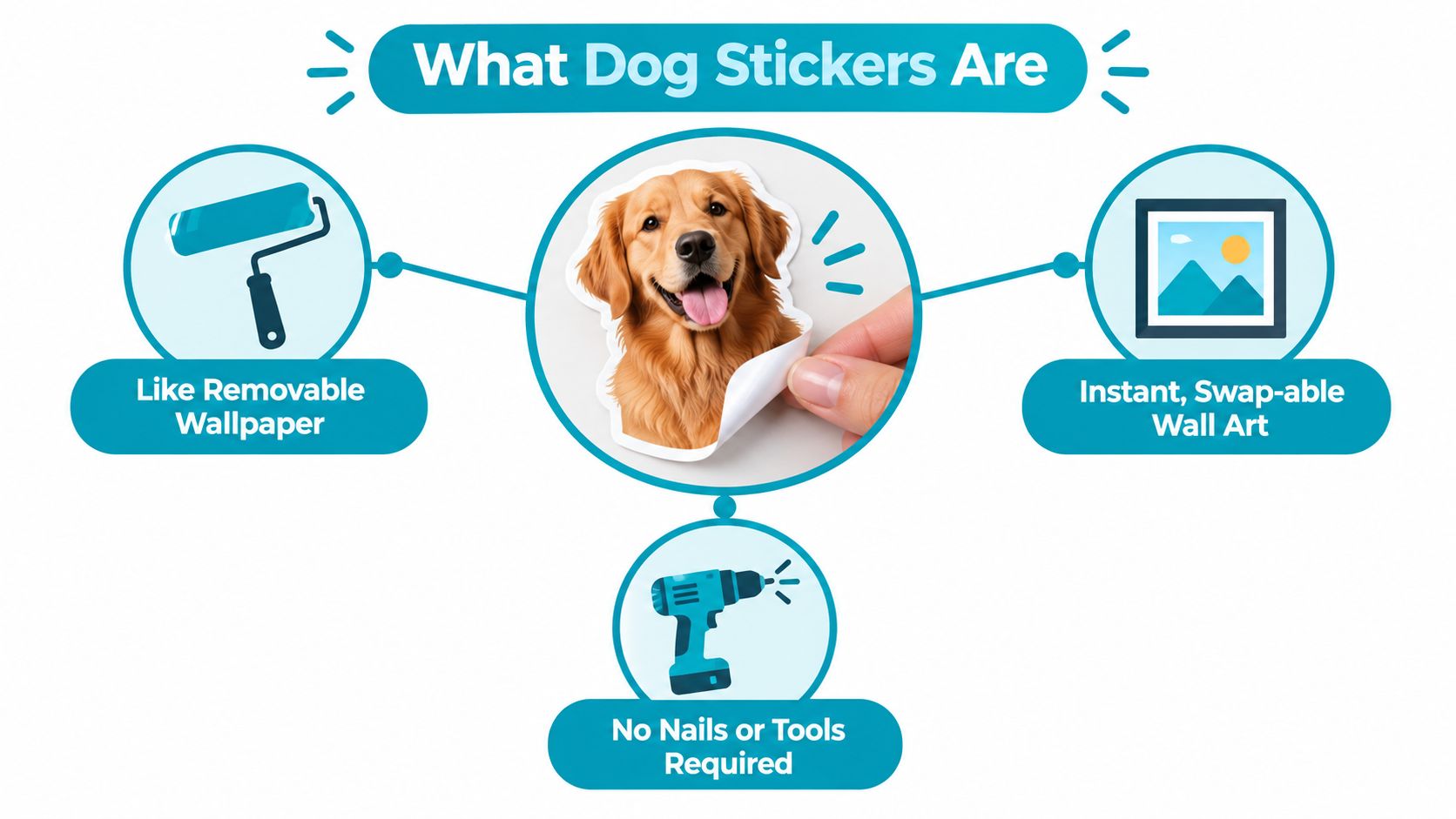
Most decorative versions use printed or coloured vinyl with an adhesive backing. The vinyl supplies the visible finish, while the adhesive determines whether the design can be repositioned or is intended to remain in place. A low-tack product behaves more like a note you can move carefully. A permanent adhesive behaves more like a label that has made a long-term decision.
That difference matters more than the picture itself. A charming dachshund design won't be a good nursery choice if it's made for a permanent surface and you expect to redecorate soon. Equally, a delicate removable decal may not be suitable for a high-contact drinks bottle or an exterior sign.
Three useful categories
Wall decals are usually larger and designed to read as decoration from across a room. They can show a complete dog, a group of breeds, a kennel scene or a coordinating pattern.
Small-format stickers suit laptops, notebooks, storage tubs and school equipment. At close range, line detail and colour accuracy become more important than overall scale.
Functional labels combine dog imagery with information, such as a child's name, a room sign or a business message. They need clear lettering, dependable adhesion and a finish suited to handling.
Shape also changes the impression. A die-cut dog follows the outline of the illustration and feels like an object placed on the surface. A rectangular sticker keeps its background and reads more like a miniature print. Matte vinyl tends to blend softly into a wall, while gloss catches more light and can make colours appear more vivid.
Practical rule: Treat the sticker as part of the room's composition, not as an item to fill an empty patch. Its position, negative space and finish matter as much as the dog illustration.
A useful mental model is a flexible decor system. You can use one breed portrait as a focal point, repeat paw prints to create rhythm, or combine a name with a small dog icon for a personalised finish. The same subject can therefore work in a nursery, home office, hallway, vehicle or small business, provided the material and scale match the job.
Popular Design Styles for Stickers of Dogs
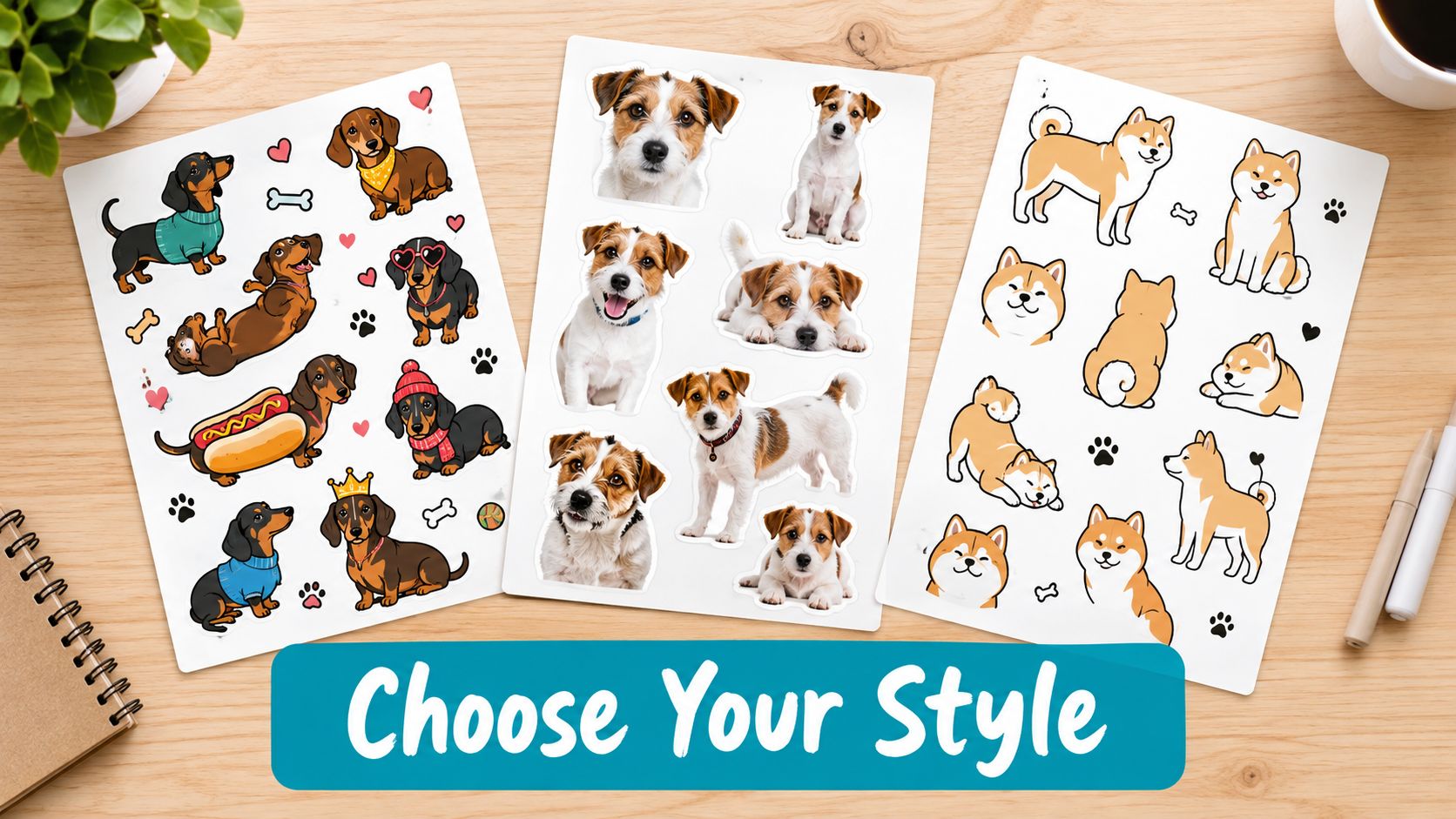
Style comes before size because the illustration sets the emotional tone. A watercolour puppy and a sharply cut silhouette may show the same animal, yet they'll create completely different rooms.
Illustrated and cartoon dogs
Cartoon dogs suit playrooms, children's bedrooms and gifts. Exaggerated ears, expressive eyes and friendly poses make the design easy for young children to recognise. Choose a restrained colour palette if the room already contains colourful toys, bedding or artwork.
For a breed-specific gift, a peeking Boston Terrier decal can add personality to a desk, door or vehicle without requiring a large graphic. Custom Sticker Shop's Boston Terrier decal is a useful example of how a recognisable pose can carry the whole design.
Realistic breed portraits
Realistic portraits work best when the dog itself is the subject. They're suitable for a family room, home office or memorial-style display, particularly when you want to celebrate a particular breed or companion. Keep the surrounding wall relatively quiet so the face remains the visual centre.
Minimalist line art
Line drawings offer a calmer option for modern interiors. A single continuous outline of a greyhound, whippet or terrier can sit above a console table or beside a reading chair without competing with furniture. Black, charcoal or muted green lines pair easily with neutral walls and natural wood.
Watercolour nursery designs
Soft washes and gentle edges bring warmth to nurseries. Spaniels, retrievers and small puppies can work well with muted bedding and pale painted walls. Avoid placing highly detailed artwork directly beside several other busy patterns, or the room may lose its restful quality.
Typography and paw-print patterns
A dog name, short phrase or simple “walkies” style message can make a decal feel personal. Typography should remain legible at the distance from which people will normally read it. Paw prints work differently. Repetition creates movement, so use them along a low wall, around a noticeboard or across storage rather than scattering them without a clear boundary.
The animal sticker ideas for walls provide another way to compare animal-led interiors and see how a dog design can sit within a wider decorative scheme.
| Style | Best visual effect | Suitable setting |
|---|---|---|
| Cartoon | Cheerful and playful | Nursery, playroom, gifts |
| Realistic portrait | Personal and recognisable | Office, family room, tribute |
| Line art | Quiet and contemporary | Hallway, bedroom, living room |
| Watercolour | Soft and gentle | Nursery, reading corner |
| Paw-print pattern | Rhythmic and lively | Storage, borders, business signage |
Materials Durability and Choosing Removable Versus Permanent Vinyl
A nursery wall may need a new look next year, while a laptop or furniture label may need to stay put through daily handling. Choose vinyl by considering how long the design should stay, how often the surface is touched and how much weather or moisture it faces. Adhesive works like the grip between a shoe and the floor. Removable vinyl gives you room to change direction. Permanent vinyl holds more firmly when movement, cleaning or outdoor exposure could lift a weaker product.
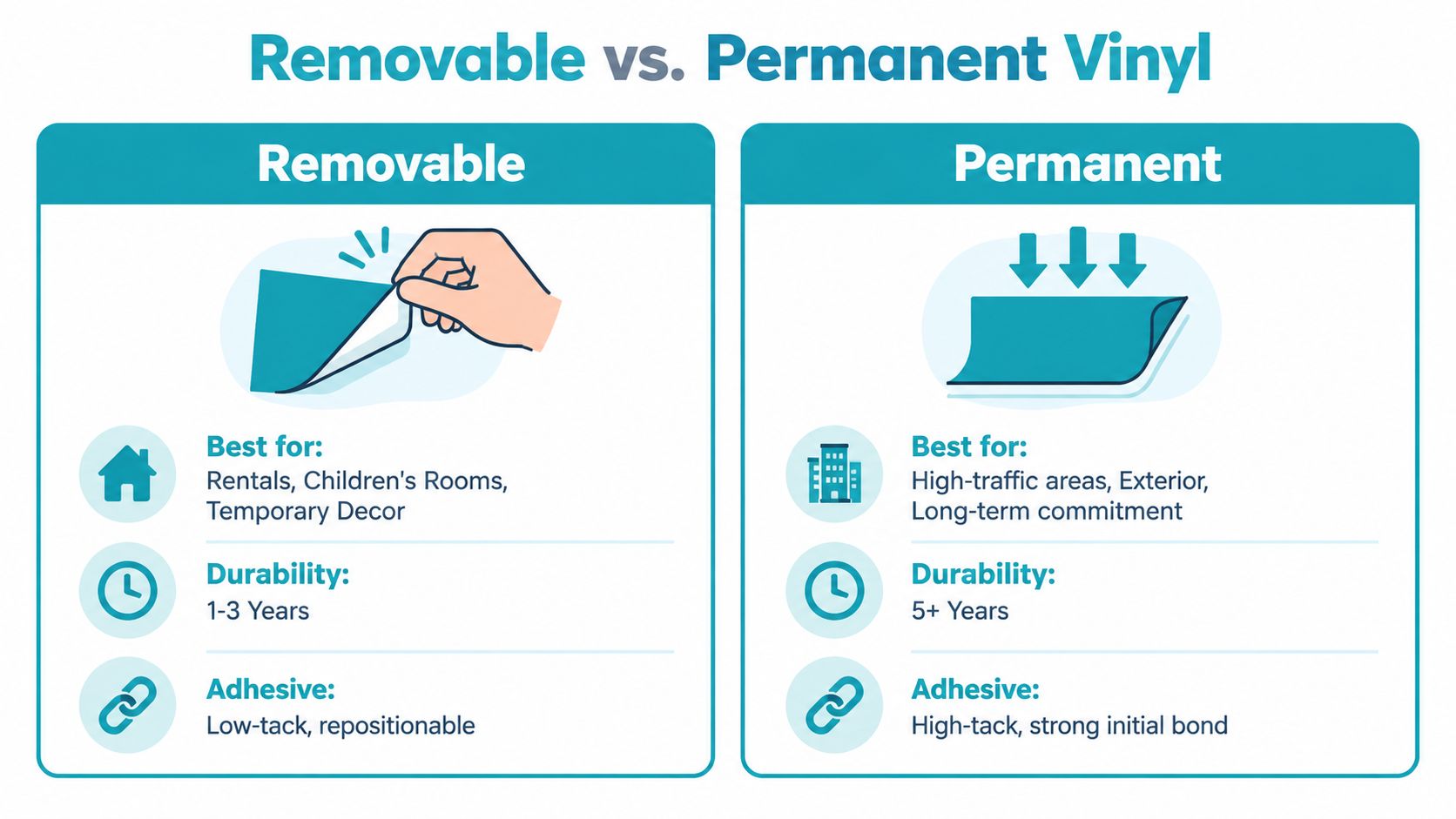
For rented walls, nursery updates and temporary event decoration, a removable dog decal is usually the safer choice. Test it in an inconspicuous area first. Paint quality, curing time and surface condition all affect removal, so even a product designed to lift cleanly needs a suitable surface. The guide to removable wall stickers offers further context for temporary wall decoration.
Permanent vinyl suits furniture projects, drinkware, high-contact labels and signs that should not shift at the edges. It can behave more like a fitted label than a temporary decoration, but the stronger bond may make later removal harder, especially on weak paint or delicate finishes.
Technical product data shows what “durable” can mean. One UK printed vinyl label specification lists a 123 µm total caliper, 116 g/m² grammage, a -30°C to 80°C service temperature range and a permanent acrylic adhesive. These properties appear in the supplier's technical information for vinyl stickers and labels. Thicker material and permanent acrylic adhesive are suited to places where edge lift and moisture movement are concerns.
Match the construction to the setting
| Feature | Removable Vinyl | Permanent Vinyl |
|---|---|---|
| Best for | Rental walls, nurseries and temporary decor | Furniture, drinkware and long-term signage |
| Adhesive behaviour | Lower tack, designed for careful removal | High tack, designed for a stronger bond |
| Main advantage | Easier to change when tastes or rooms change | Better suited to frequent contact and movement |
| Main caution | May lift on textured or poorly prepared surfaces | Can damage weak paint or make removal more difficult |
Outdoor exposure requires a separate choice. UK print guidance reports that standard vinyl with UV-cured inks typically lasts 3 to 5 years outdoors, while a UV-protective overlaminate can extend that to 5 to 7 years. Polyester-based stickers can reach 7 to 10 years in harsher conditions, according to UK guidance on outdoor stickers and decals. The same guidance gives quality vinyl a rating from -20°C to +80°C, covering typical frost and summer exposure.
For windows and cars: Ask for UV-cured printing and a protective overlaminate when the sticker will face sunlight and rain. A lovely print cannot compensate for construction that does not suit the location.
For more pet-themed material and finish ideas, you can browse unique cat stickers and compare how similar products work across another animal category.
Where to Use Stickers of Dogs and How to Get Sizing Right
Placement changes the meaning of a design. A small dog on a laptop feels personal and portable. The same illustration enlarged across a wardrobe door becomes a room feature. Choose the surface first, then select the scale and adhesive.
Walls and nursery furniture
For a painted wall, choose a smooth, clean area away from loose paint, condensation and heavy texture. A nursery wall benefits from breathing space around the cot, shelves and artwork. Don't place the design where a child can repeatedly pick at an exposed edge, particularly beside a bed or changing area.
Wardrobe doors and furniture can take a stronger visual statement. A standing dog near the lower panel may look balanced, while a small face peeking around the edge can create a playful surprise. Check whether the furniture has a waxed, oily, dusty or freshly painted finish, since these can weaken adhesion.
Laptops and drinkware
Laptop lids are close-view surfaces, so small details and a clean outline matter. Keep the hinge, vents, logo and opening edge clear. For drinkware, use a product specifically intended for that surface and follow the supplier's care instructions. Curved shapes create tension at the edges, and repeated washing can test the bond.
Glass, tiles and exterior surfaces
Glass offers a smooth base for window decals, but the design must suit the viewing direction. A sticker seen from outside may need a different finish or reversed artwork. Tiles should be clean and free from grout dust, while textured grout lines can interrupt the image.
Before applying any design:
- Clean the surface: Remove grease, dust and residue with a suitable cleaner, then let it dry fully.
- Plan the position: Use low-tack tape to mark the top corners and check the design from the normal viewing position.
- Leave margin: Keep edges away from corners, handles and seams where fingers or moisture can start lifting.
- Apply slowly: Smooth from one side to the other, pressing out air rather than trapping it beneath the vinyl.
A renter should favour a modest design on a well-prepared painted wall and keep the original backing paper. That makes later removal and storage more manageable.
Customisation and Ordering Your Perfect Stickers of Dogs
Personalisation works best when it supports the room rather than adding every possible detail. Start with the dog. Decide whether you want a named breed, a general puppy illustration, a portrait from a photograph or a simple paw icon. Then choose the function, such as bedroom decoration, a school label, a gift, packaging or business signage.
Build a clear design brief
Give the supplier enough information to make useful decisions:
- Subject: Name the breed or provide a clear photograph with the dog facing the desired direction.
- Text: Supply the exact spelling, capitalisation and wording. Short names usually remain easier to read than long messages.
- Colour: Refer to wall paint, furniture, bedding or existing branding rather than choosing colours in isolation.
- Shape: Say whether you prefer a die-cut outline, a solid background or a sheet of separate stickers.
- Surface: Identify plaster, painted wood, glass, plastic, metal or another material.
- Finish: Ask whether matte, gloss, UV protection or an overlaminate suits the intended location.
A supplier may request a high-resolution image or vector artwork for a custom design. If you're using a photograph, ask how much detail can be retained at the final size. Fine whiskers and pale shading may disappear when a portrait becomes a small laptop sticker, while a bold outline can remain clear.
Check the proof before production
Proofing is the moment to inspect the dog's expression, text alignment, orientation and colour balance. Check that the design won't place a name across a door handle or push important artwork into a furniture edge. For a wall, request the finished dimensions so you can mark the area with masking tape before ordering.
Small batches make sense for party bags, classroom belongings or branded packaging, but the same principle applies to a single gift. A well-written brief reduces revisions and helps the maker recommend an adhesive rather than forcing you to guess.
For parents organising several labelled items, InchBug's guide to bulk labels offers a useful comparison point for thinking about names, quantities and repeat ordering. Keep a copy of the final artwork and colour choices, especially if you may need matching labels later.
Caring for Removing and Reusing Stickers of Dogs
Good aftercare starts with gentle cleaning. Dust the surface with a soft, dry cloth, then use a lightly damp cloth when needed. Avoid soaking the edges, abrasive pads and harsh solvents, since these can dull the print or weaken the bond around the design.
High-touch areas need a little more attention. A laptop sticker may catch against a sleeve, while a decal on a cupboard can be brushed by hands and clothing. Press down an edge that begins to lift before dirt gets underneath, but replace the sticker if the surface has become cracked, badly faded or difficult to clean.
Remove the decal without rushing
Begin at a corner and lift the vinyl slowly rather than pulling directly away from the wall. Warmth can soften the adhesive, so use gentle household warmth and keep the angle low as you peel. Stop if paint begins to lift, and test a hidden section before continuing across a larger area.
The guide to removing wall stickers offers further practical guidance for taking decals down carefully. Removable products are more forgiving, but no adhesive can guarantee damage-free removal from weak, flaking or poorly prepared paint.
Store unused designs properly
Keep spare decals flat on their original backing paper, away from dust, direct sunlight and damp rooms. Don't fold them, place heavy objects on top or allow the adhesive side to collect fibres. Before reusing a stored sticker, inspect the edges and clean the new surface thoroughly.
Outdoor dog stickers should be checked as part of normal vehicle or window care. Fading, cracking and edge lift indicate that the design has reached the end of its useful life, even if part of the image still looks attractive.
Choose the dog style that suits your room, then confirm the surface, adhesive and finished size before ordering. Quote My Wall offers wall stickers, personalised vinyl designs and furniture or window vinyl options, so you can visit Quote My Wall to find a suitable dog-themed format or request a custom design for your home.