

Quote Stickers for Walls Ideas, Styles and Fitting Guide
You're standing in front of a blank wall with a roll of paint still in the cupboard, a tenancy agreement in the drawer, or a busy weekend already planned. You want the room to feel more personal, but drilling, wallpapering, or committing to a bold colour doesn't feel quite right. Quote stickers for walls offer a lighter way to add words, character and structure without treating every decorating decision as permanent.
A well-chosen decal can sit above a bed, anchor a sofa, brighten a hallway or give a home office a clearer sense of purpose. The important part is choosing the right surface, scale, finish and placement before you peel anything.
This guide will help you understand how wall quote stickers differ from wallpaper and framed art, how to connect them with current UK wall-art styles, and how renters can reduce paint and deposit risks. You'll also find practical advice for selecting materials, measuring a design, applying it smoothly and removing it carefully.
Introduction to Quote Stickers for Walls at Home
A plain wall can make a furnished room feel unfinished. You may have a sofa, shelves and cushions in place, yet the area above them still looks as though it belongs to someone else. A quote sticker gives that empty space a voice without requiring a full decorating project.
Think of it as the middle ground between a small art print and a feature wall. Unlike a framed print, it becomes part of the wall itself. Unlike wallpaper, it usually covers a specific area rather than an entire room, so you can add personality without matching pattern repeats, pasting long lengths or planning around every socket and corner.
That flexibility suits many UK homes. Homeowners can use a decal to test a phrase or style before making a larger change. Renters can create a focal point while keeping their approach reversible, provided the wall and paint are suitable and the product is removed correctly. Families can update a child's room as interests change, while DIY upcyclers can use typography to finish a refurbished space.
A simple way to decide
Ask yourself three questions before ordering:
- What mood should the words create? A calm phrase may suit a bedroom, while a lively family saying could work better in a kitchen or playroom.
- How permanent should the change feel? A removable vinyl design offers less commitment than wallpaper or painted lettering.
- Will the wall let the sticker sit flat? Smooth, clean and fully cured paint is usually a safer starting point than flaky, damp or heavily textured surfaces.
Quote stickers also fit a long-standing British habit of treating walls as design surfaces. Britain's wallpaper industry was established in the 18th century, and mechanised printing later made decorative wall coverings more accessible during industrialisation, as documented by 6Wresearch's overview of the UK wallpaper market. Modern decals follow the same instinct in a quicker, more targeted form.
The best result doesn't come from choosing the biggest or most dramatic phrase. It comes from matching the wording to the room, the lettering to the viewing distance and the adhesive to the wall you have.
What Quote Stickers for Walls Are and How They Work
A quote sticker turns a saying into wall art without covering the wall with a printed background. It is usually lettering, shapes or illustrations cut from adhesive vinyl, so the painted surface remains visible around the design. From across the room, the result can resemble painted typography.
A useful comparison is a removable tattoo for a wall. The design changes the room's character while leaving the plaster underneath intact, although “removable” does not guarantee a risk-free result on every paint finish. The outcome depends on the vinyl, adhesive, wall preparation, paint condition and removal method.
The layers behind the lettering
Transfer-style decals commonly have three parts:
- Backing paper, which protects the adhesive before use.
- Vinyl lettering, the visible design.
- Transfer tape, which keeps separate letters aligned while you move the phrase onto the wall.
Some smaller designs arrive as one peel-and-stick piece. That format can suit a simple graphic or short word. Transfer lettering is often more practical for a longer quotation because the spacing and alignment arrive organised, much like an art print's layout before it is framed.
The finish affects how the words join a gallery wall or statement wall. Matt vinyl has a painted appearance and usually sits beside framed prints. Gloss reflects more light, giving a contemporary room a sharper accent. Metallic finishes draw attention, but reflections can make uneven walls more noticeable.
Practical rule: Treat a wall decal as a decorative surface treatment, not a structural finish. Its purpose is to adhere attractively indoors and come away as safely as the surface allows.
The UK-recognised BS EN 15102:2019 standard covers decorative wallcoverings in roll form applied with adhesive to internal walls, partitions or ceilings for decorative purposes, according to the standard sample and scope. Quote stickers are generally used as decorative wall treatments rather than structural finishes. Check the product's indoor suitability, adhesion guidance and removal instructions before ordering.
Where they work best
Smooth, clean and dry painted plaster usually gives the most predictable base. Allow fresh paint to cure fully, then test a small hidden area if the manufacturer advises it. Dust, moisture, loose paint and deep texture reduce contact, so letters may lift or transfer unevenly.
Traditional wallpaper suits continuous colour, pattern or texture across a broad area. A quote sticker works more like an art print cut around its design, making it useful beside framed or printed pieces. For wider wall-art ideas, premium wall art at Jessie's Home can help you consider how typography might join a gallery wall instead of sitting alone.
Materials Finishes and How They Compare to Wallpaper
A renter may want a stronger wall feature without committing to paste, pattern or a difficult removal job. Quote stickers sit between painted walls and framed art. They add lettering to a chosen area, while wallpaper changes the visual character of a much larger surface.
The UK wallpaper market gives useful context. Grand View Research reports UK wallpaper revenue of USD 102.7 million in 2022, with a projection of USD 154.4 million by 2030, implying growth of about 50% over that period, in its UK wallpaper market outlook. Wallpaper remains an established decorating choice. A quote sticker joins that tradition on a smaller scale, making it suitable for a gallery wall, a reading corner or one painted statement area.
The material decision
Premium vinyl works well for lettering because it can be cut cleanly and produced in many colours. Matt vinyl usually blends more smoothly with paint and framed prints. Gloss catches the light, while metallic finishes can add a jewellery-like accent to a neutral scheme.
A transfer decal helps with longer phrases because the letters arrive arranged in their intended spacing. A single-piece sticker may suit a short line or compact symbol. Beside a busy gallery wall, matt lettering can keep the quotation readable without competing with photographs, posters and objects.
Colour can connect the words to the rest of the room. These colourful home decor ideas show ways to use accent tones without repainting, which can help renters coordinate a quote with cushions, frames or small objects.
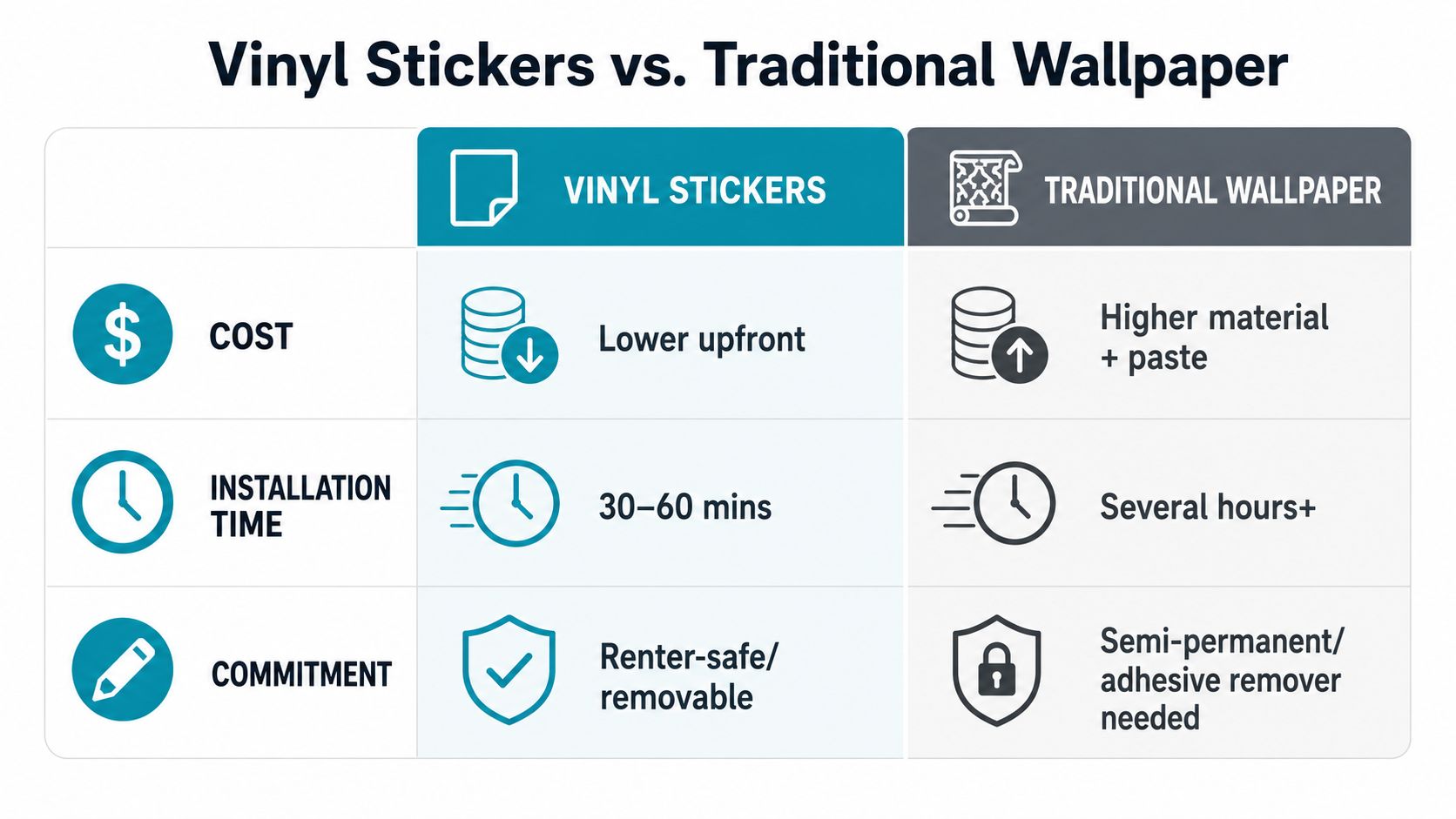
| Feature | Quote Wall Stickers | Traditional Wallpaper |
|---|---|---|
| Coverage | A selected word, phrase or design area | Continuous coverage across a wall or room |
| Installation | Usually a focused DIY application | Requires paste, careful alignment and trimming |
| Commitment | Easier to change when the surface permits safe removal | More involved to replace |
| Pattern | Typography can be positioned exactly where needed | Repeating or mural patterns create a broader visual field |
| Refresh cycle | Suits seasonal, family or style updates | Better for a considered long-term scheme |
| Surface demands | Needs a clean, smooth and suitable base | Also requires preparation, with added attention to joins |
Wallpaper suits a broad, continuous colour, pattern or texture. A quote sticker behaves more like an art print cut around its design. It can become the text element in a gallery wall rather than an isolated decal, or sit inside a painted shape to form a smaller statement wall.
Before choosing, compare the vinyl sticker wallpaper guide with your preferred finish and level of commitment. The guide can help clarify how a decal-led treatment differs from fuller wallpaper coverage.
For renter-safe decisions, allow new paint to cure fully before applying vinyl. Follow the product guidance, clean the surface without leaving residue, and test a small hidden patch first. Check the patch after application and removal, especially on delicate paint, textured walls or surfaces with a previous coating. If the test lifts paint or leaves residue, choose another location or wait longer.
A quote can therefore feel familiar within the UK's established wall-decoration culture, while requiring less coverage and a smaller change. It works as part of the room's artwork, not merely as words stuck onto an empty wall.
Sizing Fonts Placement and Design Choices That Work
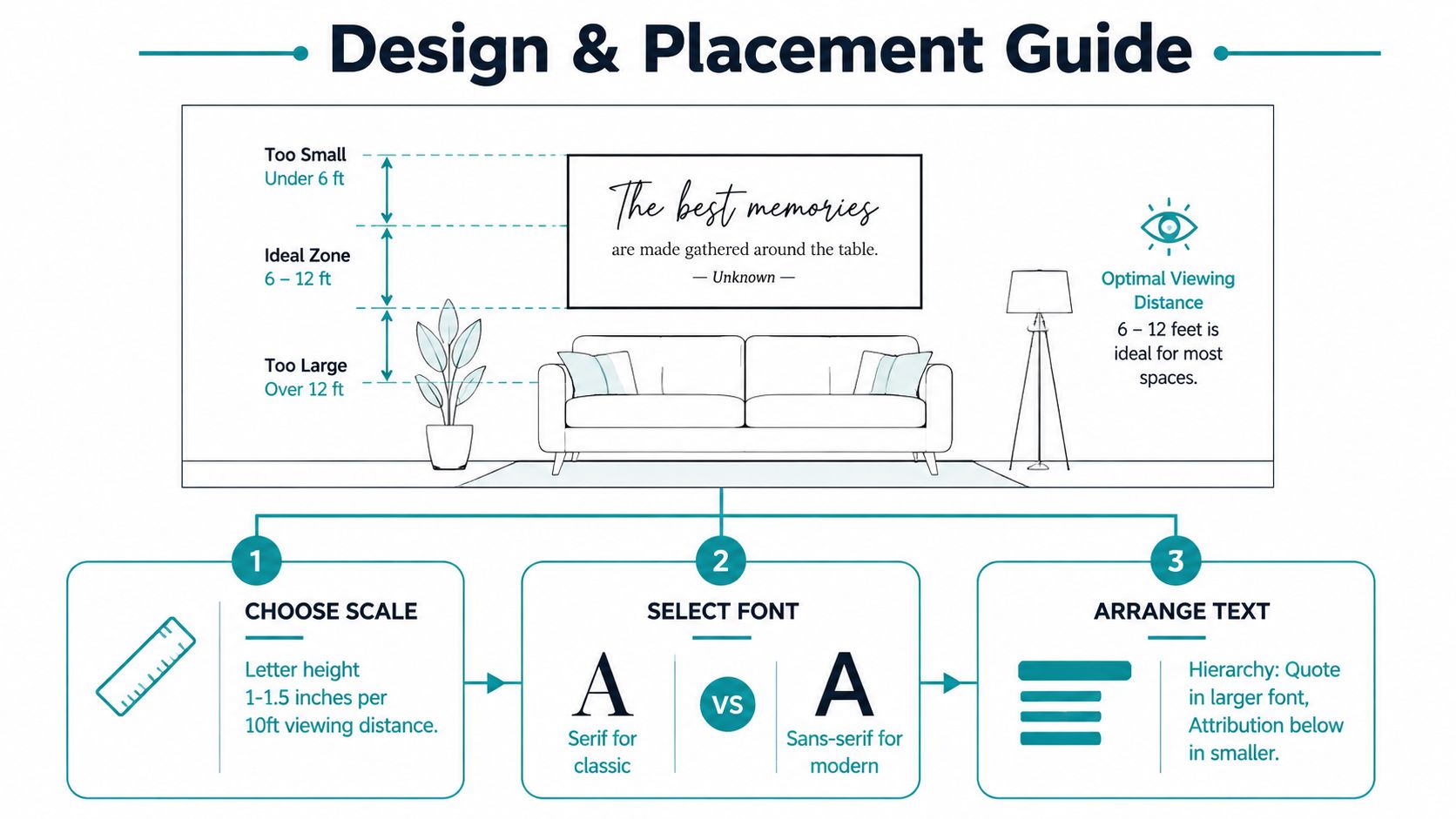
A quote can look elegant on a product page and cramped above your sofa. The difference usually comes down to scale, line length and viewing distance rather than the wording itself.
Start by measuring the furniture the lettering will relate to. Above a sofa, bed or desk, the design should feel connected to that object instead of floating independently. Leave enough breathing room around the quotation so the wall doesn't look crowded, especially if nearby shelves, mirrors or frames already create visual activity.
Build the layout before ordering
Use removable masking tape to mark the approximate width and height. Step back and read the space from the doorway, from the main seat and from the position where the words will be seen most often.
Choose the lettering style according to the room's personality:
- Serif fonts bring a traditional, literary quality and can suit period homes.
- Sans-serif fonts look clean and contemporary, particularly above desks or in minimalist rooms.
- Script fonts feel personal and soft, but they need generous spacing and strong contrast to remain readable.
- Condensed fonts save width, although they can become difficult to read if the lettering is too small.
The current UK wall-art conversation favours more expressive, personalised walls. A 2026 UK report says gallery walls beat statement pieces by 31 to 1, while abstract became the defining style and burgundy rose rose 116% year on year, as reported by Poster Store's UK wall-art trends report. These figures suggest a useful positioning choice: treat quote stickers as part of a larger composition rather than automatically using one small word in isolation.
Create hierarchy with words and colour
If the quote has an attribution, make the main line larger and the name smaller. Break a long sentence at a natural pause, not halfway through a phrase. Centre alignment can feel formal, while left alignment often looks more editorial and integrates neatly with shelves or a grid of frames.
Colour needs enough contrast against the wall. Dark navy lettering can feel calm on a warm pale background, while burgundy can create a richer accent among neutral furniture. Regional preferences vary, and the same 2026 report notes that Scotland over-indexed on navy at 3.1 times the national norm, so local style and personal taste can influence how a palette feels.
For a gallery wall, let the quote perform the role of a text-based artwork. Pair it with one or two prints, vary frame shapes and keep a shared colour thread. For a statement wall, enlarge the typography and reduce competing objects so the words have room to lead.
How to Install Remove and Care for Quote Wall Stickers
Good application starts before the backing paper comes off. UK-facing guidance advises using decals only on surfaces that are clean, dry, smooth and fully cured. Newly painted, damp, flaky or poorly primed walls are common failure points, and Apex Stickers' advice on wall decals and paint recommends waiting at least four weeks after redecorating, with a test patch before committing.
Prepare the wall calmly
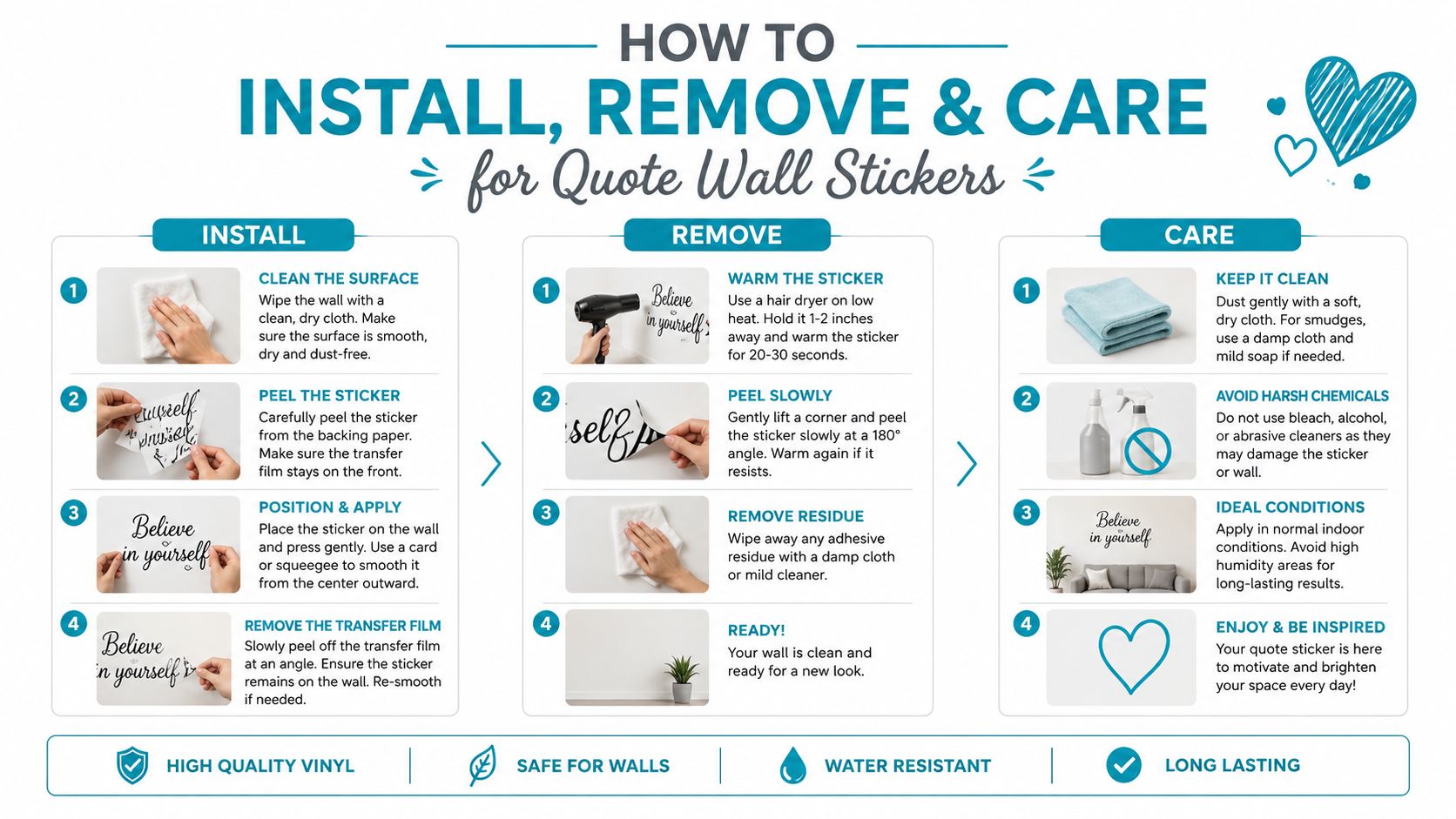
Clean the area with a soft, lightly damp cloth and allow it to dry completely. Don't apply over dust, grease, condensation or loose paint. Check the finish around the proposed position, because a wall that looks smooth from a distance may still have raised texture that prevents full contact.
Renters should use this checklist:
- Check the paint age: Wait at least four weeks after painting, as recommended in the cited UK guidance.
- Check the surface: Avoid damp, flaky, powdery, heavily textured or poorly primed areas.
- Check the conditions: Choose a dry period with low humidity, rather than applying during condensation or while the wall feels cold and damp.
- Test discreetly: Place a small corner or sample piece in an inconspicuous area and leave it for 24 hours before proceeding.
For a rented home: A test patch is more valuable than a confident guess. Keep the original paint details and photograph the wall before application.
Apply the design
Lay the decal flat and rub over the transfer tape with a squeegee or a bank card wrapped in a soft cloth. This helps the lettering adhere to the transfer layer and reduces the chance of a letter staying behind on the backing paper.
Position the whole design with low-tack masking tape before exposing the adhesive. Hinge the decal from the top, peel the backing away gradually and smooth from the centre towards the edges as you work downwards. Don't pull the vinyl sideways, as stretching can disturb spacing.
Small bubbles often settle when the vinyl has had time to bond. If one remains, prick it carefully with a fine pin and press the air towards the opening. Avoid scrubbing the design during the first part of its life, and clean around it with a soft cloth rather than an abrasive sponge.
For product-specific handling, the Quote My Wall guide to quote wall stickers provides a relevant reference point before installation.
Remove without rushing
Start at a corner and peel slowly at a low angle rather than pulling the decal directly away from the wall. Gentle warming from a hairdryer can soften the adhesive, but keep the heat moving and use a modest setting. If the paint begins to lift, stop and reassess rather than forcing the sticker.
Textured or recently painted walls deserve extra caution. No manufacturer can guarantee identical results on every paint formulation, so renters should treat surface testing and slow removal as essential parts of the purchase decision.
Customisation Pricing and Ordering Tips From Quote My Wall
Ordering becomes easier when you separate the design decision from the production details. First choose the wording and intended room. Then decide whether an existing layout works or whether you need bespoke wording, a different font, a new colour or a custom size.
Quote My Wall offers existing quote designs alongside personalised wall sticker options, including choices around wording, fonts, colours and dimensions. That makes it suitable for a family phrase, a child's room, a home-office reminder or a personalised gift, provided the brief gives the designer enough practical information.
What affects the price
The main pricing variables are usually:
- Overall size: Larger lettering uses more vinyl and may require more handling.
- Design complexity: Multiple colours, layers or detailed shapes can add production work.
- Material and finish: Different vinyl types and finishes may carry different costs.
- Delivery: Postage and packaging form part of the final order total.
A quote sticker remains a focused alternative to re-wallpapering a complete room because you're paying for a defined design area rather than continuous coverage. The best value comes from choosing a size that can be read comfortably and a finish that suits the wall, not just selecting the cheapest option.
Send a useful brief
Measure the available width twice and record the wall colour, desired wording, preferred font style and approximate placement. Ask for a proof when the layout is bespoke, and confirm the final dimensions before approving production.
Check the expected delivery window if the sticker is part of a birthday, nursery refresh or moving-day project. If you're uncertain about a surface, send a clear description and ask whether the intended material is appropriate before ordering.
Room by Room Ideas for Quote Stickers for Walls
In a nursery, a short phrase in a soft serif or rounded sans-serif can create warmth without turning the room into a fixed theme. Choose a gentle neutral, dusty colour or muted accent so the wording supports the cot, textiles and changing furniture. A removable quote also lets the room mature as the child's tastes develop.
A living room gives you more room to experiment. Place a larger quotation above a sofa, then build a gallery wall around it with prints, photographs and small objects. Burgundy can add depth to a neutral scheme, while navy can provide a calmer anchor. The quote should have enough presence to read as one deliberate artwork, not as an afterthought between frames.
In a home office, typography can define the area without taking over the whole wall. A concise phrase above the desk works best when the font is clear and the colour contrasts with the paint. Keep the surrounding area organised, because a motivational design loses impact when cables, shelves and paperwork compete with it.
Bedrooms suit quieter positioning. Try a line above the headboard or beside a dressing table, using generous spacing and a matt finish. Hallways can take a narrow vertical arrangement, while kitchens suit short family sayings placed away from steam, splashes and areas that need frequent scrubbing.
For children's rooms, a quote can sit alongside framed illustrations rather than replacing them. A themed design may be easy to update when interests change, which is one reason removable wall decals work well in rooms that need to grow with their occupants. If you want more examples of using wording in a child's room, explore this quote wall sticker inspiration.
The strongest designs share one quality: they feel connected to the room's scale, palette and daily use. Start with a small test, observe how the wall feels for a few days, and change the phrase when your space or taste changes.
Quote My Wall offers ready-made quote decals as well as personalised wording, fonts, colours and sizing for wall projects across the home. Visit Quote My Wall to browse designs or discuss a custom sticker that suits your room, wall surface and decorating plans.