

Kids Room Wall Decor: Creative Ideas for 2026
You're standing in a child's room with a paint sample in one hand and a roll of masking tape in the other, trying to decide whether this wall should stay blank for now or become something your child loves. That pause is familiar, especially in UK homes where rooms change function quickly, walls aren't always flat, and the “right” choice has to survive nurseries, school-age interests, and rental rules without becoming a costly mistake.
Kids Room Wall Decor works best when it does more than look cheerful. It gives children a sense of ownership over their space, and it gives parents a way to make a room feel finished without locking themselves into a permanent scheme. That matters in a country with about 13.6 million families and 8.3 million families with dependent children in 2024, because children's rooms aren't a one-time project, they're a recurring household task across a very large part of the UK housing stock. ONS family estimates context
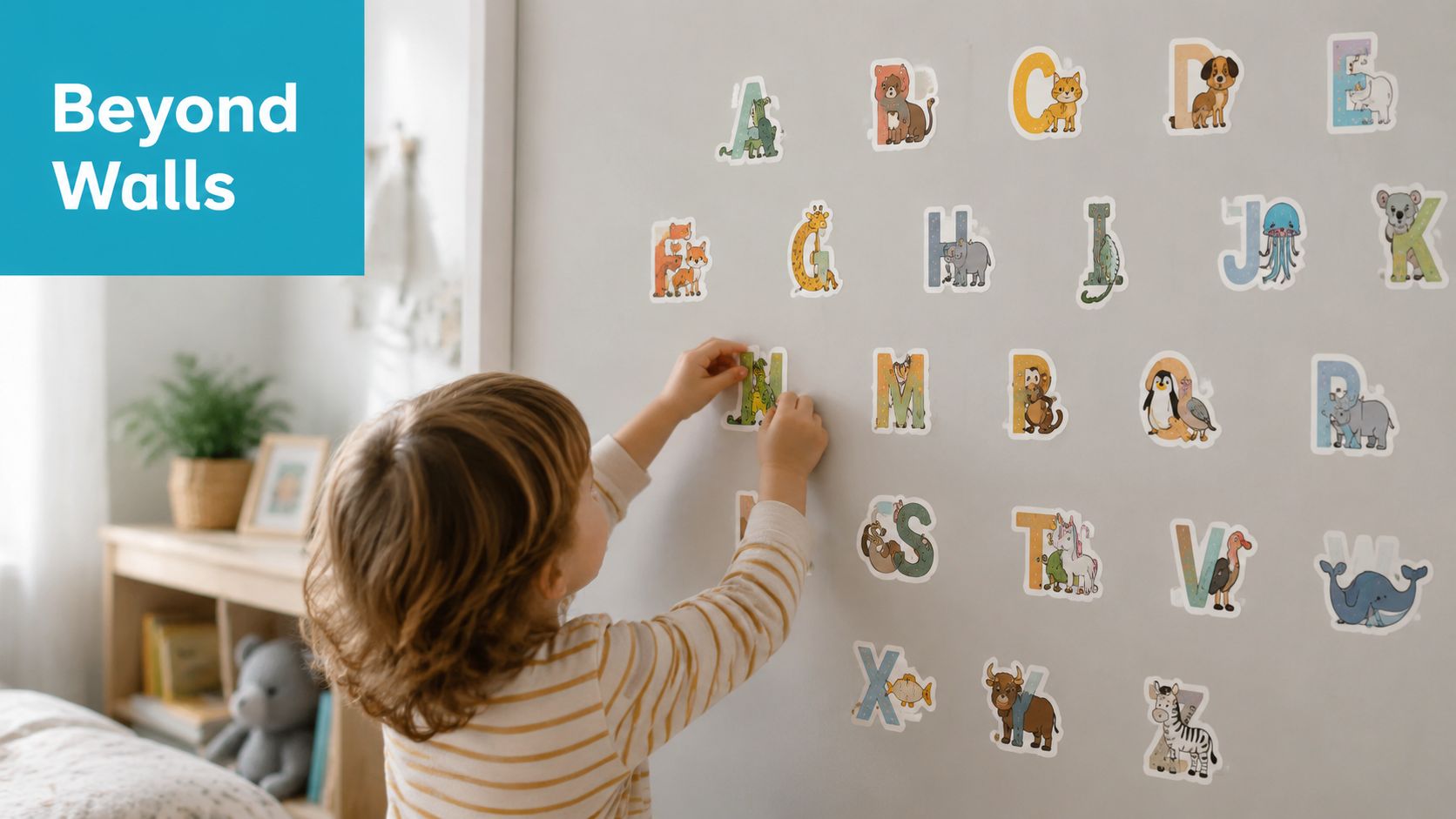
A blank wall can look tidy, but it often feels temporary in the wrong way. A few well-chosen decals, framed prints, or a simple mural zone can make a room feel like it belongs to the child who sleeps there, reads there, and keeps dragging toys across the floor there. If you want a playful example of how wall styling changes the mood of a room, this playroom wall art guide is a useful reference point.
Practical rule: choose decor you won't mind seeing every day, but don't choose it so cautiously that the room never feels personal.
For UK families, the other big reason this matters is flexibility. The English Housing Survey reported that 19% of households in England were privately rented in 2022–23, and renters usually need wall decor that can be removed cleanly instead of painted over or stripped back. That makes easy-change options feel less like a compromise and more like the sensible default, especially when a nursery needs to become a school-age room without a full redecorating cycle.
Why Kids Room Wall Decor Matters More Than You Think
I've seen the same moment in more than one house, a parent standing in a half-finished nursery, looking at a blank wall and wondering whether they're overthinking it. They're not. A room with no visual anchor can feel like borrowed space, while even a small amount of wall decor can give a child a clear corner of the home that feels theirs.
A room that grows with the child
Children's rooms change fast. A jungle print that felt perfect in toddler years can look noisy a couple of years later, and a highly themed wallpaper can start to feel fixed when the rest of the room needs to evolve. That's why removable choices tend to work better than permanent ones, because they let the room mature without forcing a full strip-and-redo.
The emotional payoff matters too. Children often respond to rooms that reflect their interests, whether that's animals, space, letters, transport, or calmer colour blocks. The room stops being just a sleep space and becomes somewhere they recognise as their own.
A child doesn't need a designer feature wall. They need a room that feels familiar, fun, and easy to live with.
UK homes make flexibility more useful
Older properties, terraced layouts, and attic conversions create awkward proportions that don't suit heavy, permanent decoration. In homes with sloped ceilings or narrow wall runs, big wallpaper patterns can fight the room instead of helping it. Lightweight decor, by contrast, can be placed where the wall works best, not where the paper roll demands.
The practical upside shows up in everyday life. If a room needs to function as nursery first, then playroom, then bedroom, it helps to avoid anything that creates a long removal job later. That's why many parents start with a simple themed focal point rather than covering every wall.
Confidence matters as much as colour
Parents often worry about picking the “wrong” theme. In practice, the wrong choice is usually the one that's too fixed, too busy, or too tied to one age. A room that can absorb change is almost always better than one that looks perfect for six months and then starts to feel dated.
Choosing the Right Materials for Growing Children
A child's room gets used harder than many expect. Marks from shoes, sticky fingers, moved furniture, and the occasional rushed redecorate all expose weak material choices quickly, especially in UK homes where renters may need to keep walls intact and loft rooms bring awkward slopes into the mix.
Material choice decides whether the room stays easy to live with or turns into a job you keep putting off. Paint is familiar, wallpaper can look polished, fabric hangings soften a space, and vinyl decals sit somewhere in the middle, but the trade-offs shift once you factor in children's habits, rental restrictions, and the likelihood that the room will need to change again.
What works best in real homes
For most families, vinyl decals and removable wraps are the most practical choice because they are easier to install, easier to remove, and easier to replace when interests change. Modern options are no longer the flimsy stickers people remember from cheap nursery catalogues. A technical sheet for one removable decal lists 0.1 mm vinyl thickness, acrylic adhesive, a claimed 5-year interior lifetime, and removal that does not damage the wall, which is the sort of specification that matters in busy family rooms. Technical vinyl decal specification
Wallpaper can look richer, but it asks more of the wall and more of the person installing it. Paint is flexible, yet it gives less visual precision when you want a specific motif, border, or personalised design. Fabric can feel warm, but it tends to be more decorative than practical in a child's room, especially where dusting and cleaning matter.
Wall Decor Material Comparison
| Material | Cost | Installation | Removal | Rental-Friendly | Durability |
|---|---|---|---|---|---|
| Paint | Lower for basic repainting, higher if prep is needed | Moderate | Moderate to difficult | Mixed | Good, but not easily adaptable |
| Wallpaper | Moderate to high | Difficult | Difficult | Usually poor | Strong if professionally fitted |
| Fabric hangings | Variable | Easy | Easy | Good | Decorative, less durable |
| Vinyl decals | Usually the most adaptable | Easy | Easy | Strong | Good for everyday family use |
If you're also thinking about the rest of the room, it helps to find durable kid-friendly furniture that can take the same kind of daily use your walls will face. A room feels more pulled together when the furniture and wall decor are chosen with the same practicality.
What to look for online
Search for removable, non-toxic, and wall-safe language, then check whether the product description gives actual material details instead of vague promises. One nursery wallpaper product tested under ISO 16000 reported 5.8 µg/m³ formaldehyde and 64 µg/m³ total VOCs, both below the manufacturer's cited French A+ thresholds. Nursery wallpaper test details
Avoid products that hide everything behind lifestyle photos. If a listing won't tell you what it's made from, how it removes, or whether it works on painted walls, it's probably not the one you want in a child's bedroom. For a more product-specific guide, this kids vinyl wall stickers overview is useful because it focuses on the kind of details that matter once the sticker is on the wall.
Planning Themes and Layouts That Hold Up Over Time
A good theme gives the room direction. A bad one turns the wall into a jumble of ideas that all compete with each other, which is how parents end up with a dinosaur corner, a rainbow strip, a moon decal, and no visual rest anywhere.
Start with a theme that can age
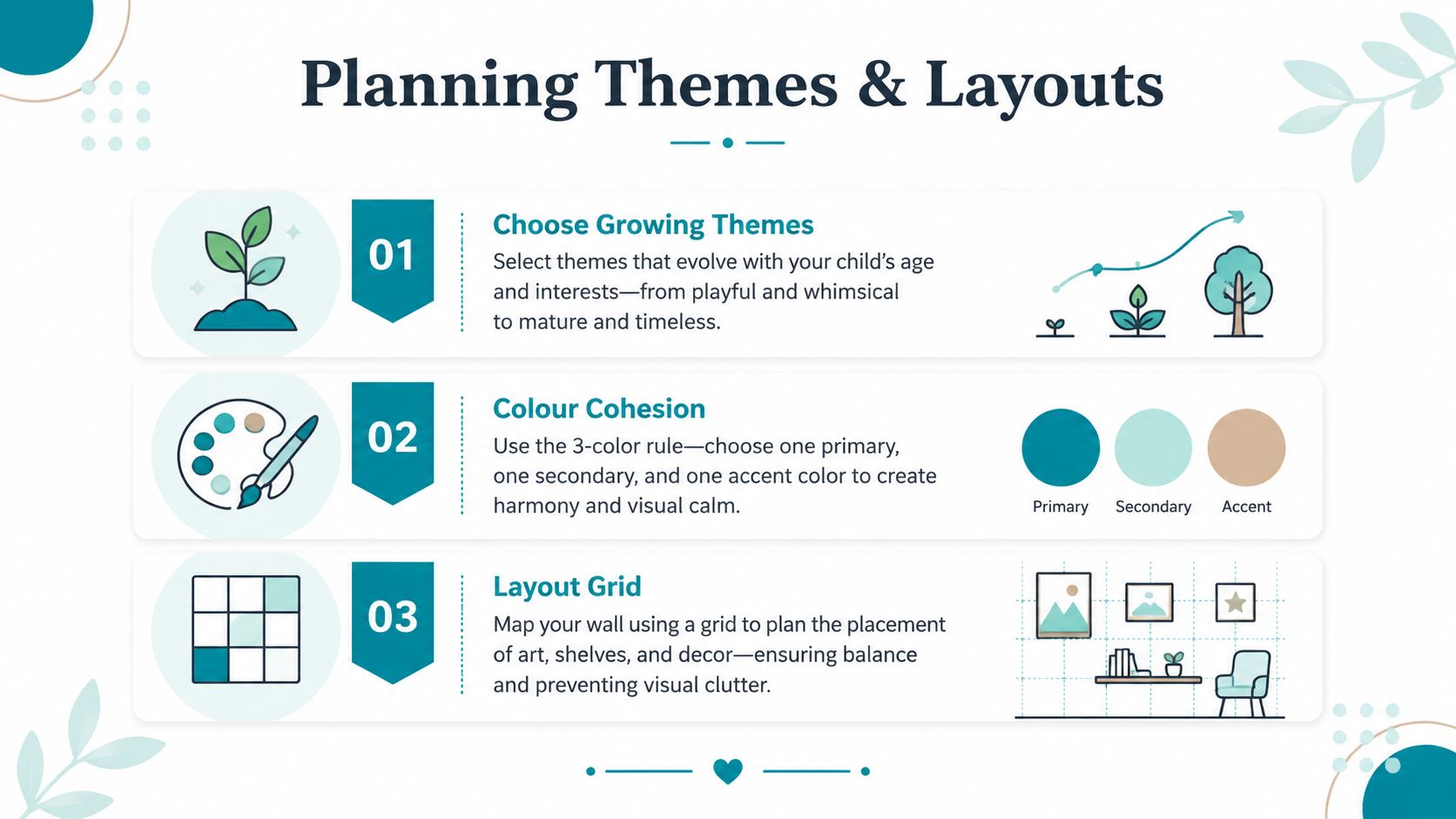
The safest themes are broad enough to survive changing tastes. Animals, transport, stars, nature, letters, and calm geometric shapes usually last longer than highly specific cartoon references. That does not mean the room has to be bland, it just means the design has room to change as your child grows.
Colour choice matters too. A small palette keeps the room from looking chaotic, especially if toys, bedding, and books already add plenty of visual noise. I usually recommend picking one main colour, one support colour, and one quiet neutral so the walls do not have to carry every bit of personality themselves.
Practical rule: in a child's room, the wall decor should set the tone, not compete with every other surface.
The layout should fit the wall, not the fantasy
In UK homes, especially loft conversions and top-floor bedrooms, wall shape often matters more than wall size. Sloped ceilings and awkward alcoves make the usual Pinterest layout less useful, because a symmetrical arrangement can look cramped when the room has a lower side wall or broken ceiling line. Light, scattered placements usually work better than one oversized centrepiece.
A simple way to avoid clutter is to use a rough rule of thirds for coverage. Leave some empty wall space on purpose, then place the main focal point where the eye naturally lands, usually above a bed, along the longest wall, or in the clearest vertical stretch. For a toddler room, that might be a low cluster of animals and initials. For an older child, it might be one larger print with a few smaller accents nearby.
If you want a theme example that stays playful without becoming noisy, this wildlife playroom idea shows the kind of direction that works well when you want interest without overload.
Let the child help, but keep the structure yours
Children should have a say in theme, colours, or a favourite animal, but they rarely need total control of placement. A good compromise is to let them choose from a narrowed set of options, then mock up the arrangement before anything touches the wall. That keeps the result personal without creating a room that looks like three different ideas fought each other for space.
This matters even more in rentals, where repainting or replacing wallpaper may not be an option. Removable vinyl gives you a cleaner route, because it lets the room change with your child without leaving you stuck with a permanent pattern. If you want a practical guide on the application side, how to apply wall stickers is a useful reference before you commit to a layout.
Step-by-Step Installation Without the Stress
Most wall decor mistakes happen before the first sticker goes up. The wall was not checked properly, the layout was guessed instead of measured, or the person installing it tried to save time by skipping the test placement. In UK homes, that often means dealing with painted plaster, rental walls that cannot be treated casually, or a loft conversion wall that slopes where you least want it to.
Prepare the wall before you touch the decor
Start with the surface, not the product. Painted walls should be clean, dry, and free from loose dust, while textured plaster or uneven areas may need a different approach because decals cling best to smoother surfaces. If the room has damp, peeling paint, or flaky filler, deal with that first.
Gather the basics before you begin. A spirit level, painter's tape, a soft cloth, and a measuring tape save a lot of guesswork. If you are applying larger pieces, a credit card wrapped in a cloth can help smooth bubbles without scratching the finish.
Test the position before committing
I always tape pieces up loosely first, especially near beds, shelves, light switches, and radiators. That makes it easier to check proportions and prevents the classic mistake of placing the whole design too high. The eye should read the decor comfortably from the room's normal viewing height, not from standing in the doorway with perfect patience.
If the wall is awkward, split the design into smaller visual parts. Corners, sloped sections, and the narrow strip above a radiator usually work better with smaller decals than with one oversized image. The same practical thinking applies when you are placing open shelving, and this Australian DIY floating shelves guide is a good reminder that measuring and fixing cleanly matter more than rushing.
If you want a clear product-specific guide for application technique, this how to apply wall stickers guide is worth a read before you start.
Fix the common problems calmly
Small bubbles usually mean the decal needs smoothing from the centre out. Peeling edges usually mean the wall was not fully clean or the product was applied too quickly. Uneven surfaces are harder, so it is better to choose a smaller motif or a different wall than to force a large design onto a bad surface.
If a piece lifts at one corner, do not yank it. Warm it gently with your hand, press it back down, and check whether the wall finish is what is causing the problem.

Safety Standards and Long-Term Maintenance
Parents are right to ask questions here. A children's room gets touched, cleaned, bumped, and lived in, so wall decor needs to do more than look cheerful. It has to make sense for air quality, fixing strength, and what happens after months of daily use.
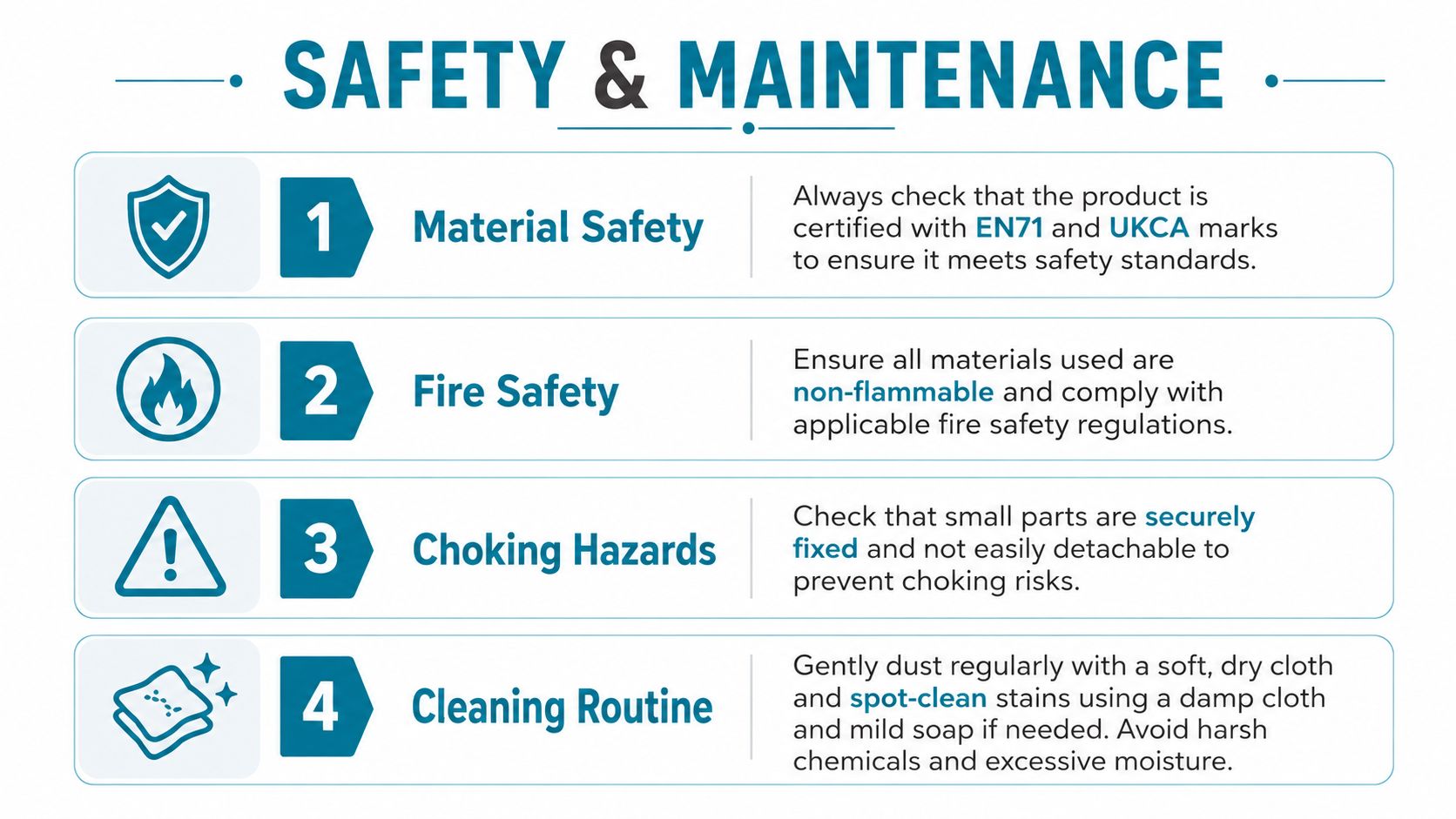
Material safety is the first filter
For bedroom use, low-VOC emissions matter because children spend long periods indoors. The ISO 16000 test result for nursery wallpaper, with 5.8 µg/m³ formaldehyde and 64 µg/m³ total VOCs, is a useful benchmark when comparing products, even though individual products still vary. Nursery wallpaper test details
Look for wording that shows a product has been made for indoor use, not just styled for a nursery photo shoot. If a decal or print is meant for a child's room, it should also handle ordinary cleaning and household temperature changes. The technical sheet for one removable decal lists resistance from -40 to 85°C, waterproof and washable performance, plus non-toxic and non-flammable properties, which gives a clearer picture of how the product is meant to behave in a real home. Removable decal specification
Maintenance is mostly about keeping edges healthy
Dusting with a soft cloth is usually enough for prints and most wall decals. Avoid harsh scrubbing unless the product specifically says it can handle it, because the aim is to keep the finish intact, not treat it like a kitchen tile. For removable pieces, check the corners every so often, especially in rooms that get a lot of heat from radiators or direct sunlight.
Small parts are worth a quick sanity check too. If a design includes raised elements or layered pieces, make sure they are secured properly and not within easy reach of a very young child. Children pull, peel, and pick at interesting surfaces, so “decorative” and “detachable” are not the same thing.
Replace sooner when the room has moved on
A wall decal does not fail just because it still sticks. Sometimes it stops working because the child has outgrown the theme, the room has changed use, or the design looks crowded once new furniture or bedding arrives. In those cases, removal is part of the system, not a mistake.
If a room needs frequent updates, treat the wall decor like a flexible layer rather than a permanent finish. That keeps the room safer, easier to clean, and much less stressful to maintain.
Budget-Friendly Ideas and Creative Upcycling
A lot of parents assume a finished-looking room has to come from a big purchase. In reality, the strongest results usually come from restraint, smart placement, and one or two pieces that do the heavy lifting instead of covering every surface.
Spend where the eye lands
Put your best visual piece where the room naturally focuses. That could be above the bed, over a reading corner, or on the longest clear wall. Once that anchor is in place, smaller accents can support it without the room needing a lot of extra product.
That approach makes a modest budget go further because empty space stops feeling unfinished. It starts looking deliberate. A single strong decal cluster or a simple print arrangement often does more than filling every inch with separate items.
Reuse what you already own
Vinyl wraps can do more than decorate walls. They can refresh older furniture, turn a tired shelf into part of the room's colour scheme, or help a mismatch piece blend into the decor instead of fighting it. That's especially useful in nurseries and shared bedrooms where you may already own decent furniture that just looks visually disconnected.
It makes sense to buy fewer, better-chosen items. A removable wall design can change later, while a good storage unit or bed frame can stay in place through several room versions. That balance keeps spending focused on the surfaces that are easiest to change.
Match the solution to the room's lifespan
If the room is temporary, pick solutions that remove cleanly and won't punish you later. If the room is likely to stay stable for years, you can be a bit more ambitious with the layout and still keep the material choice sensible. Either way, the aim is the same, a room that feels thoughtful without becoming expensive to undo.
A child also feels the difference when the room isn't overloaded with objects just because they were on sale. In my experience, the rooms that last longest are the ones where parents bought less, chose with more care, and left themselves room to adjust later.
If you want to make your child's room feel better without turning it into a full renovation project, start with removable designs that suit your wall shape and your child's age. Visit Quote My Wall to explore wall stickers, nursery prints, and vinyl options that make it easier to build a room you can update as your child grows.