

How Long Do Wall Stickers Last and Tips to Extend Their Life
Quality UK vinyl wall stickers typically last 5+ years indoors and 3 to 5 years outdoors. Indoors, a well-made decal can remain visually sound for much longer, often effectively lasting as long as you want it to when it's protected from weather and fitted correctly.
A parent smoothing a Quote My Wall jungle decal onto a nursery wall usually has a practical question in mind: will it still look good after the toddler phase, or will the corners start curling before the room needs changing? The answer depends less on a fixed expiry date than on where the sticker is fitted, what it's made from, how the wall was prepared, and how much handling it receives.
UK supplier guidance supports that distinction. Indoor vinyl avoids ultraviolet light, rainfall and dramatic temperature changes, while outdoor products commonly sit within a 3 to 5-year working range, with finish and exposure affecting the result (Edge Stickers' UK vinyl guidance). Trade guidance also describes wall graphics as short- to medium-term products rather than permanent finishes, with colour fastness and clean removability changing over time (Tradeprint's wall-sticker specifications).
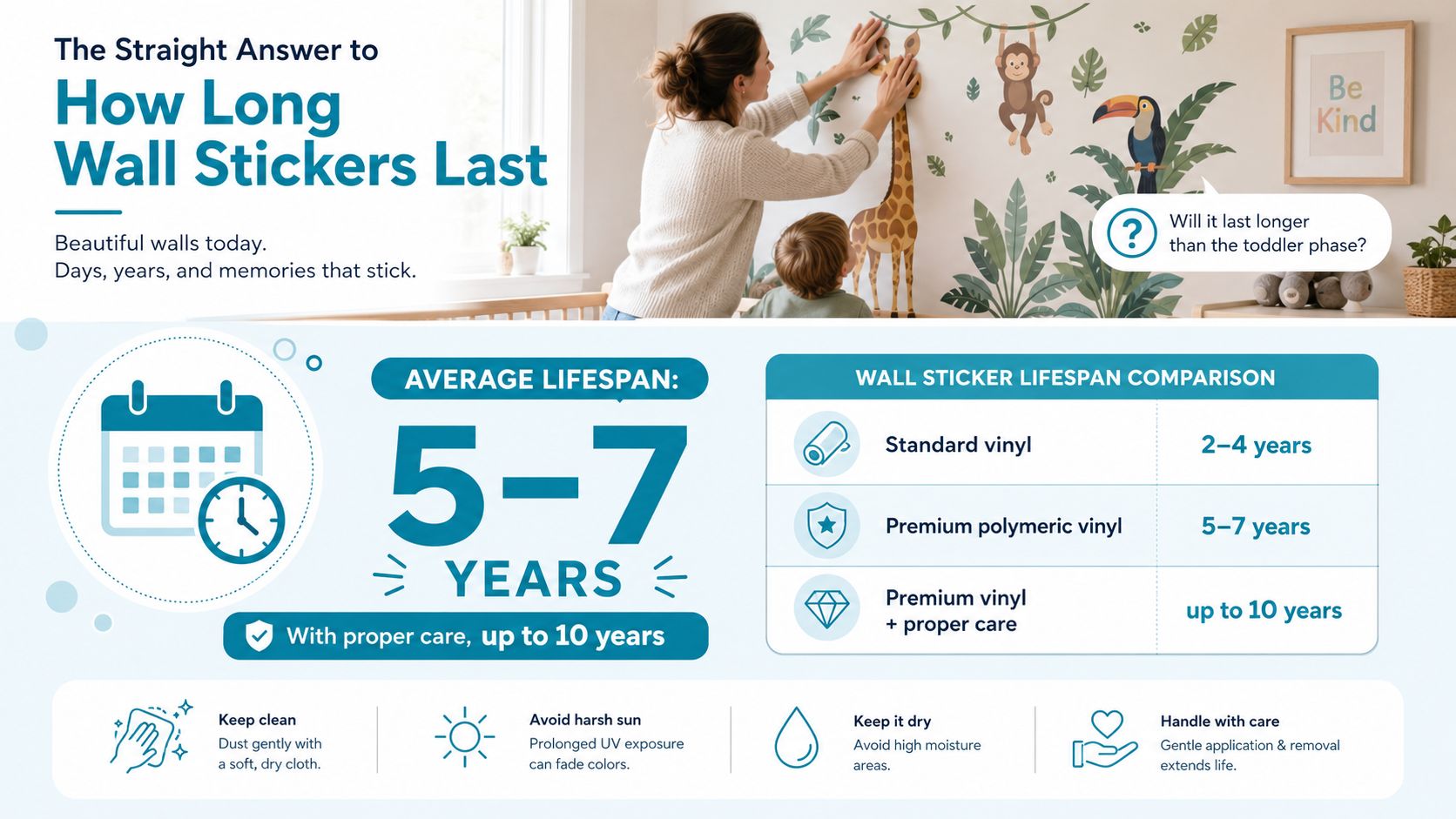
The useful way to judge lifespan is to match the sticker to the room. A shaded bedroom with a smooth, cured emulsion wall is a very different environment from a steamy bathroom, a kitchen beside the hob, or an exterior wall facing strong sunlight. The same vinyl can perform well in one location and disappoint in another.
Practical rule: Treat the advertised lifespan as a planning range, not a promise that every room will produce the same result.
The sections below focus on those real UK conditions, including rental walls, nurseries, radiators and moisture-heavy rooms. They also cover the installation habits that protect the adhesive and the warning signs that tell you when a decal should be repaired, removed or replaced.
The Straight Answer to How Long Wall Stickers Last
If a wall sticker is fitted to a sound, dry indoor wall and left largely undisturbed, Quote My Wall's specification gives a practical interior expectation of 5 to 7 years. The same product is specified for 3 to 5 years outdoors, where sunlight, rain and temperature changes create greater stress. For indoor vinyl, UK sign-industry guidance also supports a longer service life when the material is protected from weather (BF Graphics' vinyl-life FAQ).
The range is only useful when you account for the room. A shaded bedroom with cured emulsion is a gentler setting than a steamy bathroom, a kitchen beside the hob or a wall exposed to strong sunlight. The vinyl may be identical, but humidity, heat, abrasion and cleaning determine how quickly its appearance and adhesion change.
A nursery can be relatively favourable because the wall stays dry and avoids outdoor exposure. Its main risk is physical interference: small fingers can lift an edge, scratch the print or start a peel. Hallways receive regular contact from coats, bags and furniture. Kitchens add steam, grease and cleaning chemicals, even when the decal sits away from direct splashes.
Rental walls need a separate judgement. A sticker can remain attached and attractive, yet removal may become less predictable if the paint is soft, poorly bonded or recently applied. The wall's condition often matters as much as the vinyl's stated life.
Quote My Wall's product specification also matters. Premium polymeric vinyl, acrylic adhesive, fade-resistant printing and suitable surface protection provide a stronger starting point than an uncoated, low-grade material. Installation then determines whether that potential is achieved. Dust, uncured paint, silicone residue and trapped air can cause early edge failure.
A realistic planning guide
- Dry indoor bedroom: The sticker should remain serviceable through the stated interior range, and protected conditions may extend its useful appearance.
- Nursery or children's bedroom: Environmental wear may be modest, but touching, scratching and deliberate peeling can shorten its life.
- Kitchen or bathroom: Steam, heat, grease and cleaning can push performance towards the lower end of the indoor expectation.
- Above a radiator: Repeated heat can place extra strain on the adhesive, particularly if the wall also has dust or a weak paint surface.
- Outdoor placement: Plan around 3 to 5 years, with sunlight and weather deciding whether the result sits nearer the beginning or end of that range.
A sticker can be still attached without still looking fresh. Colour may fade, adhesive strength may decline and clean removability may become harder before the vinyl drops away. Judge the decal by appearance, edge condition and the wall beneath it, not attachment alone.
Indoor vs Outdoor Lifespan and Why the Gap Is So Wide
A vinyl sticker fitted inside a dry bedroom avoids several stresses that shorten outdoor service life. Outdoors, ultraviolet radiation fades printed colour, rain tests the edges, frost and heat make the wall and vinyl expand at different rates, and wind-blown grit wears the surface. A south-facing wall receives harsher exposure than a sheltered elevation, while coastal air adds persistent damp and salt.
The useful comparison is therefore about protection, not just location. A clear overlaminate shields the printed face from light scuffing, moisture and handling. It can also help preserve colour and make cleaning less damaging, provided the vinyl and laminate are suitable for the application. Trade guidance links higher-grade decals with longer service where a clear overlaminate is used (Tradeprint's vinyl graphic guidance).
Finish affects the result too. Gloss can make colours appear stronger and may be easier to wipe clean, but it shows reflections and surface marks. Matte reduces glare and can make fingerprints less obvious, although its outdoor performance may be shorter in some specifications. Edge Stickers' guidance illustrates that finish and exposure can produce very different outdoor results (Edge Stickers' FAQ on vinyl durability). Those outdoor examples should not be transferred directly to an indoor wall. They show why the same printed design can age differently depending on its surface protection and exposure.
Inside a UK home, the main risks are more localised. Indirect sunlight, seasonal heating, cooking or bathing humidity, cleaning and accidental knocks may affect the decal, but there is no continuous rain, frost or wind. A bathroom therefore places more demand on the adhesive and edges than a dry bedroom. A nursery may have less moisture but more touching, scratching and deliberate peeling. Above a radiator, repeated heat can stress the adhesive, especially where paint or dust already weakens the bond.
For a Quote My Wall sticker, the specification provides the starting point, while the room determines how closely that potential is reached. A polymeric vinyl with printed colour and suitable protection has more to work with than an uncoated short-term film, but it still needs a sound, dry wall.
Judge indoor life by appearance and edge condition rather than a fixed deadline. In a shaded room with limited contact, the sticker may remain presentable until redecorating becomes the reason for removal. In a steamy, hot or frequently handled location, visible wear can arrive sooner.
What Determines How Long a Wall Sticker Actually Lasts
Four specifications shape most of a wall sticker's working life: vinyl type, finish, adhesive and ink. A product description that identifies all four is more useful than a vague promise such as “long-lasting”.
Vinyl type and dimensional stability
Monomeric vinyl suits shorter-term graphics and can move more as temperature and moisture change. Polymeric calendared vinyl has a more stable construction, so it generally stays flatter and is less likely to shrink or crack prematurely. That difference matters when a decal is expected to remain on the wall through several heating seasons.
Quote My Wall specifies a polymeric calendared vinyl face stock. It cannot compensate for flaking paint, heavy humidity or poor application, but it provides a stronger material base than a basic short-term film. The product category and its typical wall applications are explained in vinyl decals for walls.
Finish as a protective layer
Matte and gloss finishes change both appearance and day-to-day wear. Where the product is designed for it, a suitable laminate creates a protective surface against light scuffing, moisture and handling. Gloss can make printed colour look stronger, while matte reduces reflections and can make fingerprints less noticeable. Neither finish makes a sticker suitable for persistent humidity or direct heat.
Adhesive and wall compatibility
A solvent-based acrylic adhesive is intended to grip a prepared painted surface without acting like permanent construction adhesive. The wall remains part of the system. Flaking paint, chalky emulsion, dust, silicone residue or paint that has not fully cured can fail beneath a sound adhesive, causing lifting that may be mistaken for a vinyl problem.
A clean, smooth and fully dry wall gives the adhesive its best chance to hold. Freshly painted walls need enough curing time, not just a surface that feels dry to the touch.
Ink and colour retention
UV-stable eco-solvent inks help printed colour resist fading when the design receives indirect or direct light. Less suitable printing may lose visual strength sooner, particularly in bright rooms. Check whether the inks are described as UV-stable or fade-resistant, and whether laminate is included or available.
Before buying, confirm four points:
- Film: Is it polymeric, or intended only for short-term use?
- Finish: Is protective laminate available for the room's conditions?
- Adhesive: Is it removable and suitable for painted walls?
- Print: Are the inks described as UV-stable or fade-resistant?
Room-by-Room Lifespan in Real UK Homes
The room changes the expected lifespan more than the design does. Quote My Wall's premium vinyl performs most consistently on a clean, dry, stable wall. Add steam, splashes, heat or repeated handling, and the adhesive usually shows the first signs of stress.
Kitchen
A sticker on a dining-area wall can remain in good condition for years. One near a hob or kettle faces grease, steam and frequent wiping, so expect the lower end of indoor performance in a busy kitchen. Cooking vapour and cleaning gradually work on exposed edges, particularly where the decal sits close to the worktop or splash zone.
Bathroom
Bathrooms put vinyl through repeated humidity changes and occasional direct splashes. A design outside the splash zone has a better chance of holding well, while one beside a bath or basin faces a tougher environment. Heat, cold and humidity can shorten decal life, and careful application affects how cleanly it can later be removed, as explained in Sticker Nation's guidance on outdoor and indoor decal exposure.
The specific vinyl, wall finish and position also matter. Read Quote My Wall's guide to vinyl on bathroom walls before placing a sticker where condensation or splashing is routine.
Nursery
Nurseries are usually kinder to vinyl than kitchens and bathrooms. Physical contact becomes the main concern. Once a child finds a corner, repeated picking can lift an otherwise sound decal.
With careful fitting, Quote My Wall's product can sit within its 5 to 7-year interior specification. In practice, the room may be redecorated, or the child's preferences may change, before the vinyl reaches that point.
Above a radiator
Repeated heat cycles place stress on both adhesive and paint. The nearer the sticker is to a radiator, the more cautiously I would estimate its lifespan. Keep the design away from direct heat where possible, then check the lower edge after periods of heavy winter use.
Rental property
A rental sticker has two jobs: remain presentable during the tenancy and come away without taking paint with it. Surface preparation and gentle removal matter as much as maximum staying power. Removable vinyl is generally easier to lift cleanly earlier in its life, so renters should avoid leaving removal until the last moment.
| Room | Typical lifespan | Main risk factor |
|---|---|---|
| Kitchen | Lower end of indoor range | Grease, steam and cleaning |
| Bathroom | Lower end of indoor range | Humidity cycles and splashes |
| Nursery | 5 to 7 years with care | Touching and edge picking |
| Above radiator | Shorter than a protected wall | Repeated heat exposure |
| Rental wall | Tenancy-dependent | Clean removal and paint adhesion |
Installation and Care Habits That Add Years of Life
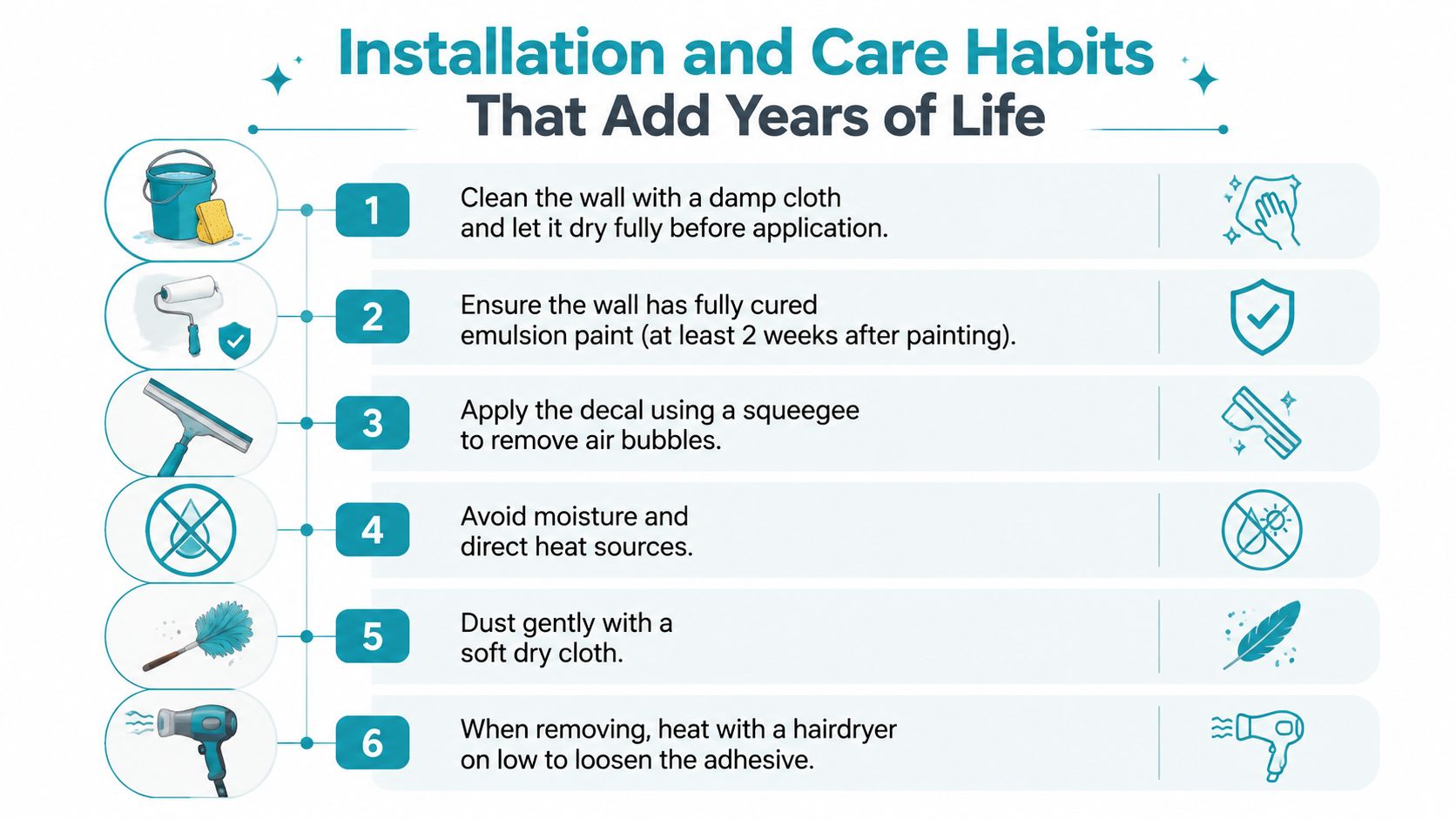
A wall sticker applied over dust, soft paint or silicone can fail long before the vinyl itself has aged. Surface preparation gives Quote My Wall's specified 5 to 7-year interior performance a fair chance, while rushed fitting creates problems no later care can fully correct.
Fit it onto a stable surface
- Clean the wall carefully. Remove dust, grease and loose particles with a suitable cloth, then allow the surface to dry completely. Condensation and cool, damp walls are poor application surfaces.
- Wait for paint to cure. Fresh emulsion may look dry while still releasing moisture. Quote My Wall's application guidance advises waiting 5 to 6 weeks after painting before applying a wall sticker.
- Check the temperature. Apply above 10°C. In a colder room, the adhesive can become stiff and make weaker contact with the paint.
- Press every section down. Use a squeegee or soft, folded cloth. Work methodically across the design, concentrating on narrow tips, corners and joins where lifting usually starts.
- Leave it alone initially. Repeatedly lifting an edge to check the bond can disturb the adhesive before it has settled. Apply it once, press it firmly, then give it time.
Keep daily wear gentle
Dust with a soft, dry cloth rather than repeatedly wet-wiping the printed surface. Avoid abrasive cloths, harsh sprays and direct heat. If regular cleaning is unavoidable, patch-test the product on an inconspicuous area first. These tips from Sunset Shine Home Cleaning also explain how to control dust and moisture when cleaning walls.
Edges deserve extra attention. Full contact across the design leaves fewer routes for moisture and dirt, whereas a poorly pressed corner gives both a starting point. In nurseries and hallways, keep furniture, toys and bags from catching the edge. That simple adjustment often protects the decal better than attempting a repair after lifting has begun.
A final practical check is worthwhile after installation. Run a clean cloth over the perimeter and inspect it in daylight, especially around joins and fine points. Correcting a small missed section immediately is easier than dealing with contamination after it has worked underneath.
Signs Your Wall Sticker Is Reaching the End of Its Life
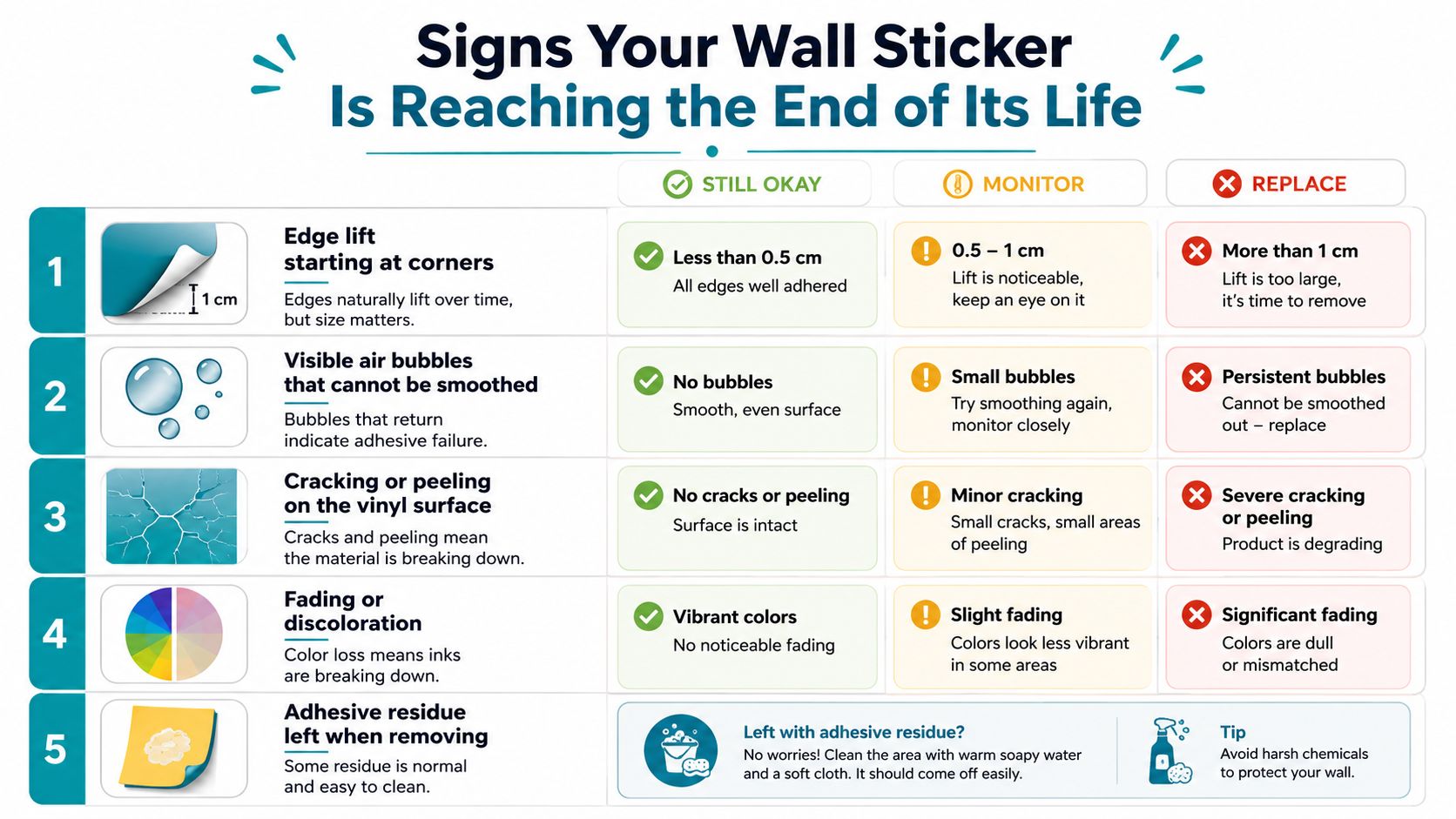
A wall sticker rarely fails without warning. In UK homes, the first clue is often a small corner lift where a fingernail, furniture or regular cleaning has disturbed the edge. Quote My Wall vinyl can remain serviceable while the design still lies flat, feels flexible and holds its colour. Once several warning signs appear together, replacement is usually more sensible than repair.
Read the early warnings
- A corner begins to lift: A stable, tiny lift can be monitored if it is out of reach. If it spreads, stop pressing it down, since dust can become trapped beneath the vinyl and prevent a clean repair.
- New bubbles appear: A bubble that develops after installation may indicate failing adhesion or movement in the wall surface. If it flattens and stays flat, keep watching it. If it returns, the bond is no longer dependable.
- The colour fades: Sun-facing designs can lose vibrancy as the printed pigments deteriorate. Minor fading is mainly cosmetic, but broad fading usually makes replacement a better choice than trying to restore the print.
- The vinyl cracks or becomes brittle: Cracks show that the film has lost flexibility. Do not stretch or reposition it, because brittle vinyl can split and leave small fragments on the wall.
- Residue shows through or remains after lifting: Sticky areas can result from ageing adhesive, contamination or a difficult removal. Use the mildest suitable cleaning method first, rather than applying solvent immediately.
- Paint comes away with the sticker: Stop pulling. The paint layer is now weaker than the vinyl, often because the emulsion was poorly bonded or the surface was not sound. Continue slowly with low heat and allow for patching or repainting.
Decide whether to repair or replace
A cleanly lifted edge may be pressed back if it has collected no dust and the vinyl is still flexible. Press it once, then leave it undisturbed. If the same corner lifts again, the adhesive or wall has probably reached its practical limit.
Fading and cracking are replacement signals, not maintenance tasks. Brittle material becomes harder to remove neatly with further handling. If the wall coating is peeling, photograph the damage and repair the surface before fitting another decal.
How to Remove Wall Stickers Without Damaging the Wall
Start with the least aggressive method. The aim is to separate the adhesive from the paint, not to prove how quickly the vinyl can be ripped off.
Work slowly and use controlled heat
Begin at a corner with a fingernail or a plastic edge. Warm the vinyl with a hairdryer on its low setting, keeping it moving rather than concentrating heat on one point. Fresh decals may release with gentle warming, while an older sticker generally needs longer dwell time and patient, shallow pulling.
Avoid metal blades on plasterboard and painted emulsion. They can gouge the surface, lift the paper face of plasterboard or remove a strip of paint. A plastic scraper is safer when a decal has become stiff, but keep it almost parallel to the wall and use it to support the lift rather than dig beneath the film.
Match the treatment to the residue
If the sticker lifts cleanly with fingernail pressure and leaves no tack, stop there. Extra cleaning can create more risk than benefit. If residue remains, work first with warm soapy water on a cloth, then consider isopropyl alcohol on cotton for stubborn marks.
Test any chemical remover on a hidden corner and leave the patch for 24 hours before proceeding. This is particularly important in rental properties, where an apparently harmless solvent can soften emulsion, change the sheen or expose a previous paint repair. Never assume a product safe for glass or tile is safe for a painted UK wall.
For a fuller visual walkthrough, use Quote My Wall's wall-sticker removal guide. Keep the pulling angle low, warm the adhesive rather than the wall, and pause whenever the paint starts to move.
Leave a rental wall ready for inspection
Before handing back keys:
- Photograph the wall before removal.
- Photograph the clean surface afterwards.
- Wipe away residue with the mildest method that works.
- Allow the wall to dry before judging its final appearance.
- Keep colour-matched paint available for small repairs.
- Record any pre-existing scuffs or loose paint separately.
Quote My Wall offers premium vinyl wall stickers designed for interior life of 5 to 7 years and exterior life of 3 to 5 years, with a wide range of nursery, children's bedroom and home designs. Visit Quote My Wall to choose a decal suited to your room, or contact the team about a personalised design when a standard size or layout won't fit.