

Are Wall Stickers Removable? a UK Homeowner's Guide 2026
Yes, most high-quality wall stickers are designed to be removable, but the outcome depends on four practical variables: sticker quality, the wall surface, how long it's been up, and how you remove it. Premium removable vinyl uses pressure-sensitive acrylic adhesive with a tack balance of 0.8–1.2 N/25mm, and with the right method many decals can also handle 3–5 reapplications before performance starts to drop.
If you're standing in a nursery, hallway, or rented living room with one hand on a decal corner and the other already worrying about peeled paint, that concern is justified. Wall stickers can come away cleanly, but "removable" never means "rip it off however you like and nothing can go wrong". In real homes across the UK, success comes from treating removability as a partnership between the vinyl, the paint, and the technique.
The Renter's Dilemma Are Wall Stickers Really Removable
A lot of people ask this question at the exact moment they want to make a space feel like theirs without turning a simple décor update into a repair job. It's common with renters, new parents decorating a nursery, and homeowners in new-builds who don't want to risk marking fresh-looking walls.
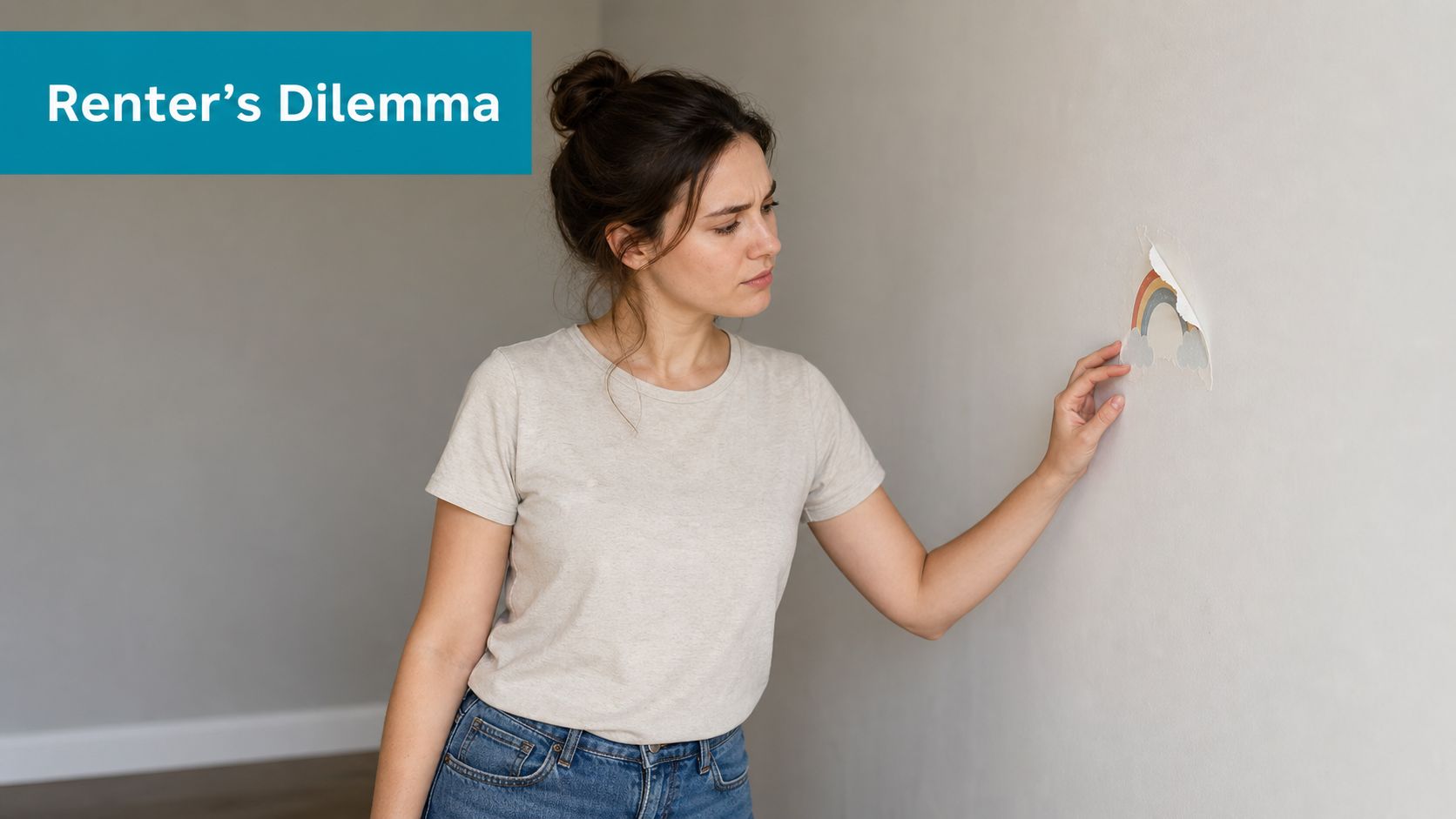
That anxiety isn't overblown. A recent UK survey reported that renters are actively choosing temporary décor, with many spending hundreds of pounds on removable updates such as wall stickers, adhesive tiles and wallpaper so they can personalise a home without breaking lease rules, according to the UK report on renters investing in removable décor.
If you're renting, the bigger worry usually isn't the sticker itself. It's whether the wall will still look acceptable when you move out. That's where understanding fair wear and tear helps, because it gives you a clearer sense of what landlords may reasonably accept and what can turn into a deposit dispute.
The honest answer
Wall stickers are removable when three things line up:
- The product is removable vinyl rather than a cheap permanent adhesive decal.
- The surface is suitable and the paint is stable.
- The removal is done slowly and correctly instead of by force.
Are wall stickers removable? Yes. Are they always damage-free in every home, on every paint, after every length of time? No.
That's the gap many quick guides miss. They give a simple yes or no, but a more detailed perspective is more useful. If you want a fuller breakdown of how removable vinyl behaves in UK homes, this guide on removable wall stickers in the UK is a useful starting point.
The Science Behind Removable Vinyl
A removable wall sticker succeeds or fails at the adhesive layer. The vinyl face matters for print quality and flexibility, but clean removal usually comes down to how that adhesive was formulated and how it behaves against your paint.
What the adhesive is actually doing
Most removable wall stickers use pressure-sensitive acrylic (PSA) adhesive. In plain terms, it sticks because you press it onto the wall, not because it cures like a glue or bonds chemically into the paint. That distinction matters. A good removable adhesive is made to hold its position on a smooth painted surface, then release with controlled peeling later.
The benchmark often cited for removable wall decal construction is 0.8–1.2 N/25mm, as explained in this technical overview of removable wall decal construction. In practice, that middle ground is what you want. Too little tack and the edges curl. Too much and the sticker starts behaving like a permanent graphic.
At Quote My Wall, this is the part I pay attention to first. Homeowners often focus on the design, but the real difference between a pleasant Sunday decorating job and a repair bill is the adhesive specification.
Why quality changes everything
Two wall stickers can look almost identical in the packet and still remove very differently a year later.
Better removable vinyl tends to stay flexible, peel in one piece, and leave less residue behind. Cheap film often shrinks slightly over time, goes brittle, or splits into smaller pieces during removal. Once that happens, the job gets slower and the risk goes up because people start picking, scraping, or pulling harder than they should.
Material quality also affects how evenly the adhesive sits on the wall. A stable film keeps consistent contact. A poor one can grip hard in some spots and barely hold in others, which is one reason bargain decals can feel unpredictable.
The bond is only as good as the wall surface
Removable adhesive is designed to release from the surface of the paint film. If the paint itself is weak, chalky, under-cured, or poorly bonded to the plaster, the sticker may still come away cleanly from the adhesive side while taking paint with it.
That is why removability is really a partnership. You need a decent vinyl, a sound painted surface, and a careful peel angle. Remove one part of that partnership and the result becomes far less reliable.
The best conditions are simple:
- Clean walls, with no dust, grease, or polish
- Dry surfaces, so moisture does not interfere with contact
- Smooth paint finishes, where the adhesive can sit evenly
- Stable paint, fully cured and properly bonded underneath
Reuse is possible, but treat it as limited
Some removable stickers can be reapplied if they are peeled off carefully and the adhesive stays clean. I would treat that as a bonus rather than a guarantee. Each removal picks up a bit more dust, skin oil, or paint debris, and each reapplication usually reduces holding power.
If you plan to reuse one, peel it off slowly, avoid folding it onto itself, and put it back on the original backing sheet straight away. Stored flat and kept clean, a quality decal often has another use in it. Stored in a crumpled ball in a drawer, it usually does not.
Key Factors That Determine a Clean Removal
Some walls let stickers go easily. Others fight back. In practice, clean removal usually comes down to three things: the paint, the age of the application, and the quality of the sticker itself.
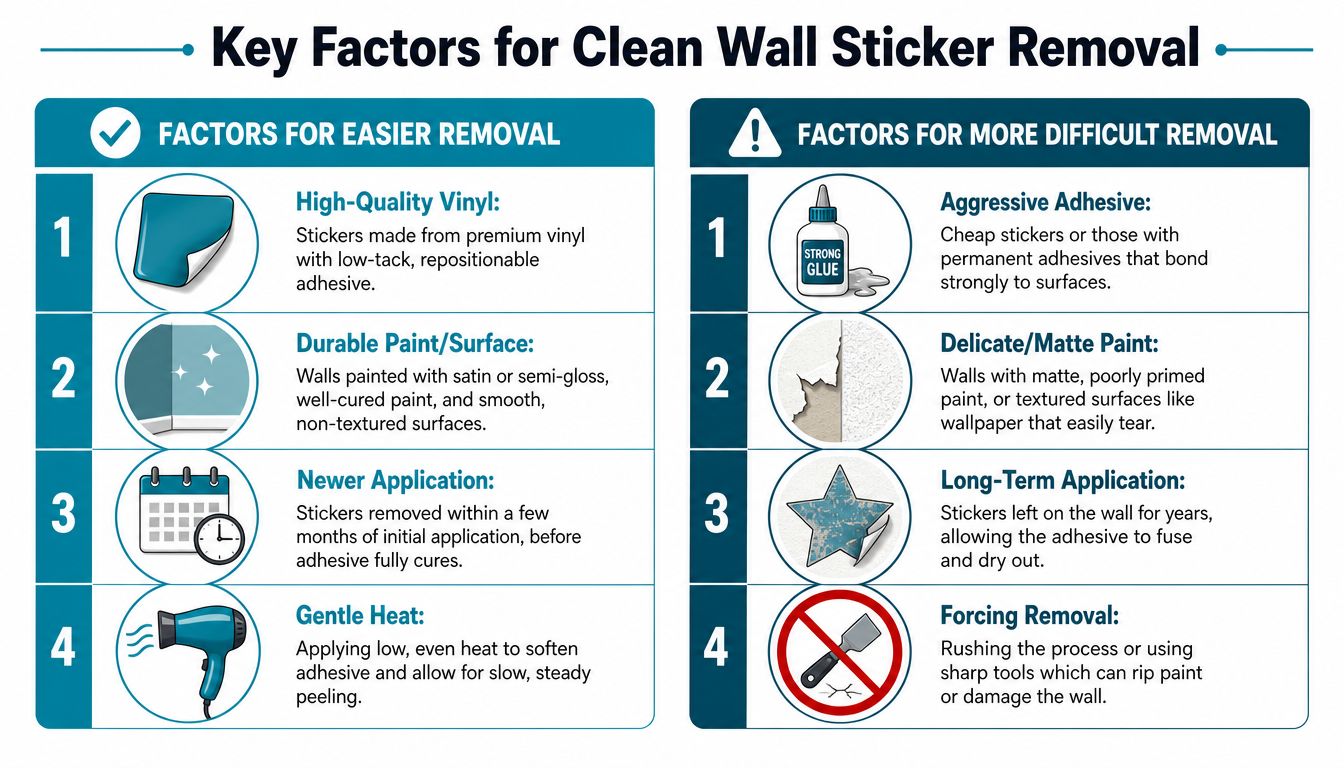
Paint type often decides the outcome
For UK homes, generic internet advice often falls apart. A major issue is modern emulsion paint. According to guidance focused on safe wall sticker removal in UK settings, 68% of UK homes have soft-touch or matte emulsion paints that can blister at temperatures above 45°C, which can cause the paint to detach even when the peel itself is gentle. That same source highlights why heat-based advice has to be used carefully on these finishes, as outlined in this UK paint-focused removal guide.
If you're in a newer rented property or a recently decorated bedroom, assume the paint may be more delicate than it looks.
Time changes the bond
A wall sticker that was fitted recently usually behaves very differently from one that has sat in place through multiple seasons.
Adhesive hardens over time. On older plaster walls with matte emulsion, the risk rises after long-term application. That's why a decal that looked fully removable when installed can feel much less forgiving later, especially if the room gets sun, moisture, or regular temperature swings.
Cheap vinyl costs more at removal time
This is the mistake people make most often. They compare decals by design, not by adhesive behaviour.
A bargain sticker may use a stronger or less stable adhesive. It may also use a stiffer film that doesn't peel in one controlled piece. Once the material starts tearing into strips, people instinctively pull harder, and that's when paint damage starts.
A quick way to assess your own wall
Use this before you touch a corner:
| Check | Lower risk | Higher risk |
|---|---|---|
| Paint finish | Satin or more durable painted surface | Matte or soft-touch emulsion |
| Wall condition | Smooth, solid, well-bonded paint | Flaky, chalky, recently patched surface |
| Sticker age | Newer application | Long-term application |
| Room conditions | Stable indoor room | High moisture or strong sunlight |
| Sticker feel | Flexible vinyl | Brittle, dry, cracking film |
If the wall paint already looks fragile, the sticker isn't the real problem. The sticker just exposes it.
What usually works best
- Test an edge first so you can feel whether the adhesive is releasing or dragging.
- Warm cautiously on delicate paints rather than blasting the whole area.
- Stop if the paint moves because that's your sign to change method, not to pull faster.
- Work in short sections instead of trying to remove a full design in one go.
Your Step by Step Guide to Removing Wall Stickers
Once you've judged the wall and the sticker, the actual removal should feel controlled. Not quick. Controlled.
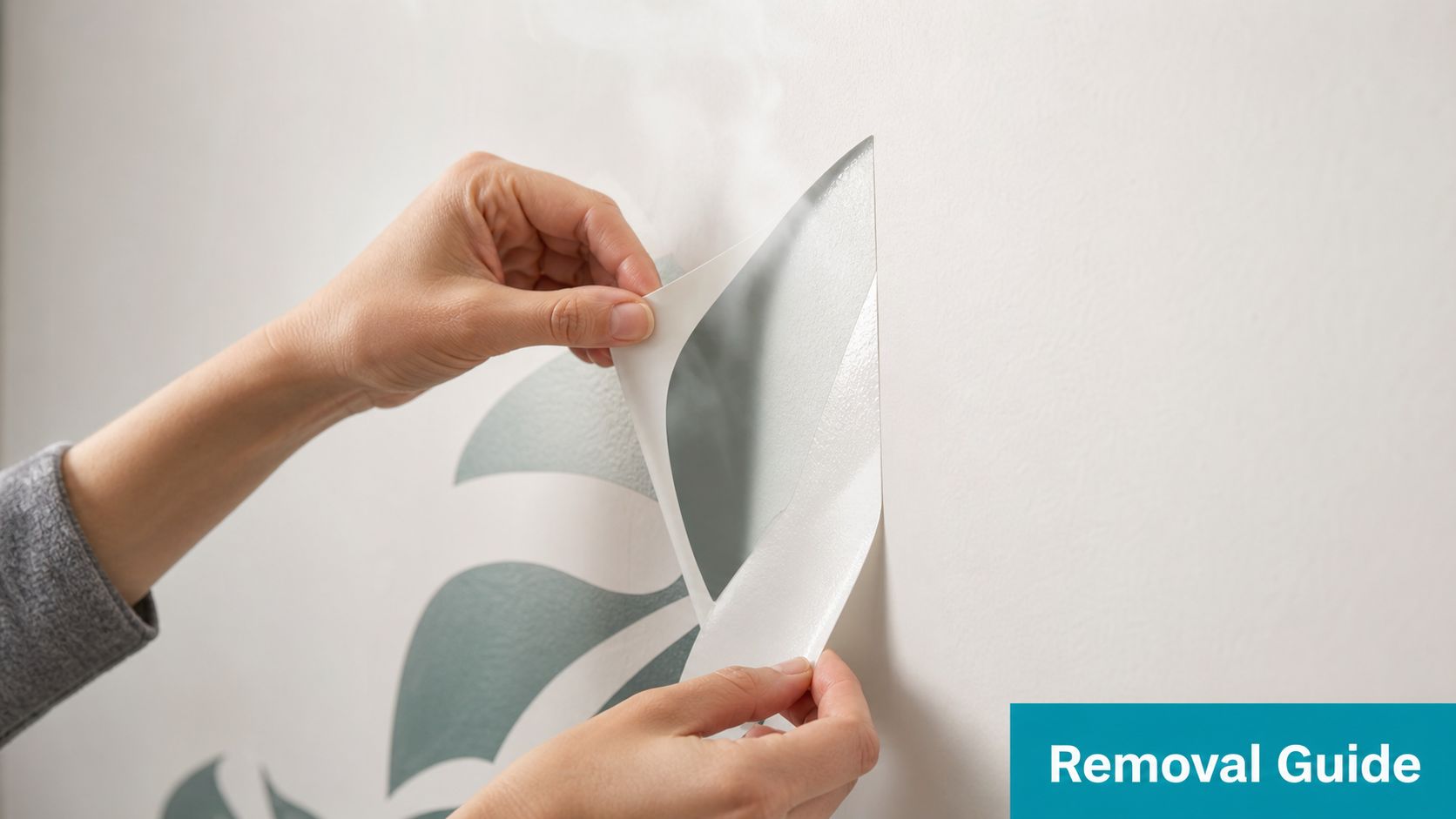
UK décor specialists consistently recommend warming the decal with a hairdryer on a low setting for about 30 seconds before lifting an edge, because the heat softens the adhesive and improves the chance of a clean peel, as shown in this video guide to safe wall sticker removal.
What you need
Keep it simple:
- Hairdryer on a low heat setting
- Plastic card such as an old store card
- Clean soft cloth
- Patience more than force
If you're removing stickers as part of a wider tidy-up before repainting or refurbishing timber nearby, practical prep guides like the Neasden Hardware guide for paint stripping can help you plan the rest of the job properly too.
The method that gives the best chance of a clean wall
-
Warm one small area first
Aim the hairdryer at one corner or edge, not the whole wall. Keep the heat low and move it steadily rather than holding it in one spot. -
Lift a corner with a plastic card
Don't use a knife blade, scraper, scissors, or anything metal. If the corner won't lift, warm it again instead of forcing it. -
Start the peel slowly
The first few centimetres tell you almost everything. If the vinyl stretches and releases, you're in good shape. If the paint starts whitening, tugging, or lifting, stop. -
Keep warming ahead of the peel line
Think of the heat as travelling with you. You're not baking the sticker off. You're just keeping the adhesive soft enough to release. -
Pause on resistance
Resistance means the adhesive is still too firm, or the wall finish is delicate. Reheat lightly and continue in a smaller section.
One useful extra resource
If you want a dedicated product-specific walkthrough, this guide on how to remove wall stickers gives a clear removal sequence using the same low-heat, slow-peel approach.
Slow hands remove stickers. Fast hands remove paint.
Troubleshooting Common Issues and Aftercare
Even with the right removal method, walls sometimes need a bit of tidying afterwards. In practice, the two problems homeowners see most are leftover adhesive and small areas of paint disturbance. Both are usually manageable.
If sticky residue stays behind
Residue usually means the adhesive softened unevenly or part of it stayed bonded to the paint film. Start with the mildest option first. A soft microfibre cloth and a little warm soapy water will often clear light tackiness on a painted wall without creating a bigger repair.
Stubborn residue needs patience. Rubbing hard, scraping with metal, or using strong solvent straight onto emulsion is where a small clean-up job becomes a visible patch on the wall. Work in short passes, let the surface dry, then check again under normal room light. If you need a fuller method, this guide to removing sticky residue from walls sets out a safe cleaning order.
If the paint starts lifting
Paint lift is rarely random. It usually comes from one of three things. Weak paint adhesion, a delicate finish such as flat matt, or too much force going away from the wall instead of back along it.
The practical fix is simple. Keep the vinyl low and pull it back on itself, almost flat to the surface. Slow peeling gives the adhesive more chance to release before the paint film takes the strain. Fast peeling, especially if the decal is being pulled outward, puts more stress into the wall finish.
That matters on UK walls because not all paints behave the same. A fully cured durable acrylic eggshell will usually tolerate removal better than a bargain contract matt, and fresh paint is always the riskier surface. If the wall starts whitening, stretching, or lifting in flakes, stop and reassess rather than trying to get the whole sticker off in one go.
What better technique looks like
- Pull the vinyl back close to the wall, not out toward your body
- Work in short sections where you can feel resistance early
- Re-warm small stubborn areas instead of forcing them
- Accept that one difficult patch may need a slower pace than the rest of the decal
Clean removal is a partnership between the vinyl, the paint, and the person taking it off.
Aftercare matters
Once the sticker is off, wipe the area lightly and leave it alone for a few hours before judging the finish. Paint can look slightly dull, shiny, or marked straight after removal, especially on matt walls, then settle as the surface dries fully.
If a tiny patch has lifted, a light fill, gentle sanding, and a touch-up coat is usually enough. That is frustrating, but it is still a local repair, not a ruined room.
The bigger lesson is the one we see every day at Quote My Wall. Removability is never just about whether a sticker is labelled removable. Good film helps. A sound, cured surface helps. Careful removal helps. Get those three working together and wall stickers are one of the safer, easier ways to decorate without committing to paint or wallpaper.
UK Specific FAQs Nursery Furniture and Clothing Labels
A lot of the questions around wall stickers are really questions about vinyl behaviour in general. Nursery walls, wrapped furniture, and stick-on labels all follow the same basic rule. The material only performs as well as the surface and the way it's used.
Can I remove nursery wall stickers safely
Usually yes, but nurseries often have delicate painted walls, especially matte finishes in soft colours. Go slower than you think you need to. Use low heat only if the paint tolerates it, and always test a discreet corner first.
If the wall was painted fairly recently or feels soft to the touch, be extra cautious. Nursery decals often stay up for longer than seasonal décor, so don't treat them like a quick peel job.
Are furniture vinyl wraps removable too
They can be, but furniture is a different substrate from plastered walls. Wrapped drawers, wardrobes and side tables often have laminate, sealed wood, or coated board surfaces. Those usually cope better than fragile emulsion paint, but edges, chipped areas, and worn finishes can still catch during removal.
The same principle applies. Warm gently, lift with a plastic edge, and peel back on itself rather than upward.
What about clothing labels
Clothing labels aren't the same as wall stickers. They're made to stay put through washing and daily wear, so the adhesive behaviour is intentionally more aggressive. That doesn't make them unsuitable. It just means you shouldn't expect the same easy peel you'd want from nursery décor.
At Quote My Wall, wall decals, furniture vinyl and stick-on clothing labels sit in different use categories for exactly that reason. The removable products are designed around décor and surface safety. The clothing labels are designed around hold.
Is there one rule that applies to all of them
Yes. Match the vinyl to the job.
If the priority is temporary decoration, choose removable wall vinyl. If the priority is durability on laundry items or frequently handled surfaces, expect stronger hold and a different removal experience. Most problems start when people assume all self-adhesive vinyl behaves the same way.
If you're choosing décor for a rented room, nursery, or a quick home refresh, Quote My Wall offers wall stickers, furniture vinyl, window films and labels across the main vinyl categories, so you can pick a material that matches the surface and the level of removability you need.