

Apothecary Coffee Table Your Style & Storage Guide
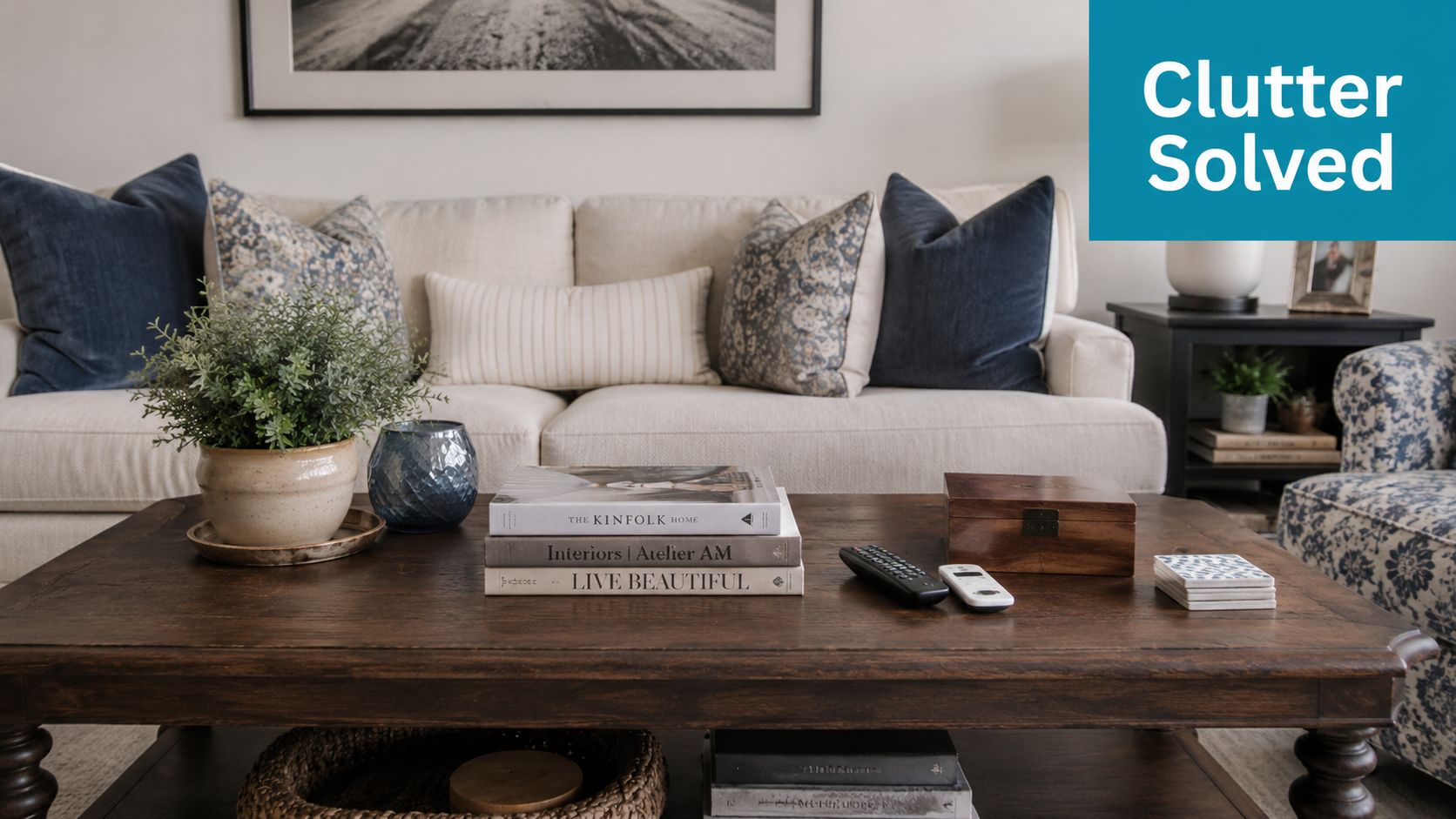
You know the feeling. The living room looks nearly finished, but the coffee table still collects the daily mess, remotes, coasters, a stray charger, maybe a notebook you meant to put away. An apothecary coffee table solves that problem in a way that feels more considered than a plain boxy table, because it gives you storage that's part of the design rather than an afterthought. It's the sort of piece that makes a room look calmer while unobtrusively tackling the task of hiding clutter.
What Is an Apothecary Coffee Table
An apothecary coffee table is a coffee table with the look and logic of old shop storage. Think small drawers, labelled fronts, visible hardware, and a sturdy, cabinet-like shape rather than a simple open shelf. The appeal is easy to understand once you see it in a room, because the drawers break up the front face and give the table a crafted, furniture-maker feel instead of a mass-produced one.
Why the style feels so distinctive
The word apothecary matters here. In England, apothecaries were a legally and socially distinct medical occupation for centuries, with a history stretching from at least the 13th century through the late 16th century. Their shops used cabinetry and compartmentalised storage, and that British material culture is what gives the furniture style its heritage feel, along with the sense of order, storage, and craftsmanship that people still respond to today. You can read the historical background in the research on English apothecaries' trade and medical history in this SAGE article.
The coffee-table part of the name is newer. Coffee tables emerged much later, with historical accounts placing their popular rise in the late 18th century and their modern form in the 20th century. A common milestone in Britain is 1652, when London opened its first coffee house, helping establish coffee as a social habit, while the low living-room table itself was later shaped by modern seating arrangements. A concise design-history overview is available in this brief coffee table history.
Practical takeaway: the style works because it joins old-world storage language with a modern living-room scale.
For UK homes, that combination makes sense. You get the visual richness of a heritage-inspired piece without losing the low profile that works beside a sofa. The result feels timeless rather than themed, which is why the style can sit comfortably in both traditional and contemporary rooms.
Key Features Construction and Materials
The first thing to understand is that a good apothecary coffee table is usually built like a cabinet, not like a simple slab with legs. The structure often uses a frame-and-panel approach, where the load is carried by the side panels and supports. That matters because the drawers need a stable housing, and the table still has to stay balanced when you reach into them every day.
What quality construction looks like
A representative DIY build shows the logic clearly. In that example, the top support sits with an 11.25-inch gap, which helps preserve drawer clearance while keeping the centre of gravity low. The same build also uses legs attached flush to 3/4-inch side panels, plus lower supports to carry the weight of the cabinet structure. You can see the practical thinking behind that layout in this apothecary console table build.
That construction tells you what to look for when shopping. If the front looks busy with drawers but the frame feels flimsy, skip it. A well-made piece should feel solid when you open a drawer, not hollow or top-heavy.
Materials and hardware to assess
Wood choice changes both appearance and longevity. Solid oak and pine bring warmth and a more authentic furniture feel, while MDF and veneer can keep the price lower and still look smart if the finish is done well. Reclaimed wood gives the table character, especially if you want a more weathered or workshop-inspired look.
Hardware matters just as much. Bin pulls, cup handles, and label holders give the table its apothecary identity. If you want to understand how material weight and visual thickness affect a room, the principles discussed in chunky wood shelves are a useful point of comparison, especially if you like furniture that reads as substantial rather than delicate.
A drawer-heavy table should look engineered, not improvised. If the front is all style and no structure, it usually won't feel right in daily use.
A Practical Buying and Placement Guide
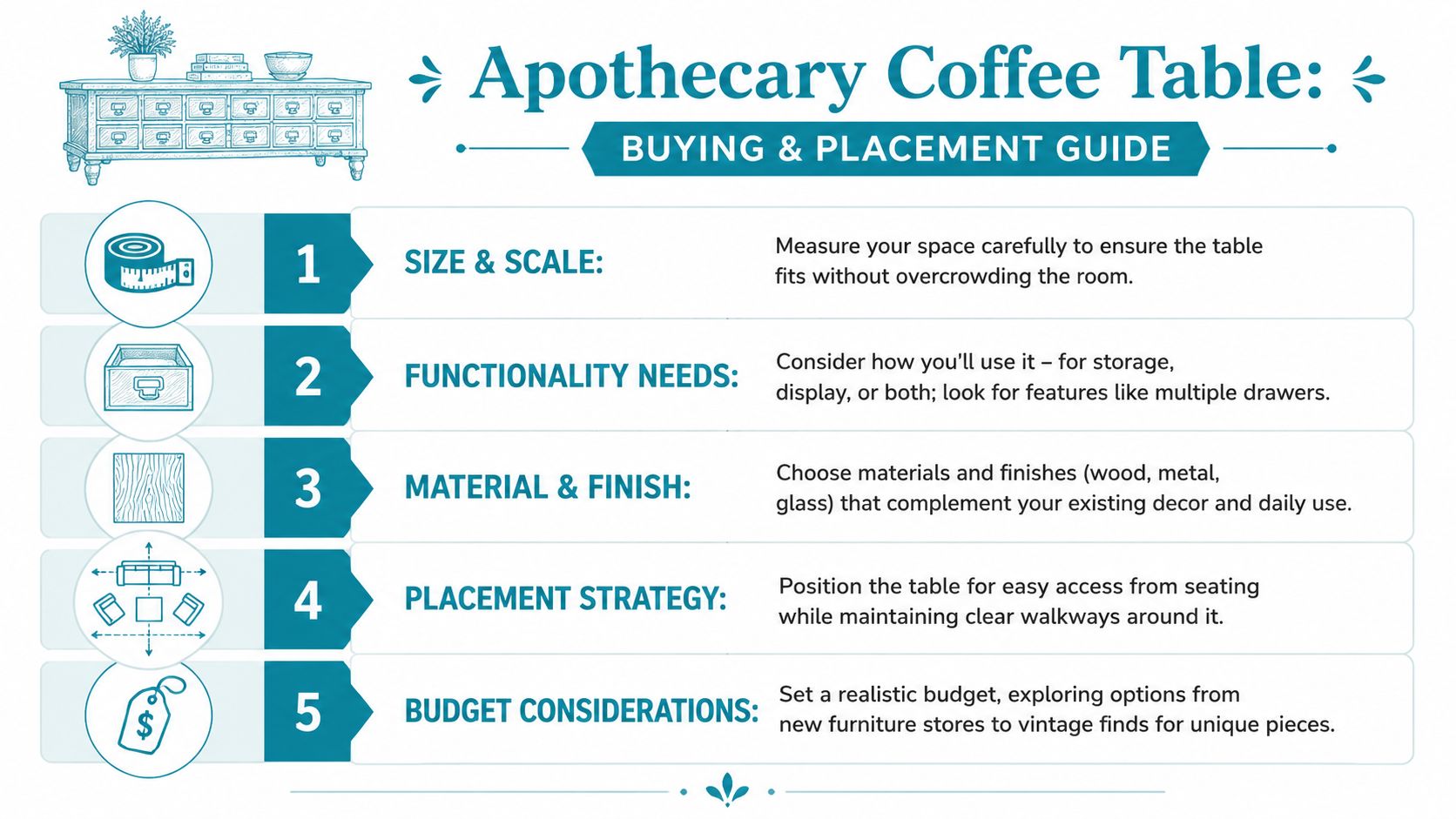
Buying one of these tables is mostly about avoiding two mistakes. The first is choosing a piece that overwhelms the room. The second is buying something beautiful that doesn't solve your storage problem. That tension is especially relevant in smaller UK living rooms, where a compact footprint can matter more than a dramatic silhouette.
Start with how the room works
Measure the space first, then choose the table. You want enough room to walk around it without shuffling sideways, and enough space in front of the sofa so the table feels like part of the seating zone rather than an obstacle. If you have a compact lounge, a rectangular apothecary table often works better than a bulky square one because it reads as less imposing.
Decide how much storage you'll really use
This is the question many trend articles skip. The current discussion around coffee tables often leans towards styling, mixed materials, and sculptural shapes, but buyers still need to know whether the table stores anything useful. That storage question is especially important in tighter layouts, as noted in Ideal Magazine's 2025 coffee table trend coverage.
Practical rule: if you reach for the same three or four items every day, drawers beat an open shelf. If you mostly want a surface for books and a tray, fewer drawers may be enough.
For shopping, antique fairs can be brilliant for authentic-looking pieces with honest wear, while modern retailers are better if you want clean lines and consistent drawer action. If you're renovating a room at the same time, look for a finish that matches your flooring or sideboard so the table feels intentionally placed rather than added at the end.
A sensible final check is simple. Sit on your sofa, look at the coffee table zone, and ask whether the piece will help the room feel calmer or busier. A good apothecary table should do both jobs at once, storing the clutter while keeping the room visually grounded.
Styling Ideas for Modern and Classic Homes
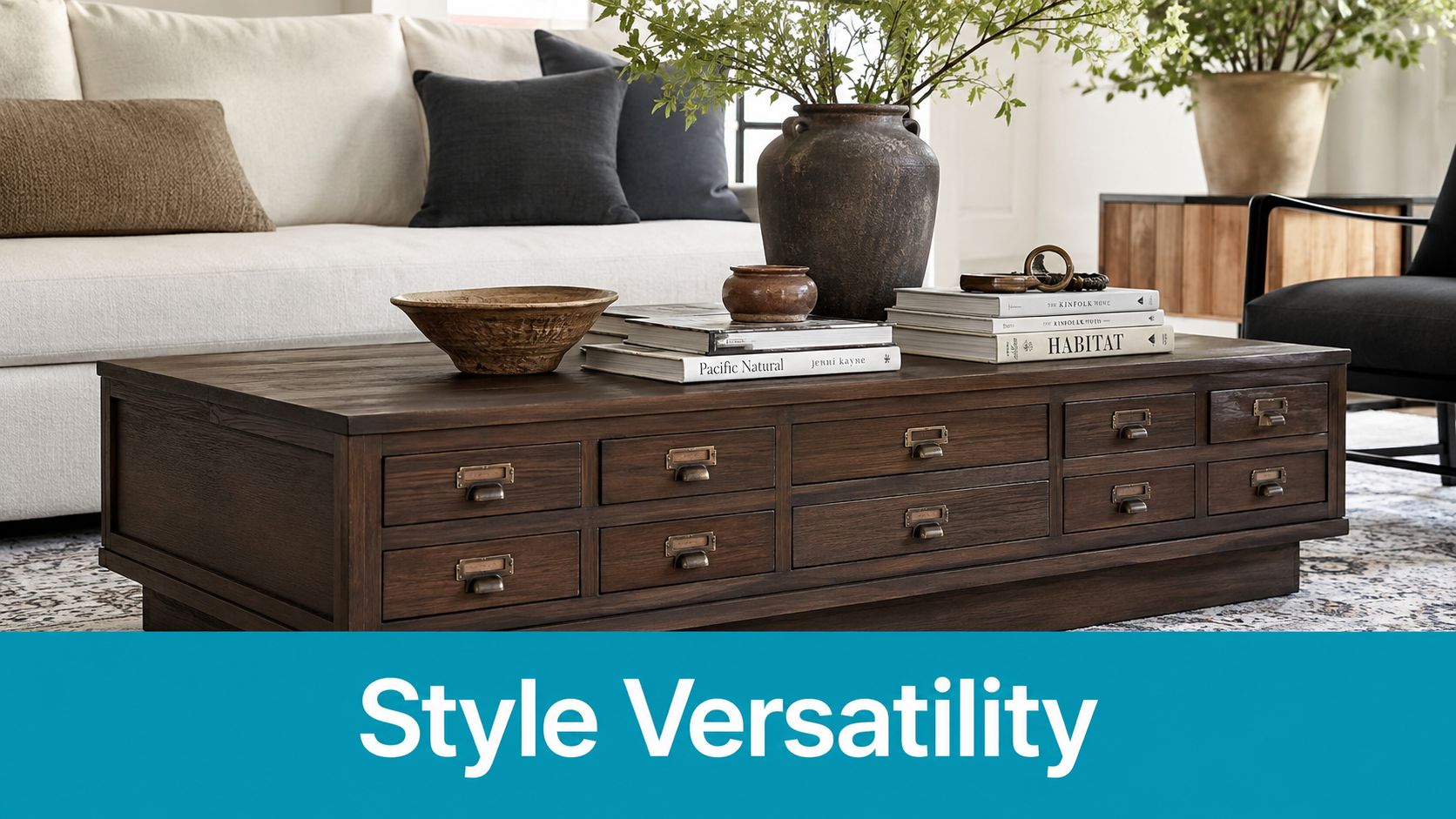
The charm of an apothecary coffee table is that it can look rustic, refined, or understated modern depending on what you place around it. The table itself has visual weight, so the styling needs to feel edited. Too many small objects will fight the drawer fronts, while a few well-chosen pieces will make the whole room look intentional.
Four looks that suit the style
In a modern farmhouse room, a slightly distressed wood finish works well with linen cushions, a ceramic vase, and a stack of neutral books. The drawers add texture, while soft textiles stop the table from feeling too heavy.
For an industrial scheme, choose darker wood tones and hardware with a cast-iron look. Pair it with a black metal lamp, a concrete tray, and a couple of art books so the table echoes the room's tougher materials.
In a Scandinavian space, the table should feel lighter. Pale wood, simple ceramics, and one small plant are enough, because the drawer grid already gives the surface enough character.
A traditional British room can take a richer finish, like walnut or mahogany tones, with polished brass pulls and classic objects such as hardback books, a candlestick, or a small framed print.
If you enjoy rooms with a calmer, more reflective mood, it's worth browsing explore spiritual home decor ideas for inspiration on how to balance grounded furniture with serene decorative layers.
Keep the top visually quiet
The table face already carries detail, so the top works best when you keep to a small grouping. A tray helps gather remotes and candles, a plant softens the edges, and a book stack gives the eye somewhere to rest. That way, the drawers stay the hero instead of fighting with clutter all over again.
How to Create Your Own Apothecary Look
A plain coffee table can be turned into an apothecary-style piece without buying a full new cabinet. That's the appeal for DIYers, especially if you've got a sturdy second-hand table and you want the look of custom furniture without the cost or mess of a full rebuild. The trick is to make the front read as drawer-based storage, even if the table started life as something far simpler.
Build the illusion before you add the details
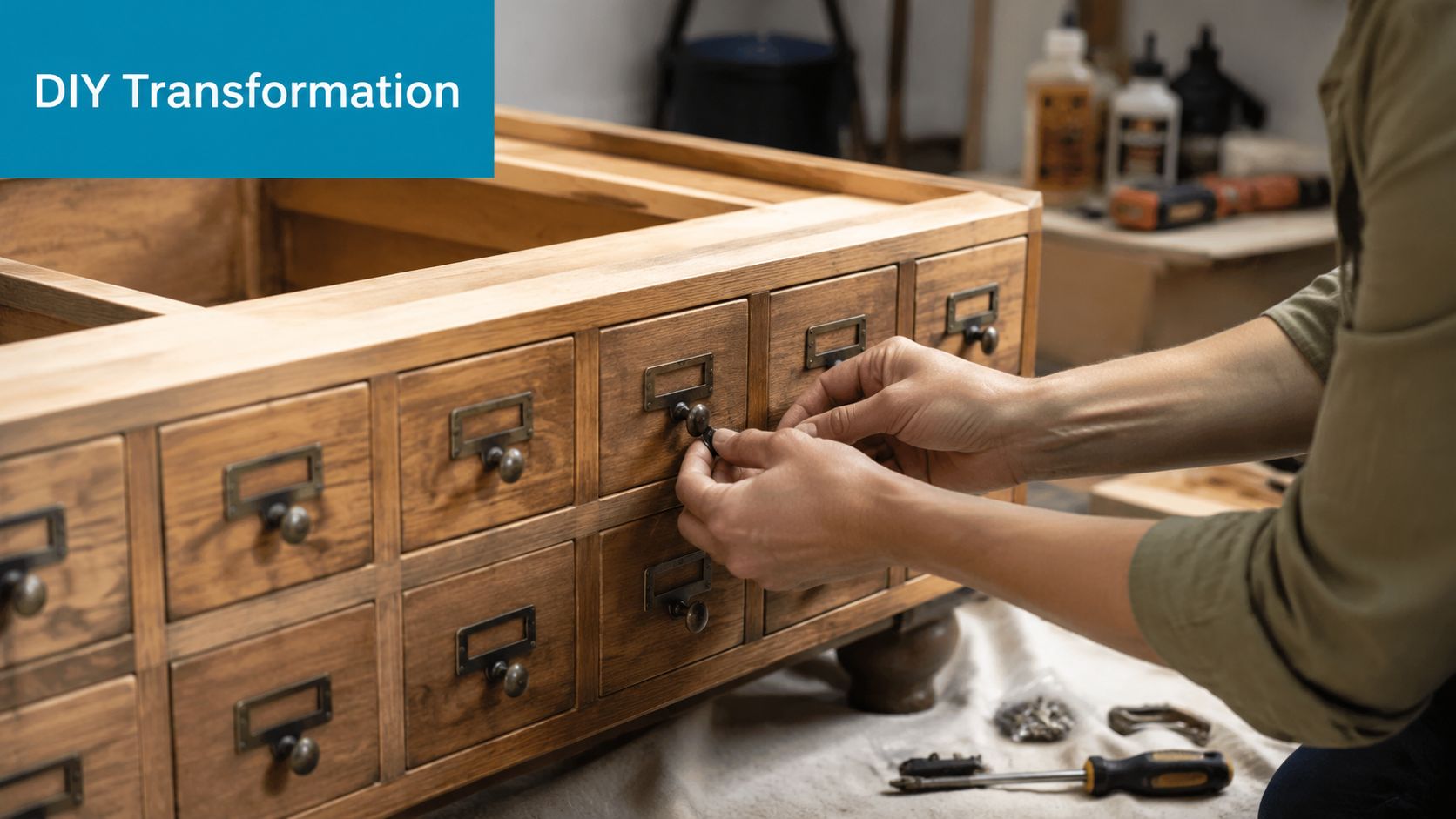
Start by cleaning the table thoroughly and sanding any glossy finish just enough for adhesion. Then decide whether you're creating real faux drawers with shallow fronts or disguising larger panels so they look compartmentalised. If the table already has storage, keep the existing layout and enhance it, because the apothecary look becomes more convincing when the drawers function.
Adding hardware is the fastest way to change the personality of the piece. Label holders, cup pulls, or neat metal handles instantly suggest old shop cabinetry, especially if you align them carefully. If you want a fuller furniture makeover route, the step-by-step advice in the GTA homeowners' kitchen paint guide is useful for thinking about prep, surface choice, and finish discipline before you pick colours.
Vinyl wrap is the low-fuss shortcut
For many projects, vinyl wrap is the easiest way to get a professional-looking result. It's clean, fast, and ideal if you want either a wood-grain effect or a smooth painted finish without handling primer, brushes, or drying time. A good wrap also helps the table look more consistent, especially if the original surface is patchy or dated.
The best approach is to work in sections. Measure each panel, cut the vinyl with a little extra allowance, apply from one edge, then smooth it down gradually so air doesn't get trapped. If you want more guidance on the material itself, the resource on vinyl wrap for furniture in the UK is worth reading before you buy.
Best result: keep the lines straight, space the handles evenly, and let the finish look calm rather than overworked.
Once the wrap and hardware are in place, the table stops reading as generic and starts looking deliberate. That's the sweet spot for an upcycle project, because it feels custom even when the base piece was inexpensive or second-hand.
Keeping Your Table Looking Its Best
Different finishes need different care. If you treat a solid wood table the same way you treat vinyl wrap or veneer, you can shorten its life or make the finish look tired quickly. A little routine maintenance keeps the drawers sliding properly and prevents the surface from losing its crisp, apothecary-style character.
Quick fixes for the most common issues
For solid wood, use a soft cloth and a gentle cleaner made for timber. Wipe spills quickly and avoid soaking the surface, because standing water is the main cause of dull marks and swelling.
For veneer, be even more careful with moisture. Use a barely damp cloth, then dry the surface straight away so the edges don't lift.
For vinyl-wrapped surfaces, a mild soap solution and a soft microfibre cloth are usually enough. Skip abrasive scrubbers, because they can mark the wrap and make the finish look uneven.
Sticky drawers usually mean dust, misalignment, or too much humidity. Clear the runners, check that nothing has shifted inside, and rub a little candle wax or a suitable furniture glide on the contact points if needed.
Keep a coaster on the table and a dry cloth nearby. That small habit prevents most finish problems before they start.
If you're moving house or storing the table, soft protection matters. A practical option is to use covers for moving furniture so the corners and hardware don't get knocked or scratched. For more upcycling ideas that can extend the life of old pieces, the guide on how to upcycle furniture is a useful next read.
Is an Apothecary Coffee Table Right for You
Choose an apothecary coffee table if you want a piece that does three things at once. It brings heritage-inspired style, it offers practical storage, and it works in rooms where clutter needs a visual home. That combination is why the style feels so useful in everyday living, especially when you want the room to look finished without adding extra cabinets.
If your priority is a small work surface, a lift-top coffee table may suit you better, because it's built for laptop use and casual eating. If you want the room to look as light and uncluttered as possible, a waterfall table gives you a simpler, more minimal silhouette. Both are valid choices, but neither offers the same cabinet-like storage language that makes the apothecary style so distinctive.
A distinct benefit of this table is that it doesn't force you to choose between beauty and usefulness. It can feel traditional, modern, or DIY-friendly depending on the finish you pick. It also gives you room to personalise the look with hardware, wraps, paint, or a careful styling scheme.
If you want a coffee table that helps your room look calmer while hiding the small things that always seem to pile up, the apothecary version is a strong choice. Explore the vinyl-wrap and furniture-upcycle ideas at Quote My Wall and start planning a table that fits your space, your storage needs, and your style.