

Alphabet Letter Stickers: A Complete UK Buyer's Guide
You've got a nursery wall to personalise, a wardrobe that needs a child's initials, or a pile of school jumpers waiting for name labels. The obvious choice seems to be alphabet letter stickers, but the wrong type can lift paint, peel from fabric, or look untidy within weeks. Wall decals, clothing labels and furniture lettering are different products, and buying them as though they're interchangeable is the quickest route to disappointment.
A UK renter also has more to consider than colour and font. Painted emulsion, nursery surfaces, rental deposits, washable clothing and indoor air quality all affect the right choice. This guide gives you the practical buying advice I use when deciding what letter sticker belongs on which surface.
What Alphabet Letter Stickers Actually Are
A parent in Manchester might start with hand-cut paper letters taped above a cot, hoping an improvised alphabet display will last until the room is finished. In Bristol, a renter may press vinyl initials onto a white wardrobe door to make flat-pack furniture feel personal. Meanwhile, a Sunderland school PTA could be sorting name labels for children's uniforms and equipment before the September intake.
Those jobs look similar, but they need different sticker formats. Alphabet letter stickers are pre-cut A–Z characters, sold as individual letters, complete alphabet sheets, name strings or custom phrases. Each character has its own contour, rather than forming part of one large printed mural.
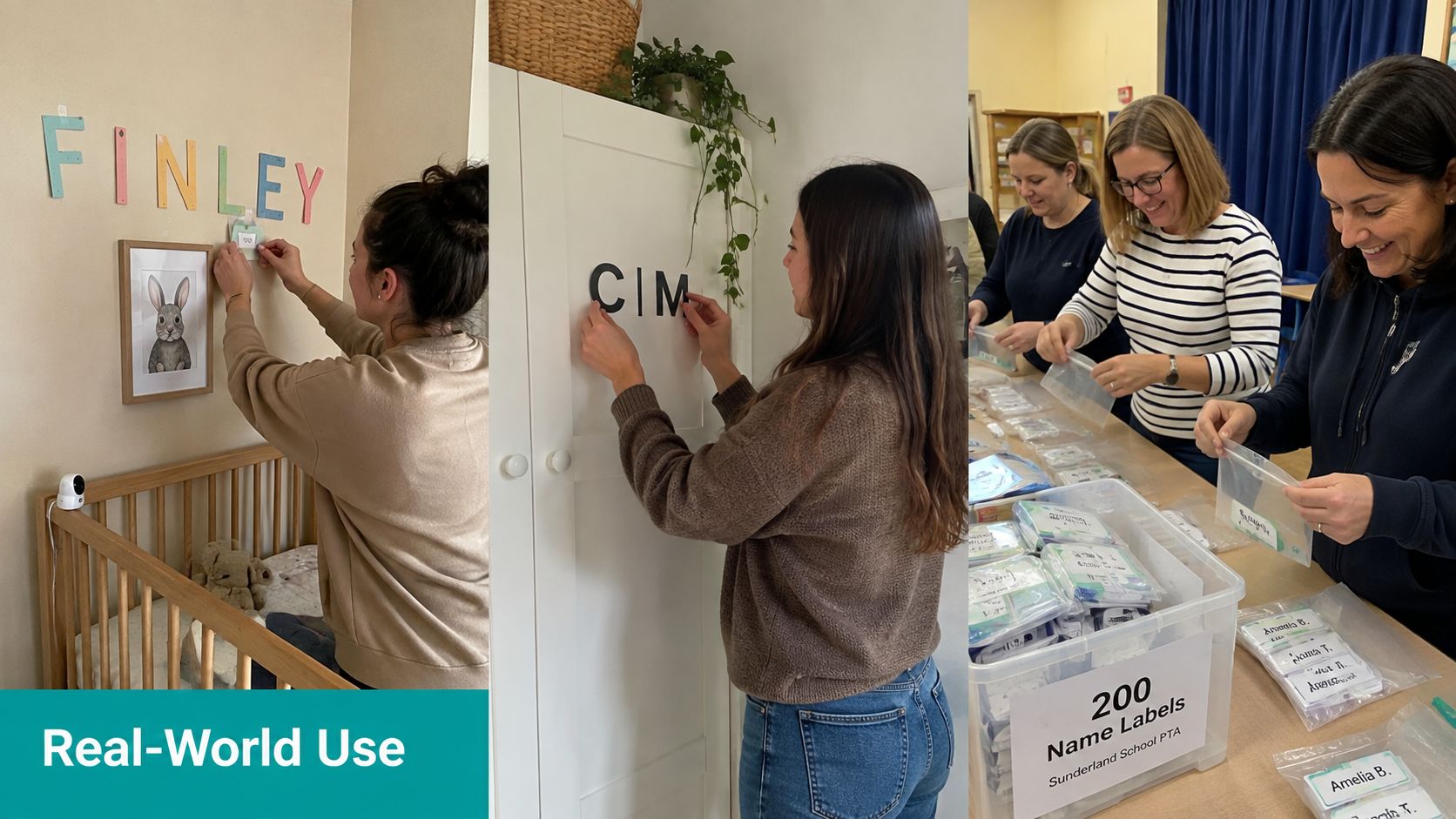
Three products, three jobs
Wall and furniture decals are usually cut from vinyl. They're designed for painted walls, doors, cupboards, windows or smooth furniture surfaces, with an adhesive selected for either removability or long-term bonding.
Clothing and equipment labels are a separate category. Stick-on name tags use a washable face film, while iron-on labels use heat-transfer materials. Their adhesive must cope with handling, moisture and laundering, and not just sit flat on a wall.
Craft letters are generally paper, foam or light adhesive-backed film. They suit scrapbooks, cards, classroom displays and short-term projects, but they aren't the right choice for a humid bathroom, an outdoor sign or a frequently handled wardrobe.
Practical rule: Choose the surface first, then the sticker family. Never start with the font or colour.
For a child's room, look at a dedicated alphabet wall sticker range for kids' spaces, then check the material and adhesive before ordering. A nursery name, a school jumper and a furniture makeover may all use letters, but they shouldn't share the same product.
The technology behind peel-and-stick lettering has a long UK connection. Sir Rowland Hill's invention of adhesive paper in 1839 helped lead to the first modern UK postage stamps, widely treated as the earliest modern stickers because they combined printed designs with adhesive backing. That development matters because it established the adhesive-printing logic later used for peel-and-stick labels and lettering in the UK sticker history and the 1839 milestone.
Materials, Finishes and How They Behave
Treat sticker material like you'd treat paint, fabric or wallpaper. The same alphabet design can behave completely differently depending on whether it's printed on flexible vinyl, paper, polyester or static cling.
PVC calendered vinyl is the everyday wall-lettering choice. It's flexible, gives letters a clean edge and is available in matt, satin, gloss and metallic finishes. Matt is my usual recommendation for painted walls because it reduces glare and looks more like part of the surface. Gloss works well on glass and wipe-clean furniture, while metallic finishes make small names stand out against plain décor.
Cast vinyl is thinner and more conformable. It's useful on gently curved furniture, rounded storage boxes or surfaces where a thicker film might bridge and lift. It won't turn a heavily textured wall into a smooth one, though. Deep texture still creates weak contact points.
Compare the material before choosing the finish
| Material | Typical Thickness | Best Finish Options | Best For |
|---|---|---|---|
| Calendered PVC vinyl | 70–80 microns | Matt, satin, gloss, metallic | Walls, doors, cupboards and general décor |
| Cast vinyl | Around 50 microns | Matt, gloss and specialist finishes | Curved furniture and more demanding contours |
| Polyester or Mylar | Varies by product | Chrome and brushed metal | Names, signage and decorative accents |
| Static-cling vinyl | Not specified | Clear and printed finishes | Smooth glass and temporary window displays |
| Paper with water-based acrylic backing | Not specified | Printed and coloured paper finishes | Scrapbooking and short-term classroom work |
| PU flex or heat-transfer vinyl | Not specified | Matt, gloss and printed options | Iron-on clothing names and garment decoration |
Polyester and Mylar create the metallic appearance many buyers want for nursery names or event signage. They're decorative materials first, so check whether the product is intended for walls, glass or a specific substrate before assuming it will work everywhere.
Static-cling vinyl has no adhesive. It holds to smooth glass through surface contact, peels away quickly and avoids sticky residue, but dust destroys that grip. It won't behave properly on emulsion paint, plaster or wood.
Paper letters are fine for a supervised craft activity or temporary display. They'll tear when soaked and may curl in a steamy room. For clothing, choose a labelled PU flex or heat-transfer film, or a printed polyester label designed for laundering. The face film and adhesive are engineered for fabric movement, unlike a wall decal.
Finish also changes legibility. Gloss and metallic surfaces catch light, while matt lettering sits against paint. If you're pairing uppercase and lowercase characters, choose a finish that keeps the shapes clear rather than one that creates distracting reflections.
Adhesive Types and Which Surface They Suit
Adhesive choice decides whether a letter stays put or removes a strip of paint with it. “Removable” is not a guarantee of clean removal from every UK wall. It describes the adhesive's intended behaviour, but the paint age, surface condition, texture and humidity still matter.
The practical trade-off
| Adhesive type | Suitable surfaces | Main advantage | Main risk |
|---|---|---|---|
| Permanent acrylic | Metal, sealed wood, tile and suitable outdoor surfaces | Strong, lasting bond | Can pull paint or damage finishes |
| Removable adhesive | Sound painted walls, smooth glass and selected furniture | Easier future removal | May lift on dusty, damp or textured surfaces |
| Repositionable low-tack | Smooth, clean surfaces during careful fitting | Allows alignment before final pressure | Weaker bond if repeatedly moved |
| Ultra-high-tack industrial adhesive | Powder-coated metal, brick and outdoor signage | Handles demanding conditions | Poor choice for rental walls |
Permanent acrylic is appropriate for tile splashbacks, sealed furniture and outdoor house numbers where you want the lettering to remain. Removable adhesive is the sensible starting point for rental bedrooms, nursery walls and temporary décor, provided the emulsion is sound and fully cured.
Ultra-high-tack products belong on sturdy substrates, not behind a rented cot. They can grip aggressively enough to remove paint, especially from weak or flaky surfaces. A low-tack or repositionable option gives first-time fitters more control, but it still needs a clean, stable surface.
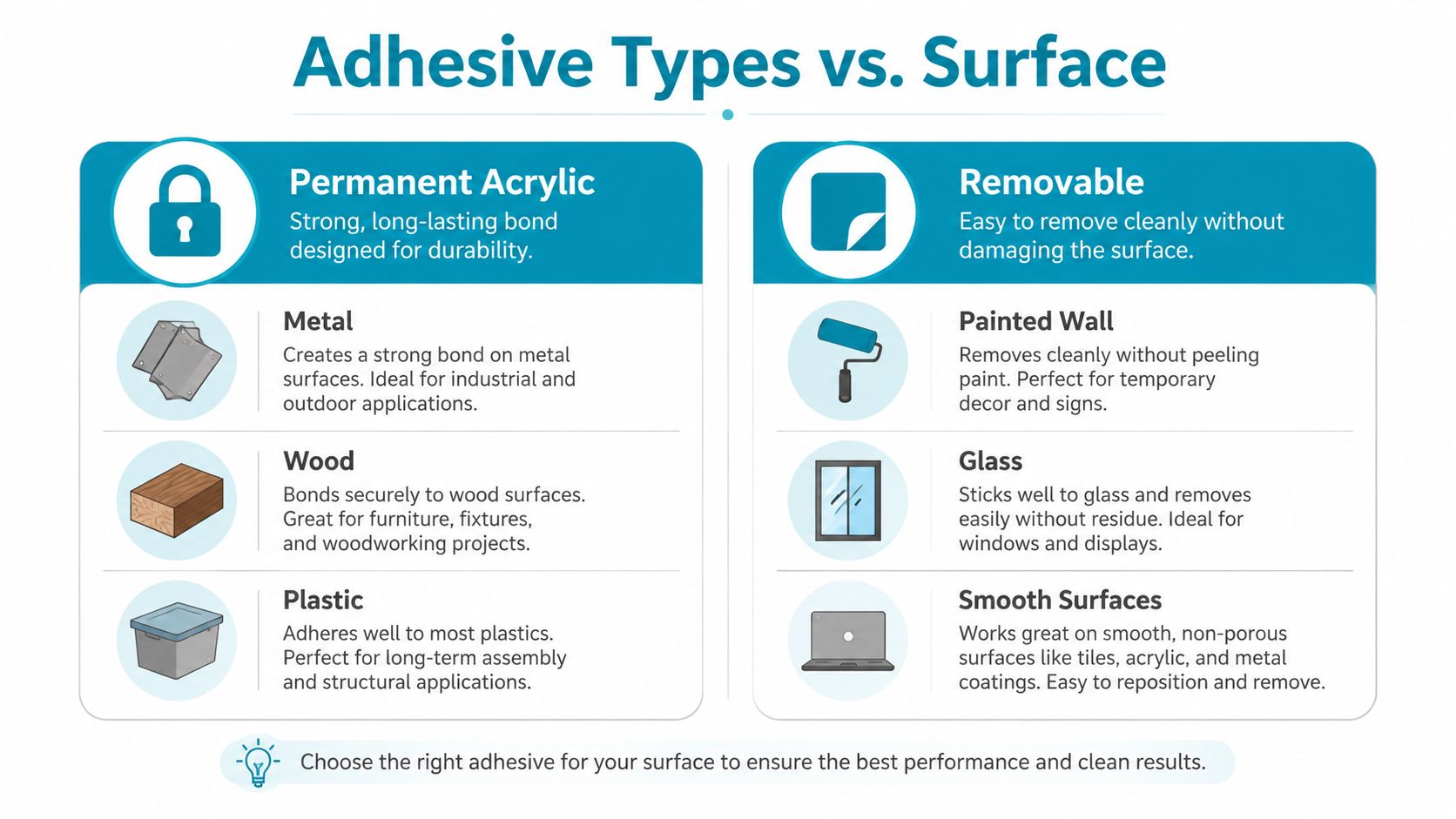
Emulsion paint, glass, melamine, bare wood, brick and polyester fabric all present different bonding conditions. Even a product described as removable may struggle on an artex ceiling, chalky paint or furniture covered with a dusty wood-effect film.
Rental-wall advice: Test one spare letter in an inconspicuous place. Leave it long enough to assess adhesion, then warm and remove it before committing to the full design.
For a careful removal method, use this practical guide to remove sticky residue from walls. If the lettering is intended for regulated hazardous-goods packaging, ordinary decorative vinyl isn't enough. BS 5609 requires printed pressure-sensitive labels to withstand a three-month seawater immersion test and remain legible and adhered after abrasion and UV or weather exposure, with compliance applying to the complete print system, not just the base material BS 5609 marine-label requirements.
Applying Alphabet Letter Stickers Without Bubbles or Tears
Most failed applications start with rushed preparation. A clean letter on a properly prepared surface will outperform a premium decal pressed onto dust, grease or uncured paint.
Prepare the surface properly
Lay the lettering flat on a table before you begin. For a wall decal supplied with transfer tape, keep the letters attached to the tape while you separate the backing paper. Work slowly, especially around thin strokes and small counters in letters such as “a”, “e” and “R”.
Clean the surface with a lint-free cloth and a very small amount of isopropyl alcohol where the finish allows it. Let the area dry completely. Don't apply to damp paint, greasy kitchen surfaces or freshly decorated walls.
Mark a faint pencil guideline for the baseline. This matters more than people expect. A long phrase can look crooked even when each individual letter is perfectly straight, particularly if it contains rounded characters or a mixture of capitals and lowercase forms.
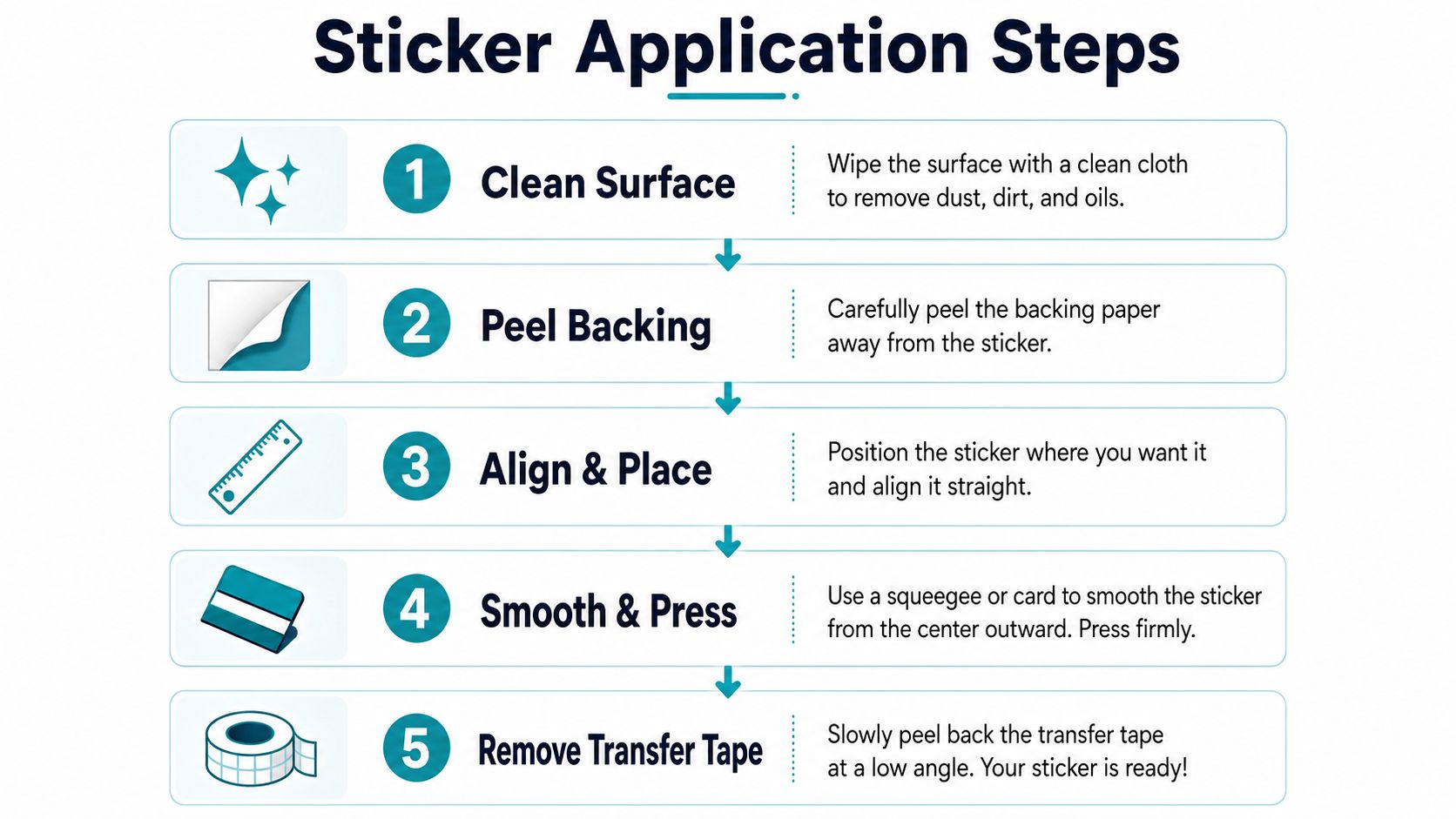
Apply from the centre outwards
- Position the transfer tape: Hold the taped lettering above the guideline and check the spacing from both ends.
- Tack the centre: Press the middle of the phrase first, then smooth towards each edge with a squeegee or an old bank card.
- Keep the angle shallow: Push outwards with overlapping strokes. This gives air an escape route instead of trapping it beneath the vinyl.
- Deal with bubbles: Small bubbles can often be pushed towards the edge. For a stubborn bubble, prick the vinyl with a fine pin and flatten it gently.
- Remove the tape slowly: Pull it back at a low angle rather than straight towards you. If a letter begins to lift, lay the tape down again and burnish that area.
Don't wet-apply ordinary wall lettering unless the supplier specifically permits it. Water can delay the initial bond, complicate alignment and leave moisture beneath porous paint.
The best results come from patience, not force. Press firmly enough to activate the adhesive, but don't scrape repeatedly over a delicate matt wall finish.
Sizes, Fonts and Customisation Options
Choose letter height before choosing a font. A beautiful script that disappears from the other side of a bedroom is a poor purchase, while a heavy block font can overwhelm a small cupboard door.
| Letter Height | Typical Use | Best Surface |
|---|---|---|
| 10–25mm | Scrapbooks, craft projects and small labels | Paper, card and craft materials |
| 50–100mm | Doors, cupboards, bins and equipment | Smooth walls, melamine and sealed furniture |
| 200–600mm | Feature walls, nursery names and statement décor | Broad, smooth wall areas |
The height bands above are useful buying guides, not rigid rules. Thin scripts need more room than block lettering because narrow strokes lose clarity at a distance. Block serifs generally read well on doors and walls, while rounded fonts create a softer nursery look.
Colour should match the surface contrast. White lettering needs a darker background, while black or deep colours give stronger definition on pale UK emulsion. Matt finishes suit most walls, gloss suits wipe-clean surfaces and metallic or glitter effects work best when you deliberately want the letters to catch light.
Ask whether the supplier cuts each character separately or supplies a phrase on one transfer strip. Individual letters take longer to align but offer greater flexibility. A transfer strip keeps spacing consistent and is usually easier for a long name.
Common customisation options include:
- Personal names: Useful for bedrooms, lockers, storage boxes and care-home doors.
- Mirrored lettering: Necessary when the design is viewed through glass from the opposite side.
- Cut-to-size lettering: Helps fit a measured panel without awkward cropping.
- Special finishes: Matt, gloss, glitter, metallic and chalkboard effects change both appearance and cleaning requirements.
If your lettering forms part of a wider room or sign system, typography guidance can help you improve legibility on your site. The same principle applies to physical lettering. Contrast, spacing and stroke width matter more than choosing a fashionable font.
Removing and Caring for Stickers on Walls, Furniture and Clothing
Removal should be slow and warm, never a test of strength. Pulling a cold vinyl letter straight off a painted wall can take the top layer of emulsion with it, particularly where the paint is weak or the surface has texture.
Painted walls and furniture
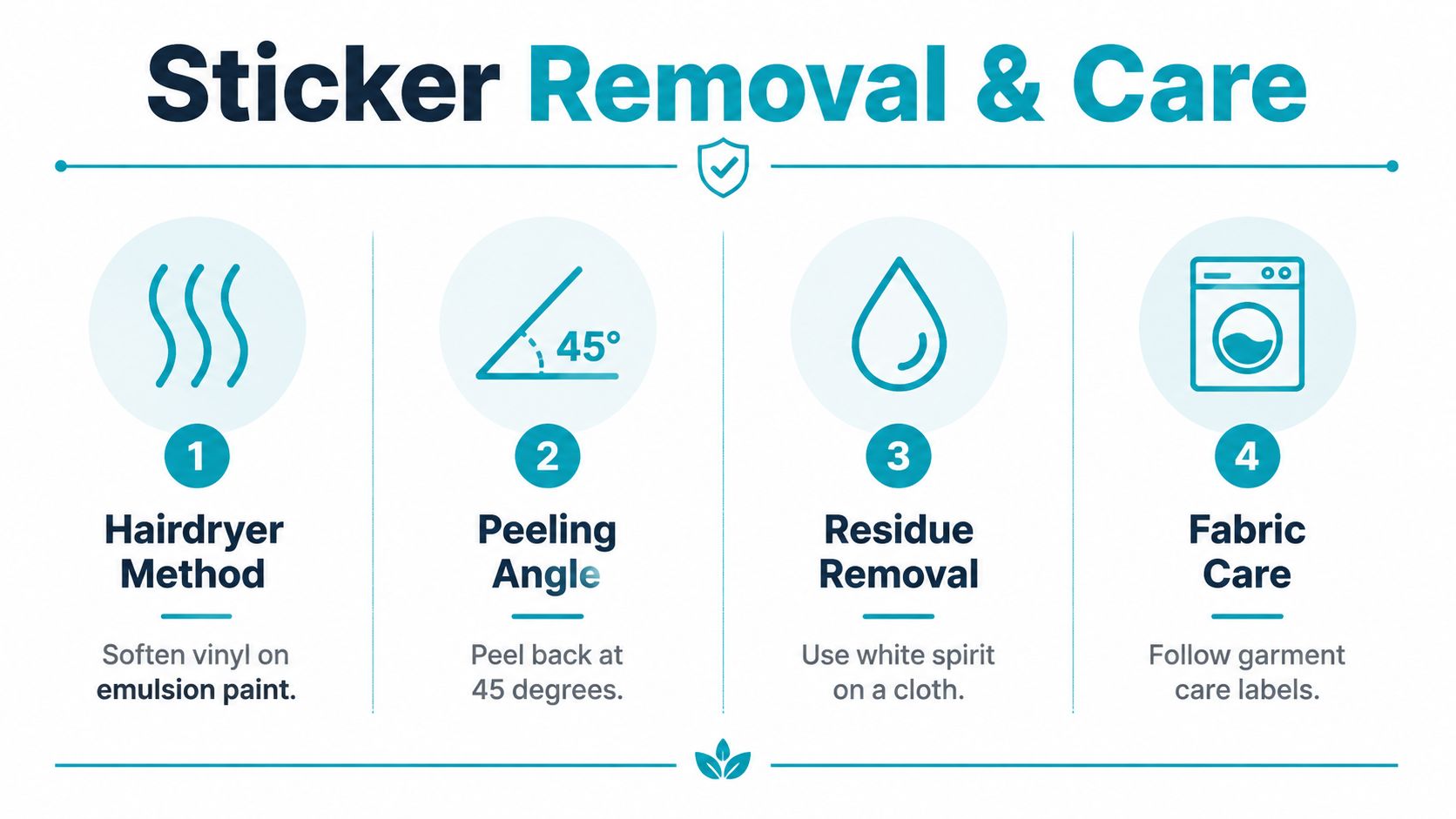
For removable vinyl on sound emulsion, warm one letter with a hairdryer on a medium setting for about 30 seconds, then lift a corner and peel back at roughly a 45-degree angle removable vinyl guidance. Keep the dryer moving. A heat gun is too aggressive for most painted walls and can scorch or soften the finish.
Furniture needs a similarly gentle approach. Warm the vinyl, then pull slowly across the grain rather than sharply upwards. On a wrapped or coated panel, this reduces the chance of lifting the underlying finish.
If residue remains on paint, use a pea-sized amount of white spirit on a cotton cloth only after testing the area. Rinse with clean water afterwards and avoid saturating the wall. On glass or mirrors, letters often lift cold, and a small amount of vinegar can help with remaining adhesive.
Clothing labels need different care
Iron-on labels require a warm iron, a pressing cloth and firm pressure for about 10 seconds. Follow the supplier's instructions, because excessive heat can mark synthetic fabric or distort the garment.
Wash labelled clothing inside out at 30°C, avoid tumble drying where the product instructions advise against it, and let the adhesive cool fully before washing. For a broader wall-removal sequence, use this guide to remove wall stickers safely.
Never place loose alphabet letters inside a cot. Wall-mounted décor is a different risk from detachable pieces that a child can pull away, fold or put in their mouth. Nursery buyers should also check the product's PVC, phthalate and ink information, plus compatibility with the painted surface, because plastic-based decals can raise indoor-air-quality questions near sleeping babies UK nursery décor and decal considerations.
Real UK Uses for Alphabet Letter Stickers
A Leeds nursery can turn a blank wall above a changing unit into an ABC frieze with removable vinyl. The key is a wipeable face and an adhesive suited to sound, cured emulsion, so the display provides a clear learning cue without treating the wall like a permanent sign.
The same nursery shouldn't use craft paper letters there. Paper belongs on a protected board or temporary display, not where cleaning and daily contact can expose it to moisture.
Three practical scenarios
Furniture upcycling in Bristol: A couple refurbishing a pine bookcase can spell a child's name across the top in chalkboard vinyl. Degrease the sealed wood, check the finish is smooth and stable, and use lettering designed for furniture rather than a paper craft sheet. The result gives a flat-pack piece a personal focal point without screws or a painted inscription.
Laundry organisation in Manchester: A care home can use washable name labels on knitwear, towels and personal clothing. Choose a label made for fabric, not a wall decal, and organise the lettering by resident or wing if staff need fast visual identification. The adhesive, face film and washing instructions matter more than decorative font choice.
Early-learning play at home: Parents can use separate uppercase and lowercase letters on a playroom board, then pair them with objects or pictures that begin with each sound. For bath-time activities, compare the construction and safety information before choosing the best bath letters, because floating foam pieces are not the same as adhesive wall lettering.
Match the product to the routine
A nursery display needs a calm finish, safe placement and a wall-friendly adhesive. A bookcase needs strong surface preparation and a film that tolerates wiping. A care-home garment label needs reliable fabric adhesion and clear laundering instructions.
Quote My Wall's clothing-label range includes ultra-high-tack stick-on labels intended for school clothing and care-home garments, with product information covering washing, tumble drying, microwave and dishwasher use. Check the exact label instructions before applying them to a particular fabric or item.
Buying Checklist and Common Questions
Before ordering, photograph the surface and measure the available width in millimetres. Then answer these questions:
- Surface: Is it emulsion, glass, melamine, wood, brick or fabric?
- Adhesive: Do you need permanent, removable or repositionable?
- Size: Will the letter height remain readable at the viewing distance?
- Font: Are the strokes wide enough for the chosen size?
- Finish: Will matt, gloss, glitter or metallic suit the room?
- Laundry: Will a clothing label handle the garment's wash instructions?
- Purpose: Do you need a name, initials, a full alphabet or a phrase?
- Production: Is the design made to order?
- Application: Does it arrive as individual letters or transfer lettering?
- Testing: Can you order a sample or spare letter?
Can vinyl go on freshly painted walls? Wait until the paint has fully cured. For a rental wall, four weeks is the stated practical waiting period in the supplied guidance, followed by a hidden-area test.
Are alphabet stickers safe in cots? Use fixed wall decals outside a child's reach. Never add loose, detachable letters to a cot.
Will clothing labels survive tumble drying? Only follow the product's stated care instructions. Low heat may be acceptable for some labels, but don't assume every adhesive has the same tolerance.
Will they stick to wood-effect furniture wrap? Yes, if the surface is smooth, stable and thoroughly degreased. Buyers developing personalised sticker products can also use niche research for POD beginners to explore product ideas, but the physical material and adhesive still determine whether the finished label performs.
Quote My Wall supplies wall decals, nursery lettering, furniture vinyl, window films and washable clothing labels for UK homes, schools and care settings. Visit Quote My Wall with your measurements and surface details, then choose the lettering format that fits the job instead of forcing one sticker type to do everything.