

Your Ultimate Guide to Washable Name Labels for Clothing
Let's be honest, we've all been there. That sinking feeling when your child comes home from school missing yet another jumper, or when a favourite t-shirt vanishes from the nursery bag. The lost property box becomes a black hole, and the cost of replacing everything quickly adds up.
Washable name labels are your secret weapon in the war against lost clothes. They are specially designed tags that can handle the rough and tumble of the washing machine and dryer, staying put without fading, peeling, or disappearing themselves. Think of them as tiny, durable signposts ensuring every item of clothing finds its way back to the right owner.
Why Every Family Needs a Stash of Name Labels
The constant cycle of lost school uniforms, PE kits, and nursery clothes isn't just frustrating; it's a real drain on your time and money. One unlabelled cardigan can easily get swallowed up in a sea of identical ones, leading to fruitless searches and yet another trip to the shops.
This is where washable name labels step in. They’re not just a handy little accessory; they're a smart investment that saves your sanity. They offer a clear, reliable, and long-lasting way to identify belongings in the chaotic environments of schools, nurseries, and even care homes.
This guide will walk you through the best options out there, so you can find the perfect match for your family's needs:
- Stick-on labels: The ultimate time-saver, perfect for applying directly to a garment's care tag.
- Iron-on labels: A semi-permanent choice that fuses directly onto the fabric itself.
- Sew-in labels: The traditional, ultra-secure method for maximum durability.
The problem of lost clothing is surprisingly massive. A 2023 report on textile waste revealed that UK schools misplace around 1.2 million items of clothing every single year. This costs families a staggering £9.6 to £14.4 million annually. The good news? The same report found that schools with clear labelling policies saw lost property reduced by up to 60%. It’s proof that a simple label makes a huge difference. You can read more about this in the report by Wrap UK.
By spending just a few minutes labelling an item, you give it the best possible chance of being returned. It's a simple step that saves you from rummaging through lost property bins and protects your wallet from the cost of another new school jumper.
Comparing the Best Types of Clothing Labels
Choosing the right washable name labels can feel a bit overwhelming, but it really just comes down to the job at hand. You wouldn't use a hammer to turn a screw, right? The same logic applies here. The main players are iron-on, sew-in, and stick-on labels, and each one shines in different situations and on different fabrics. Getting to know their strengths is the secret to keeping that dreaded lost property pile at bay.
Think of an iron-on label as a high-tech transfer. A hot iron fuses it directly into the fabric's fibres, making it feel like part of the garment. Then you have the traditional sew-in label—the gold standard you see in high-end clothing. It’s stitched in place for a professional, ultra-secure finish that's not going anywhere.
Finally, there's the stick-on label, the undisputed champion of convenience. It’s the quick-fix hero for busy parents, applying in mere seconds with no heat or sewing needed. Each type has its perfect moment to shine.
This simple flowchart says it all: labelling clothes is the clear path to a stress-free outcome.
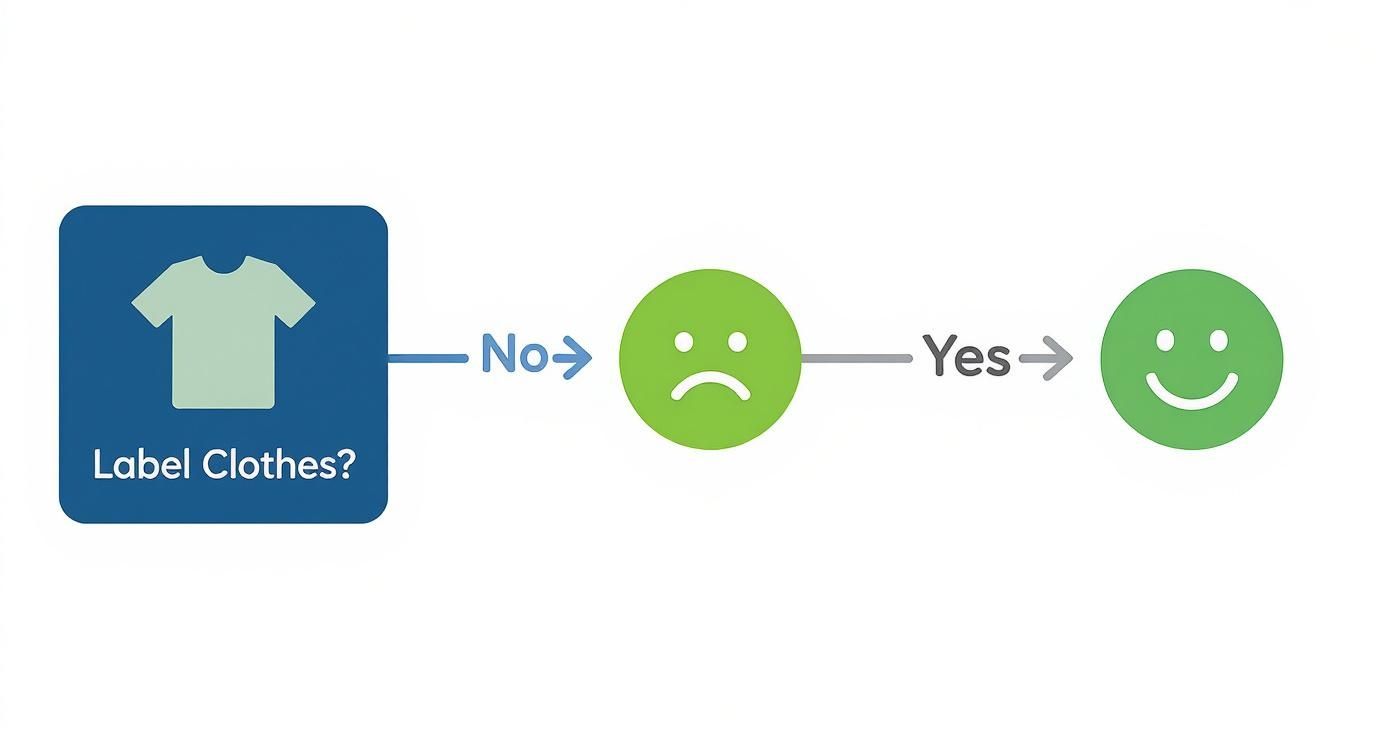
As you can see, taking a few minutes to label everything is a small price to pay for peace of mind.
To help you decide, let's break down the most popular types and see how they stack up.
Quick Comparison of Washable Label Types
This table gives you a quick, at-a-glance comparison of the most common options to help you pinpoint the perfect label for your needs.
| Label Type | Best For | Application Method | Durability | Removal |
|---|---|---|---|---|
| Iron-On | School uniforms, PE kits, cotton & poly-cotton blends. | Heat-activated adhesive applied with a hot iron. | Very High: Lasts 50+ washes when applied correctly. | Difficult; can sometimes be re-heated and peeled. |
| Sew-In | High-value items, delicate fabrics (wool, knits), hand-me-downs. | Stitched directly into the garment with a needle and thread. | Extremely High: Lasts the lifetime of the clothing. | Simple: Carefully snip the threads with a stitch ripper. |
| Stick-On | Quick labelling, care home items, anything with a care tag. | Peel-and-stick adhesive applied to the garment's care tag. | High: Withstands regular washing and drying when on a care tag. | Easy: Peels off the care tag, usually without residue. |
Ultimately, the best choice depends on what you're labelling, the type of fabric, and how much time you have.
The Reliable Iron-On Label
Iron-on labels are a brilliant semi-permanent choice, especially for clothes that get thrown into frequent, high-temperature washes. They work wonderfully on robust fabrics like cotton, poly-cotton blends, and canvas.
When you apply them correctly, they literally become one with the garment. A properly applied iron-on label can easily withstand over 50 washes without a hint of peeling or fading. This makes them a go-to for school uniforms and sports kits that take a real beating. For a step-by-step tutorial, check out our guide on how to apply https://www.quotemywall.co.uk/blogs/news/iron-on-names perfectly every time.
The Classic Sew-In Label
For ultimate permanence, nothing beats a sew-in label. Because they're physically stitched into the clothing, they will last as long as the garment itself. This makes them absolutely perfect for expensive items, special occasion wear, or treasured hand-me-downs you want to pass on.
You can use them on any fabric you can get a needle through, which is a lifesaver for delicate wools or chunky knits where a hot iron would be a disaster. Yes, they take a bit more effort upfront, but their staying power is second to none. For those who love a personalised touch, creating custom embroidered labels can add a really professional and bespoke finish.
The Speedy Stick-On Label
When you need to get the job done fast, stick-on labels are your best friend. These aren't just any old stickers; they’re engineered with a seriously powerful adhesive that's specifically designed to bond with the smooth, silky surface of a garment's care or brand tag.
Key Takeaway: Stick-on labels must only be applied to the care tag—never directly onto fabric like cotton or fleece. Their special glue is formulated for that smooth, nylon-like surface, and when applied there, they’ll happily survive countless trips through the washing machine and tumble dryer. They're an absolute lifesaver for that last-minute uniform labelling blitz the night before school starts.
Getting Your Labels to Stick (and How to Get Them Off)
Getting your name labels to stay put is half the battle. A good application is the secret to making sure they survive the washing machine, tumble dryer, and the general chaos of daily life. Whether you've gone for the quick-and-easy stick-on type or the ultra-durable iron-on version, how you apply them makes all the difference.
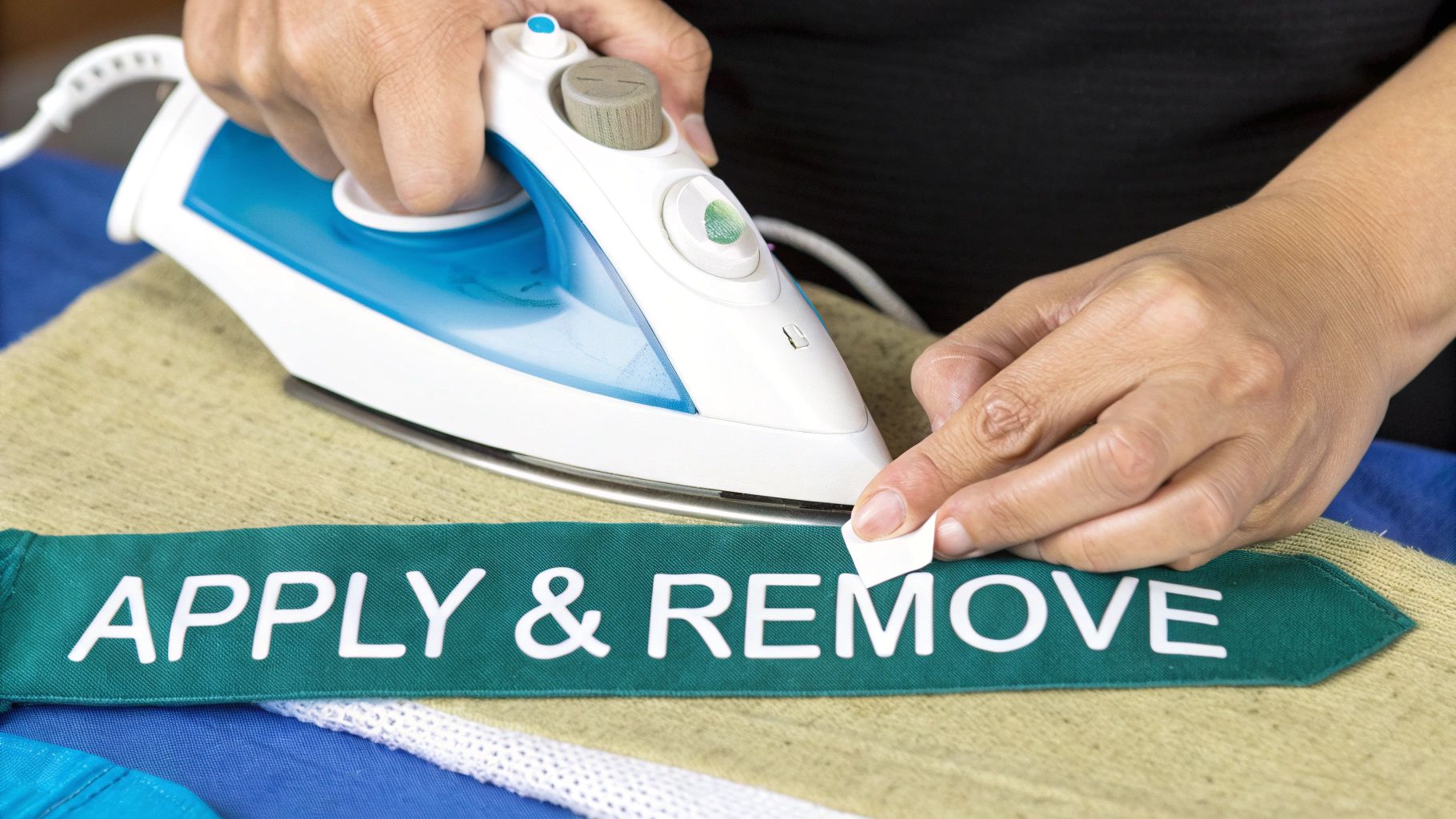
It’s not just about making them stick for a day or two; it's about creating a bond that truly lasts. Taking an extra minute during application can add months, sometimes even years, to a label's life, keeping it readable and firmly in place through countless washes.
How to Get Iron-On Labels Right Every Time
Iron-on labels are fantastic because they literally fuse with the fabric, creating a strong, semi-permanent bond. Just follow these steps, and they won't be going anywhere.
- Get Your Iron Ready: Turn your iron on to a medium-high heat, which is usually the 'Cotton' setting (around 150-170°C). The most important part? Make sure the steam is off. Steam is just water, and it will ruin the adhesive's ability to create a strong bond.
- Find a Hard Surface: Lay the clothing flat on a hard surface like a kitchen counter or a sturdy table. An ironing board is actually too soft and padded for this job; you need a firm surface to press against.
- Position the Label: Place the label exactly where you want it. Now, cover it with the parchment paper that came with it, or just use a thin, dry tea towel. This little barrier stops the hot iron from melting the label or scorching the garment.
- Press, Don't Iron: This is key. Press the hot iron down firmly on top of the covered label and hold it completely still for 15-20 seconds. Don't be tempted to move the iron around as you normally would. You need that direct, even pressure to activate all the glue.
- Let It Cool, Then Check: Give the area a minute to cool down completely before you try to peel away the paper. Once cool, gently flick at the edge of the label with your fingernail. If it starts to lift, no worries – just repeat the pressing step for another 10 seconds.
A pressing cloth is your best friend when applying iron-on labels. It’s a simple step that protects both the label and your clothes from the iron's direct heat, giving you a clean, professional finish without any scorch marks.
The Golden Rule for Stick-On Labels
Stick-on labels are wonderfully convenient, but they come with one non-negotiable rule: they must stick to the silky care tag inside the clothing, not directly onto the fabric.
The adhesive used on these labels is specifically designed for the smooth, shiny surface of a nylon or satin care tag. Stick it there, and it will happily go through the wash dozens of times. If you try to stick it directly onto a textured fabric like cotton, wool, or fleece, it'll peel off in the first wash. It's just not what it was made for.
If you have an item without a care tag, like socks, towels, or some knitted jumpers, an iron-on or a sew-in label is definitely the way to go.
Removing Labels Without a Fuss
When it's time to pass on clothes to a new owner, taking the name label off is a nice touch. Luckily, it's usually quite straightforward.
For iron-on labels, you basically reverse the process. Cover the label with your pressing cloth and press it with a hot, dry iron for another 15-20 seconds. This will warm up and reactivate the glue. While it's still hot, carefully use a pair of tweezers to grab a corner and peel the label away.
Stick-on labels are much easier. You should be able to simply peel them straight off the care tag. If you find a little bit of sticky residue left behind, a quick wipe with a cotton bud dipped in rubbing alcohol will get rid of it instantly.
How to Keep Your Labels Looking Brand New
You’ve got your washable name labels perfectly applied, but how do you make sure they stay put and look great wash after wash? The secret is all in the laundry routine. With a few small tweaks, you can keep them looking vibrant and feeling secure for years to come.
Think of it this way: the biggest enemies of any clothing label are extreme heat and harsh chemicals. While good quality labels are built to be tough, constantly blasting them with high temperatures or aggressive detergents can eventually take its toll, weakening the adhesive or fading the colours.
The Ideal Washing Routine
For best results, moderation is your friend. Washing labelled clothes at 30-40°C is the sweet spot. It's more than warm enough to get everything properly clean, but gentle enough to protect both the label's adhesive and the garment's fabric. Plus, it's a win for the environment and your energy bills.
Of course, keeping the labels in good nick goes hand-in-hand with looking after the clothes themselves. For a great overview, check out these comprehensive washing and maintenance tips for children's clothes.
Here’s a simple trick that makes a big difference: turn garments inside out before they go in the machine. This creates a protective barrier, reducing the friction on the label as it tumbles around. It’s a fantastic way to prevent the edges of iron-on labels from starting to peel. If you want to learn more, we have a whole guide dedicated to machine washable labels.
Drying Your Labelled Clothes
When it comes to drying, you’ve got a couple of solid options. Each one has its own benefits for keeping your labels in top shape.
- Air Drying: This is by far the kindest method. Hanging clothes on a line or an indoor rack to dry naturally avoids any intense heat or tumbling. It’s the best way to maximise the lifespan of both stick-on and iron-on types.
- Tumble Drying: Don't worry, most quality labels are perfectly safe in the tumble dryer. The key is to stick to a low or medium heat setting. Using the hottest cycle repeatedly can soften the adhesive over time, which you want to avoid.
A simple rule of thumb: if the garment's own care tag says to use a cool wash and a low-heat dry, follow that same advice for the label. What’s good for the fabric is almost always good for the label attached to it. Stick to these easy steps, and your labels will look as good as new for a long, long time.
When you hear "name labels," what's the first thing that pops into your head? For most of us, it’s probably a school jumper or a lost PE kit. And you wouldn't be wrong – schools are a massive reason these little labels are so popular. But their usefulness goes way beyond the classroom.
Basically, anywhere clothes can get mixed up, a good name label is a lifesaver.
The sheer scale of the school uniform problem is staggering. A 2022 survey revealed that a whopping 92% of primary schools and 78% of secondary schools in England and Wales insist on having every single item of clothing clearly named. When you add it all up, that’s an estimated 55–77 million garment labels needed just for school uniforms every single year. You can dig into the details in the schoolwear findings on their website.
Essential for Care Home Residents
Care homes are another place where washable name labels are absolutely vital. With communal living comes communal laundry, a system that, while efficient, can easily lead to personal items going astray. This can be genuinely distressing for residents and creates a lot of extra work for the staff.
A clear, durable label is a simple way to preserve a resident's dignity and their sense of ownership. For their families, it offers real peace of mind, knowing that their loved one's clothes will find their way back after every wash. It saves the upset and expense of having to replace lost items.
In a communal laundry system, a simple name label is more than just an identifier; it’s a tool for organisation and respect, ensuring personal items are treated with care and returned to their rightful owner.
A Lifesaver for Sports Clubs and Teams
Picture your local sports team – whether it's a kids' football club or an adult rugby squad. Everyone is kitted out in the same uniform. It looks great on the pitch but can be a logistical nightmare in the changing rooms afterwards. How easy is it for one muddy shirt to get muddled up with another?
Labels are the straightforward answer for players and parents alike. They make sure that expensive, team-branded gear actually makes it home with the right person. This is particularly crucial for things like personalised jerseys or specialised kit that costs a pretty penny to replace. A tiny label can prevent a big headache.
Perfect for Camps and Group Trips
Summer camps, school residential trips, and scout groups are exercises in organised chaos. When you have dozens of kids living out of suitcases, keeping track of whose socks are whose is a challenge for even the most eagle-eyed leader.
In this environment, labels become an essential tool for group management. They help staff quickly sort out lost property and get it back to its owner, cutting down on clutter and stress. For a child away from home, seeing their name on a misplaced jumper can be a small but significant comfort, making the whole trip run that much more smoothly.
How to Choose the Right Labels for Your Needs
So, now you’ve got a good handle on the different types of washable name labels for clothing, let's turn you into a savvy shopper. Picking the perfect label is about more than just a nice design; it's about matching the right product to your real-life needs. Things like material quality, how much you can personalise them, and even the pack size make a massive difference in getting the best value.
Think about your own situation. Are you faced with a mountain of school uniforms that have to survive a weekly hot wash? Or maybe you just need a quick, no-fuss solution for a few bits of clothing heading to a care home. Your answer is what will point you to the right choice.
Consider the Material and Durability
The material is the single biggest factor in a label's staying power. Hard-wearing vinyl stick-on labels are brilliant for care tags, giving you a speedy solution that really lasts. On the other hand, for a truly permanent fix on pricey items or chunky jumpers where an iron is a no-go, you can't beat traditional woven cotton or polyester sew-in labels.
If you want to get into the nitty-gritty of how different materials stack up, have a look at our guide on choosing the right material for name labels. The aim is always to find a material that works with the garment, not against it.
Personalisation and Pack Size
Once you’ve got the material sorted, it’s time for the fun part – looks and quantity. Most suppliers let you choose from different fonts, colours, and even little icons to make the labels truly personal. This is a game-changer for little ones who might spot their special picture long before they can read their own name.
A little tip on pack size: while a bigger pack might feel like a hefty upfront cost, it almost always works out cheaper in the long run. This is especially true if you’ve got more than one child or need to label an entire wardrobe for a care home resident.
This focus on durability is a huge deal for parents here in the UK. The children's clothing market was valued at a whopping £5.2 billion in 2022, and with school uniforms alone accounting for £1.1 billion, that’s a serious investment to protect. In fact, reports show that over 90% of parents label their kids' school clothes, and for nearly 40% of them, durability is a top priority when they're buying the clothes in the first place. You can read more about the UK childrenswear market from Mintel.
Got Questions About Washable Clothing Labels? We've Got Answers
It's completely normal to have a few questions buzzing around your head when you're trying to pick the right name labels. You want to get it right the first time. Let's walk through some of the most common things people ask, so you can choose your labels with complete confidence.
A classic question is, "Can't I just use a permanent marker?" It seems like an easy shortcut, but in reality, marker ink fades surprisingly fast in the wash. It's also notorious for bleeding through the material, leaving a messy, unreadable smudge that won't go down well at school or in a care home.
How Long Do They Really Last and What Fabrics Can I Use Them On?
One of the biggest concerns is whether iron-on labels actually stay put. The answer is a resounding yes! When you apply a quality iron-on label correctly to the right kind of fabric, it’s designed to stay there for the entire life of the garment. It can easily handle 50+ washes, even on a warmer cycle, without a hint of peeling or fading.
Ever noticed the corner of an iron-on label lifting? That's almost always a sign the iron wasn't quite hot enough when it was first put on. The fix is simple: just press the area again with a hot iron for 10-15 seconds to reactivate the glue and lock it back down.
Another common query is about stick-on labels and fabric compatibility. This is a crucial one: stick-on name labels are brilliant, but they are specifically designed for one place and one place only—the silky care tag inside clothing.
They are not meant to stick directly onto fabric textures like:
- Cotton t-shirts
- Woolly jumpers
- Fleece jackets
If you stick them straight onto these materials, they’ll almost certainly come off in the wash. For anything without a care tag, like socks, towels, or PE kits, you'll always be better off with an iron-on or sew-in label. That way, every single item gets labelled securely.
At Quote My Wall, we specialise in ultra-durable, stick-on clothing labels that are fully washable and built to last. Take a look at our range and make laundry day a little bit easier by visiting us at https://www.quotemywall.co.uk.