
Dinosaur Prints for Nursery Styling and Buying Guide
You've chosen the cot, washed the tiny sleepsuits and perhaps even found the perfect rug. Then you look at the blank wall and wonder whether dinosaur prints for a nursery will create a gentle, welcoming room or turn it into a noisy themed set that feels babyish within a year. That hesitation is sensible. Nursery art has to work around sleep, storage, safety, changing routines and, for many UK families, rented walls.
The most successful dinosaur rooms treat the artwork as part of a wider system. The print style should relate to the cot and textiles, the colours should rest easily beside the wall paint, and the installation method should suit the wall and the child's stage. A removable sticker may be more practical than a framed picture in one room, while a small group of prints above a dresser may suit another.
Dinosaur imagery is now a familiar part of UK children's décor. UK retailers offer dedicated dinosaur murals, prints and stickers for nurseries, playrooms and children's bedrooms, with options ranging from soft Scandinavian palettes to more animated illustrations. Families can also find coordinated pieces such as a custom dinosaur blanket collection, which can help connect the wall art with a cot or reading corner without making every item match exactly.
This guide focuses on choosing a calm, safe and age-flexible look. You'll learn how to compare styles, select materials, plan a wall, combine colours and install art responsibly. For broader ideas on creating a cohesive room, you can also explore this guide to nursery wall art in the UK. By the end, you should be able to look at your own wall and make a clear decision rather than buying the first cute dinosaur set you see.
Understanding Dinosaur Print Styles and Themes
The easiest way to choose a dinosaur print is to decide what kind of story the room should tell. A watercolour diplodocus feels like a quiet bedtime book. A bright cartoon tyrannosaurus feels more like playtime. Neither is wrong, but they create different energy around the cot.
Choosing the mood before the creature
Soft watercolour designs use faded greens, warm neutrals and loose brushwork. They suit parents who want dinosaurs without sharp outlines or loud contrast. The animals may look naturalistic, but the pale background keeps the wall restful.
Scandinavian minimal prints reduce the subject to simple shapes, limited colours and plenty of open space. This style works well in a small nursery because the wall can carry the theme without appearing crowded. A single line-drawn triceratops beside a wooden shelf may have more staying power than a full cast of cartoon characters.
Vintage educational artwork uses labelled species, fossil references or museum-inspired compositions. It can introduce a sense of curiosity and learning, while still feeling decorative. The Natural History Museum in London has maintained a long connection with dinosaur education since its opening in 1881, which helps explain why dinosaur imagery feels familiar and credible to many British families. That heritage is described in the museum's dinosaur history and learning resources.
Playful cartoon prints are expressive and immediately child-friendly. They're a good choice if the nursery already includes colourful toys, patterned bedding or a bright reading nook. To prevent visual overload, keep the surrounding pieces simpler and let the dinosaurs provide the main burst of personality.
Selecting the arrangement
A single statement print gives the eye one clear destination. Choose it for a narrow wall, an alcove or a room where furniture already provides plenty of visual detail.
A set of three creates balance without requiring a large gallery wall. British online shops commonly sell dinosaur prints in groups of three, and individual dinosaur nursery prints can start at about £8.29, with framed and set-based versions costing more, as shown by Dolly and Fred's dinosaur print collection. This gives families room to choose between a low-cost starting point and a more finished display.
A mural-like arrangement can use several small prints, decals or a coordinated wallpaper panel. It's effective on a broad feature wall, but it needs more restraint. Repeat one background colour or illustration style so the wall feels collected rather than accidental.
Design test: If you'd happily read the print's visual story during a quiet bedtime routine, its mood is probably suitable for a sleep space.
Materials Finishes and Framing Choices That Last
The picture is only half the decision. Paper, canvas, ink, glazing and mounting determine how the artwork feels in the room and how well it copes with dust, fingerprints and changing décor.
Paper, canvas and surface protection
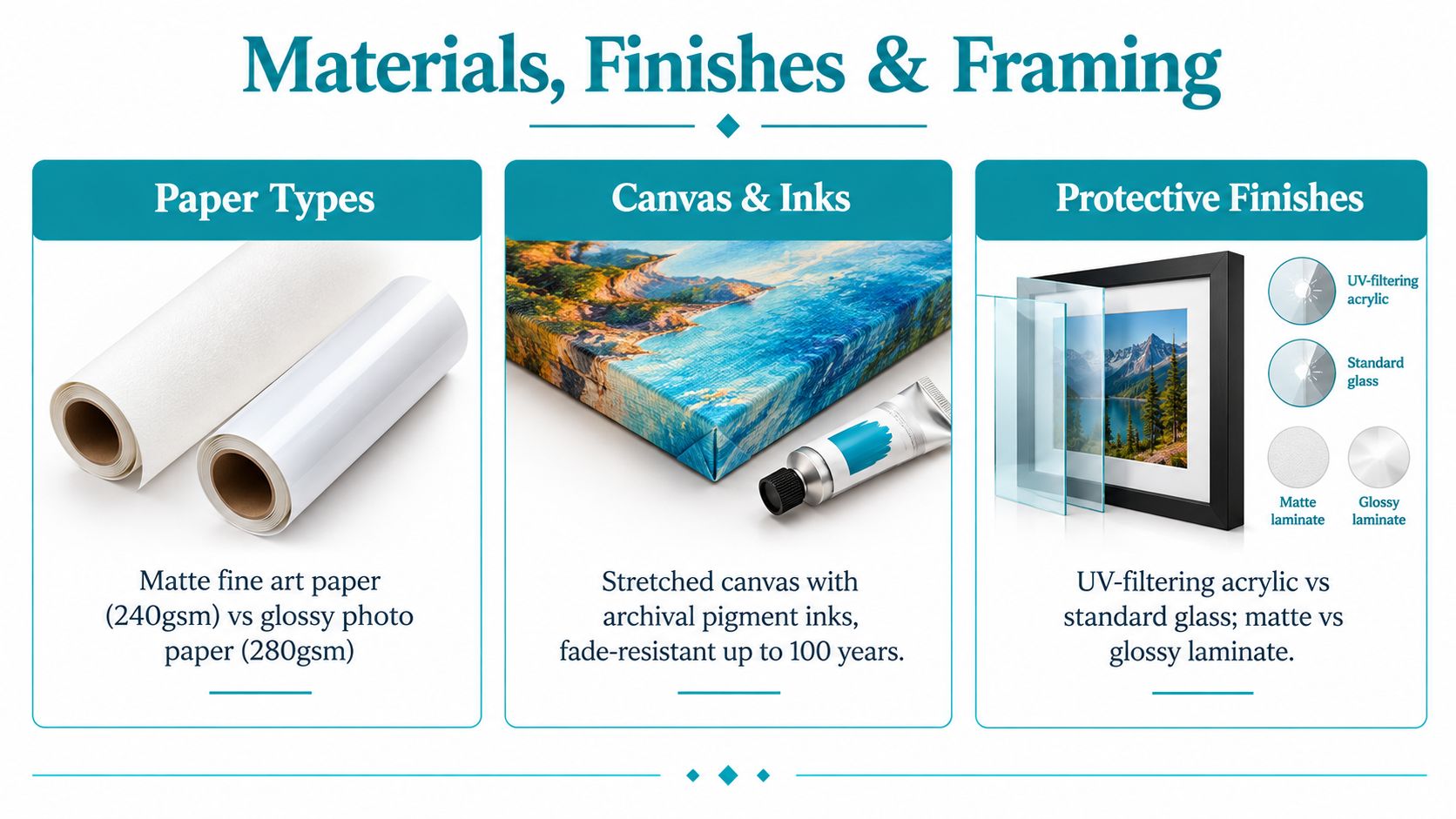
Matte fine art paper gives watercolour and muted dinosaur illustrations a soft appearance. It reduces glare, which is useful when a lamp or window faces the wall. Glossy photo paper makes colours look more vivid, but reflections can distract in a nursery and fingerprints are usually easier to notice.
Canvas adds texture and visual weight. It can make a simple dinosaur silhouette feel more like a small piece of art, although the stretched format is less convenient for renters who want a very light, removable display.
Ask the seller about the ink and substrate rather than assuming every nursery print has the same specification. If an item may be mouthed or treated as toy-adjacent, BS EN 71-3 is relevant because it covers migration limits for elements including lead, cadmium, mercury, chromium and antimony from toy materials. The BSI information on BS EN 71-3 provides the standard reference. For ordinary wall art, choosing low-emission inks and low-VOC or VOC-free materials is a sensible precaution.
Framed and unframed displays
Framing protects paper from handling and can make a group of inexpensive prints look deliberate. It also adds hard edges, weight and a more permanent fixing method. In a rented home, an unframed print in a lightweight display hanger or a removable wall decal may be easier to update.
Acrylic glazing is lighter and less prone to shattering than standard glass, but it can scratch. Glass offers a crisp finish and is easy to wipe, though its weight matters when you're deciding where to hang it. Keep framed art away from areas where a child can pull it down.
Use this quick comparison when you're stuck:
| Choice | Strength | Watch for |
|---|---|---|
| Matte paper | Gentle finish and low glare | Needs protection from moisture and handling |
| Canvas | Textured, substantial appearance | Less flexible for renters |
| Framed print | Polished and protected | Adds weight and hard surfaces |
| Flat decal | Lightweight and removable | Wall preparation affects adhesion |
For precise positioning, the guide on personalised home prints can also help you think about how a print's format relates to the rest of the display.
Sizing and Layout Guide for Nursery Walls
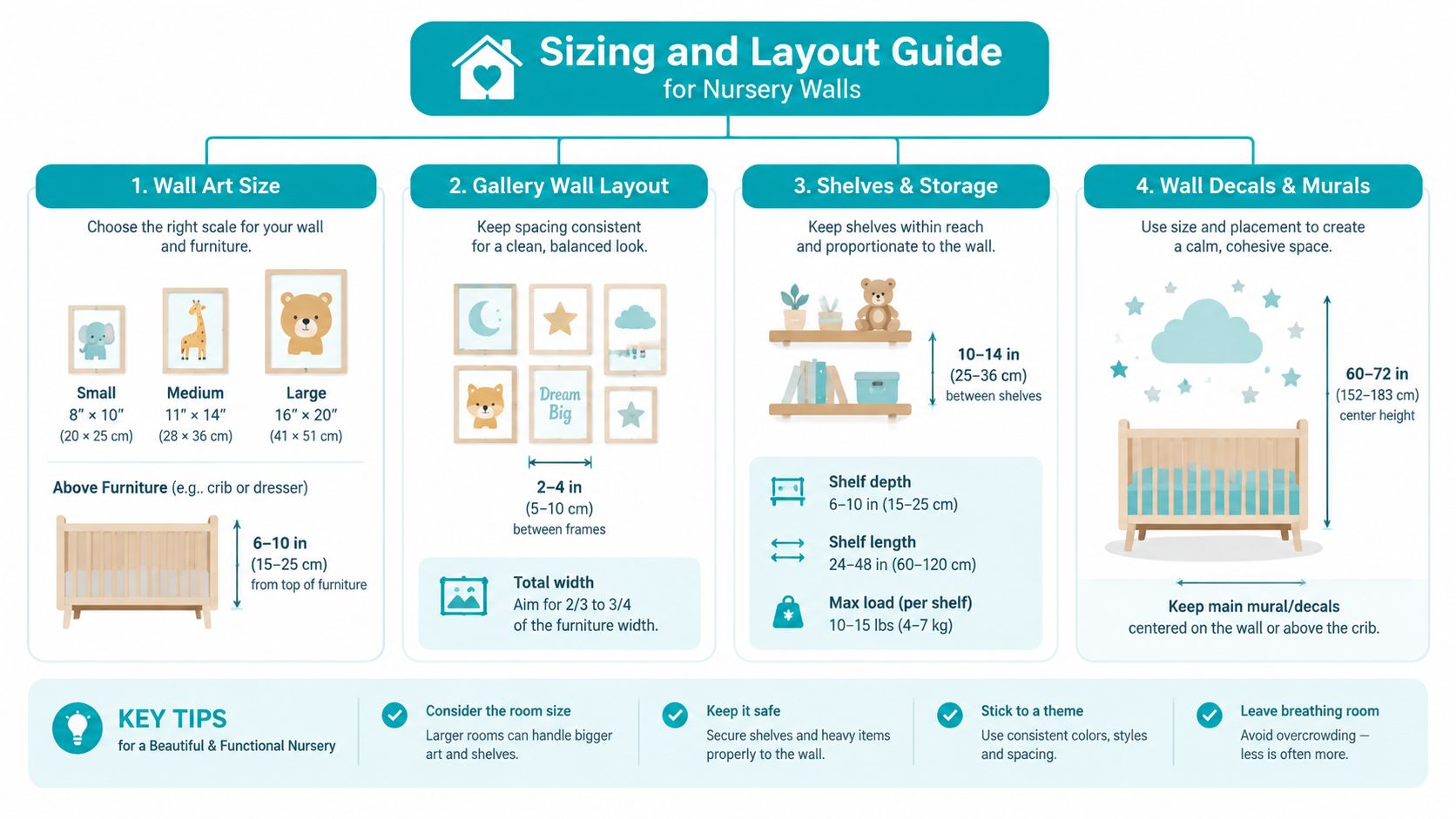
Good layout starts with the furniture, not the product page. Measure the cot, dresser, available wall width and nearby doors before choosing a dinosaur print. A picture that looks modest online may dominate a narrow wall once it sits beside a wardrobe or changing unit.
A simple measuring routine
Start by marking the furniture's width with low-tack masking tape. Then create paper rectangles for the print or print set and attach them temporarily to the wall. Leave them in place through different lighting conditions. Morning daylight, an evening lamp and the room's normal sleep lighting can make the same colour feel quite different.
For sticker layouts, measured packs are useful because you can plan the spacing before peeling anything. A UK DIY listing gives approximate dinosaur sticker sizes of 13 cm by 16 cm, allowing decorators to map a repeat pattern with reasonable precision. Check the specific product before ordering because packs vary.
Use these layout patterns as starting points:
- One large print: Centre it on the usable wall area, not necessarily the whole room. Keep it visually connected to the furniture below without forcing it directly over the cot.
- Three-piece grouping: Arrange the prints in a row for a calm, architectural look, or use a loose triangle if the illustrations have different shapes.
- Small gallery: Mix dinosaur portraits with fossils, leaves or simple stars. Keep one consistent frame colour so the variety still feels organised.
- Sticker trail: Begin with the largest dinosaur, then place smaller shapes around it. Leave enough open wall to prevent the design becoming a dense block.
Small rooms and awkward walls
A narrow nursery benefits from vertical placement. Stack two small prints beside a wardrobe or use a short decal trail that follows an empty strip of wall. In an alcove, avoid filling every surface. The surrounding blank space gives the dinosaur motif room to breathe and keeps the sleeping area visually quieter.
Adults may prefer art at a comfortable viewing height, but children experience the room from a lower position. Place interesting details where they can be seen during supervised play, not where a child can reach and pull them down. The cot and changing area should remain practical first, decorative second.
Colour Pairing and Motif Coordination Made Simple
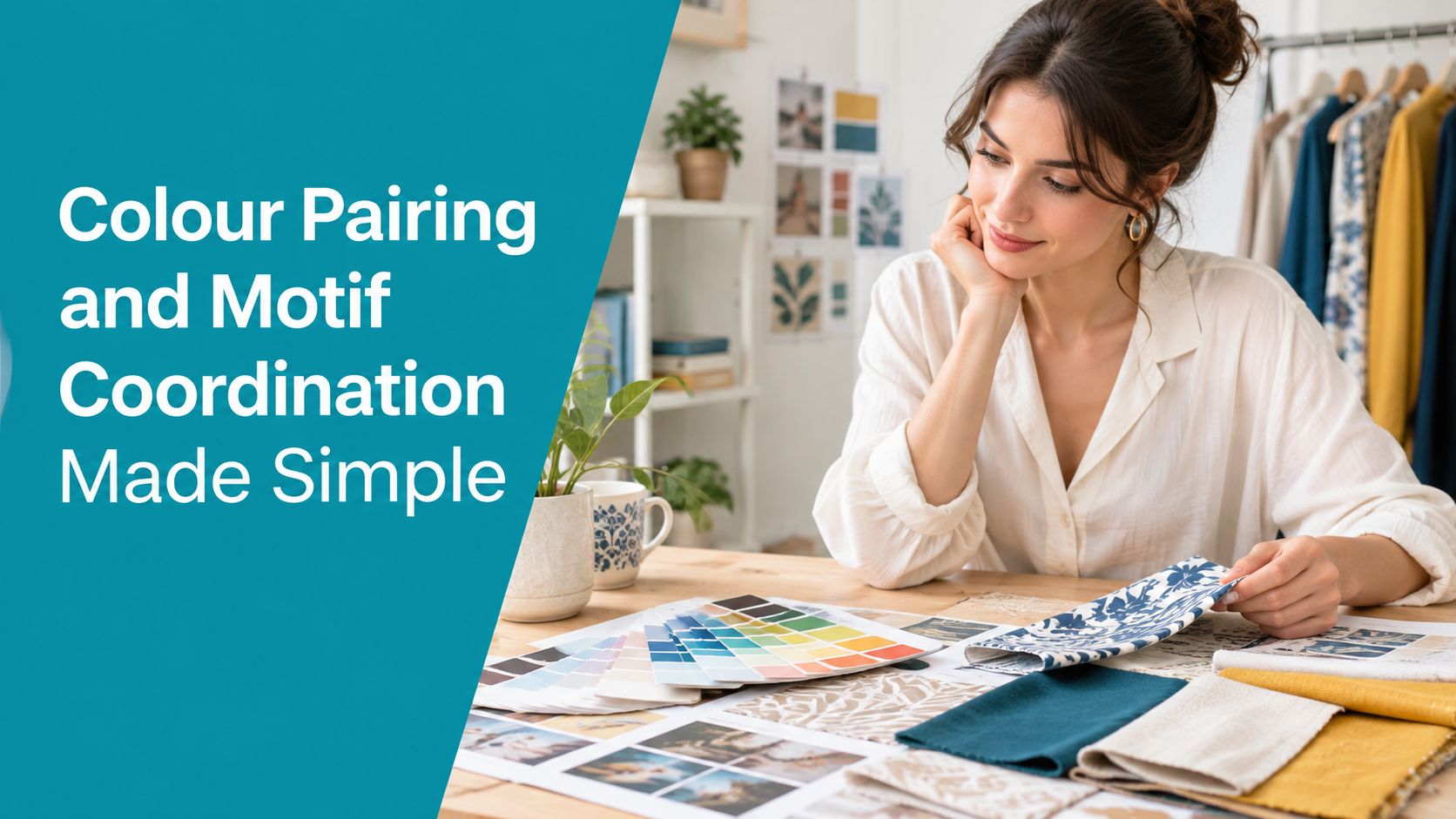
Dinosaur prints become easier to live with when their palette borrows from the room instead of competing with it. Start with the colours already present in the floor, cot, curtains and bedding. Then choose artwork that repeats one or two of those tones and introduces only a small amount of contrast.
Build a quiet base
Nature-led colours such as sage, mushroom, terracotta and olive help dinosaur imagery feel less like a temporary character theme. They also sit comfortably with timber, cream, woven textures and neutral furniture. A sage background with charcoal dinosaur outlines can feel calm, while a terracotta accent can add warmth through one small illustration or cushion.
The background matters as much as the animal. A detailed dinosaur against a plain, pale ground is often easier to rest beside than several highly patterned dinosaurs competing with stripes, checks and busy bedding.
Try this three-part colour method:
- Choose the anchor: Use the wall, rug or largest textile as the main tone.
- Repeat a supporting colour: Pick a shade from the print and echo it in one cushion, blanket or storage basket.
- Add one accent only: Use a stronger colour for a small detail, such as a dinosaur crest, fossil shape or frame.
Lay a sample print beside fabric swatches and view it from the doorway. Parents often judge art close up, but the room is mostly experienced at a distance. If the dinosaur disappears completely, choose stronger contrast. If it grabs attention before the cot or reading chair, reduce the intensity.
Coordinate motifs without making a set
Botanicals are a natural partner because leaves and ferns reinforce the prehistoric, outdoor feeling. Stars can work with bedtime styling, provided they're sparse and share the same line weight as the dinosaur illustrations. Geometric shapes are useful in a modern room, but repeat only one shape or pattern so the wall doesn't become a visual activity board.
Keep the theme flexible by avoiding too many licensed characters or strongly baby-coded details. A simple fossil print, leaf silhouette or neutral dinosaur profile can remain appropriate as the child moves into a toddler bedroom. That approach also supports gender-neutral styling, especially when the room needs to suit changing preferences rather than a fixed colour story.
Safe Installation Care and Personalisation Options
Safety should decide where dinosaur art goes before style decides how it looks. Heavy, hard or hangable objects directly above a cot can fall, while unsecured items may create impact or entanglement hazards. Flat decals and murals are safer choices for the wall beside or behind the sleeping area, while framed prints belong on an adjacent wall or somewhere well beyond a child's reach.
Installation checklist
- Avoid the cot zone: Don't place a heavy framed print directly above where a child sleeps. The UK nursery safety guidance on unsafe design trends supports using flat wall treatments or safer adjacent locations.
- Inspect the fixing: Use a suitable fixing for the wall type, and check that hooks, cords and hanging hardware aren't accessible.
- Test removable products: Try a peel-and-stick decal on a discreet area first. Clean, dry and smooth walls generally provide the most predictable result.
- Keep reachable walls simple: Put tactile or interactive details where an adult can supervise, not beside the cot where a child might pull at them.
- Control the environment: Keep prints away from persistent condensation, direct sunlight and heat sources. Dust with a soft, dry cloth and follow the maker's cleaning instructions.
For framed art, measure twice and mark the fixing points carefully. A practical tutorial on how to hang a picture precisely can help you avoid crooked frames and unnecessary wall damage.
Personalisation with restraint
A name print can make a dinosaur wall feel thoughtful without adding more visual clutter. Consider a child's name, a simple species illustration or a chosen colourway rather than combining names, dates, quotes and several decorative borders in one piece. Personalised artwork for nursery rooms is available through specialist retailers, including personalised wall art for nurseries.
Before ordering, check the spelling, colour proof and final dimensions. If you're renting, favour removable formats or hang a lightweight print from an existing picture rail where possible. Keep packaging, spare adhesive and mounting components out of the nursery once installation is complete.
Styled Nursery Examples and Final Buying Tips
A renter in a small flat might choose three muted dinosaur decals on the wall beside the cot, with a sage play mat and removable mounting elsewhere in the room. The dinosaurs provide a clear theme, but the open wall and restrained palette prevent the nursery from feeling like a full set. When the family moves, the layout can be removed without committing to wallpaper or multiple drilled fixings.
A larger nursery with a dresser can take a framed set of three above the furniture, provided the display is securely installed and away from the cot. Choose one consistent frame finish, perhaps pale wood or white, and let the illustrations vary slightly. A fossil, a leaf and a dinosaur portrait will feel more collected than three nearly identical faces.
For a nature-led room, use a mural-inspired arrangement with a few large dinosaur silhouettes, small botanical details and generous blank space. Sage, mushroom or olive can soften the prehistoric subject, while a terracotta detail adds warmth. This is the most effective route for parents who want a feature wall that can transition into a toddler bedroom without a complete redesign.
A budget-conscious buyer can begin with one unframed print and add matching pieces later. A set of three creates cohesion quickly, while a single statement design gives greater flexibility if the furniture layout changes. Before buying, ask:
- Will the colours still suit the room if the bedding changes?
- Is the print style calm enough for the sleeping area?
- Can the product be cleaned or protected easily?
- Is the installation suitable for a rented wall?
- Could the design still feel right when the child is older?
Quote My Wall offers dinosaur wall stickers, peel-and-stick wallpaper and nursery prints, including personalised options for children's rooms. Visit Quote My Wall to compare dinosaur designs and choose a format that fits your wall, colour palette and installation needs.