

Clothing Label Material Guide for Durable Labels
You notice it halfway through the week. One school jumper has lost its name label completely, another has a corner peeling up, and the care home cardigan you carefully marked last month has come back from laundry with a blank, ghostly patch where the name used to be. The label didn't fail by accident. In most cases, the clothing label material was wrong for the job.
A lot of people shop for labels by colour, size, or whether they need a pen or printer. Those details matter, but they sit on top of the question. What is the label made from, and will that material cope with your routine? If a label has to survive school washes, tumble drying, regular handling, and communal laundry, the material does the heavy lifting.
That's especially true because clothing labels aren't only a branding extra. In garment manufacturing, they also carry important information about what a product is made from. If you're interested in how clothing gets made more broadly, this overview of sustainable clothing production gives useful background on the choices that happen long before a garment reaches a wardrobe.
Introduction Why Clothing Label Material Matters More Than You Think
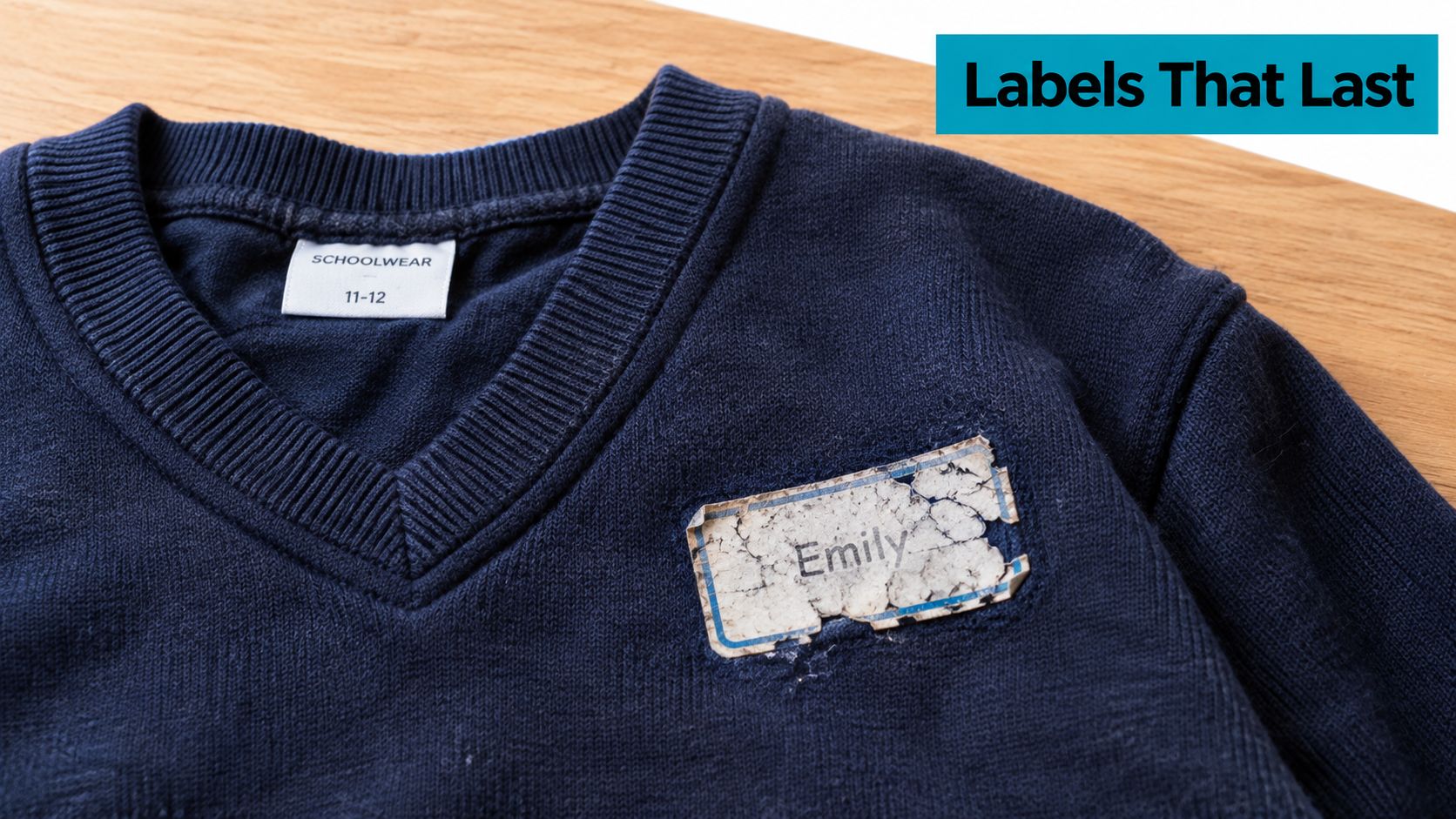
The frustrating part is that many failed labels look fine on day one. They're neat, smooth, and easy to apply. Then real life starts. A school blazer gets shoved into a PE bag. A vest goes through a warm wash. A favourite hoodie gets tumbled because there's no time to air dry. By the time you need the label to prove who owns what, it has faded, curled, or vanished.
For parents and carers, that creates two different headaches. First, things go missing. Second, replacing labels becomes one more small job that keeps coming back. When that happens, people often blame the adhesive or the washing machine. Often, the hidden issue is simpler. The substrate itself wasn't suited to moisture, heat, rubbing, or repeated laundering.
A label is a tiny working part
It helps to think of a label like the sole on a school shoe. You don't buy the shoe for the sole alone, but if the sole fails, the whole thing becomes annoying very quickly. Label material works the same way. It affects comfort against skin, how crisp the text stays, whether the edges fray, and whether the label remains attached after wash after wash.
Some materials are soft but less durable. Some are durable but need sewing. Some are quick to apply but only work properly if they're stuck to the right surface. Once you see those trade-offs, shopping gets easier.
A good label isn't the one that looks nicest in the packet. It's the one that's still readable and attached after your normal weekly routine.
The real-life survival test
One practical question stands out: which clothing label material will survive a washing machine, a tumble dryer, and constant handling without turning into another chore?
That's the useful way to compare label types. Not by catalogue language, but by survival tests. For some households, that means school uniform and sports kits. For others, it means care home laundry, where clothes move through shared washing systems and need clear identification every time.
What Clothing Labels Must Do and Why Material Is Key
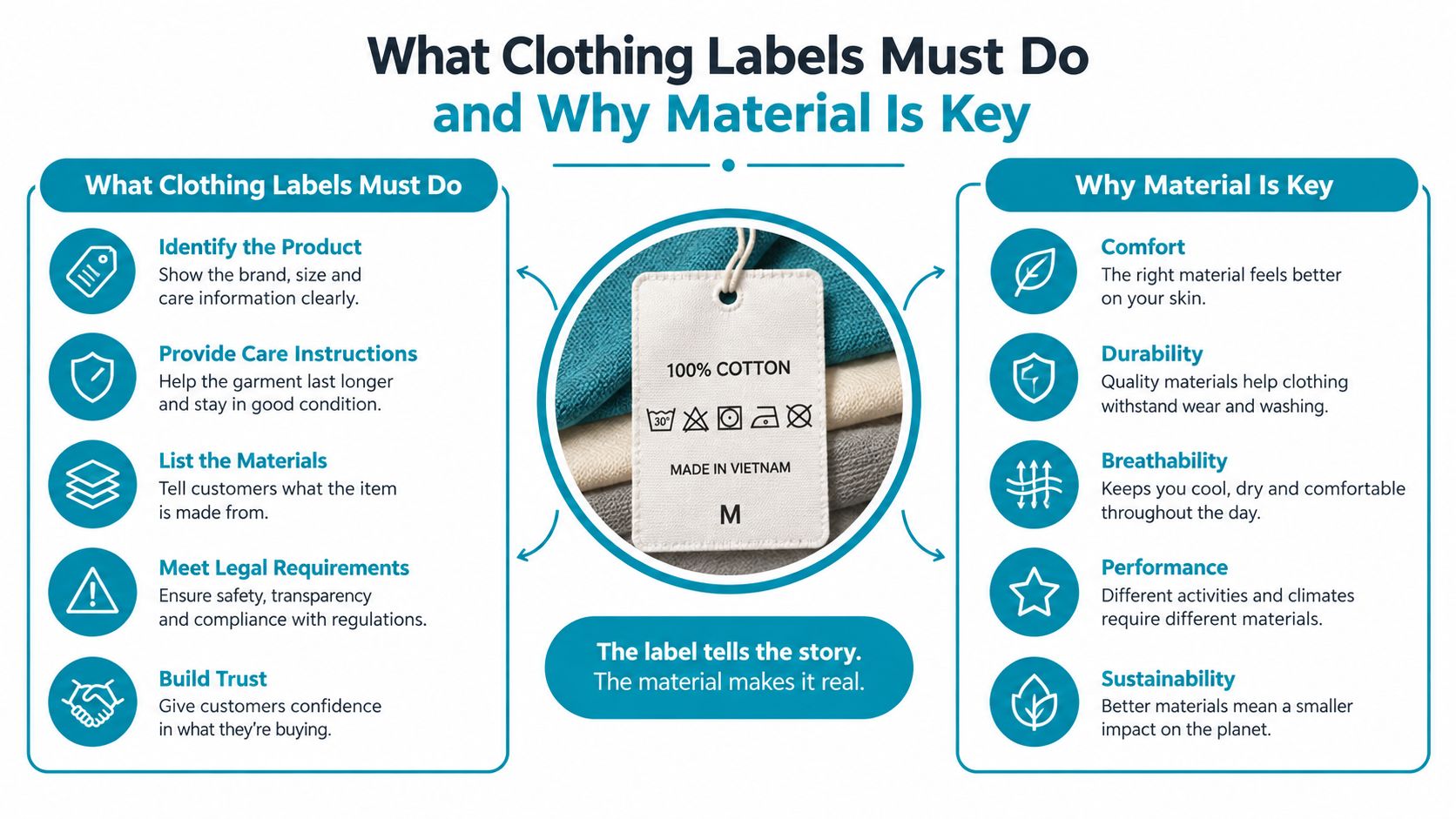
A clothing label has two jobs. It must carry information, and it must keep carrying that information during real use. If either part fails, the label isn't doing its job.
In the UK, textile labelling has been regulated for a long time. The older framework included the Textile Products (Indications of Fibre Content) Regulations 1986, and that regime was later replaced by the Textile Products (Labelling and Fibre Composition) Regulations 2012. That history matters because it shows that a clothing label is not just decoration. It is part of how fibre information is communicated and traced through the product's life, as set out in the UK textile labelling legislation history.
Think of the label as a garment passport
A simple way to understand this is to treat the label like a tiny passport sewn into the product. It tells you what the garment is made from, and in mixed constructions it may need to identify different parts separately.
That means the material under the print or weave matters. If the label scratches away, shrinks badly, frays, or becomes unreadable, the information becomes useless even if it was technically correct at the start.
What UK rules mean in plain language
Current UK guidance says textile labels must show fibre content in a durable, easily legible, visible and accessible form, and where a label is used it must be permanently attached and in English, according to the official UK textile labelling guidance.
That one sentence explains a lot about material choice.
- Durable: The label can't be a flimsy afterthought.
- Easily legible: Tiny blurred print on a poor surface won't do.
- Visible and accessible: The information must be easy for the user to find and read.
- Permanently attached: A loose temporary tag isn't enough for this purpose.
Why mixed fabrics make labels more demanding
The same legal framework also requires component-by-component disclosure where a textile product has two or more components made from different fibres. In day-to-day terms, if parts of a garment are made from different fibre mixes, the label may need to state each part clearly.
That makes label material more important than many buyers realise. The label is carrying exact composition information, not just a logo or a first name. A weak label stock can blur those details, while a stronger substrate holds shape and legibility much better.
Practical rule: If a label needs to survive the life of the garment, don't judge it only by softness or appearance. Judge it by whether the information will still be readable after repeated use.
This is why woven polyester, satin, and taffeta are common in manufactured garments. They're not chosen only because they look tidy. They're chosen because they're better at staying attached and readable when clothing is handled, washed, and worn.
Common Clothing Label Materials Compared
For clothing label material, the usual goal is a straight answer. Which materials are common, what do they feel like, and what are they good for? The table below gives the fast version first.
Clothing Label Materials at a Glance
| Material | Feel and Look | Durability and Wash Resistance | Attachment Method | Best For |
|---|---|---|---|---|
| Woven polyester damask | Soft, neat, premium woven finish | Strong for repeated wear and washing | Sew-in | Branded garment labels, long-term factory labels |
| Satin | Smooth and glossy, softer against skin | Good legibility but can snag or crease | Sew-in or printed label insertion | Babywear, lingerie, comfort-focused garments |
| Cotton | Natural, matte, soft | Comfortable but can fray and absorb moisture | Sew-in | Natural-look branding, artisan garments |
| Tyvek or paper-like stocks | Crisp, lightweight, utilitarian | Limited long-term comfort and can wear harshly | Sew-in or temporary attachment | Disposable or short-term identification |
| Heat-transfer labels | Very flat, no separate tag feel | Can work well if applied correctly, but heat and fabric compatibility matter | Iron-on or press-applied | Minimal-feel labelling inside garments |
| Stick-on vinyl | Smooth printed surface, practical rather than woven | Designed for handling and routine care when used correctly | Stick-on, usually onto existing care label | School clothes, care home items, quick labelling |
Woven polyester damask
This is the classic branded clothing label many people recognise. The design is woven into the label rather than printed on top, which helps it keep a sharp, tidy look over time. It's often soft enough for everyday wear and strong enough for garments that will be washed often.
Its downside is convenience. It usually needs sewing, so it's less appealing if you're trying to label twenty school items on a Sunday evening.
Satin and cotton
Satin labels feel smoother and more slippery against the skin. They're popular where comfort matters, especially in lighter garments. The trade-off is that satin can crease, snag, or show wear differently from a more durable woven polyester label.
Cotton labels have a softer, natural feel and suit brands that want a more handmade or understated look. But cotton is still fabric. It can fray at the edges, absorb water, and lose crispness if the print method or finish isn't strong enough.
Tyvek and paper-like labels
These have a more utility-style feel. They can be useful in some settings, but they aren't usually what busy families want inside clothes worn every week. Against the skin, they can feel stiffer. Over time, they may crease or degrade in ways that make them less pleasant and less readable.
For long-term everyday clothing use, people usually move away from anything that feels temporary.
Heat-transfer labels
Heat-transfer labels appeal because they sit flatter inside the garment. There's no separate woven tab rubbing the neck or side seam. The catch is application. Heat, pressure, and fabric type all affect the result.
If the transfer goes onto the wrong fabric, or if ironing instructions aren't followed carefully, edges can lift or print can break down sooner than expected. That's why many people compare them with sew-in labels for clothing before deciding which hassle they'd rather deal with.
Some label choices fail in use, not because the material is poor in itself, but because the method of attaching it doesn't suit the person using it.
Stick-on vinyl
Stick-on vinyl solves a different problem. It's made for speed and convenience. Instead of sewing into seams or using heat, you apply it directly, commonly onto the garment's existing care label. For families labelling uniforms or carers marking multiple items, that can be much easier to manage.
The important thing is understanding where it works best. Vinyl labels are usually strongest when stuck to a smooth existing label rather than directly onto soft, fuzzy fabric. Used that way, they combine readable print with a practical application method.
How Durability and Care Requirements Shape Material Choice
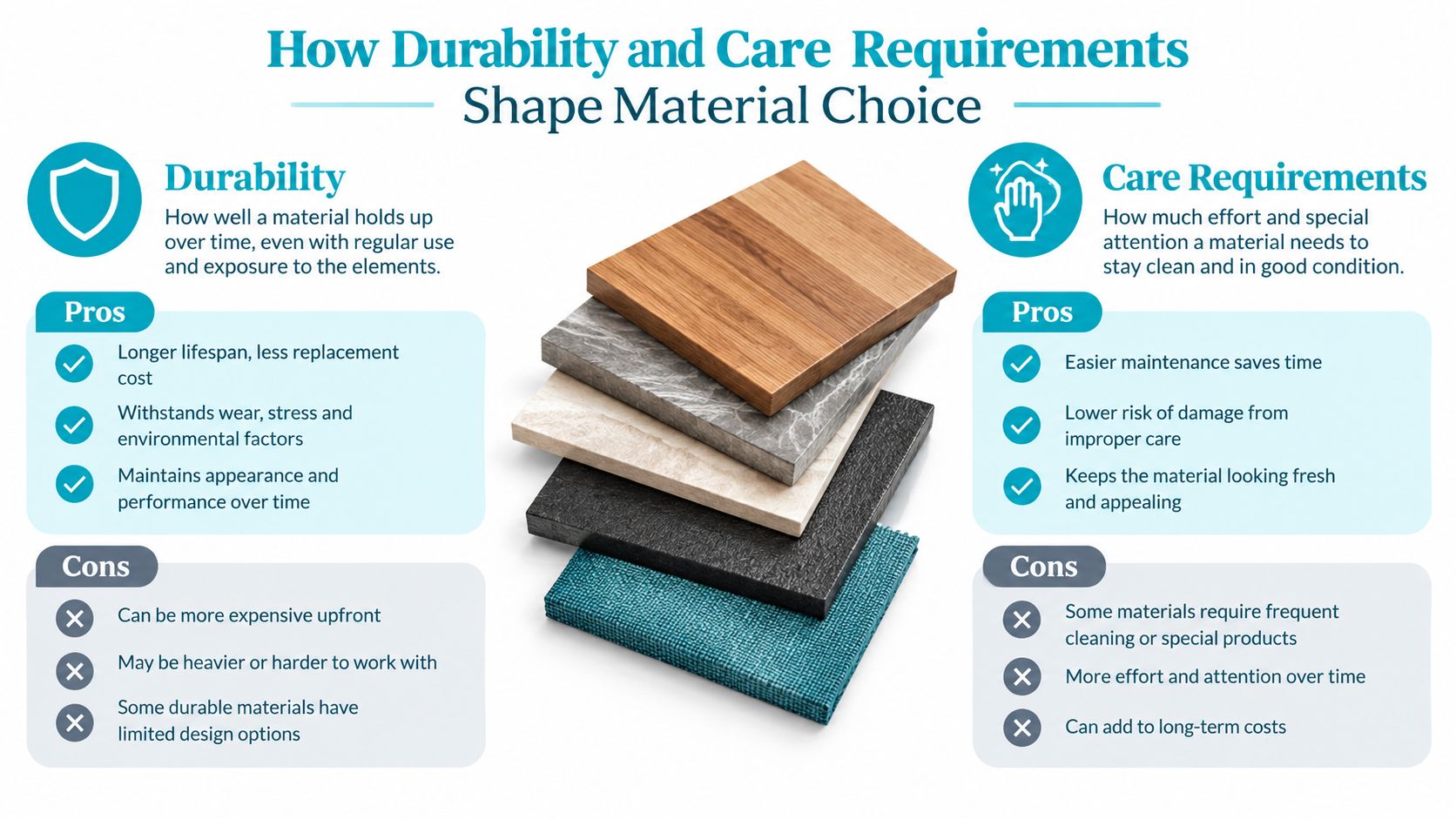
A label doesn't live a quiet life. It gets rubbed by skin, folded into sleeves, pressed against other clothes in the drum, exposed to detergent, warmed in a tumble dryer, and pulled by impatient hands checking names. That's why durability needs to be judged by real stresses, not just by how the label looks when new.
In apparel testing, retailers commonly use 40°C machine washing as a standard care-performance reference and assess dimensional stability after multiple washes under BS EN ISO 6330, with some manuals specifying limits such as negligible change for washable garments and ±3% for certain non-fitted items, as shown in this UK and EU apparel testing manual.
For labels, that translates into simple questions. Will the substrate shrink? Will edges fray? Will the print rub off? Will the adhesive give up before the garment does?
The washing machine test
The washing machine is usually the first big filter. Water, detergent, friction, and movement all happen at once. Woven labels usually cope well because the material itself is built for repeated laundering. Printed or stuck labels depend more heavily on surface quality, print method, and correct placement.
That's why machine-wash performance matters so much when choosing machine washable labels. A label that survives a quick rinse isn't necessarily the same thing as one that stays readable through normal family laundry.
The tumble dryer and heat test
Heat changes the picture. Some materials tolerate it calmly. Others stiffen, distort, or lose adhesion more quickly. If you regularly tumble dry uniforms, vests, socks, or care-home basics, your label choice has to reflect that.
Iron-on solutions bring another heat variable at the start because correct application matters as much as later care. Sew-in labels avoid that issue but create a time and effort barrier instead.
Care labels matter because people use them
There's another reason durability matters. A 2026 UK-wide survey found that 82% of consumers find care labels and their symbols useful when looking after clothes, according to UKFT guidance on clothing care labels. The same guidance says wash care labels aren't legally required, while fibre-content labelling is mandatory, and manufacturers must state what textiles a garment is made from, giving exact percentages for any material over 15% of the total weight.
That tells you two things at once. First, labels are part of compliance. Second, people read them.
If the label becomes unreadable halfway through the garment's useful life, both the practical value and the information value drop at the same time.
The dishwasher and microwave test for stick-on types
Non-sewn label systems split away from traditional garment labels. Some stick-on vinyl products are also made for items beyond clothing, such as lunch boxes, cups, or other daily-use belongings. That's why dishwasher and microwave resistance matters in many family routines.
For a parent, the decision may not be only about a jumper. It may also be about matching names across clothes, food containers, and kit. For a care setting, the same practical thinking applies to personal items that move with a resident.
Best Clothing Label Materials for Kids and Care Home Use
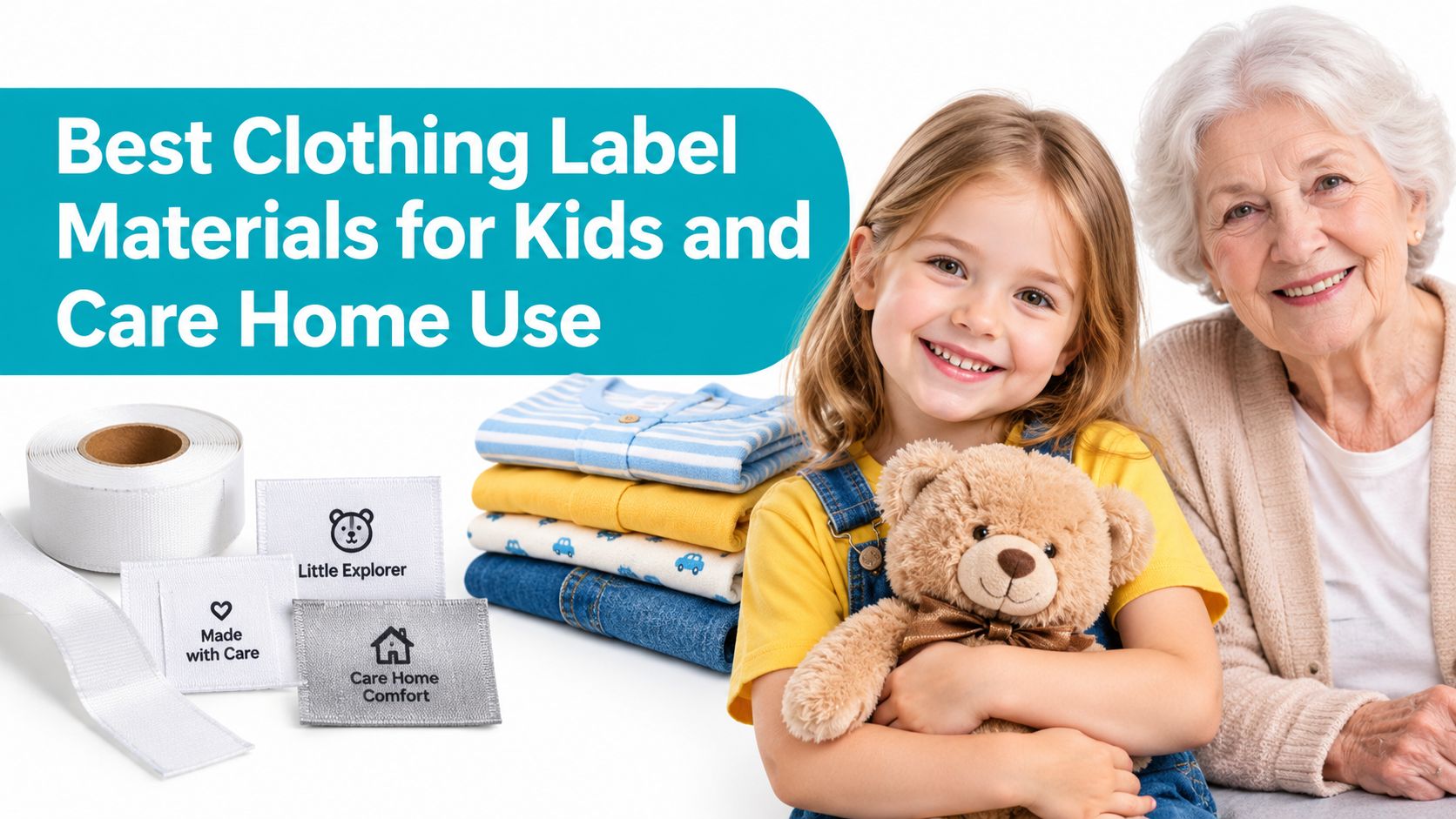
The two trickiest label jobs are usually children's clothing and care-home laundry. They sound similar because both involve names on clothes, but they ask different things from the material.
A reception child's cardigan needs speed, softness, and enough staying power for regular washing. A care-home resident's clothing needs clear identification in a shared system where garments are handled often and separated in bulk. In both cases, the wrong label material creates repeat work.
For kids' school clothes
Parents usually want the fastest route to “done”. That changes the ideal material choice. Sew-in labels are durable, but many families won't sew twenty items before Monday morning. Iron-on labels remove stitching, but they still need setup, heat, and careful application.
Stick-on vinyl is often the most practical fit because it can go onto the existing care label rather than the fabric itself. That reduces fuss, avoids sewing, and keeps the named label in a place that already sits inside the garment.
Helpful features for children's use include:
- Quick application: Useful for uniforms, PE kits, socks bags, and last-minute extras.
- Clear print: Important when teachers or club staff need to read a name quickly.
- Low bulk: Better for comfort in collars or side seams.
- Cross-item use: Handy when the same label style can also identify lunch gear or water bottles.
Parents comparing formats often start with guides to labels for fabric because the sticking point is usually surface compatibility, not just design.
For care-home clothing
Care homes bring a different kind of pressure. Garments are often washed in batches, handled by several people, and returned through a communal process. In that setting, the label needs to stay attached and easy to read without requiring staff or families to sew fresh ones in all the time.
That's where a strong adhesive stick-on label can be especially useful, provided it's designed for that purpose and applied to the correct label surface. It reduces the friction that comes with sew-in options and avoids the extra step of ironing.
Why ultra high tack vinyl changes the decision
This is the point where material choice becomes less theoretical. An ultra high tack vinyl label tackles the biggest practical objection people have with clothing labels, which is the application hassle. It removes the need to pick between sewing and ironing for many common labelling tasks.
Used properly, this type of label suits the routine of both groups. For children, it helps with quick turnaround before school terms and activity clubs. For care-home use, it helps families and staff label clothing with less setup and less repeat work.
Quote My Wall offers stick-on clothing labels made from ultra high tack vinyl for school clothes and care-home items, and the product range is described as washable, microwave safe, tumble dryer safe, and dishwasher safe. That combination is especially useful when one household wants a single labelling approach across clothing and daily-use belongings.
How to Choose the Right Clothing Label Material for Your Needs
If you're trying to decide quickly, don't start with colour or shape. Start with your routine. The right clothing label material is the one that matches what the item will go through each week.
Five checks that narrow it down fast
- Garment type: A soft baby vest, a thick school jumper, and a care-home cardigan don't behave the same way. Check whether you need a label for direct fabric, a seam, or an existing care tag.
- Wash and heat exposure: If the item is washed often and tumble dried regularly, choose a material built for that level of care rather than a light-duty option.
- How you want to apply it: If you know you won't sew, rule sew-in labels out early. If you don't want to use an iron, skip heat-transfer options.
- Comfort level: For neck areas and sensitive skin, flatter or softer-feel options are usually more comfortable than stiff label stocks.
- Personalisation needs: If several family members or residents need names on many items, clear print and easy repeat ordering matter more than decorative finish.
Small choices that make a big difference
Placement matters almost as much as material. Stick-on labels usually perform best on the garment's existing care label rather than directly on soft fabric. That gives the adhesive a smoother, more stable surface.
Size matters too. A label that's too large may catch at the edges. One that's too small may be harder to read in a hurry. For school and care use, simple, readable text usually beats crowded designs.
Try one or two labels first on the clothing types you use most. A quick home test tells you more than a long product description.
A sensible shortcut for busy households
If your priority is minimum effort with strong everyday resilience, a stick-on vinyl label is often the easiest route. That's especially true if you want one system for uniforms, spare clothes, and named belongings that may also need to handle kitchen or travel use.
The best choice isn't the most technical one on paper. It's the one you'll apply properly, in the right place, and trust to stay there.
Final Thoughts on Choosing a Clothing Label Material That Lasts
Most label problems aren't really label problems. They're material-choice problems. A name can be printed perfectly, but if the base material can't cope with washing, heat, rubbing, or repeated handling, the result is still a failed label.
That's why the best clothing label material depends on real life, not brochure language. Woven options make sense when permanent sewn branding is the goal. Satin and cotton can improve comfort or appearance in the right setting. Heat transfers suit people happy to apply them carefully. For many parents and carers, though, the biggest win comes from removing effort while still getting dependable day-to-day performance.
If you're labelling school uniforms or care-home clothing, ultra high tack stick-on vinyl solves the question that usually slows people down. Sew it in, or iron it on? With the right stick-on format, you often don't need to do either. You apply it to the care label, press firmly, and move on with your day.
Keep the final rule simple. Choose the label that stays readable and attached through the routine you already have. Then check placement and care guidance so the material gets the best chance to do its job.
If you want an easy option for school uniforms, care-home clothing, and everyday named items, Quote My Wall offers personalised stick-on clothing labels made for practical routines. Their range focuses on ultra high tack vinyl labels that are washable and suitable for tumble dryer, microwave, and dishwasher use, which makes them a straightforward choice when you want to skip sewing and ironing.