

Wall Quotes for Bedroom: How to Choose, Fit and Style
You've found the perfect phrase, ordered the vinyl, and held it against the bedroom wall. Then the doubt arrives. Is it too large above the bed? Will it look childish in a grown-up room? And will it come off cleanly when the tenancy ends?
Wall quotes for bedroom work best when you treat them as part of the room's architecture, not as an afterthought. The wording, material, scale and position should respond to the person sleeping there, the furniture underneath and the way the room is used. A small, well-placed line can give a plain rented bedroom more character than a crowded gallery wall, while the wrong decal can float awkwardly or make a calm room feel busy.
Why Wall Quotes Work in a Bedroom
A wall quote earns its place when a bedroom needs one clear point of focus. In a spare room with a single bed, it can supply personality without committing you to a full theme. Above a headboard, a short line creates a visual finish where a blank painted wall might otherwise feel unfinished. In a nursery, a name or gentle phrase can make the room feel personal, while a teenager can use a lyric or statement to claim the space without starting another major redecoration project.
The common mistake is scaling the quote to fill empty wall area. Large lettering without a furniture anchor looks stranded, especially in a narrow UK bedroom. The eye needs to connect the words to something below them, usually the bed, a dressing table or a chest of drawers.
Practical rule: Centre the quote on the furniture it belongs to, not automatically on the wall.
Quotes also succeed where framed art can feel too formal. They add a sentence of intent, soften a plain painted surface and create a focal point without introducing another frame, texture or competing image. That restraint suits bedrooms, where the strongest schemes usually leave enough visual space for the room to feel restful.
UK bedroom choices support this quieter approach. A 2026 Dreams analysis ranked wall panelling first among UK bedroom searches, with 33,960 monthly searches and 13.3% 12-month growth, while green bedrooms received 27,780 monthly searches and beige or neutral bedrooms received 10,020. The figures point to demand for feature-wall treatments and calm palettes that give typography room to breathe. Dreams' bedroom trend analysis also reported bow bedroom décor searches rising 183% over 12 months, suggesting that personalisation remains active rather than fading away.
Before choosing words, decide whether the room needs calm, identity, warmth or a playful detail. For broader calm bedroom design tips, look for guidance that considers the whole palette, not just the wall decoration. You can also browse wall stickers with quotes for ideas, then reduce the design to one line that genuinely belongs in the room.
Picking the Right Material for a Bedroom Wall Quote
Material changes the risk, finish and lifespan of a wall quote more than the wording does. For most UK bedrooms, cut vinyl is the practical first choice. It's quick to fit, available in a wide range of colours and removable from many smooth, sound emulsion surfaces when handled carefully. It also suits nurseries and rented rooms because you can replace the design without repainting the whole wall.
A framed print or canvas is the safest option if you don't want adhesive touching the paint. You can swap it when the room changes, but the frame adds visual weight and usually costs more for a statement of similar size. It works particularly well above a dressing table or on a wall where you already have furniture with a strong presence.
Painted lettering gives the most integrated finish. A signwriter or confident decorator can match the wall scheme precisely, but the result is permanent and removal means repainting. Stencil work can look excellent on a feature wall, though uneven paint edges will show more clearly than they would on a cut vinyl design.
Magnetic panels and washi-tape systems are the least committed. They're useful for short phrases, shared walls and temporary displays, but they can't carry long, delicate lettering as neatly as a proper decal.
| Material | Typical Price Band | Durability in Bedroom | Paint-Safe Removal | Best For |
|---|---|---|---|---|
| Cut vinyl decal | Low to medium | Good on a dry, stable wall | Usually good on suitable emulsion | Renters, nurseries and quick updates |
| Framed print or canvas | Medium to high | Very good | Excellent, because no adhesive is required | Statement pieces and frequent changes |
| Hand-painted or stencil-painted quote | Medium to high | Excellent | Poor, repainting is normally required | Permanent feature walls |
| Magnetic or washi-tape system | Low to medium | Moderate | Excellent when removed gently | Short-term displays and shared rooms |
Use vinyl on a smooth, fully cured wall, not a textured or repellent finish. A heated bedroom is generally fine, but steam and moisture make adhesion less reliable, so avoid treating a bathroom-style surface as equivalent to a dry bedroom wall.
For surrounding accents, consider how the quote interacts with shelves, frames and geometric details. Practical honeycomb decor tips from Gates can help you judge whether a quote needs to stand alone or sit within a wider arrangement.
Sizing and Positioning Around the Bed and Furniture
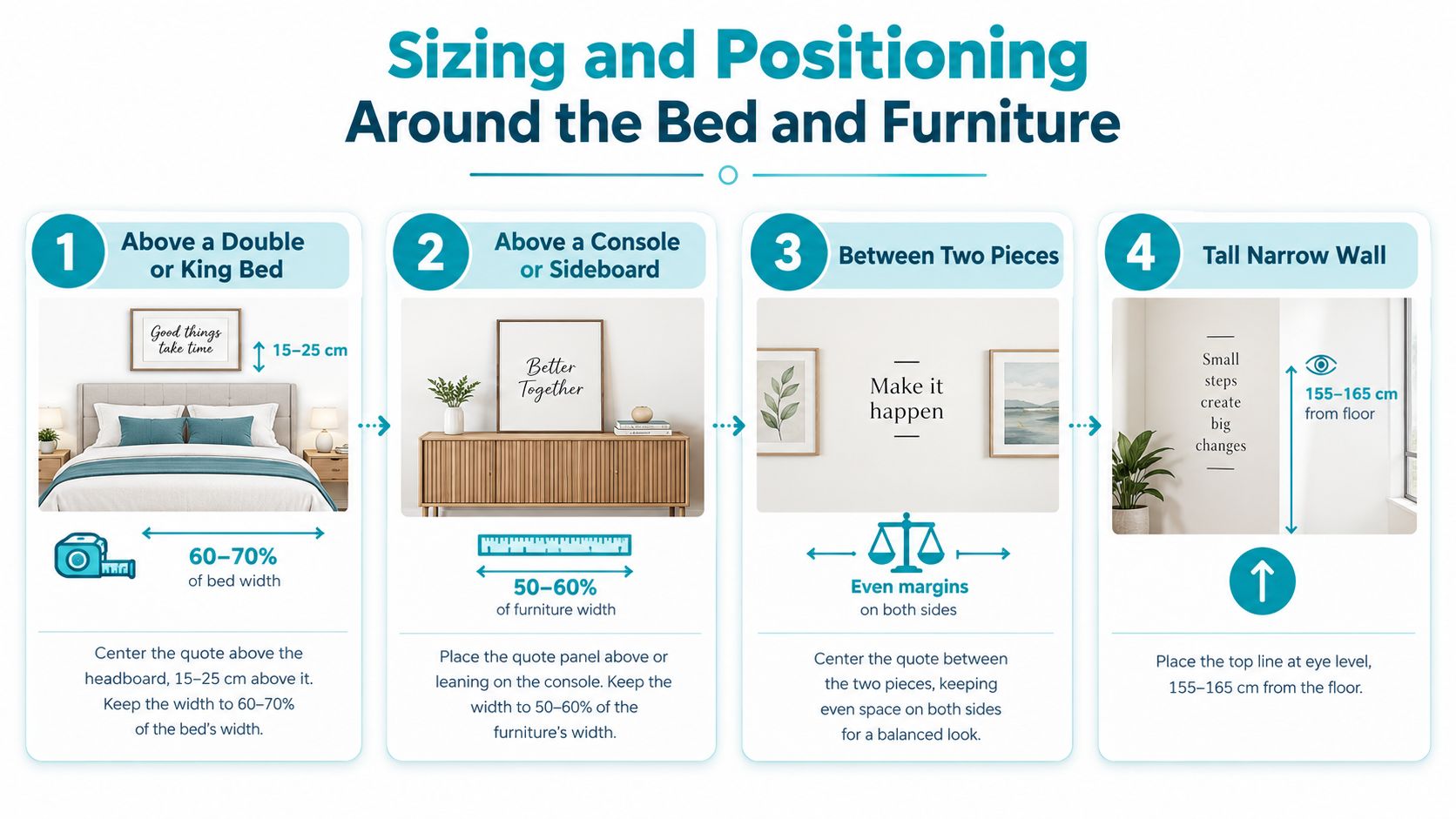
Start with the furniture, then measure the wall. The quote should usually span roughly two-thirds of the width of the bed, chest or table beneath it. That proportion gives the lettering enough presence without allowing it to overpower the furniture.
Above a double or king headboard
Place the lowest part of the lettering around 15 to 25 centimetres above the headboard, provided the quote doesn't collide with the ceiling or wall lights. A starting width of 60 to 70% of the bed width normally feels balanced. Use a two-line design only when the wording needs it. A single, generously spaced line looks calmer.
Across a feature wall behind the bed
A full feature wall needs a stronger anchor than the wall's centre. Align the quote with the bed, not the room's architectural midpoint, and keep it below the visual dominance of the headboard. If the bed is low, let the top line sit near eye level when standing, rather than pushing it high enough to resemble a wallpaper border.
Over a dressing table or chest of drawers
Keep the quote narrower here, around 50 to 60% of the furniture width, so lamps, mirrors and storage still have breathing space. The lower edge should sit close enough to the furniture to form a group, but not so close that the lettering appears attached to the surface.
Above a nursery cot
Centre the design on the cot and keep the first line at a comfortable adult reading height, around 155 to 165 centimetres from the floor where the wall and furniture allow it. Keep all loose framed alternatives out of reach. For adhesive designs, check the cot's position as it changes, rather than assuming the original layout will last.
Use masking tape to mark the intended outer edges. Step back, photograph the wall with your phone and review the image in black and white. The photograph exposes poor scale quickly. If the lettering occupies most of the wall but has no visual relationship with the bed, reduce it.
Choosing the Right Words by Bedroom Type
In an adult bedroom, less wording usually looks more considered. A short line such as “be still” can sit above the bedhead with generous spacing, while a meaningful date or private phrase gives the room identity without turning it into a slogan board. Choose a soft matte finish and a colour close to the wall if the mood should stay quiet.
A teenager's room needs more flexibility. One twelve-year-old may outgrow a themed room and want a scheme that feels older without becoming bland, so a favourite lyric, personal motto or sharply edited phrase will age better than a cartoon reference. Avoid wording that sounds designed for a much younger child. The best choice should still feel credible as the room moves towards sixth form.
In a shared nursery, use the quote as an affectionate detail rather than the entire decoration. “You are loved”, a name initial or a short name can work above the cot, with small stars or simple shapes as companions. Keep the lettering readable for adults and place it beyond a child's reach.
The test is simple. Ask whether the occupant would willingly read the words each morning. If the phrase only looks appealing because it appears repeatedly on Pinterest, skip it. Personal wording, restrained scale and a room-appropriate typeface will outlast generic “good vibes” language.
For more wording ideas, see bedroom wall quotes, then edit aggressively. A quote should support the room's purpose, not compete with sleep, study or play.
Applying and Removing Wall Quotes Safely
A quote above a bed, cot or desk needs a wall that can hold it cleanly. Dust, grease, silicone residue and uncured paint stop vinyl gripping properly, so prepare the surface before opening the packet. The material and application method should also suit how the room is used. Choose removable vinyl for a rental or a child's changing room, and avoid placing any quote within reach of curious hands.
Prepare the surface
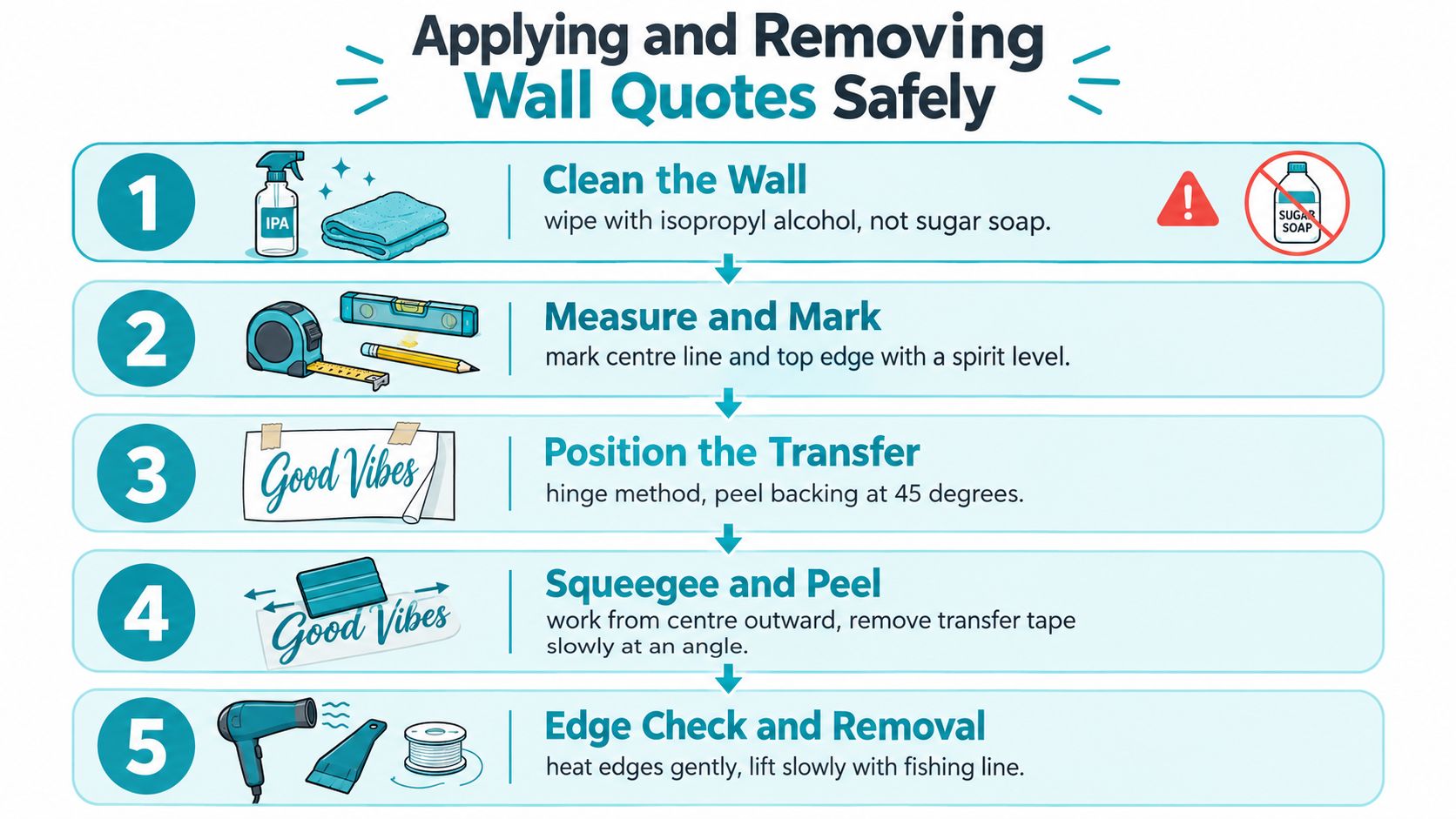
Wipe the area with isopropyl alcohol and a soft lint-free cloth. Avoid sugar soap if it may leave residue, then let the wall dry fully. UK decal guidance recommends a dry, dust-free and fully cured surface. Leave freshly painted walls for at least four weeks before applying a quote. Treat two to three weeks as an absolute minimum only for matt emulsion in a warm, dry room. Work in a comfortably heated room, since surfaces below 15°C can reduce adhesion. For more fitting detail, see our guide to wall stick-on quotes alongside Signomatic's decal fitting guidance.
Test a discreet patch before committing, especially on silk paint, textured finishes or specialist wipe-clean coatings. This matters in rented bedrooms, where a clean removal is part of the styling decision.
Fit from the centre out
Use a spirit level and masking tape to mark the centre line and top edge. Hold the transfer sheet in position, check it from the doorway and judge it against the bed or furniture beneath it. A quote centred on bare wall can look misplaced once the room is furnished.
Peel the backing away gradually while keeping the sheet controlled. Press the letters with a felt-edged squeegee or soft cloth, working from the centre outwards in overlapping strokes. Re-burnish the complete design, focusing on thin strokes and corners, then remove the transfer tape slowly at a shallow angle.
Remove it gently
For a tenancy handover, warm one section at a time with a hairdryer on medium. Keep the airflow moving rather than blasting one spot, then lift the vinyl at a 45-degree angle. If adhesive remains, use a small amount of alcohol and a soft cloth, testing first somewhere inconspicuous.
A peeling edge can be pressed down if the surrounding wall is clean and the vinyl has not stretched. If dust has collected or the adhesive has failed, remove that piece fully instead of trapping debris underneath. Never pull cold vinyl sharply from painted plaster.
Quick Checklist and Common Questions
Measure before you browse designs. The room's proportions should decide the quote, not the other way around.
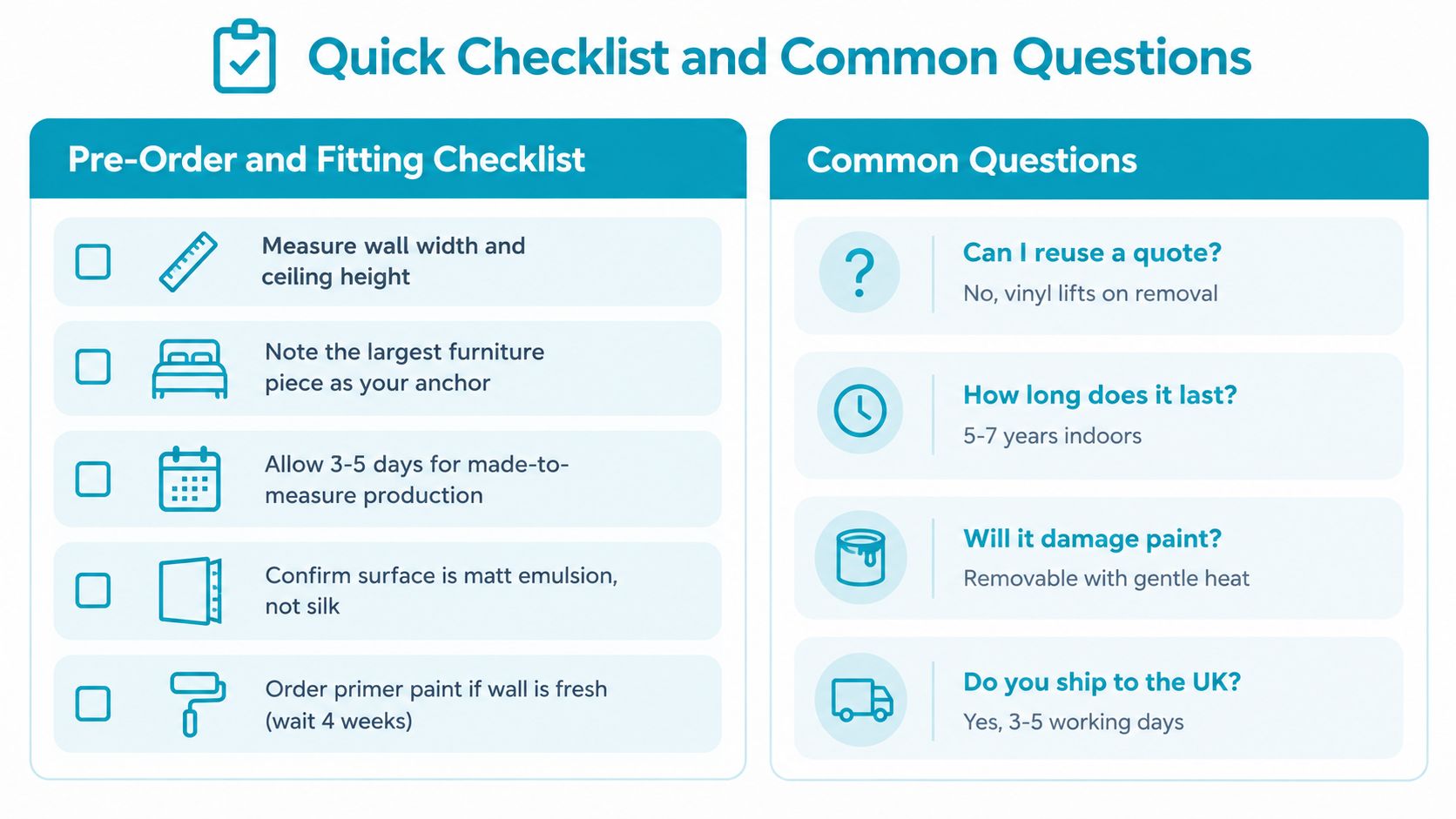
- Measure the wall: Record wall width, ceiling height and the usable area above the furniture.
- Choose an anchor: Use the bed, chest, dressing table or cot as the sizing reference.
- Match the material: Choose vinyl for smooth emulsion, or magnetic and framed options for textured walls.
- Edit the wording: Confirm the line fits the planned zone without shrinking the type until it becomes hard to read.
- Check the colour: Order a swatch when the wall shade and lettering colour are close.
Can I order custom wording? Yes. UK makers such as Bespoke Decals and Vinyl Impression offer routes for personalised designs, but confirm the finished dimensions before approving the order.
What's the most common fitting mistake? Centring the quote on the bare wall instead of the bed or furniture beneath it.
What should I do if vinyl starts peeling? Warm the edge, press it firmly and monitor it. If it won't hold, remove it cleanly and ask the supplier whether fresh transfer tape or a replacement is appropriate.
Will a wall quote damage rental paint? It can if you pull it off cold or apply it to unsuitable paint. Gentle heat, slow removal and a discreet test reduce the risk substantially.
Quote My Wall offers bedroom wall stickers, personalised vinyl designs and printed alternatives for UK rooms, including nursery and children's bedroom décor. Browse Quote My Wall, choose a line that suits the occupant and furniture, and order only after you've taped out the intended size on the wall.