

How to Make a Thank You Gift Bag That Feels Personal
You're standing in the aisle with two bags in your hand, one looks cheap and one looks overdone, and neither feels quite right for the teacher gift, wedding favour, client handover, or care-home thank-you you've got to sort before the end of the week. That's the problem with a thank you gift bag, it has to feel personal without looking fussy, and it has to carry something useful without collapsing the second someone picks it up.
The best results come from treating the bag as part of the gift, not the wrapper around it. Once you choose the right format, size, material, and label method, the whole thing stops looking improvised and starts looking intentional. That matters even more in the UK, where gift packaging sits inside a mature market built around presentation and practicality, and where buyers already expect ready-to-gift formats rather than loose items piled into a carrier bag. For context, the UK paper packaging market was valued at about £5.1 billion in 2023, and the wider gift packaging market was estimated at USD 29.01 billion in 2025, with a projection to USD 44.20 billion by 2034 in the linked market overview, which helps explain why presentation-led bags keep showing up in schools, offices, and events alike (gift packaging market overview).
Choosing the Right Thank You Gift Bag for the Occasion
You're usually not choosing a bag in the abstract. You're choosing it for a very specific moment, a wedding table that needs fifty neat favours, an end-of-term teacher gift that needs to look thoughtful but not extravagant, or a corporate handover where the packaging has to stay tidy on a desk and not rattle like a bargain bin. That's why the first decision is not colour, it's format.
A kraft paper bag works best when you want structure, easy branding, and a look that reads practical rather than precious. It suits teachers, small business client drops, and event inserts because it takes a label well and can feel polished without a lot of embellishment. A fabric tote feels more valuable because the recipient can keep using it, which makes it stronger for reusable branded gifting, but it also pushes you into more careful sizing and a higher visual standard. A reusable non-woven pouch sits in the middle. It can feel neat and lightweight, but it only works if the contents are modest and the finish is crisp.
If you need a useful comparison point for ideas beyond the bag itself, the alternative to party bags piece is a handy way to think about presentation-led gifting without defaulting to sweet-filled filler. For wedding-party inspiration from a different angle, the personalised gift ideas in personalised thank you gifts from Get Spliced show how much difference a clear recipient-focused format can make, even when the gift is small.
Practical rule: pick the bag format by what the recipient will do with it after opening. If it gets reused, the bag itself is part of the thank-you. If it gets binned, the finish has to do more work on the day.
The quickest way to narrow it down is to decide three things before you buy anything, the occasion, the number of bags, and whether you want the bag to be disposable or kept. Once that's clear, the rest gets much easier.
Materials and Specs Worth Knowing Before You Buy
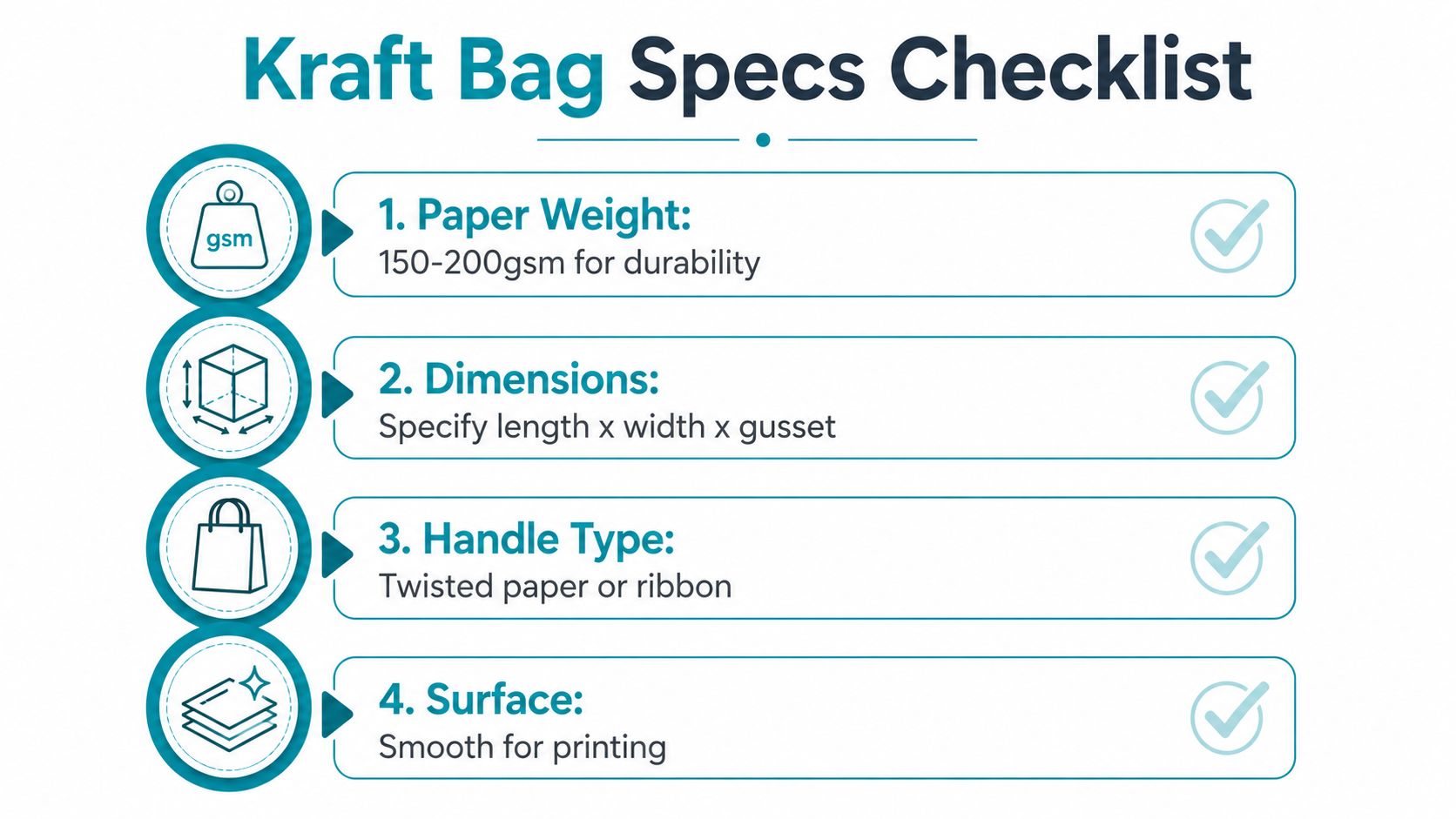
If you've ever bought bags that looked fine online and arrived too flimsy in person, the issue was probably the specification, not the colour. On paper bags, gsm is the paper weight, and it matters because a heavier sheet generally feels stiffer, folds more cleanly, and holds shape better when filled. For a thank you gift bag, the difference between a flat, tired-looking bag and one that stands upright often comes down to that build quality and to whether the base is reinforced.
A 120 gsm kraft bag with a reinforced baseboard is a sensible working point for heavier contents, and independent packaging guidance says that setup can handle up to 10 lb of contents (independent packaging guidance). That doesn't mean every bag should be loaded to the limit. It means you should still match the bag to the object, because under-sizing the gusset or using a gauge that's too low is where seam strain and bottom-split risk start. For handled HDPE bags, the same guidance notes that 12.5 micron material is chosen for better puncture and tear resistance than thinner retail bags, which is useful when the contents have sharp edges or awkward corners.
The medium paper size that keeps proving useful in practice is about 21 × 11 × 27 cm. That works well for paperback books, mugs, scarves, and small toys, and it follows the common gift-bag rule that the depth should exceed the gift depth by at least 1.5 cm, while the height should exceed the gift height by about 5 cm so you have room for tissue and closure. That's the size I'd reach for most often when the brief is “small but not tiny”.
Handles, tissue, and finish
Handle choice changes the perceived quality fast. Twisted paper handles are tidy and cost-conscious. Rope handles look sturdier and are easier to grab. Ribbon handles feel more gift-like, but only if the rest of the bag matches that level of finish.
If you're ordering in one pass, add tissue paper, a closure sticker or tag, and any filler at the same time. Tissue gives shape, filler keeps the contents centred, and a good closure method stops the top of the bag from looking crushed. For anyone planning a branded batch, choosing the right material for name labels is worth reading alongside your bag spec, because the label finish needs to suit the surface, not fight it.
Assembling and Filling the Bag Without the Mess
The bag looks better when it's built from the bottom up. Flatten the base first, press the creases cleanly, and make sure the gusset sits square before anything goes inside. If the base starts twisted, the rest of the bag keeps that bargain-shop look no matter how nice the contents are.
Tissue should go in before the gift, not after as a last-minute cover-up. Nest the item inside the tissue so it feels cushioned and framed, then let the top of the tissue rise slightly above the opening. That extra height makes a small gift feel fuller without requiring more stuff, which is exactly what you want when the actual item is modest but you still need the bag to feel generous.
Useful habit: put the heaviest object at the bottom and the softest pieces around it. That keeps the bag stable in transit and stops the top from collapsing into a lopsided shape.
Oddly shaped gifts need a little restraint. A bottle, cylindrical mug, or long item should sit snugly in the centre rather than being shoved against one side. If the fit is too loose, add shredded paper or crinkle cut fill around the base so the object doesn't tilt and the bag still photographs well if you're sharing it on social media. For a cheap but polished look, colour-match the fill to the tissue rather than mixing every craft supply you own.
Finish by closing the top in a way that suits the format. A folded top works for rustic paper bags. A ribbon tie suits a more dressed-up look. A sticker seal is neat for smaller runs and keeps the opening tidy without adding bulk. The key is to let the contents settle before you seal anything, because once a bag is overpacked, no amount of ribbon can hide it.
Personalising With Vinyl Stickers and Clothing Labels
The fastest way to make a thank you gift bag feel custom is to treat the front like a small brand panel. On a paper bag, a vinyl sticker or decal works well because it sits flat, reads clearly from a distance, and can carry a name, logo, date, or short message without clutter. On a fabric tote, the same visual idea usually works better as a washable stick-on clothing label, especially if the bag is going to be reused, washed, or passed between family members.
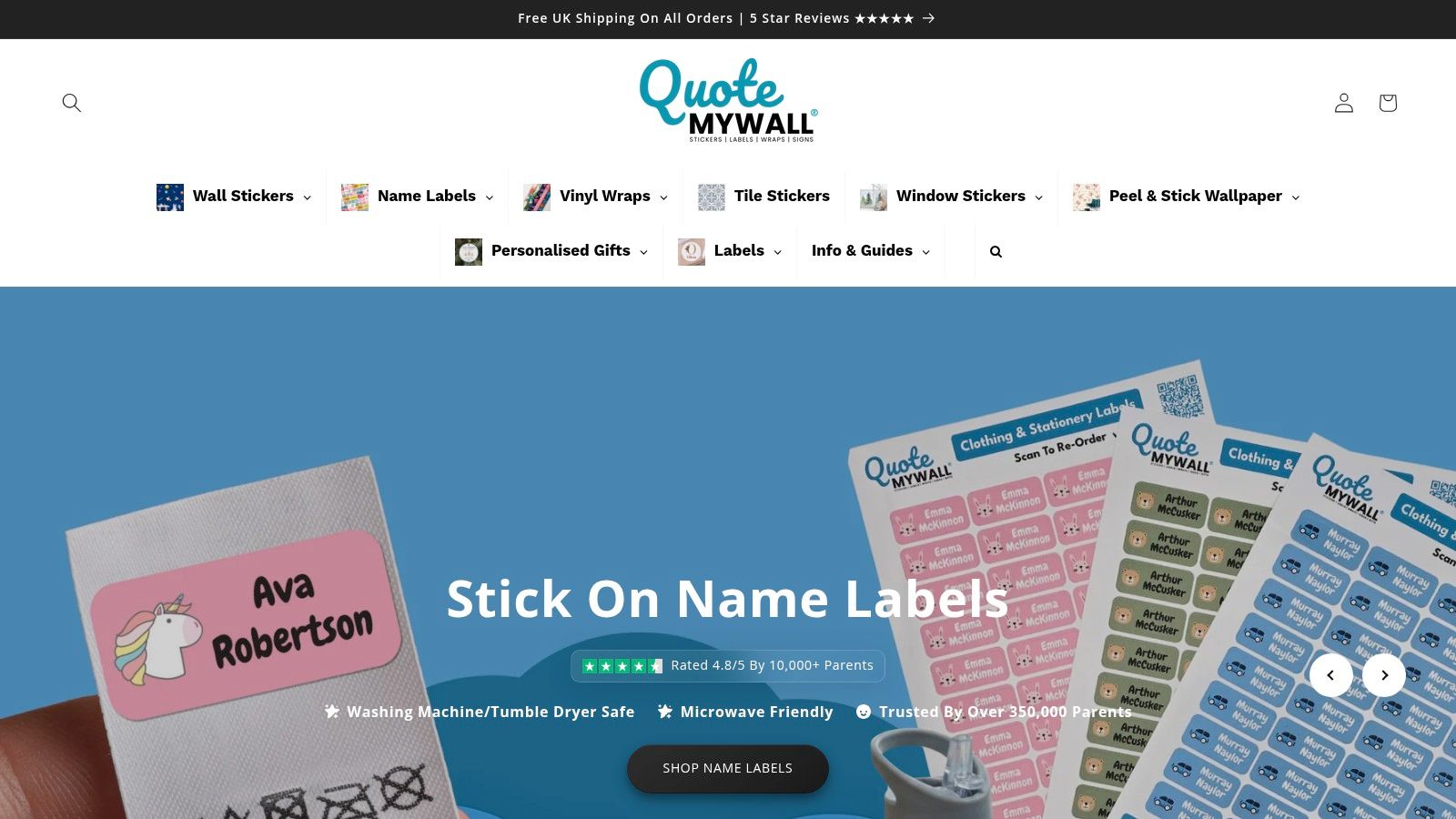
That's where the practical difference matters. A decorative label can be beautiful on a one-off event bag, but a reusable tote needs more than decoration. Quote My Wall's clothing labels are described as fully washable, microwave, tumble dryer and dishwasher safe, which makes them far more useful for school uniform bags, care-home laundry, and reusable shopping totes than a fragile printed sticker would be. Those are the sorts of environments where the bag is handled often, cleaned often, and expected to last.
For application, the surface has to be clean, dry, and smooth. Press the label from the centre outward so air bubbles don't get trapped under the film, and use a firm edge to settle the corners. If the bag is paper, keep the label large enough to read without forcing the design into the grain of the kraft surface. If the bag is fabric, avoid tiny lettering that disappears once the material moves or folds.
The key advantage of reusable labelling is that it changes the perceived value of the whole thank-you. A paper bag says “thoughtful packaging”. A tote with a durable, neatly applied name label says “this was made for you, and you can keep using it”. That's a better fit for UK gifting now that waste sensitivity is part of how people judge packaging choices, especially in shared households and care settings where disposable clutter is less welcome.
Design rule: keep contrast high. Dark text on pale bags, pale text on dark bags, and no more than one strong font style if you want the name to stay legible at small size.
For batch runs, lock the artwork before you order. Consistent spacing, one typeface, and the same label size across the set make the whole table or team gift look planned instead of pieced together.
Theme and Audience Ideas That Actually Land
The bag content should match the setting, not just the occasion. A teacher thank-you can be warm and useful, a wedding favour can be elegant and light, a corporate client gift should feel branded but not pushy, and a care-home staff bag needs to be practical, safe, and easy to share without awkwardness. A good thank you gift bag gets the tone right before anyone even sees what's inside.
For teacher appreciation, keep it simple and friendly. Small stationery, a wrapped snack, a tea sachet, or a gift card all work because they feel useful without turning into clutter. Avoid anything too personal, and don't overload the bag with sugary filler just to make it look fuller. A clean label with the teacher's name or the school year is enough to make it feel considered.
For weddings, the best bags are light and elegant. Think mini confectionery, a small keepsake, or a note that ties the favour to the day. Guest names on the front can work beautifully if the typography is restrained and the colour palette stays consistent across the table. For corporate client gifts, a branded notebook, a pen, or a small desk item is safer than novelty items that will be left in the drawer. For care-home staff, choose comfort or practicality, and keep the contents non-fragranced, easy to handle, and low-risk for shared environments.
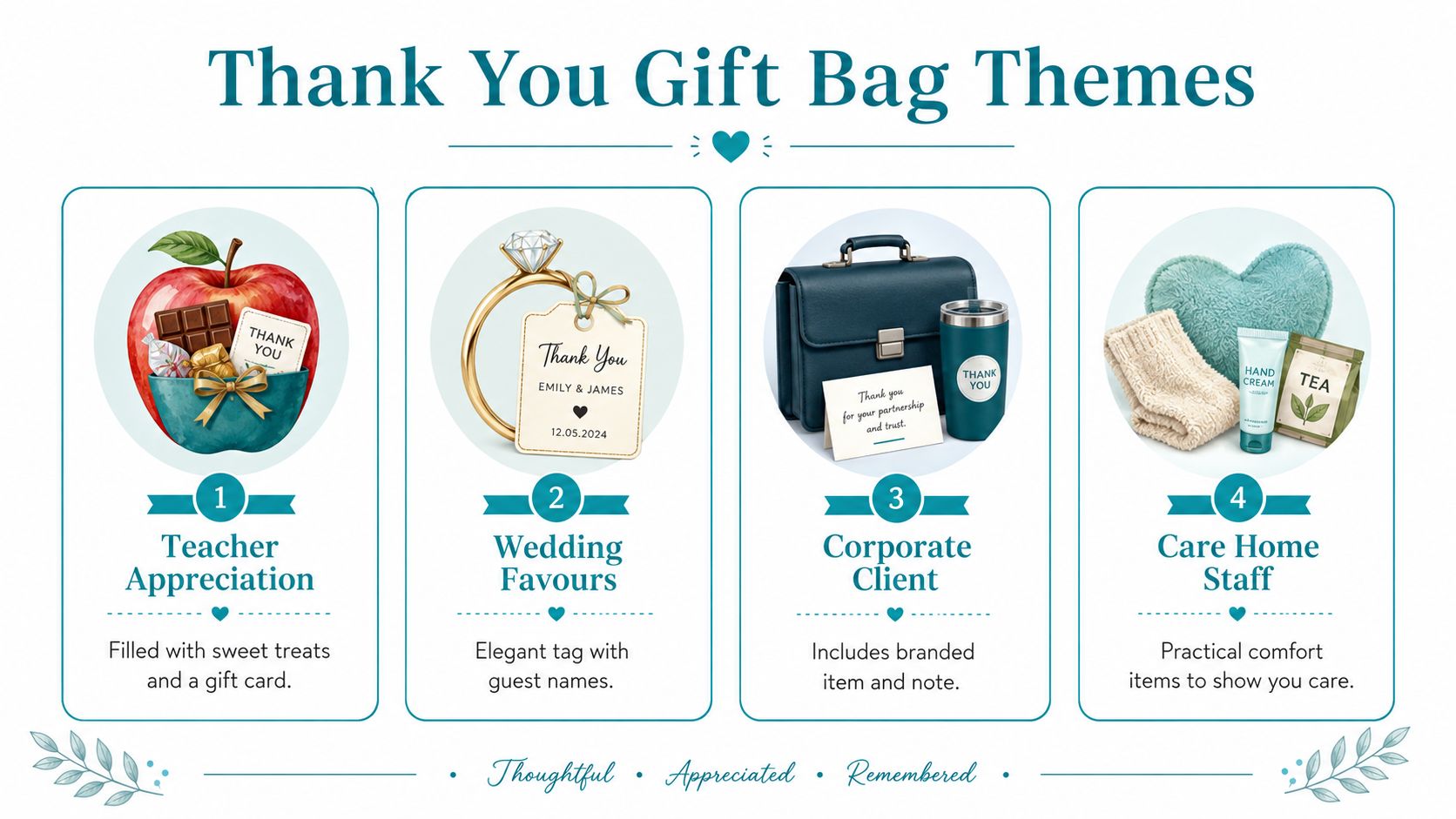
The care setting needs the most judgement. England's adult social care sector employed around 1.59 million jobs in 2024 according to the Care Quality Commission, which shows how many thank-you moments happen in these environments, but shared settings also make food, fragrance, and overly decorative items more complicated. In schools, care homes, and clinical spaces, washable and reusable labels help because the bag can be assigned, cleaned, and reused without guesswork. That's the practical edge of a durable label in a shared UK environment.
A quick pick-your-row shortcut helps here:
- Teacher row: stationery, tea, sweet treat, note, neat paper bag.
- Wedding row: treat, tag with names, ribbon tie, coordinated colour.
- Corporate row: branded item, notebook, pen, folded kraft bag, logo label.
- Care-home row: practical comfort item, non-fragranced option, easy-clean tote, clear name label.
Finishing, Presentation and Common Mistakes to Avoid
The finishing touches decide whether the bag looks handmade in a good way or homemade in a rushed way. Use ribbon sparingly, because too much volume around the handle makes the top look crowded. If you're tying a tag, attach it to the handle, not to the bag body, so it moves naturally and doesn't crumple the front panel.
Tissue colour should either echo the main theme or stay neutral. White, cream, kraft, and one accent colour are usually enough. If you mix several bright shades, the bag starts to read as leftover stock rather than a planned thank-you. The same goes for fonts on labels, one clear typeface usually beats a decorative mess that's hard to read from arm's length.
Keep the name where the eye lands first. On most bags, that's the upper front area or the handle tag, not the lower corner.
The common mistakes are predictable. Bags that are too small make even lovely gifts look forced. Closing the top before the contents settle leaves a sagging lump at the side. Forgetting spelling on tags is more embarrassing than a plain bag. And in reusable formats, people sometimes treat the bag itself as packaging when it's really part of the gift, so it deserves the same care as the item inside.
For a batch run, check the same things every time, ribbon length, label alignment, tissue height, and whether the contents sit stable at the base. If you're making eighty wedding favours or two hundred client inserts, that five-minute QC pass saves you from redoing half the stack later.
Budget Breakdown and Quick Reference
The cleanest way to plan a thank you gift bag is to match the bag format and personalisation to your budget, then stop there. Once you do that, the whole job becomes easier to buy, easier to assemble, and easier to repeat for the next event.
| Budget per bag | Best bag format | Recommended contents | Personalisation method |
|---|---|---|---|
| Under £2 | Kraft paper bag | One small treat, note, simple insert | Sticker or name tag |
| £2 to £5 | Medium paper bag or small pouch | Mixed small items, tissue, fill, card | Vinyl decal or printed label |
| £5+ | Reusable tote or premium pouch | Kept item, useful desk or household gift | Washable clothing label or stronger branded decal |
The pattern is simple. Lower budgets work best when the bag does a lot of the visual work. Mid-range budgets let you mix texture, fill, and a stronger label. Higher budgets make sense when the bag is reusable and the recipient should keep using it after the event.
A thank you gift bag only feels generic when the packaging and the message don't match. Get the size right, choose the material with the recipient in mind, and use a label that suits the surface, and even a small gift starts to feel properly thought through.
If you want a cleaner way to personalise bags, labels, and reusable gifts without starting from scratch every time, Quote My Wall has the kind of vinyl and washable label options that suit school bags, care settings, and custom thank-you packaging. It's a practical place to build the branded detail into the bag itself, not just the note inside.