
A Parent's Guide to Personalised Iron On Clothing Labels
Staring at a mountain of unclaimed school jumpers or dealing with a laundry mix-up at a care home is a frustration many of us know all too well. Personalised iron on clothing labels are the simple, permanent fix you've been looking for. These are small, custom-printed tags that, with the heat of a household iron, fuse directly onto the fabric, creating a durable bond that’s built to last.
The End of Lost School Jumpers and Care Home Mix-Ups
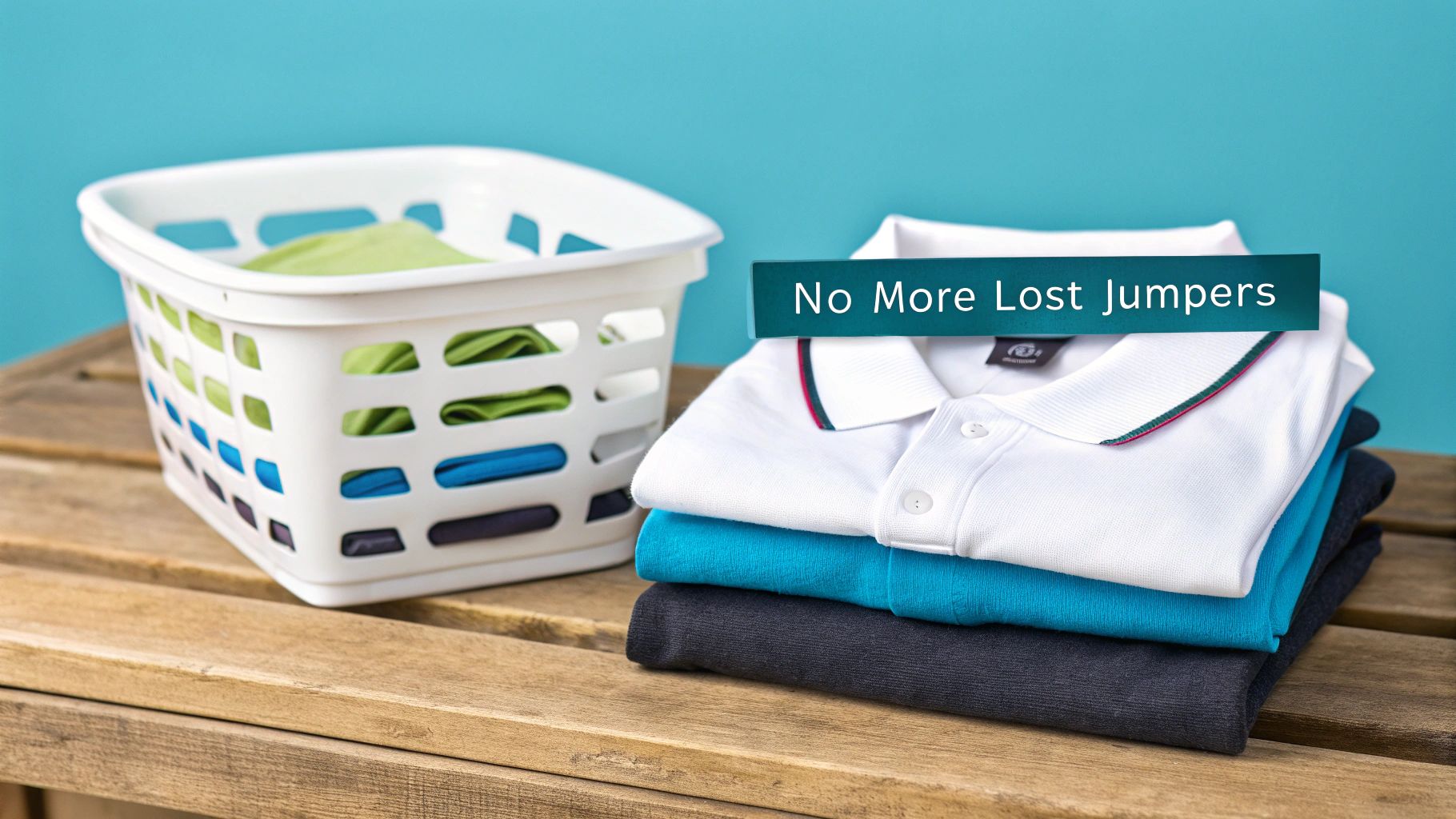
Think of these labels as a gentle, fabric-friendly tattoo for your garments. They completely do away with the faff of sewing and are far more reliable than marker pens that fade after just a few washes. For busy parents and dedicated caregivers across the UK, they've become the go-to choice for making sure every sock, shirt, and PE kit finds its way home.
This straightforward idea has quickly become a cornerstone of organisation for countless families and facilities. It's part of a much bigger trend, too. Here in the UK, the demand for personalised clothing solutions is on the rise, with the decorated apparel market projected to more than double to USD 3,138.2 million by 2030. This boom is all down to people like us looking for unique, customised items.
Why They Are an Essential Tool
Personalised iron on clothing labels create a foolproof system for keeping track of belongings, especially in busy, shared environments. While they're perfect for school uniforms, their usefulness goes much further. They're invaluable for:
- Care Home Residents: Ensuring personal clothing is returned to the right room after laundering, which helps preserve dignity and prevents sentimental items from getting lost.
- School Uniforms and PE Kits: Putting a final stop to lost blazers, jumpers, and sports gear in the chaos of the school changing rooms and lost property box.
- Children's Belongings: Helping to manage the countless small items that come with active kids; they're as useful as other key toddler accessories for preventing headaches.
- Handmade Items: Adding a professional, personal touch to knitted blankets, sewn gifts, and other lovingly made creations.
In essence, these labels are more than just tags; they are a small investment in peace of mind. They ensure that valuable and sentimental items are protected, identified, and always accounted for.
This guide will walk you through everything you need to know. We'll show you exactly how to choose, apply, and care for your labels, making lost clothing a thing of the past.
Iron-On vs. Stick-On Labels: Which One Do You Need?
Choosing between iron-on and stick-on labels can feel like a bit of a puzzle, but it’s actually quite straightforward once you know what each is designed for. Getting it right means your child’s school jumper or a relative’s favourite cardigan will always find its way home.
It really boils down to matching the label to the job.
Think of a personalised iron-on clothing label as becoming part of the fabric itself. When you press it with a hot iron, the special adhesive melts and literally fuses with the fibres of the clothing. It’s a permanent bond, designed to handle countless hot washes and tumbles in the dryer without ever peeling, cracking, or fading away.
Stick-on labels, on the other hand, are more like super-strong stickers. They have a seriously powerful adhesive that grips a surface, but it sits on top of the material rather than becoming one with it. They are incredibly tough, but their sweet spot is on smooth, non-fabric items or, crucially, the silky care tag you find inside a garment.
The Durability Factor
When it comes to clothes that are in the wash week in, week out—school uniforms, PE kits, and care home laundry are prime examples—durability is everything. In this arena, iron-on labels are the undisputed champions.
Because they bond so completely with the fabric, their staying power is second to none. A properly applied iron-on label will genuinely last for the entire life of the garment. This makes them the perfect ‘set it and forget it’ solution for busy families.
Stick-on labels are tough, no doubt, but they have their limits if you stick them directly onto fabric and then throw them into frequent, hot washes. Their real strength shines on things like lunch boxes, water bottles, or the garment's satin care tag, where they hold on brilliantly. If you're curious, you can learn more about the benefits of stick on clothing labels here.
Application and Fabric Suitability
The best choice also hangs on the type of material you’re labelling and how much time you’ve got to spare.
- Iron-On Labels: These need a couple of minutes with a hot iron. They’re absolutely perfect for common fabrics like cotton, polyester, and poly-cotton blends—anything that can take the heat. Just be sure to avoid them on heat-sensitive materials like nylon or very delicate woollens.
- Stick-On Labels: Application couldn't be faster—just peel and press. This makes them a lifesaver for all those items you can't possibly iron, like waterproof jackets, wellies, lunch boxes, and shoes.
The core takeaway is simple: For a permanent, wash-proof label that goes directly onto the fabric, choose iron-on. For quick, versatile labelling on care tags or hard-surfaced belongings, stick-on is your best bet.
To help you decide at a glance, here’s a quick comparison of how the two types stack up.
Iron On vs Stick On Labels: A Feature Showdown
| Feature | Iron On Labels | Stick On Labels |
|---|---|---|
| Best For | Direct-to-fabric application (e.g., school jumpers, shirts). | Garment care tags, lunch boxes, shoes, water bottles. |
| Durability | Extremely high; lasts the lifetime of the garment. | High on appropriate surfaces; less durable on fabric. |
| Application | Requires a hot iron; takes a few minutes per label. | Instant peel-and-stick application; takes seconds. |
| Washability | Excellent; withstands hot washes and tumble dryers. | Good on care tags; not for direct fabric washing. |
| Fabric Types | Cotton, polyester, poly-cotton blends. | Best for satin care tags; not for direct fabric use. |
Ultimately, having both types on hand is often the smartest approach. That way, you’re covered for everything from school blazers and PE shorts to drinks bottles and pencil cases, with the best possible label for every single item.
How to Perfectly Apply Iron-On Labels in Minutes
Getting your new iron-on labels to stick properly is much easier than you might think. There's no need for fiddly sewing; all it takes is a few minutes and your household iron to get a permanent, professional-looking finish that will last as long as the garment does. A good application means the label will see you through countless washes, tumbles, and all the rough and tumble of daily life.
To make sure you get it right first time, every time, I've put together a simple guide.
Your Simple Application Guide
Follow these steps for a secure bond that won’t peel, crack, or fade, whether you’re labelling a cotton school polo shirt or a polyester PE kit.
-
Preparation is Key: First things first, grab a clean, dry, and freshly washed garment. Set your iron to a high heat – usually the 'Cotton' or '•••' setting, which is around 150-170°C. The most important bit? Turn the steam function completely OFF. Steam adds moisture, and moisture is the enemy of a good, strong adhesive bond.
-
Position Your Label: Pop the label onto the garment exactly where you want it. The collar, waistband, or just inside near the care tag are all popular spots. Now, place the piece of parchment paper (this usually comes with your labels) over the top. It acts as a protective shield, stopping the hot iron from scorching the label or the fabric itself.
-
Apply Heat and Pressure: Press the hot iron firmly down onto the parchment paper and hold it completely still. Don't be tempted to slide it around like you would when ironing out creases. You need to apply firm, even pressure for about 10-15 seconds. It’s this combination of direct heat and steady pressure that melts the adhesive and fuses the label right into the fabric's fibres.
-
Check and Cool Down: Carefully lift the iron and the parchment paper. The label should look like it’s become part of the fabric, and you might even see the material's texture showing through it slightly. Let it cool down completely for at least a minute. And the final, crucial step: you must wait at least 24 hours before you wash it. This gives the adhesive time to fully cure and set for good.
This handy infographic breaks down the key differences between the permanent iron-on method and the more versatile stick-on alternative.
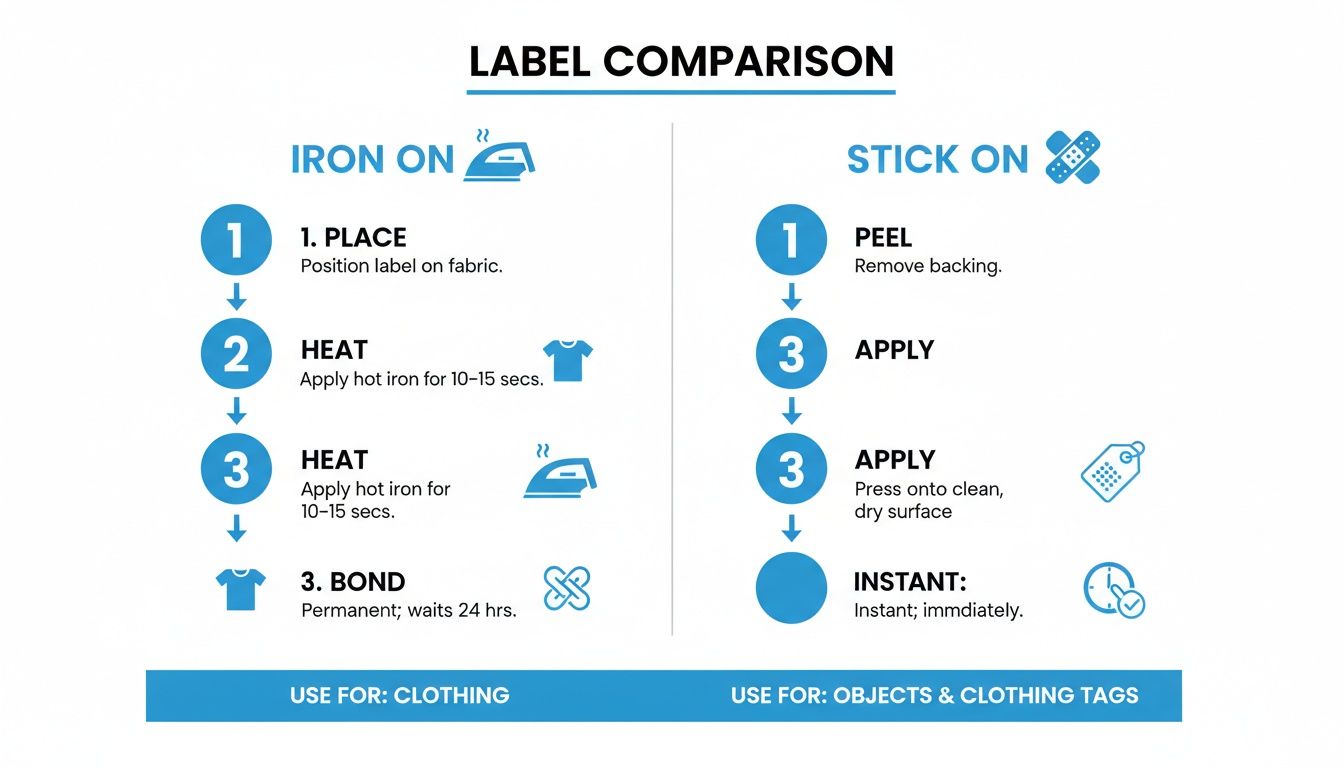
As you can see, iron-on labels are made for bonding directly with fabric, whereas stick-on labels are brilliant for care tags and all those non-fabric items.
Top Tip: Don't use a wobbly ironing board! They absorb too much of the pressure you're trying to apply. Instead, use a hard, flat surface like a kitchen worktop or a wooden chopping board. This ensures the adhesive bonds properly and stops the edges from peeling later on.
By following this process, you can be confident that your personalised iron-on clothing labels will stay exactly where you put them. If you're interested in customising other fabric items, you might find our guide on applying iron on clothing decals useful.
Finding the Best Personalised Iron-On Labels for Your Family
It’s easy to think all iron-on labels are the same, but the truth is, the quality can vary wildly. Choosing the right one from the get-go is the secret to making sure they actually last. A good label is one you can apply and then forget about – it needs to be clear, comfortable, and tough enough for everything from the school playground to a busy care home laundry room.
So, what should you look for? It really boils down to three things: the material, the size and shape, and what you can print on it. Get these right, and you'll have a set of labels that works perfectly for your family.
Quality Materials are Non-Negotiable
When you're looking at what labels are made from, high-quality vinyl is the gold standard. Steer clear of the cheap, papery types you sometimes see. They might seem like a bargain, but they crack and fade after just a few washes. A premium vinyl label, on the other hand, is flexible. It moves with the fabric, so it's not going to peel off or look tatty.
A well-made vinyl label literally fuses with the material, creating a smooth finish that won't scratch or irritate sensitive skin. That’s a huge deal for things like underwear, socks, or pyjamas that are worn right next to the skin.
Getting the Size and Placement Spot On
There’s no one-size-fits-all solution here. The best label size really depends on what you’re putting it on. It’s often a good idea to have a couple of different sizes on hand so you’re covered for any item.
- Small Labels: These are your go-to for being discreet. They're ideal for tucking inside a shirt collar, on the cuff of a sock, or along the waistband of trousers. You get clear identification without it being obvious.
- Larger Labels: For bulkier things like winter coats, PE bags, or blankets, a bigger label is much more practical. It makes life easier for school staff or care home workers who need to see the owner’s name at a glance.
Make the Customisation Work for You
Personalisation isn’t just about printing a name; it’s about making that name as clear and helpful as possible. For clothes going into a care home, for instance, a clear, bold, and easy-to-read font is absolutely crucial for avoiding mix-ups in the laundry.
Personalised iron-on clothing labels are a game-changer for UK care homes, where lost clothing can cost the sector an estimated £20-30 million annually. Following guidelines from the Care Quality Commission, around 65% of UK care homes now mandate personalised labelling, which has helped reduce laundry mix-ups by as much as 40% in facilities using iron-ons. You can find more insights on the best iron on name labels for the UK on My Nametags.
For little ones who can't read yet, adding a small icon is a brilliant trick. A simple star, a favourite animal, or a heart next to their name gives them something unique to look for. It’s a simple touch that helps them feel more independent when they're trying to find their own jumper in a sea of identical ones.
Keeping Your Labels Looking Brand New
You’ve gone to the effort of perfectly applying your personalised iron on clothing labels, so the last thing you want is for them to peel off in the wash. The good news is, making them last is incredibly easy and doesn't require a special laundry routine.
The most critical step is the first one: wait at least 24 hours before washing the garment. This short waiting period is all it takes for the adhesive to fully cure and create a permanent bond with the fabric, setting the label up for a long and useful life.
Simple Care for Long-Lasting Results
Once that initial 24-hour window has passed, a few simple habits are all you need to keep your labels firmly in place and easy to read, wash after wash.
A brilliant little trick is to turn the clothing inside out before it goes into the machine. This small action protects the label from rubbing against other clothes, zips, or buttons, which helps prevent any unnecessary wear and tear.
It's also a good idea to steer clear of harsh chemicals like chlorine bleach directly on the label. While our labels are tough, strong chemicals can cause the print to fade over time. Your usual colour-safe detergent is all you need.
One of the best things about quality iron-on labels is just how resilient they are. They’re designed to be completely tumble dryer safe, so there's no need to worry about them melting or coming unstuck in the heat. They really are a 'set it and forget it' solution.
Following these simple tips means your labels will stay put and remain legible, ready for whatever adventures the clothes (and their owner) get up to.
- Wait 24 Hours: Let the adhesive fully cure for a day before the first wash.
- Turn Inside Out: A simple way to protect the label from friction during washing and drying.
- Avoid Harsh Bleach: Stick to regular detergents to keep the print looking sharp.
- Tumble Dryer Safe: You can use your tumble dryer without a second thought.
Proper care is simple and makes sure your organisational efforts pay off for the long haul. If you're curious about what makes some labels so much more durable than others, check out our guide to choosing machine washable labels.
Creative Ways to Use Your Personalised Iron-On Labels
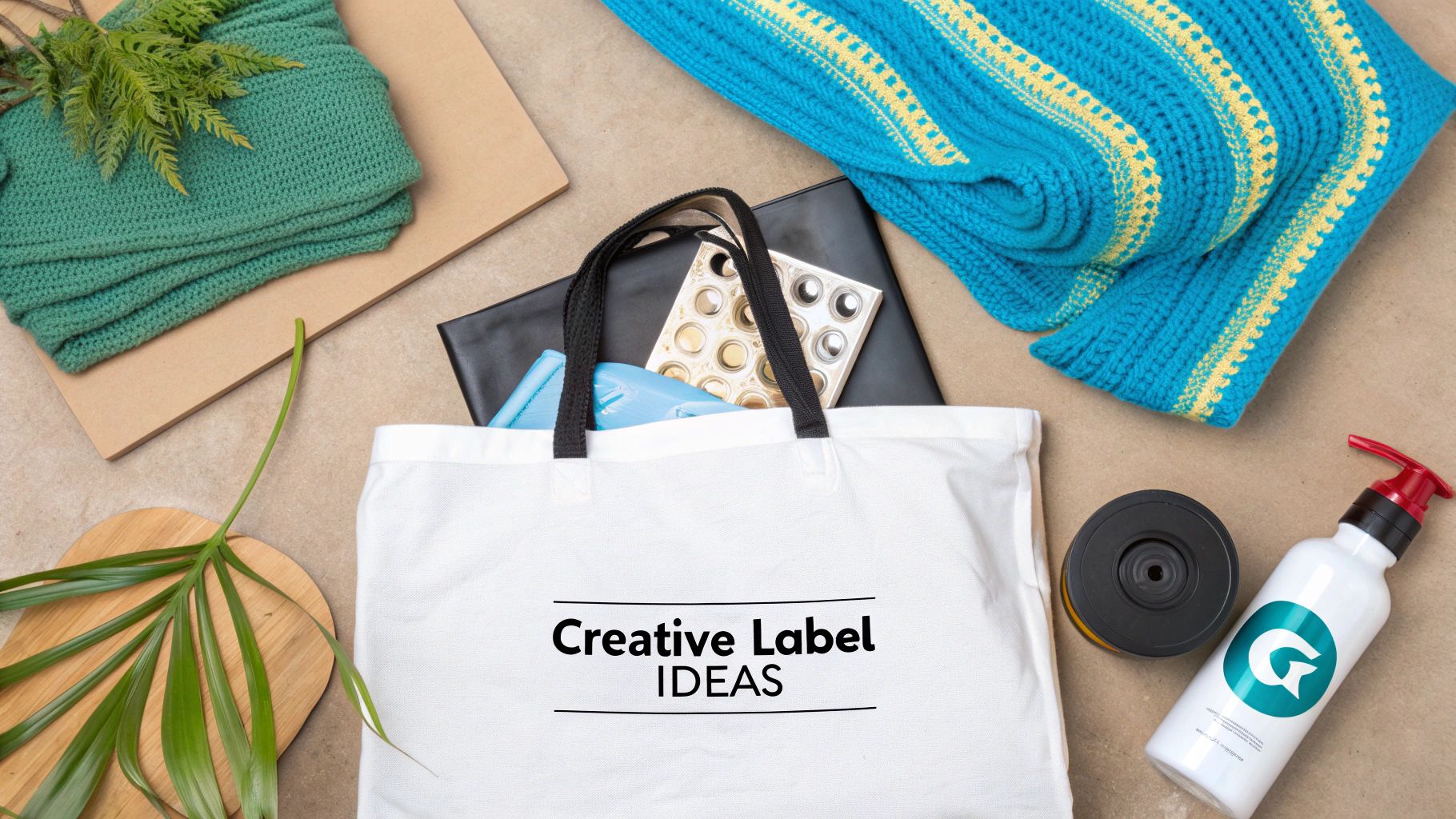
While they’re absolute lifesavers for school uniforms and care home laundry, the humble personalised iron on clothing label has a lot more to offer. Think of them as a secret weapon for adding a unique, practical, and personal touch to all sorts of fabric items in your life.
Your imagination is really the only limit here. These little labels can transform everyday items into something special or add a surprisingly professional finish to your handmade projects.
Beyond the School Gates
If you’re a crafter, you’ll find these labels are a game-changer. Picture adding a beautifully designed label to your hand-knitted blankets, quilts, or sewn gifts. It's such a simple way to "sign" your work, pop on some care instructions, or even include a heartfelt message. It gives your creations a polished look that shows just how much effort you've put in.
They're also brilliant for sorting out group activities or adding flair to personal projects. Here are a few ideas to get you thinking:
- Local Sports Teams: Quickly personalise PE kits or team bibs for the kids' local football or netball club. No more mix-ups in the changing rooms.
- Personalised Accessories: Add a name or a fun little icon to fabric pencil cases, canvas tote bags, or gym sacks to make them stand out from the crowd.
- DIY Home Organisation: Create custom labels for fabric storage bins in the playroom or on shelves. It makes tidying up that little bit easier for everyone.
Think of these labels not just as name tags, but as a clever tool for adding a thoughtful, custom finish to almost any fabric item you can get your hands on.
From customising a cushion cover to branding your own products for a craft fair, a simple iron-on label elevates the item. It makes things more personal and memorable, and it's an incredibly easy and affordable way to make your mark.
Your Iron-On Label Questions Answered
Even with the best instructions, you might still have a few questions floating around. Not to worry! We’ve gathered the most common queries we hear from parents and carers to clear up any last-minute uncertainties and help you get the best results from your personalised iron-on clothing labels.
Can I Remove an Iron-On Label?
Honestly, removing a well-applied iron-on label is a tricky business – they’re designed to be permanent, after all! If you really must, you can try reheating the label with an iron (always use baking parchment to protect the fabric) and carefully peeling it off while the adhesive is hot.
But a far easier fix is often just to place a new label directly over the old one. To save yourself the hassle, we always suggest giving the name and placement a quick double-check before you bring out the iron.
Will They Work on All Fabric Types?
Our iron-on labels are brilliant on any fabric that can handle a hot iron. This covers most of the materials you’ll find in school uniforms, sportswear, and everyday clothes.
- Cotton
- Polyester
- Poly-cotton blends
They aren't a good match for very delicate or heat-sensitive fabrics like silk, nylon, or certain synthetics that could melt. The golden rule? Always check the garment's care tag for ironing instructions before you start.
How Many Washes Will a Label Last For?
A high-quality iron-on label is incredibly tough and designed to last the lifetime of the garment. When applied correctly, it can easily handle over 50 wash cycles and is perfectly safe for the tumble dryer. These labels are made to resist peeling, cracking, or fading, keeping the name crystal clear wash after wash.
The real test of a good label is its staying power. A proper iron-on label fuses with the fabric, becoming a permanent feature that won't give up, no matter how many times it goes through the laundry.
Are the Labels Comfortable for Sensitive Skin?
Absolutely. We use skin-friendly materials that feel soft to the touch. Once it’s on, the label integrates with the fabric, creating a smooth finish that won’t scratch or irritate even the most sensitive skin.
They are much softer and less noticeable than old-fashioned sew-in tags. This makes them a fantastic choice for items worn right against the skin, like socks, underwear, and PJs, ensuring total comfort for little ones and elderly relatives alike.
Find the perfect labelling solution for your family at Quote My Wall. Our durable, easy-to-apply, and skin-friendly personalised iron-on clothing labels make lost items a thing of the past. Shop our collection now.