
Name Clothes Labels: The Complete UK Buyer Guide
The school jumper has vanished again. It may be sitting in a crowded lost-property box, mixed with identical sweatshirts, PE tops and coats. At a care home, the same problem is more serious: clean laundry returns from a shared wash, but nobody can confidently match every cardigan, pair of trousers or nightdress to the right resident.
Name clothes labels solve a simple operational problem. They give families, teachers, laundry teams and care staff a clear way to identify garments before they're lost, mixed up or replaced. The right label must do more than look neat on day one. It must suit the fabric, survive the garment's care routine, remain readable and respect the person wearing it.
Why Reliable Clothing Identification Matters
A missing jumper is rarely just a missing jumper. Someone has to search the classroom, check the playground, inspect the lost-property basket and decide whether the similar-looking one belongs to the child. If the garment never turns up, the family buys another. The child may then arrive in the wrong uniform item while everyone tries to sort out the mix-up.
Care homes face the same basic issue at a larger operational level. Residents' clothing goes through repeated handling and laundry processes, often alongside garments belonging to other people. A name clothes label gives staff an immediate identification point, which helps reduce sorting errors and makes lost-property checks more efficient.
Practical rule: Label the items that leave the house or enter communal laundry, not only the expensive ones.
That includes school jumpers, blazers, trousers, coats, PE kit, socks, shoes and bags. For care-home residents, it usually means everyday clothing, nightwear, outerwear and anything sent in for laundry. Identification also matters for specialist workwear. Kitchens, for example, manage shared or similar garments, so choosing the right chef uniforms for your kitchen involves both fit and practical garment management.
A readable label can support a child's independence too. A child who recognises a name, colour or simple icon can identify their own coat without relying entirely on an adult. In a care setting, the label supports dignity by helping staff return the correct personal clothing instead of issuing a substitute item.
The value is not limited to preventing loss. Clear identification supports laundry accuracy, wardrobe organisation, second-hand reuse and quicker recovery. It also reduces the temptation to write a name with a marker that fades, bleeds or becomes unreadable after repeated washing.
Comparing Stick-On, Iron-On and Sew-In Options
There isn't one perfect label for every garment. The best choice depends on the surface, the care instructions, how often the item is washed and whether it may be passed to someone else.
| Label Type | Application Method | Best For | Durability Rating |
|---|---|---|---|
| Stick-on | Peel and press onto a smooth care tag or suitable flat surface | Busy households, outerwear, care-home garments and items that may be reused | High when applied to the correct surface |
| Iron-on | Apply heat through a pressing cloth, following the product instructions | Suitable cotton and other iron-safe fabrics | High when correctly applied |
| Sew-in | Stitch the label securely to the garment | Heavy-use clothing, uniforms and situations requiring a physical attachment | Very high, but labour-intensive |
Stick-on labels
For most busy parents and care staff, ultra high tack stick-on labels are the practical first choice. They need no needle, thread or ironing board. Peel the backing away, place the label flat on a clean, dry care tag and press firmly across the entire surface.
The important limitation is placement. A pressure-sensitive adhesive generally performs better on a smooth, stable label than on a stretchy, textured fabric. Direct application to fleece, knitted fabric or a rough seam can leave edges vulnerable to lifting. Use the garment's care tag where possible, and make sure the label doesn't extend beyond its edges.
Stick-on labels also suit garments that may change owner. A removable or replaceable label is more useful for a school-uniform swap than one permanently bonded to the fabric.
Iron-on labels
Iron-on labels can create a strong, flat attachment on fabrics that tolerate heat. They're a sensible option for suitable cotton shirts, trousers and uniform items, provided the garment's care instructions permit ironing.
They're less suitable for fleece, waterproof outerwear, padded coats and heat-sensitive materials. Heat can damage the fabric, flatten insulation or fail to form a consistent bond. Don't assume that a label designed for clothing makes every garment safe to iron.
Sew-in labels
Sew-in labels remain dependable for hard-wearing clothing and institutional wardrobes. Once stitched properly, they don't depend on adhesive performance. The drawback is time. Labelling a full school wardrobe or a resident's complete clothing inventory can become a substantial task, and removal may leave visible stitch holes or require cutting threads close to the fabric.
For a fuller comparison of convenience and application, see this guide to the benefits of stick-on clothing labels compared with iron-on tags.
My recommendation is straightforward. Use stick-on labels for smooth care tags and reusable garments, iron-on labels for suitable heat-safe fabric, and sew-in labels where a stitched attachment is operationally worth the extra labour.
The True Cost of Lost School Uniforms
School uniform is a near-universal requirement in England. The Department for Education's 2023 Cost of School Uniform Survey found that 100% of surveyed parents or carers of primary-school children and 99% of those with secondary-school children said their child was required to wear school uniform.
The same survey found average spending across required uniform items during the 2023/24 school year was £249.58, compared with an inflation-adjusted £279.51 for the equivalent period in 2014/15. When PE kit was included, average combined expenditure reached £381.92, according to the same Department for Education survey.
Those figures cover a complete clothing system, not one isolated jumper. Families may be managing several tops, trousers or skirts, sportswear, footwear and outer layers. Losing one item creates a replacement cost, but the disruption can start earlier, especially if the child has no correct spare garment available.
The Children's Society's survey of approximately 1,000 parents found average annual uniform spending of £315 per primary-school child and £337 per secondary-school child. Parents considered £85 reasonable for primary uniform and £105 reasonable for secondary uniform. The report also found that 23% of parents said uniform costs had contributed to a child wearing ill-fitting, unclean or incorrect clothing, while the organisation estimated that almost half a million children had been sent home because of incorrect uniform connected with cost pressures. These figures come from The Wrong Blazer report.
The financial logic of labelling
A label won't recover every missing garment. It does, however, make ownership visible at the point when a teacher, laundry worker or another parent finds the item. That improves the chance of a return and may prevent an unnecessary replacement.
The environmental argument follows the same logic. Keeping an existing garment in use avoids buying another garment to perform the same job. This matters particularly for uniforms that are worn repeatedly, handed down or included in school swap schemes.
For practical school-label guidance, including placement and format considerations, use this advice on choosing the best school name labels. A label is a small purchase, but it protects a much larger clothing budget when applied consistently.
Application, Washing and UK Compliance Rules
Application quality determines whether a stick-on label becomes a durable identifier or a loose piece of plastic in the washing machine. Don't rush this part.
Apply the label properly
- Choose the surface first. Use a smooth, flat care tag whenever possible. Avoid seams, ribbed fabric, fleece and heavily textured material.
- Clean the area. Remove lint, dust and laundry residue. The surface must be completely dry.
- Position the label. Keep it fully within the care tag or approved flat area. Don't fold it over an edge.
- Press firmly. Work from the centre towards the edges, then run a thumbnail around the perimeter.
- Allow the bond to settle. Follow the label maker's curing instructions before washing. A fresh adhesive bond shouldn't go straight into a demanding wash cycle.
For iron-on labels, follow the product's stated temperature and pressing method. Never iron a garment that says not to iron, and use a pressing cloth if the instructions require one.
Wash according to the garment, not the marketing
A washable label isn't permission to exceed the garment's care instructions. UK adult-social-care guidance requires used or infectious laundry to be separated from clean laundry and recommends washing clothing at the highest temperature permitted by the manufacturer. Scottish care-home infection-control guidance also recognises that some personal clothing is heat-labile and may shrink or stretch under higher-temperature treatment.
A care-home label therefore needs to survive the whole care cycle:
- detergent exposure
- agitation
- permitted heat
- tumble-drying where allowed
- repeated handling and sorting
Test labels on representative garments before adopting them across a wardrobe. Domestic schoolwear should also be assessed against repeated washing, fabric softener, stain treatment and mechanical agitation.
Keep legal information visible
UK textile rules require fibre composition to be identified using legally recognised fibre names, with constituent percentages shown in descending order. The information must be durable, legible, visible and accessible, and separate components with different compositions may need separate identification. The UK textile labelling guidance sets out these requirements.
Place personalised name labels beside existing care and fibre information, not over it. The neck, side-seam or care-label area may work, but only if the adhesive doesn't obscure mandatory details or safety information.
For non-clothing items and personalised textile gifts, the same practical thinking applies. Ideas for gift tags for blankets can help when you're identifying soft furnishings without covering important manufacturer information.
Navigating Second-Hand Swaps and Privacy Needs
Permanent isn't automatically better. It's better only when the garment will stay with the same owner and the label needs to withstand heavy use without alteration.
School uniforms often move between siblings, friends, swap events and donation schemes. A child's full name permanently attached to a garment can make that transfer awkward. It may also expose more personal information than the next owner needs.
Choose a label that matches ownership
For garments likely to be handed down, use one of these approaches:
- Family surname: A family name can work across siblings, though it won't distinguish children in a household with multiple owners.
- Transferable identifier: Use a label that can be removed or replaced on the care tag when the garment changes hands.
- Initials or a household code: These offer a more discreet visual marker, provided the receiving family or school understands the convention.
- Replaceable labels: Keep new labels available so donated or swapped garments can be updated before use.
Remove old identifiers before donation when they reveal a child's full name. Don't place a new name over an old one if the previous information remains visible around the edges.
The policy discussion around school-uniform affordability has included proposals to limit branded items and support families with uniform costs. London's textiles planning also highlights uniform swaps, reuse and distribution to families in need. Those developments make adaptable identification more sensible than treating every label as permanent ownership marking.
Care homes need a proportionate system
Care homes should agree their naming convention before families label clothing. A full name may be appropriate, but staff may also need an approved secondary identifier for residents with similar names. That second identifier should come from the home's own process, not from sensitive personal information printed casually on clothing.
Never put dates of birth, medical conditions or unnecessary contact details on an external clothing label. A room number may change, can be misunderstood and may disclose more than needed. Ask the care home what it accepts before labelling an entire wardrobe.
The operational process should include:
- Label clothing before admission where possible.
- Create an inventory of garments brought into the home.
- Photograph valuable or distinctive items.
- Confirm how lost property is recorded.
- Update the inventory when clothing is replaced, donated or discharged.
Privacy principle: The clearest label is not always the safest label. Use enough information to identify the garment, and no more.
Customising Fonts, Icons and Sizes for Readability
A label is useful only if someone can read or recognise it quickly. Decorative script, low contrast and cramped text may look attractive on a screen but fail in a laundry room, classroom or coat peg area.
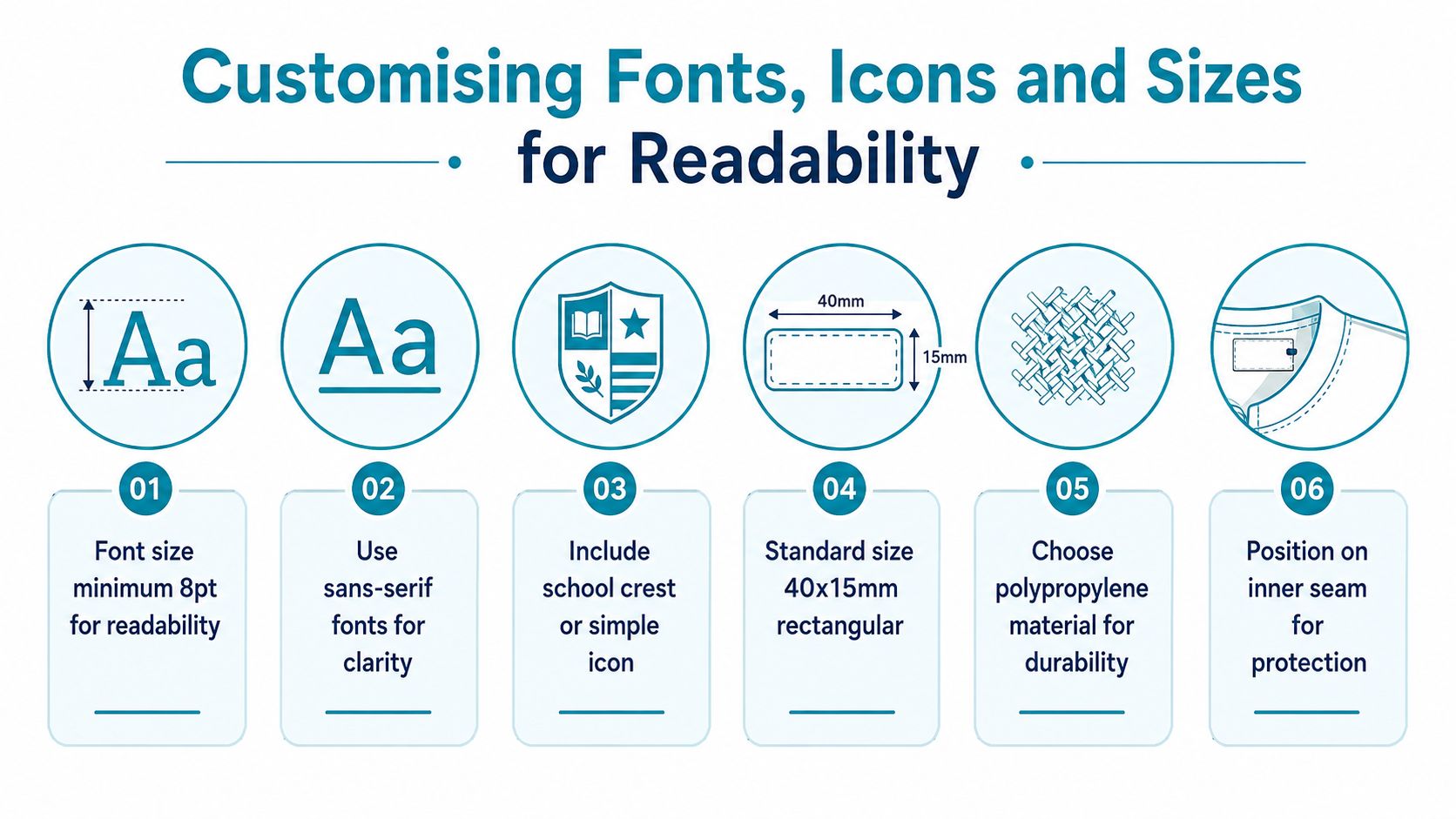
Choose a clear sans-serif font, strong contrast and simple wording. The name should remain readable when the garment is moving, creased or viewed under ordinary indoor lighting. Avoid squeezing a long name into a tiny label merely to keep the dimensions small.
Icons can provide a second recognition route. A child who can't read confidently may recognise a star, animal or colour before recognising their name. A simple visual marker can also help staff sort similar garments, but it shouldn't replace the written identifier where adult care or laundry records require clarity.
Match the label to the garment
Small garments need compact labels, but compact doesn't mean illegible. Socks, small tops and narrow care tags may need a shorter family identifier or initials. Coats, bags and care-home outerwear can usually accommodate a larger label that is easier to find and read.
For a commonly used rectangular format, the infographic above refers to 40 x 15 mm. Treat that as a useful standard size rather than a rule for every garment. Always check the actual care tag and the manufacturer's available dimensions.
Use colour carefully. Assigning one colour to each child can speed up sorting in a multi-child household, but colour should remain a secondary cue because lighting, fading and individual colour vision vary. The name or agreed identifier must still carry the identification burden.
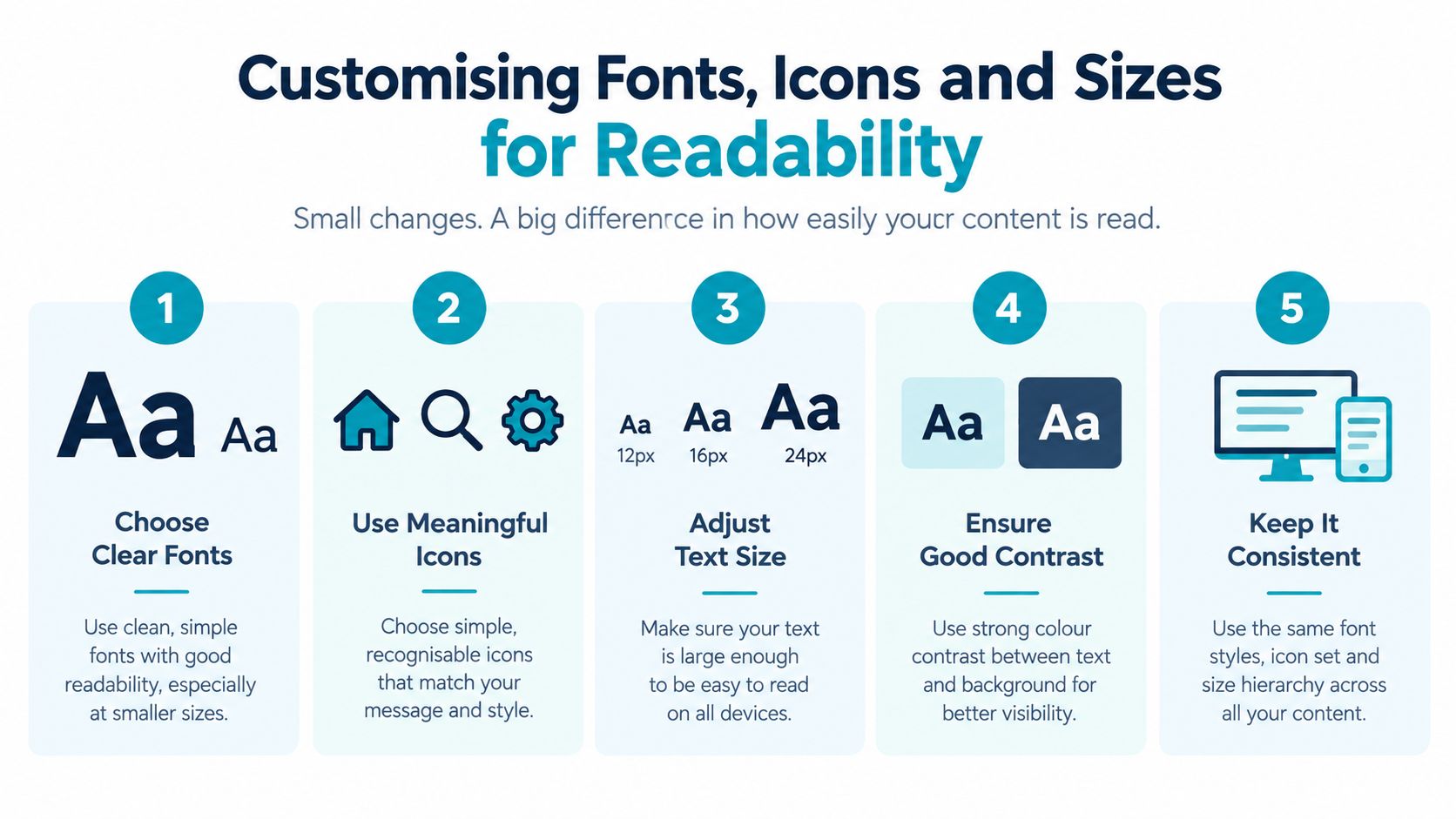
For more guidance on selecting a legible style, see this resource on choosing fonts for name labels. My practical recommendation is simple: bold text, high contrast, one small icon at most and no decorative clutter.
Troubleshooting Adhesion and Common Buyer Questions
Most label failures come from three causes: the wrong surface, contamination or the wrong care routine. Fix the process before blaming the product.
If the edges lift
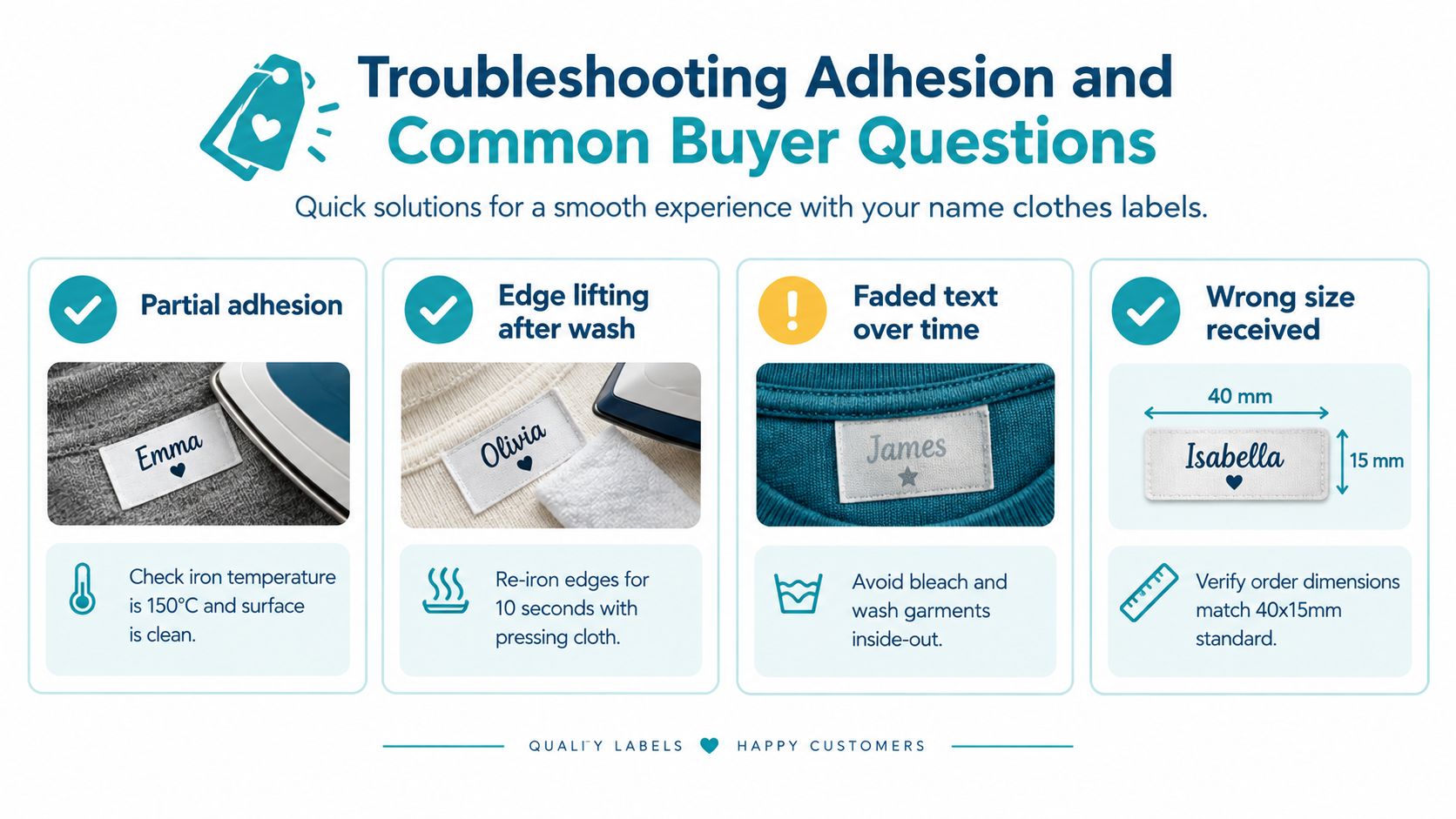
Peeling usually means the label extends onto fabric, the surface wasn't clean and dry, or the edge didn't receive enough pressure. Remove loose lint, press the label flat and check that the full perimeter sits within the smooth area. If the care tag is too small, choose a smaller label rather than forcing a larger one over the edge.
For iron-on products, use the specified heat and pressing method. Don't drag the iron across the label, and don't increase the temperature just because the first attempt failed. Heat-sensitive clothing can be damaged long before the adhesive improves.
If the print fades
Bleach and aggressive stain treatments can affect print and material. Follow the garment's care instructions, avoid unnecessary chemical exposure and wash items inside out when that suits the garment. Replace a label once the identifier can no longer be read reliably.
If the surface is difficult
Wool, fleece and textured knits are poor candidates for a direct stick-on application because the adhesive can't maintain full contact with the fibres. Use a smooth care tag, choose a suitable sew-in method or select an iron-on only when the fabric is explicitly safe for heat.
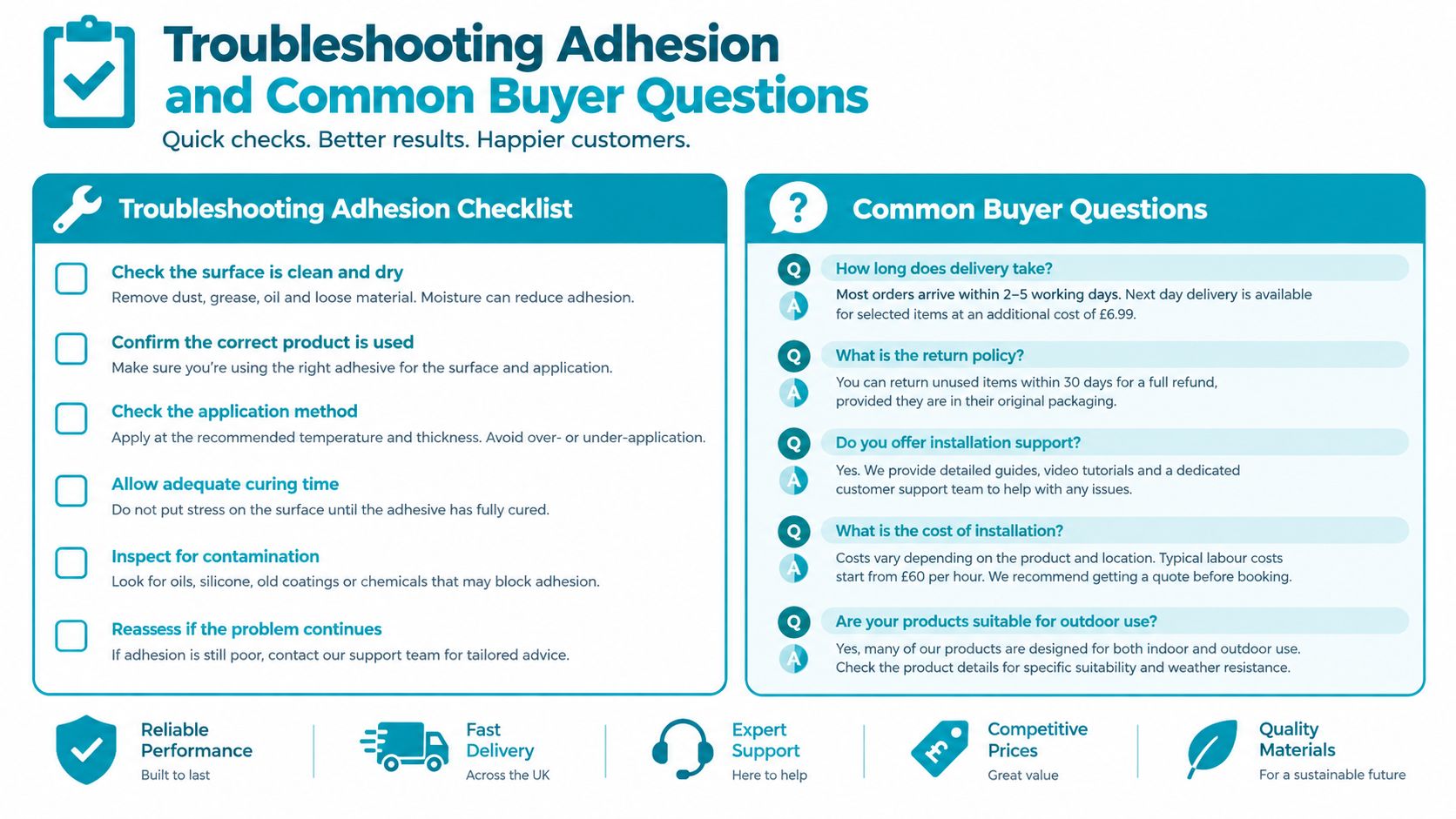
Common buyer questions
Can I put a stick-on label directly on a jumper?
Usually, the safer choice is the smooth care tag. Textured or stretchy fabric can weaken the bond.
Can I use the same label on shoes, bags and containers?
Only if the product is designed and tested for those surfaces. Check the maker's instructions rather than assuming a clothing label suits every item.
Are washing, tumble-drying, microwave and dishwasher claims interchangeable?
No. Each claim relates to a different exposure. A product described as suitable for clothing laundry isn't automatically suitable for food containers or appliances unless the manufacturer explicitly says so.
Should a school order labels in bulk?
Ask the supplier about pack quantities, personalisation, artwork approval and replacement arrangements. A school or care home should test representative garments before standardising a label across its wardrobe system.
How long will an ultra high tack adhesive last?
There is no single lifespan that applies to every garment. Performance depends on surface preparation, garment care, heat, chemicals, handling and whether the label sits on a stable care tag. Test the exact care cycle you use.
What should I do before sending clothes to a care home?
Agree the naming convention with staff, label every item, keep an inventory and avoid sensitive personal information on the label. Ask how the home handles new garments, lost property and replacements.
Quote My Wall offers personalised, no-iron stick-on clothing labels in different designs, colours, sizes and pack quantities for schoolwear and care-home garments. If you need a practical label set matched to your household or laundry process, visit Quote My Wall and choose labels that fit the garment, the wash routine and the way ownership may change.