

Minimalist Wall Art for UK Homes: A Practical Guide
You're renting a Manchester flat, staring at a blank lounge wall and trying to make the room feel calmer without overcrowding it or risking your deposit. The sofa is already doing most of the visual work, the wall is narrower than it looked online, and a drill feels like an unnecessarily expensive commitment.
Minimalist wall art solves that problem when you treat it as a considered design choice rather than an excuse to leave walls empty. The right piece might be a fine line drawing, a quiet print, a small typographic print, a flat vinyl decal or a compact canvas triptych. What matters is the breathing space around it, the material you choose and whether the installation suits the room.
What Minimalist Wall Art Really Means for UK Homes
Minimalist wall art uses pared-back visuals with a clear purpose. Think single-line faces, soft botanical sketches, geometric forms, muted outdoor scenes and short words in an unfussy typeface. You're not trying to fill every available patch of plaster. You're choosing one strong focal point, a small group of related pieces or a decal arrangement that gives the wall room to breathe.
That distinction matters in British homes. A Victorian or Edwardian terrace may have low ceilings, chimney breasts and awkward alcoves, while a new-build flat often has narrow feature walls and open-plan rooms that need visual separation. Rental properties add another constraint, because permanent fixings can be difficult to justify when you're responsible for returning the walls to their original condition.
Practical rule: Minimalism should feel deliberate, not unfinished. If you remove a piece, the remaining artwork should still look placed rather than abandoned.
The style suits the wider British preference for calm, functional interiors. Adobe's guide to UK home interior trends describes Scandinavian and minimalist interiors as one of the popular style directions in British homes, built around neutral colours, natural materials and functionality. That makes minimalist wall art a dependable choice for a lounge, bedroom, home office or nursery that needs to work with changing furniture.
You don't need a completely white room to achieve it. A warm clay wall can support a charcoal line print. A sage-painted nursery can take a cream decal with a simple leaf motif. In a small flat, one hero print above the sofa can look more refined than a crowded gallery wall, while a cluster of removable vinyl shapes can create interest without adding bulky frames.
For more affordable ways to approach a pared-back scheme, browse this guide to cheap wall art in the UK. Choose the format according to your tenancy, the room's traffic level and how often you expect to change the arrangement.
Core Design Principles Behind the Minimalist Look
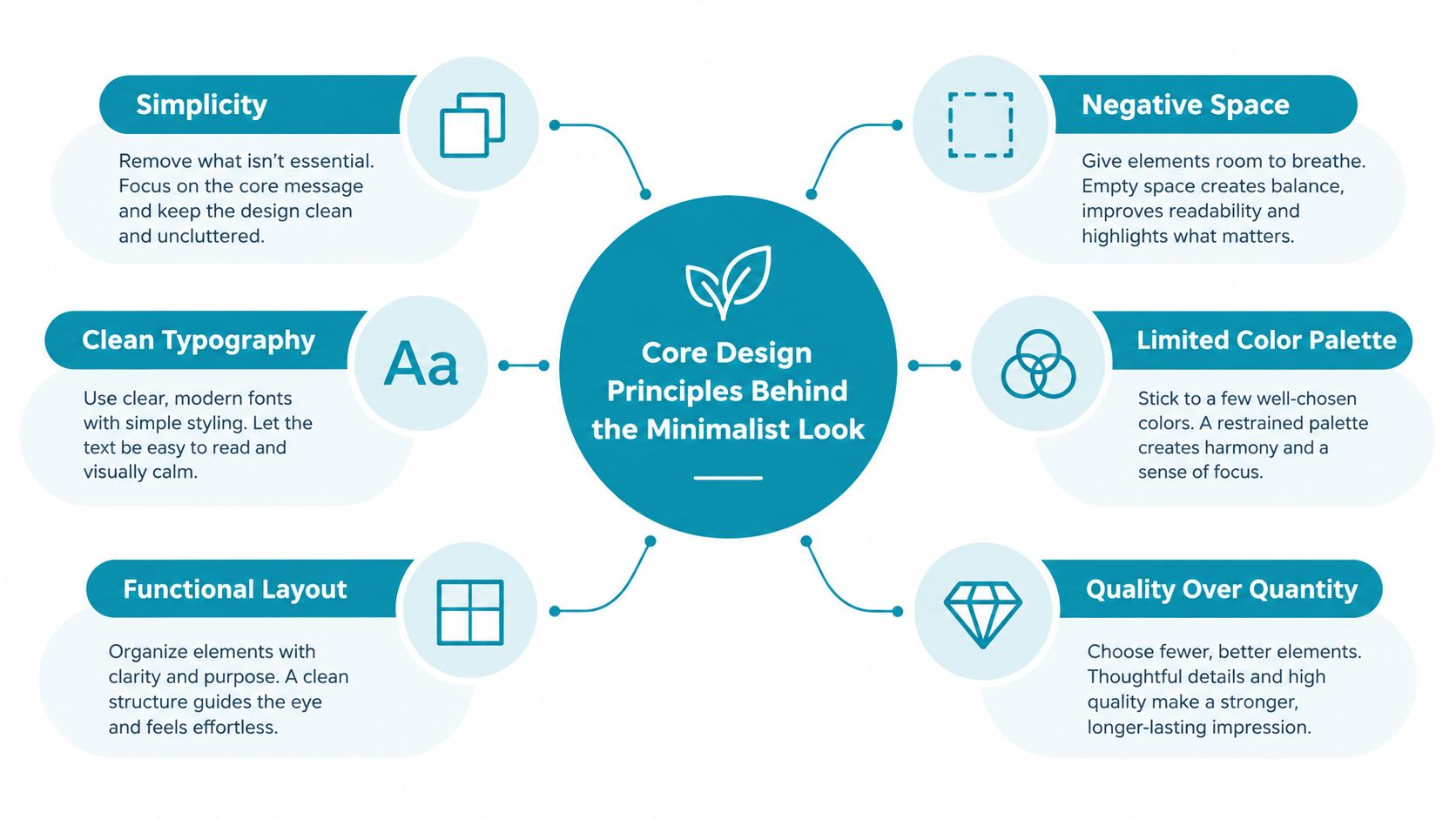
A successful minimalist scheme relies on restraint with enough contrast to stop the room feeling flat. UK homes rarely benefit from copying a stark showroom. Warm materials, practical furniture and small imperfections make the look liveable.
Start with a restrained palette
Warm white, muted sage, soft clay, sand and charcoal are easier to live with than a wall covered in competing bright tones. Pick artwork that connects with the room's secondary or tertiary colour, not necessarily the paint. A charcoal drawing can echo a black lamp or window frame, while a pale botanical print can repeat a cushion colour without matching it exactly.
Keep the artwork quieter than the room's main furniture. If the sofa is patterned, choose a simple print. If the furniture is plain, a textured canvas or expressive abstract shape can provide the interest.
Treat negative space as part of the composition
Empty wall space isn't a sign that you've under-bought. It creates visual rest and helps a single piece read as important. Leave enough surrounding space for the artwork to feel anchored by the sofa, console or bed rather than squeezed into a gap.
This is why a single statement piece often works better than several small objects scattered across a wall. Current UK trade guidance points towards large-scale expressive pieces, earthy-neutral palettes and single works or triptychs as alternatives to dense decoration, while also noting interest in recycled or FSC-certified materials, water-based inks and print-on-demand production. You can read the full UK wall-art trend analysis before buying.
Limit the subject matter
Choose one visual language and repeat it carefully. A set of botanical outlines feels organised because the subject connects, even when the shapes differ. A monochrome quote print in a hallway works because the typography becomes the focal point. Abstract arches, circles and blocks can create rhythm without making the room feel busy.
Avoid combining a detailed scene, a bold slogan and a heavily patterned frame unless the rest of the room is exceptionally quiet. Minimalist wall art needs a clear hierarchy.
Let the material look honest
Paper should look like paper, canvas should offer softness and texture, and vinyl should sit cleanly on the wall without pretending to be a framed painting. A thin unframed print feels light and temporary. A deep canvas wrap feels warmer and more substantial. A matte decal can be the most discreet option in a nursery or rental.
For high-contrast inspiration, this black and white painting guide is useful when you're deciding whether monochrome artwork needs texture, framing or a softer surrounding palette.
Comparing Prints, Vinyl Decals, Canvas and Framed Pieces
The format you choose changes the room more than many people realise. Unframed paper prints are light, flexible and easy to rotate on a picture ledge, but they need a mount or frame if you want a polished finish. They work particularly well in hallways, home offices and small rental rooms where a large object would feel intrusive.
Vinyl decals are the practical winner for nurseries, rented homes and awkward surfaces. They sit close to the wall, don't add visual weight and can create lettering, line art or an arrangement of shapes without drilling. Choose a removable product designed for the surface, and always test a discreet area first. Decals aren't magic. Poor paint adhesion, damp plaster or textured walls can still cause problems.
Canvas wraps add warmth without the reflective glass associated with some framed prints. They suit bedrooms and quiet reading corners, especially when the design uses soft brush marks or an earthy abstract. Framed prints look more finished above a sofa, mantel or sideboard, but they're heavier and usually need a more secure fixing.
If you're considering a more architectural treatment rather than flat art, this guide on how to transform a room with 3D panels offers useful context. For most minimalist UK rooms, however, one flat focal piece is easier to maintain and less likely to dominate.
| Format | Typical Price (£) | Best Room | Renter Safe | Durability |
|---|---|---|---|---|
| Unframed paper print | Varies by size and paper | Hallway, office or picture ledge | Usually, if displayed without permanent fixing | Depends on paper, light and handling |
| Removable vinyl decal | Varies by design and coverage | Nursery, rental lounge or playroom | Often, when applied and removed correctly | Depends on surface and care |
| Canvas wrap | Varies by size and finish | Bedroom or relaxed living room | Usually requires a secure fixing | Good with careful dusting and placement |
| Framed print | Varies by frame, glazing and artwork size | Lounge, dining room or hallway | Less suitable where drilling is prohibited | Good, provided it's kept away from damp and harsh sun |
For design ideas that suit British interiors, explore this UK vinyl wall-art guide. My usual recommendation is simple: vinyl for flexible rooms, framed line art for a finished lounge, canvas for warmth and small unframed prints for transitional spaces.
Choosing Sizes, Colours and Placement for Each Room
Scale should follow the furniture beneath the artwork. A common mistake is hanging a tiny print above a substantial sofa, then adding several more pieces to compensate. That creates clutter without solving the proportion problem.
Living rooms need one clear anchor
In a Victorian terrace, centre the artwork on the sofa or chimney breast, not on the nearest wall edge. In a new-build flat, centre it on the furniture even if the wall itself is asymmetrical. A broad horizontal print, a generous abstract or a calm triptych will usually look more settled than a collection of tiny frames.
Leave a comfortable gap between the top of the sofa and the bottom of the artwork. The exact distance depends on the furniture height, but the piece should feel connected to the sofa rather than floating near the ceiling. Use removable masking tape to mark the outer edges before you commit.
Bedrooms benefit from quiet symmetry
A horizontal pair above a headboard gives a bedroom structure without introducing a formal gallery wall. In a box room, one medium-sized piece is often enough. Choose a horizontal orientation when the bed is wide, or a single vertical line drawing when the wall is narrow.
Keep bedroom artwork softer than lounge artwork. Warm neutrals, faded greens and charcoal outlines are easier to rest beside than busy contrast. If morning sunlight hits the wall directly, paper prints behind glazing may need more care, while matte vinyl avoids glass reflection but can show surface irregularities.
Nurseries need safety before styling
Place decals where adults can see them easily but children can't pull at loose edges. Keep artwork away from cot rails and changing surfaces, and avoid heavy frames above sleeping or play areas. A simple name, moon shape or botanical outline can create a personal focal point without turning the nursery into a themed display.
Use soft monochrome or gentle pastel tones, then repeat one of those colours in bedding or a rug. The room will feel coordinated without matching every item.
Use a simple placement pattern
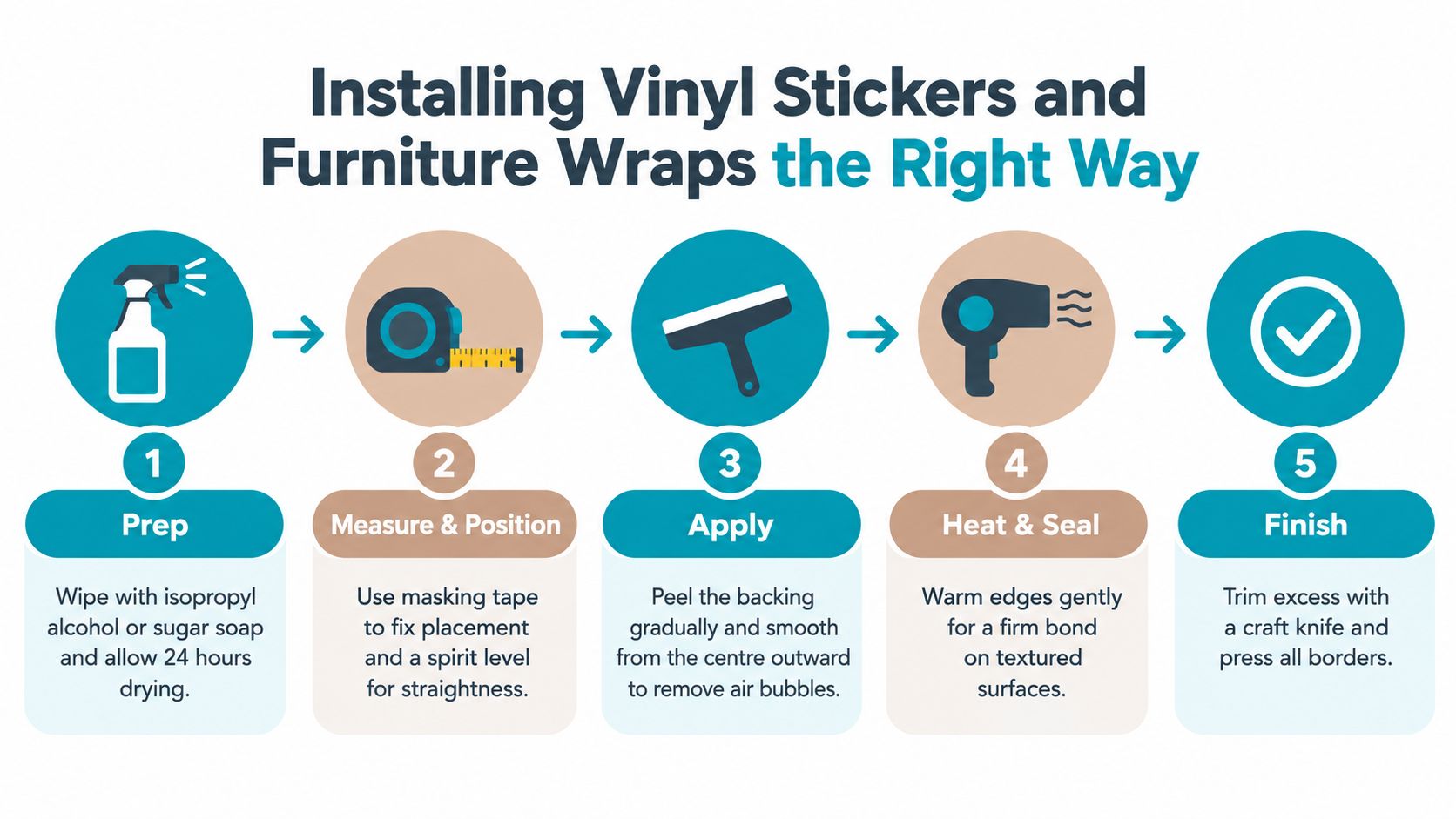
- Centre on furniture: Best for a sofa, bed, console or changing unit. The furniture gives the art a visual base.
- Single hero piece: Best for a narrow wall or a room with patterned upholstery.
- Small grid: Best for related prints in a home office or hallway, provided the frames share a finish.
- Decal cluster: Best where you want movement without the depth of framed art.
Choose colour from the room's supporting tones and keep the accent palette narrow. Minimalism looks calmer when the artwork contributes to the room rather than competing with the wall paint.
Installing Vinyl Stickers and Furniture Wraps the Right Way
A clean installation starts before the vinyl leaves its backing sheet. Check the wall first. It should be dust-free, grease-free, fully cured and not above 75% relative humidity, because trapped moisture can create bubbling, adhesion loss and possible mould growth, as explained in this UK surface-preparation guidance.
New paint needs at least two weeks to cure, while newly plastered walls need at least four weeks before you apply a wall graphic. Those waiting periods matter more than rushing to finish a room. If the wall feels cool, damp, powdery or visibly uneven, postpone the installation.
Applying a wall decal
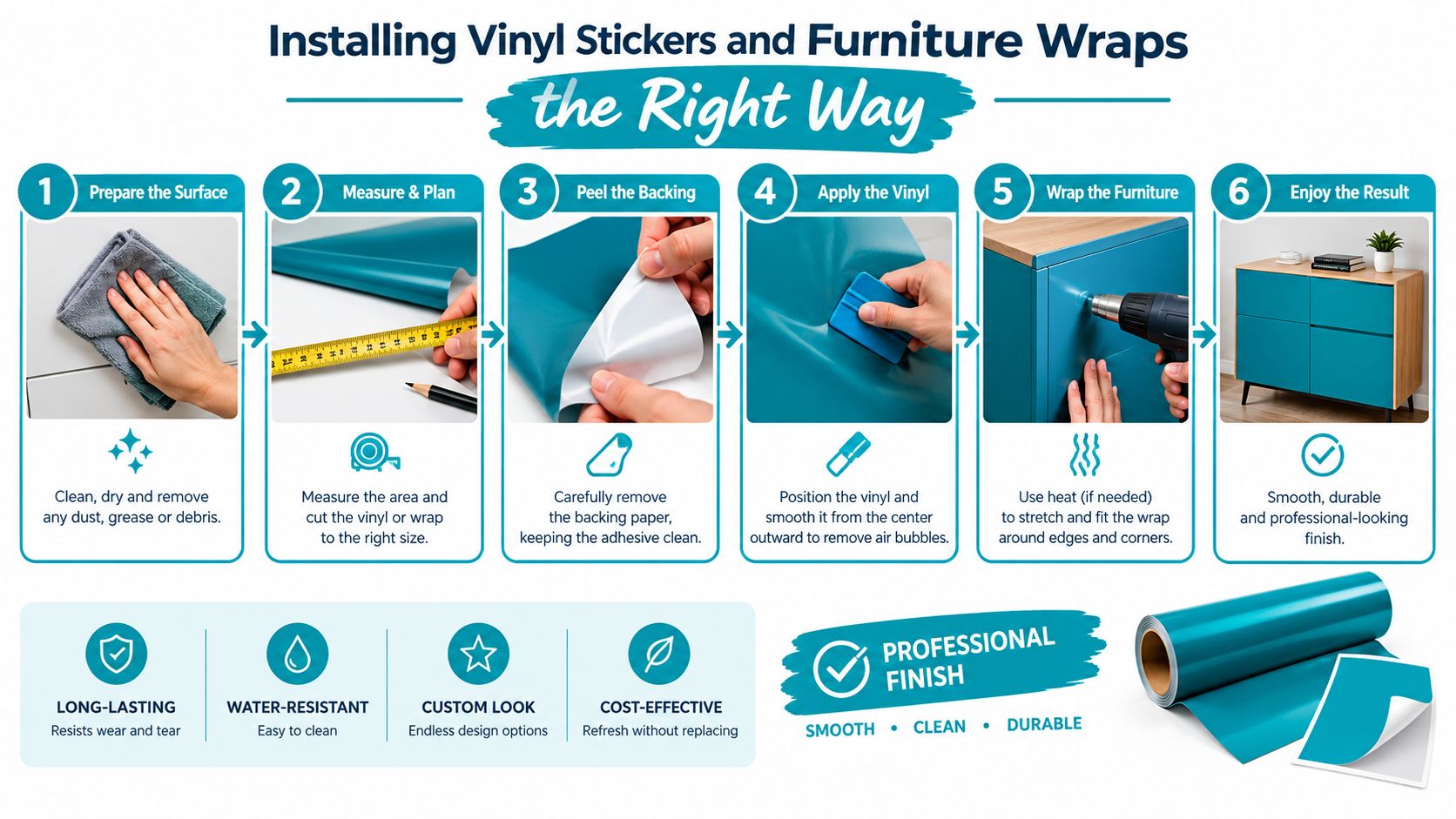
Clean the surface with a suitable mild cleaner, then let it dry completely. Don't apply over flaking paint, heavy texture or areas affected by condensation. Mark the position with low-tack masking tape and use a spirit level if the design contains lettering or straight lines.
Peel the backing away gradually rather than exposing the entire adhesive side at once. Work from the top down, smoothing with a felt squeegee or a bank card wrapped in a soft cloth. Push air towards the nearest edge. If a small bubble remains, lift the vinyl carefully and smooth that area again rather than stabbing the finished surface immediately.
Wrapping furniture
Remove handles, hinges and detachable fittings before you begin. Clean the furniture thoroughly, and lightly abrade a glossy finish if the product instructions allow it. Apply the wrap to broad flat areas first, then warm it gently with a hairdryer so it can conform around curves.
Trim excess with a sharp craft knife, keeping your fingers clear of the blade. Press the edges firmly, especially around corners and drawer fronts. Furniture wrap needs patience because a crooked first panel can make every following panel look misaligned.
Removal advice: Warm the vinyl gently and peel it back slowly, keeping the sheet close to the surface. Fast, cold removal is more likely to lift paint from plasterboard.
If a corner starts peeling, clean the surrounding area, warm the edge and press it down again. If a transfer has landed in the wrong position, don't drag it across the wall. Lift it carefully while the adhesive is still manageable, then realign it with fresh masking-tape guides.
Personalisation Ideas That Keep the Look Calm
Minimalism doesn't mean living with anonymous artwork. It means giving personal details enough space to feel intentional. A family name in a clean sans-serif, a meaningful date, a location rendered as a quiet typographic print or a short phrase in charcoal can add warmth without covering the wall in visual noise.
Use personalisation as an accent, not a theme. A custom name decal above a nursery bookshelf can feel more refined than a room packed with character graphics. For adults, a muted print with a place name or simple coordinate-style layout can hold a memory while still working with neutral furniture.
One effective nursery approach is to combine a child's name with a restrained botanical line drawing. Keep the lettering modest and let the illustration carry the personality. Choose a matte finish if the wall receives strong daylight, and place the design where it won't be touched or picked at.
For a broader perspective on how to personalise your space without making it feel crowded, start with the room's existing materials. Wood, linen, boucle, painted furniture and soft lighting can make a sparse arrangement feel welcoming.
Quote My Wall also offers custom wall stickers, typographic designs, nursery decals, furniture wraps and stick-on clothing labels. A discreet monochrome label strip can personalise a canvas wrap or framed print for a child's room, a wedding gift or a practical household project without introducing another dominant colour.
Try the two-to-one approach. Pair two personal pieces with one neutral piece, such as a family name decal, a meaningful print and a plain abstract shape. The neutral element gives the eye a pause and stops the arrangement becoming a collection of unrelated reminders.
Removable decals make seasonal changes straightforward. Swap a small botanical detail or festive word while keeping the main palette, furniture and hero artwork unchanged. The room evolves, but the underlying composition stays calm.
Care, Maintenance and Quick Buying Checklist
Minimalist wall art looks best when its edges, surfaces and spacing stay crisp. Dust canvas and framed pieces with a soft brush or dry microfibre cloth. For vinyl decals, use a soft, lint-free cloth and gentle strokes. Avoid abrasive sprays, soaking the wall or scrubbing the edges.
Renters should remove decals slowly rather than pulling from one corner. Warm the vinyl gently with a hairdryer, lift an edge and peel it back close to the surface. Stop if paint begins to lift, especially on plasterboard or walls with weak adhesion.
Use this checklist before adding anything to your basket:
- Room scale: Measure the wall and the furniture beneath it.
- Visual weight: Decide whether the room needs a hero piece, a light print or a flat decal.
- Colour: Choose from the room's supporting tones, not just the paint colour.
- Fixing method: Confirm whether you can drill, use removable adhesive or need a freestanding solution.
- Surface condition: Check for dust, grease, texture, damp and uncured paint.
- Product fit: Match the material to the room, especially for nurseries, kitchens and high-traffic areas.
- Maintenance: Consider how easily you can dust, clean, remove or reposition the artwork.

Don't forget the softer layers around the artwork. A neutral throw can stop a room feeling overly clinical, so you might browse the throw blanket collection after choosing the wall piece. Pick texture rather than another loud pattern.
Quote My Wall offers custom wall stickers, minimalist prints, nursery decals, furniture wraps and personalised label options for UK homes. Choose a removable decal for a rental or nursery, or select a restrained print for a more permanent focal point, then visit Quote My Wall to find a design that suits your room.