

Doctor Who Art: The Complete Buyer-to-Install Guide
You're probably staring at a print, a sticker, or a framed mock-up on your screen right now, wondering if it'll look sharp in your home or end up as another regrettable buy stuffed in a cupboard. Doctor Who art is easy to love and easy to get wrong, especially once you factor in UK rentals, older walls, small rooms, and the temptation to buy the biggest TARDIS print you can find. Get the format, size, and installation right, and the piece looks intentional. Get them wrong, and it reads like clutter.
The show's long visual history is exactly why this category works so well in British homes. Doctor Who began on 23 November 1963, ran through 1989, and returned in 2005, giving it a long, multi-era presence in UK culture and a huge pool of recurring imagery, from the TARDIS to the Daleks and the changing Doctor (History of Doctor Who). That continuity matters for interiors because the symbols are instantly recognisable, but they still need to be handled with restraint if you want a room to look polished.
Identifying Quality Doctor Who Art
The first mistake people make is treating every Doctor Who art listing as if it's the same thing. It isn't. A licensed print, a fan-made poster, and a cheap reproduction can all look convincing in a thumbnail, but they don't carry the same finish, durability, or buyer protection. If you want a piece that still looks crisp after it's on the wall for months, you need to inspect more than the image itself.

What to check before you buy
Look for the basics first. Officially licensed art usually shows publisher branding, product details, or a certificate of authenticity, while independent fan-created work should clearly name the artist and describe the print method. If a listing hides both, walk away. That's not a niche collectible, it's a gamble.
Practical rule: if the seller won't tell you who made it, what it's printed on, and how it's finished, assume the quality is average at best.
Paper stock matters more than most buyers realise. A good print listing should tell you whether the piece is on heavyweight paper, canvas, or adhesive vinyl, because that affects both the look and the lifespan. Thin paper reproductions can curl, and low-grade vinyl can lift at the edges or lose colour faster than you'd expect.
For a good benchmark on how thoughtful curation changes the feel of a print collection, look at curated prints for New York collectors. The style is different from Doctor Who, but the lesson transfers directly, good presentation starts with material choice and visual consistency, not hype.
Red flags that save you money
A blurry thumbnail, a no-name seller, and vague wording like “premium quality” without details usually mean you're paying for the image, not the object. That's fine if you only need a temporary decoration, but it's a bad buy for a wall you care about. If you want the piece to sit neatly in a living room or hallway, the listing should look specific and professional.
There's also a rights issue. Fan art can be brilliant, but you should know whether you're buying a personal-use print, an open edition, or something officially approved. That matters if you later want a matching piece, a replacement size, or a second print for another room.
For a useful comparison point on buying poster-style art online, the Dark Knight poster buying guide is worth reading because it shows how much difference format and finish make even when the subject is purely decorative. Apply the same discipline to Doctor Who pieces and you'll avoid the usual disappointment.
Choosing the Right Format for Your Space
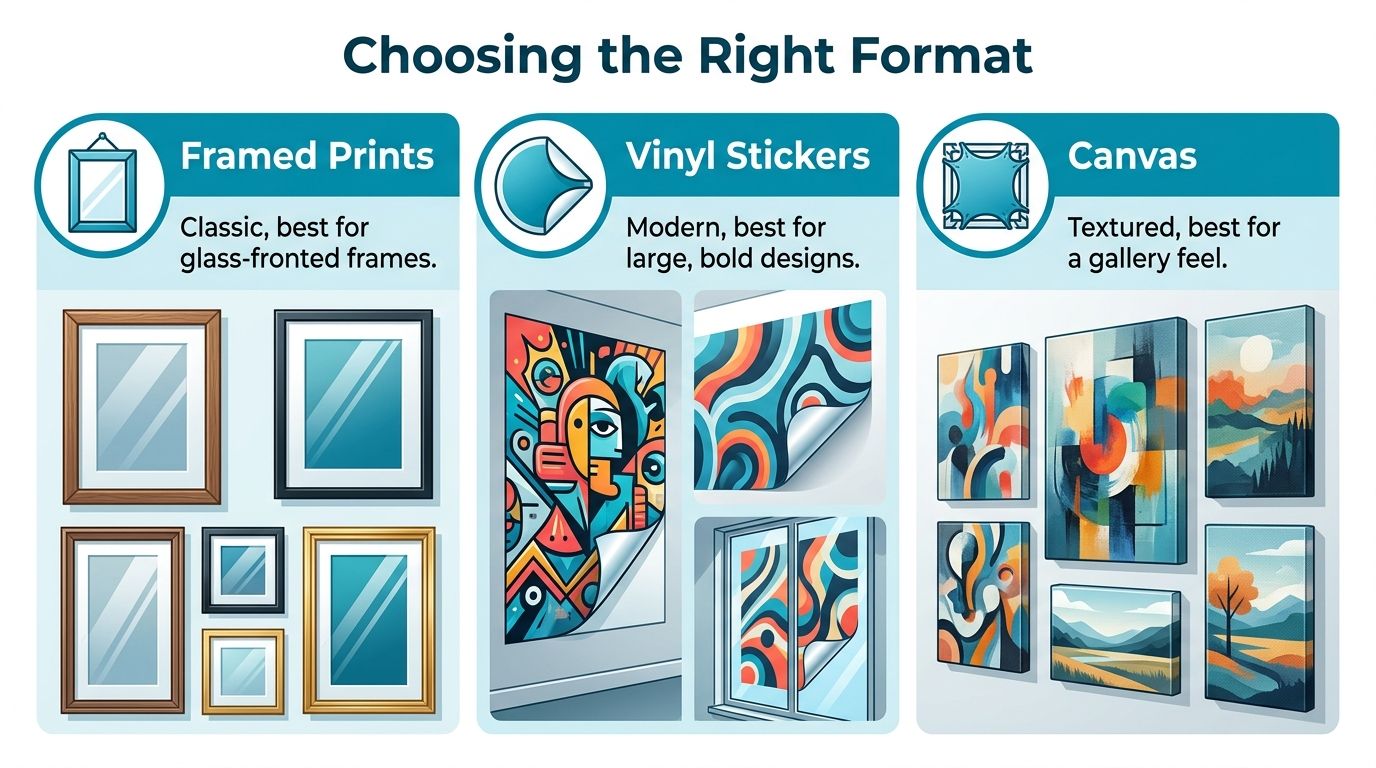
Pick the wrong format and you'll pay twice, once for the item and again when you replace it. The right Doctor Who art format depends on where it's going, how permanent the setup is, and whether you're dealing with a landlord, a child's room, or a piece of furniture that needs rescuing. Don't buy based on the image alone. Buy based on the surface it's meant for.
Framed prints suit permanence
A framed print is the best choice when you want the art to feel finished and anchored. It works well in living rooms, hallways, and bedrooms where you can hang safely into brick, plasterboard, or studs. Glass-fronted frames suit more formal schemes, but they need careful placement because glare can ruin the view. If you're choosing a framed piece, choose the frame first and the artwork second, because a cheap frame makes even a strong print look undercooked.
Vinyl stickers suit flexibility
Vinyl wall stickers are the practical option for renters and anyone who can't drill holes. They're also the safest route for large, bold designs, especially a TARDIS silhouette or a statement quote running across a feature wall. The clean advantage is removal, because you can usually take them down without the commitment of a framed installation. For a deeper look at this format, the vinyl wall art UK guide is a useful reference for how adhesive art behaves in real homes.
Canvas and furniture vinyl change the feel of a room
Canvas gives the image a softer, gallery-style presence. It works best when you want the art to blend into a room rather than shout at it. Furniture vinyl wraps are different again, they're not wall art, they're a way to turn tired pieces into the setting for your fandom. A plain chest of drawers wrapped in a subtle Doctor Who motif can make more sense than another poster if the wall space is already busy.
Best rule for humid rooms: avoid delicate paper prints in bathrooms and kitchens. Stick to formats that tolerate moisture better, and keep them away from direct steam and splashes.
Measuring and Sizing Your Doctor Who Art
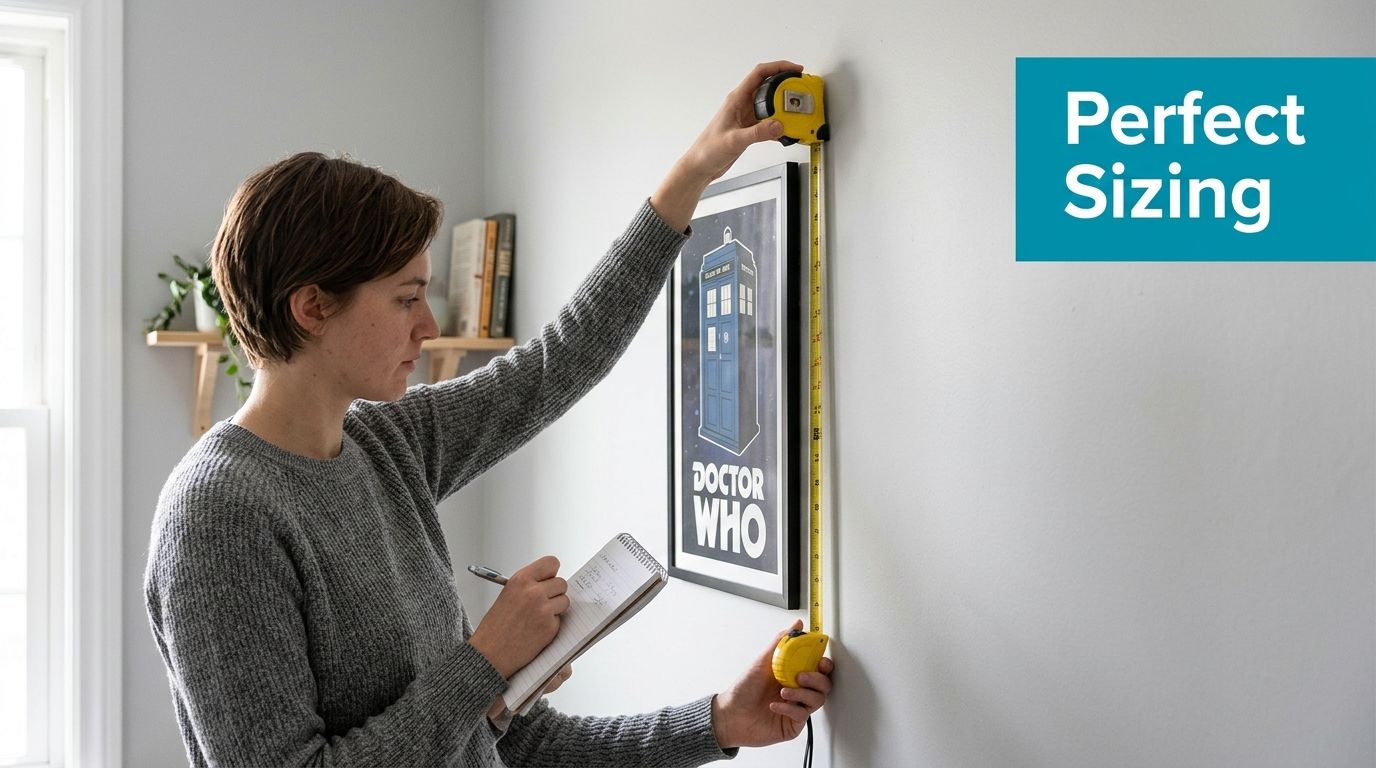
Most bad wall art decisions come down to scale. The piece is either too tiny for the wall or so large it crowds the furniture beneath it. With Doctor Who art, this mistake is common because people buy to the fandom first and measure second. Don't do that. Measure the wall, then choose the subject.
Use the wall width, not your instinct
A simple rule works well in most rooms. Aim for the artwork, or the full grouping, to cover roughly 60 to 75 per cent of the wall area above the furniture it sits over. That keeps the piece visually tied to the sofa, cot, or sideboard instead of floating awkwardly above it. If you're hanging a single TARDIS print above a sofa, leave the frame wide enough to breathe on both sides so the image feels purposeful.
If you're using a vinyl sticker on a nursery feature wall, mark the central area first and test the size with low-tack tape or paper cut-outs. That gives you a real-life view before you commit. A sticker that looks exciting on the floor can feel chaotic once it's at eye level next to a cot or changing unit.
Match the scale to the room function
For a gallery wall, don't let every piece fight for attention. One larger Doctor Who print can hold the centre, while smaller companion pieces, typography, or monochrome sci-fi references sit around it. Keep the spacing consistent and the outer edges aligned. That matters more than filling every inch.
The wall doesn't need more art. It needs the right-sized art in the right position.
If standard sizes don't fit, order custom dimensions rather than forcing a mismatch. That's especially useful for narrow walls, stair landings, and awkward recesses in older UK homes where the obvious size is never the right one.
Styling Doctor Who Art in Living Spaces
A room with Doctor Who art doesn't need to look like a convention stall. The trick is to treat the imagery as part of the decor, not as an excuse to abandon the decor. That means choosing one dominant reference, then letting the rest of the room stay calm enough to support it. The show's iconic blue helps, but it only works if the surrounding colours stay disciplined.
In a minimalist living room, a single large TARDIS print can act like a structured pop of colour. Keep the frame black, white, or slim wood, and let the sofa, rug, and curtains stay neutral. That way the print looks deliberate, not adolescent. If you want a second reference, make it subtler, maybe a small Dalek line drawing or a monochrome typography piece placed away from the main focal point.
A nursery needs a different touch. Vinyl Dalek shapes can be playful without becoming overwhelming, especially if you keep them to one section of the wall and balance them with softer textiles. Avoid placing any wall decoration where it competes with sleep cues directly above the cot. The room should feel comforting first and themed second.
For a child's bedroom, use the art to create a mini story wall. A framed print of the TARDIS, a companion graphic, and a piece of space-themed art can work together if they share a palette. The result feels collected rather than bought in a rush.
Colour choices that work
Use the show's blue as your anchor, then repeat it in one or two nearby details, a cushion, a lamp base, or a book spine. Don't scatter the same colour everywhere. That's how a themed room starts looking messy. One strong reference point is enough.
A gallery wall is the best place to mix Doctor Who with other interests. Pair one larger piece with photography, travel prints, or simple line art so the fandom doesn't take over the whole room. If you want the room to stay grown-up, keep the tonal balance tighter than you think you need.
Installing Vinyl Stickers and Framed Prints
Installation is where good taste either pays off or falls apart. A clean vinyl sticker, hung frame, or furniture wrap can look bespoke. A crooked one looks cheap immediately. Older UK plaster walls, rental restrictions, and uneven surfaces make the process more awkward, so preparation matters as much as the product itself.
Vinyl needs a clean, dry start
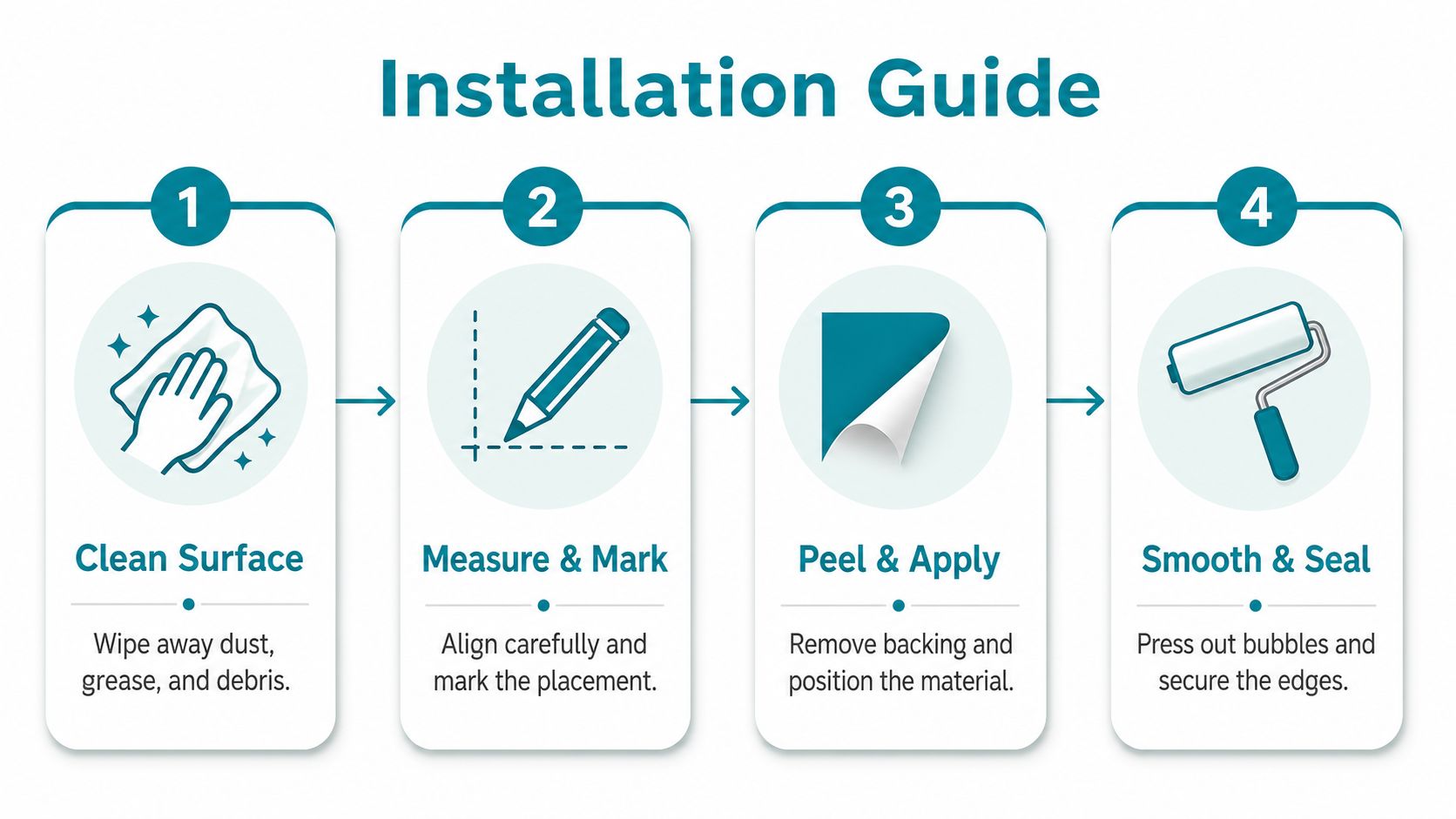
Start with a dust-free wall and let the surface dry fully before application. Use a soft cloth, a tape measure, a pencil, and a plastic smoothing card. That's enough for most jobs. You don't need a drawer full of special gadgets, you need patience and a level head.
For applying stickers properly, the step-by-step vinyl application guide is a useful companion, especially if you've never dealt with transfer film before. Read it before you start, not halfway through when the corners begin to curl.
Frames need the right fixing for the wall
Brick walls can handle more substantial fixings, while plasterboard needs anchors or hooks suited to the load. Stud walls reward careful placement because you want the weight carried properly, not by guesswork. If your frame is large, get help for the final hang. Trying to level a sizeable piece on your own is how you end up with fresh holes and a bad mood.
For anyone who wants a more general hanging reference, hanging pictures perfectly at home is a practical guide that matches the same principle. Measure twice, hang once, and check the alignment from a distance before you call it done.
Furniture wraps need even pressure
Vinyl wraps for furniture should go on a clean, dry, smooth surface. Work slowly from one edge, pressing out air as you go. If bubbles appear, lift the film gently and reapply rather than forcing them flat. Rushing the finish is the easiest way to leave visible flaws that catch the light every time you walk past.
If a sticker won't stick, the usual culprit is surface prep, not the design. If a frame hangs crooked, the wall mark was wrong or the hook isn't level. Fix the cause, not the symptom. That's the difference between a decent result and one that looks professionally installed.
Caring for Your Art and Exploring Custom Options
A good Doctor Who art purchase should last, not just look good on day one. Dust framed pieces gently, keep vinyl away from harsh cleaners, and don't place any format directly where steam, grease, or wet hands can reach it. That's especially important in kitchens, bathrooms, and busy family rooms where daily wear adds up quickly.
Clean vinyl with a soft, slightly damp cloth and nothing abrasive. Skip bleach, scourers, and anything that leaves residue. For framed prints, protect them from direct sunlight and moisture as much as you can. If the room gets a lot of light, rotate pieces occasionally or choose locations where the sun doesn't strike them all day. Replacement makes more sense than repair once a print has started to warp, peel, or fade visibly.
Custom work is where the category becomes genuinely personal. A bespoke size solves awkward walls. A personalised vinyl design lets you choose a favourite Doctor, a line that matters to your household, or a nursery-friendly motif that doesn't feel generic. Furniture vinyl can also be used as an upcycling tool, which is smart when you want a theme without buying all-new storage.
Give any custom seller clear details before you order. Send the exact wall or furniture measurements, the surface type, the room use, and whether the piece must be removable. The better the brief, the better the result. That's true whether you're ordering a print for a hallway, a sticker for a child's room, or a wrap for a tired chest of drawers.
If you want Doctor Who art that suits a UK home, browse the collection at Quote My Wall. You'll find wall stickers, prints, and vinyl wrap options that fit rental spaces, children's rooms, and furniture upcycling projects without the guesswork. Choose the right format, measure properly, and make the room look intentional from the first glance.