
The Best Children's Clothing Name Labels Guide
We've all been there. That sinking feeling when your child walks out of school without their brand-new, just-worn-once jumper. It’s a frustratingly common part of parenthood.
Children's clothing name labels are your best defence in this ongoing battle. They’re a simple, surprisingly effective way to save money, reduce stress, and sidestep those endless rummages through the lost property bin. From PE kits to winter coats, a good label ensures everything finds its way back home.
The Never-Ending Battle of Lost School Jumpers
Take one look at the mountain of unclaimed clothes in any school’s lost property box, and you'll see the scale of the problem. For parents, it’s a costly cycle of replacing perfectly good items that have simply vanished into thin air.
It's more than just a little annoyance; it's a real drain on the family budget and another thing to worry about in an already busy life. In a sea of identical uniforms, how can anyone tell one blue jumper from another? This guide is here to solve that exact problem.
Your Practical Investment Against Lost Property
Think of name labels as a tiny investment that pays for itself the very first time a coat is returned instead of being lost for good. With household budgets being squeezed, making every piece of clothing count is more important than ever.
It’s not just about identification. A good name label gives your child a sense of ownership and makes it much easier for busy teachers to reunite lost items with their owners. It’s a win-win.
A name label does more than just identify an item; it empowers your child to take responsibility for their belongings and gives teachers a helping hand in reuniting lost items with their rightful owners.
Whether you're getting ready for the new school year or labelling a mountain of tiny clothes for a new baby (after reading an essential guide to clothes for newborns, of course!), finding the right labelling system is crucial.
For a deeper dive, our ultimate guide to school clothing labels is a great place to start. In this guide, we'll walk you through:
- The main types of labels: Stick-on, iron-on, and the traditional sew-in.
- How to choose the best fit for school, nursery, or even summer camp.
- Simple tips for applying them so they actually stay put, wash after wash.
Comparing Your Name Label Options
Trying to choose the right children's clothing name labels can feel a bit much, but it really just comes down to three things: what you're labelling, how much time you've got, and how permanent you need it to be. Let's be honest, the best label for a school blazer isn't necessarily going to be the right one for a pair of muddy wellies.
So, let's walk through the main contenders on the market—stick-on, iron-on, sew-in, and stamps. Each has its own place, and knowing the difference will help you pick the perfect one for the job.
The Speedy Solution: Stick-On Labels
For busy parents, stick-on labels are an absolute game-changer. Their main selling point is pure speed. You just peel one off and stick it straight onto the garment’s care or brand tag. Simple as that. This makes them perfect for those "Oh no, school trip tomorrow!" moments of panic.
They're also incredibly versatile. Stick-ons work brilliantly on clothes, but you can also pop them on lunch boxes, water bottles, pencil cases—pretty much anything with a smooth, hard surface. The golden rule is to apply them to a synthetic surface like a satin care tag, not directly onto fabrics like cotton or wool where they won't grip properly.
- Best For: Synthetic care tags, hard goods (lunch boxes, bottles), and anyone who's short on time.
- Durability: Very high, but only when you stick them to the right surface.
- Time to Apply: Just a few seconds.
If you want to dive a bit deeper into how these modern marvels compare to the old-school methods, we've got a full breakdown in our article on the benefits of stick-on clothing labels compared to iron-on.
The Permanent Powerhouse: Iron-On Labels
When you need a label that’s going to stay put no matter what, iron-on is the way to go. You apply them with a hot iron, which melts the adhesive directly into the fibres of the fabric. The result is a bond that’s designed to survive wash after wash, even on a hot cycle.
This makes them the ideal choice for things that don't have a convenient care tag, like socks or underwear. They're also brilliant for PE kits and sports gear that tend to take a real beating in the washing machine. The application takes a couple of minutes, but you're getting a label that is well and truly there for the long haul.
This flowchart perfectly sums up why labelling is the only real fix for the lost jumper saga.
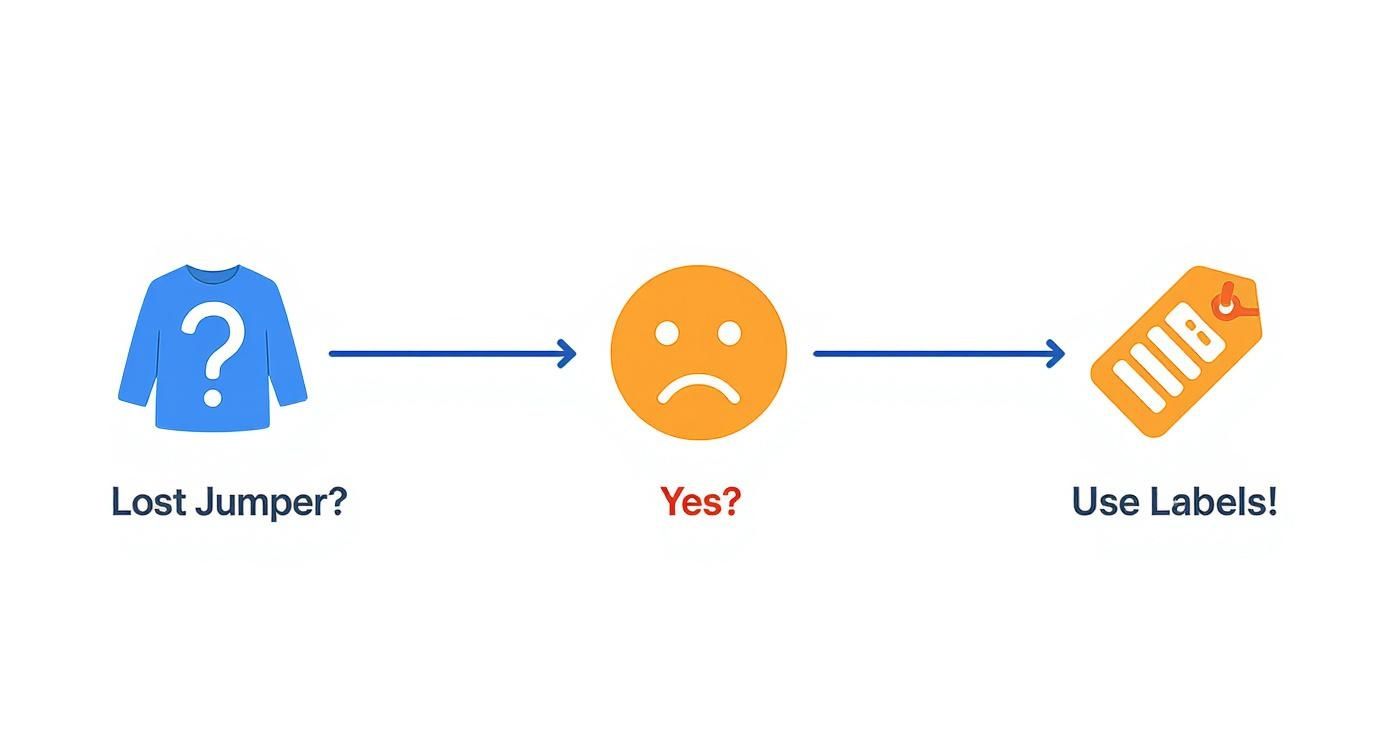
Ultimately, it shows that the simplest way to sidestep the frustration of lost property is to put a name on it.
Traditional and Niche Options
Beyond the big two, there are a couple of other methods that are great for specific situations.
Sew-in labels are the classic, time-tested option. They are unbelievably durable and have the added bonus of being removable—you can just unpick the stitches and reuse them on another item. This makes them a great choice for expensive school uniforms or hand-knitted jumpers. Of course, the catch is that they require a bit of time and a basic sewing ability.
Clothing stamps are another option, offering a quick way to mark a whole pile of clothes at once. You use permanent ink to stamp a name directly onto the fabric. The main downside is that the ink will inevitably fade over time with repeated washing. It can also bleed through on thinner materials, which doesn't look quite as neat as a purpose-made label.
To make things even clearer, here’s a quick-reference table that lays out the pros and cons of each type at a glance.
Comparison of Children's Clothing Name Label Types
| Label Type | Application Method | Durability | Best For | Time to Apply |
|---|---|---|---|---|
| Stick-On | Peel and stick to a care tag | High (on correct surfaces) | Uniforms, coats, lunch boxes, shoes | Seconds |
| Iron-On | Apply with a hot iron | Very High / Permanent | Items without tags (e.g., socks), PE kits | 1-2 minutes |
| Sew-In | Stitch into the garment | Highest / Reusable | Heirlooms, hand-knits, delicate items | 5+ minutes |
| Stamp | Stamp directly onto fabric | Medium (fades over time) | Marking lots of items quickly | Seconds per item |
This table should help you quickly pinpoint the best choice for your family's needs, whether you're prioritising speed, permanence, or versatility.
What Makes a Truly Great Clothing Label
Ever had a name label fade into an unreadable smudge or peel off after just one wash? We’ve all been there. It’s frustrating, but it highlights a simple truth: not all children's clothing name labels are created equal. The difference between a label that works and one that doesn't comes down to the details.
A truly great label is a perfect mix of durability, safety, and smart design. It needs to survive the chaos of the school cloakroom and the trial-by-fire of your laundry basket. Think of it like a good pair of wellies – they have to do their job properly, which means staying put and staying readable, no matter what.
The Foundation of Durability
It all starts with the material. This is easily the most important factor. Top-quality labels are usually made from specialised vinyl or flexible polyester, materials specifically engineered to handle repeated trips through the washer and dryer without falling apart.
This resilience is what makes a label genuinely washing machine and tumble dryer safe. A brilliant label won’t curl at the edges, crack, or have its colours bleed. It should look just as good after thirty washes as it did on day one.
The ultimate test for any clothing label is the laundry cycle. A high-performance label should effortlessly survive high-temperature washes and tumble drying without peeling, fading, or losing its adhesive strength.
Safety and Comfort Are Non-Negotiable
Beyond being tough, what the label is actually made of is hugely important for your child’s skin. The glues and inks have to be completely safe for direct contact, especially for little ones with sensitive skin.
Here’s what to look for:
- Non-Toxic Inks: This ensures no harmful chemicals can be absorbed by the skin.
- Skin-Safe Adhesives: The right adhesive prevents irritation, rashes, or allergic reactions.
- Phthalate-Free Materials: This is a common standard you should expect from high-quality children's products.
A comfortable label is one your child won't even feel. It should be soft and flexible, never scratchy or stiff. After all, the last thing you want is a battle over a "poky" t-shirt.
Clarity is King in the Cloakroom
At the end of the day, a label is useless if you can’t read it. Good design puts legibility first. This means picking a clear, simple font – not a fancy, curly script that turns into a blur when you’re trying to find a lost jumper in a hurry.
High contrast between the text and the background is just as vital. A name printed in a dark colour on a light background is far easier for a child or teacher to spot at a glance. It's a small detail that makes a massive difference. With the UK kids' clothing market's projected value hitting £6.5 billion and a growing interest in sustainability, the demand for well-made, long-lasting items is on the rise. You can discover more about these UK market trends on andfacts.com. Investing in a durable label that keeps clothes out of the lost property bin fits this mindset perfectly.
How to Apply Labels So They Never Come Off
The secret to a label that stays put isn’t magic; it’s all in how you apply it. Honestly, a few extra seconds of care can mean the difference between a label that survives the whole school year and one that gives up after the first wash. Getting it right ensures your children's clothing name labels stick around, wash after wash.
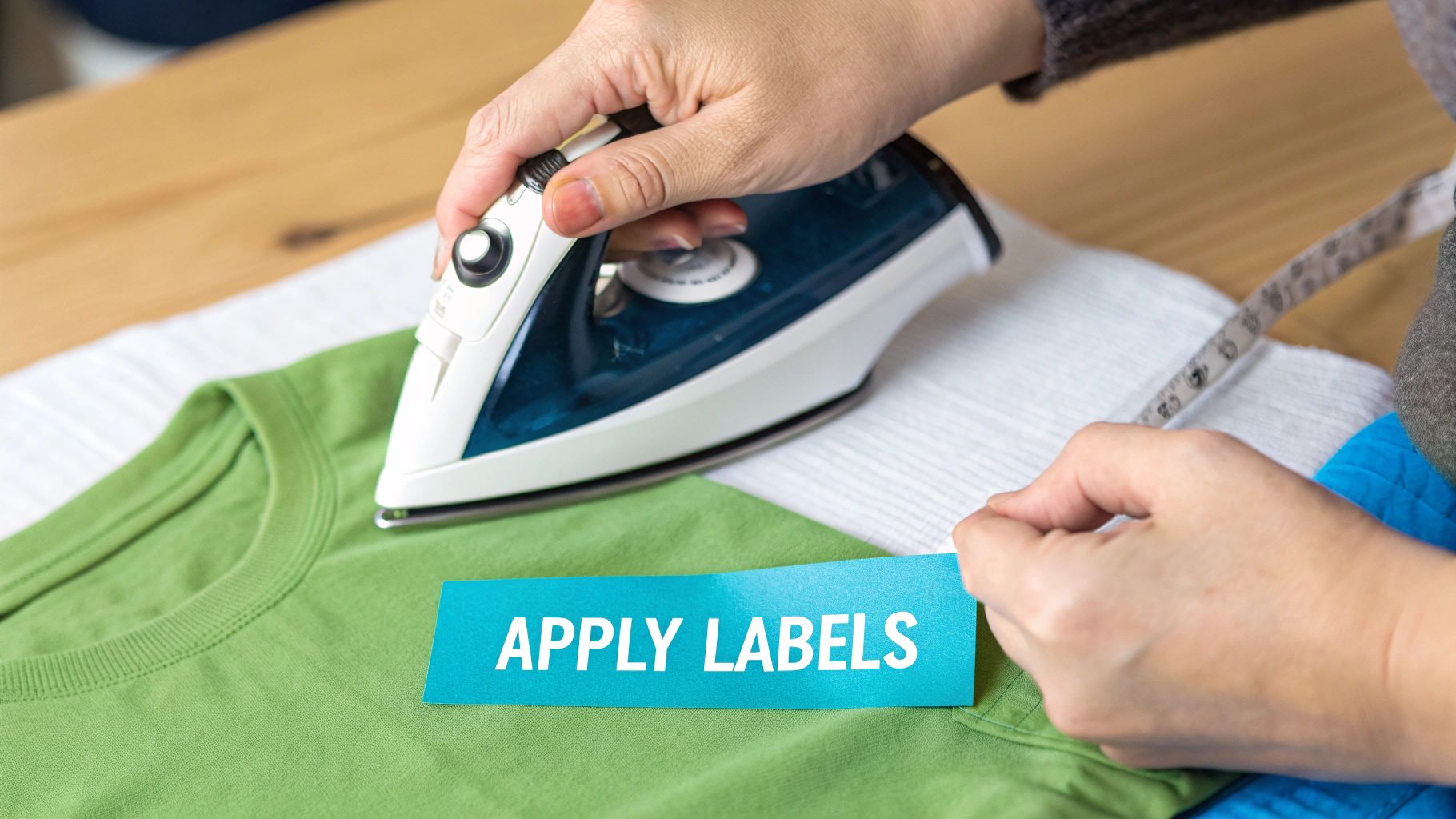
Whether you’ve gone for stick-on or iron-on labels, the following steps will help you get a bond that’s built to last. Let's keep those clothes out of the lost property pile for good.
Mastering Stick-On Label Application
Stick-on labels are wonderfully simple, but their sticking power hinges on one golden rule: they must be applied to the silky care or brand tag, not directly onto fabric like cotton or wool.
Here’s our simple, three-step process for a perfect stick every time:
- Prepare the Surface: First, make sure the care tag is completely clean and dry. Any lingering dampness or dust can get in the way of the adhesive doing its job properly.
- Press Firmly: Peel the label off its backing and press it down firmly onto the tag. I always use my thumb to smooth it out, pushing from the centre outwards to get rid of any sneaky air bubbles. You want the whole surface of the label to make good contact.
- Wait 24 Hours: This is the most important step, and the one people are most tempted to skip! The adhesive needs a full 24 hours to cure and form its super-strong, waterproof bond. Don't wash the garment during this time.
Think of it like letting glue set on a craft project. If you rush it, you’ll get a weak result. A bit of patience here ensures a hold that can withstand whatever your kid throws at it.
Perfecting the Iron-On Method
Iron-on labels work by melting a special adhesive right into the fabric fibres, creating a truly permanent bond. When you do it right, you avoid any damage to the garment and guarantee the label won’t peel away.
First things first, set your iron to a medium-high heat (the cotton setting is usually perfect) and make sure the steam function is turned off. Steam adds moisture, which is the absolute enemy of a good, permanent seal.
Ready? Just follow these steps:
- Place the label exactly where you want it on the clothing.
- Cover the label with the parchment paper that comes in the pack. This is crucial—it protects both the fabric and your iron from the direct heat.
- Press the hot, dry iron down firmly on top of the parchment paper for about 15-20 seconds. Don't wiggle the iron around; just hold it still with steady, firm pressure.
- Let the area cool down completely before you gently test the edges with your fingernail. If an edge lifts up, don't worry, just pop the parchment paper back on and repeat the process for a few more seconds.
Caring for Your Labelled Clothes
Once your labels are on properly, a couple of simple laundry habits will help them last even longer. For those who want a deep dive, you can explore our guide on machine washable labels, which has more tips on long-term care.
- Wash inside out: Turning clothes inside out reduces the amount of direct friction on the label during a wash cycle.
- Avoid harsh chemicals: Fabric softeners and bleach can weaken the adhesive over time, so it's best to use them sparingly on labelled items.
This kind of attention to detail is something you see across the UK childrenswear industry, where clear product information is vital. Retailers have to follow regulations that require clear labelling, so we all know what we're buying. Proper application of your own labels just ensures they remain just as clear and reliable for the life of the garment.
Making Labels Fun and More Effective
A great name label does more than just state a name. It’s a chance to get clever and make it a powerful tool for safety, organisation, and even a little bit of independence for your child. By personalising children's clothing name labels, you’re upgrading them from a simple tag to a smart identifier that works harder for you and the school staff.
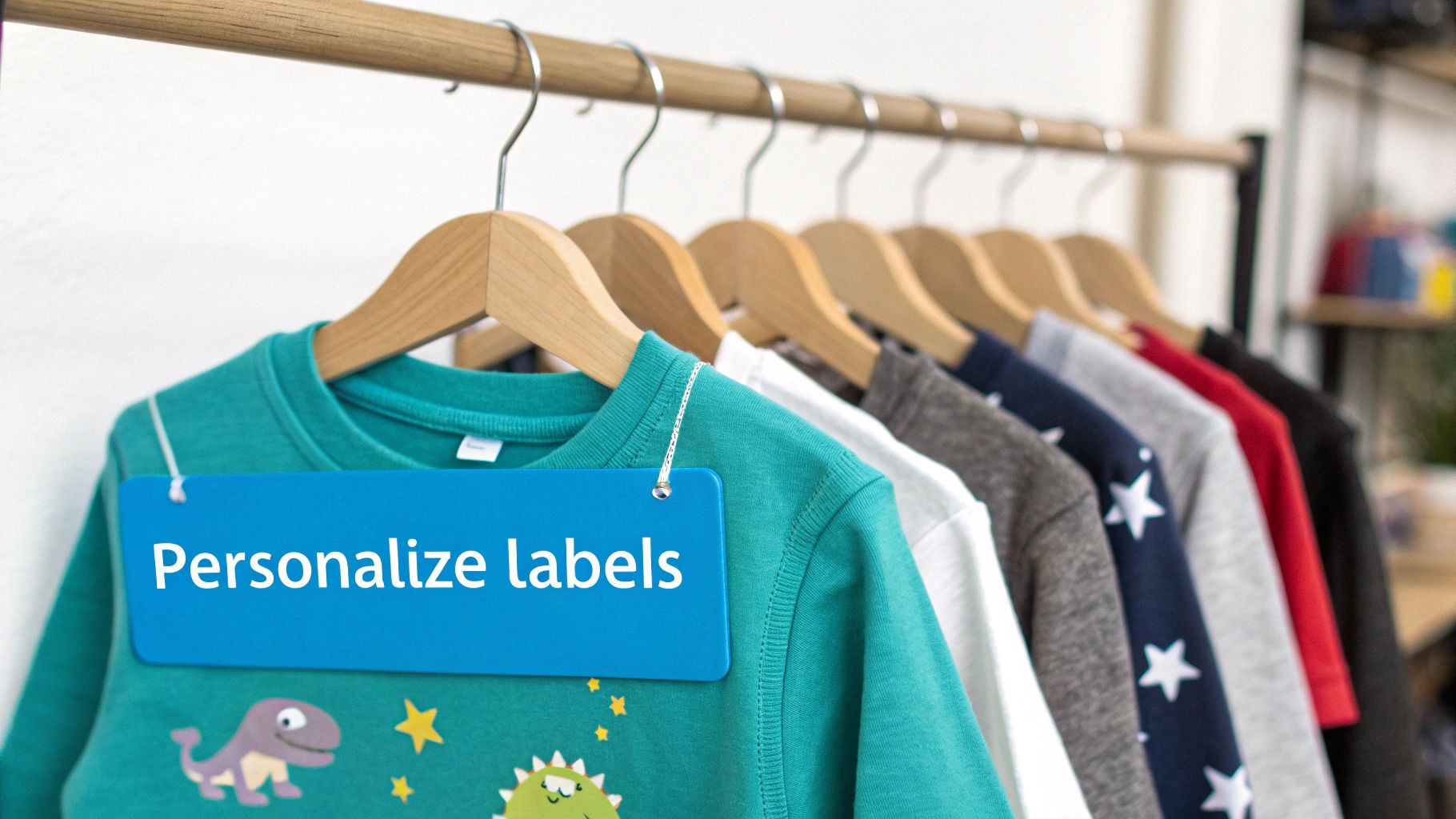
This is about thinking beyond just the surname. A few simple additions can make a huge difference in a busy, chaotic school environment.
Adding Practical Information
Think about what crucial bit of information would get a lost item back to you the fastest. A phone number is a brilliant addition, especially for things taken on school trips or to the park. It means anyone who finds it can get in touch with you directly, completely bypassing the school’s overflowing lost property bin.
For items that stay on school grounds, adding a class name (e.g., "Anna Smith, Year 2") is a lifesaver for staff. Instead of a jumper sitting in a central pile for weeks, a teacher or helper can return it straight to the right classroom. This one small detail dramatically increases its chances of ever making it home.
The Power of Pictures for Little Ones
For younger children in nursery or reception who can't read their own name yet, simple icons and colours are a game-changer. A recognisable symbol empowers them to spot their own belongings in a sea of identical-looking uniforms.
Imagine your child confidently spotting their unique little dinosaur or star icon on their peg or in a jumble of school jumpers. This small feature helps build their independence and reduces the anxiety of losing their things, making their day that much easier.
This kind of visual recognition is a fantastic first step in teaching them how to look after their own property.
It’s not just for clothes, either. You can use labels for safety by adding a clear allergy alert icon to a lunch bag or water bottle. Suddenly, a basic name tag becomes an essential safeguard, giving caregivers a quick visual reminder. Personalisation is really about making items uniquely and safely theirs.
Beyond just the labels themselves, many parents are finding creative ways to personalise their children's items, drawing inspiration from resources on creating custom name designs. By making labels both functional and fun, you’ll find they work ten times better.
Why We Think Our Labels Are a Lifesaver for Busy Parents
After wading through all the options out there—from old-school sew-in tags to fiddly iron-on ones and even messy stamps—it’s obvious what busy families really need. You need a solution that’s quick, dependable, and completely safe for your little ones. That’s precisely why we created Quote My Wall’s children's clothing name labels; they’re designed to tackle the real-world problems parents face every single day.
Our whole focus has been on making a product that genuinely cuts out the faff without cutting corners on quality. Forget setting aside a whole evening with a needle and thread or waiting around for the iron to heat up. Our stick-on labels are a brilliantly simple way to keep your child’s gear out of the lost property box for good.
Made for the Chaos of Family Life
Let’s be honest, kids' clothes go through a lot. That’s why our washable stick-on labels are built to survive just about anything your laundry basket can throw at them. They're designed to hold their own against high-temperature washes and endless tumbles in the dryer.
That incredible durability means you can stick them on once and just forget about them. The special adhesive creates a super-strong, waterproof bond that won’t peel, fade, or fray, keeping the name perfectly clear and readable all school year long.
The real measure of a clothing label isn't how it looks on day one, but how it holds up after 30 washes. We designed our labels to pass that test, giving you a reliable solution that saves you time and money down the line.
Simple to Use, Safe to Wear
We firmly believe that keeping track of your child’s belongings shouldn't be a chore. It's why our labels are ridiculously easy to apply—no iron or sewing needed, ever. You just peel one off, stick it firmly onto the garment's care tag, and that's it. Job done.
And most importantly, our commitment to your child's safety is non-negotiable. The labels are made with skin-safe, non-toxic materials and inks, so you never have to worry about them causing any irritation, even on the most sensitive skin. They're a practical, worry-free choice you can count on. Choosing Quote My Wall really is choosing a simpler, more organised life.
Common Questions About Clothing Name Labels
Even after you've got the hang of the different types of labels, it's natural to have a few questions rattling around. You want to make sure you’re getting the best solution for your kid's kit, and I get that completely. To help you out, I’ve pulled together the most common queries I hear from parents.
Let’s dive into the big ones – from laundry survival to skin safety – so you can feel 100% confident in your choice.
Do Stick-On Labels Really Stay On in the Wash?
This is the number one question, and for good reason! The answer is a big, fat yes – but only if you apply them correctly. The secret lies in a combination of a seriously strong, laundry-safe adhesive and putting it in the right spot. Good quality stick-on labels are specifically engineered to create a permanent bond with the synthetic material of a garment’s care tag.
Think of it this way: the smooth, glossy surface of a care tag is the perfect partner for the adhesive. When you press the label on firmly and let it 'cure' for 24 hours, you create a waterproof seal. That seal is tough enough to handle the heat and tumble of countless washing machine and dryer cycles.
Where Is the Best Place to Put a Name Label?
For the best results and to keep things comfy for your child, the ideal spot is almost always the silky care tag – you know, the one with all the washing symbols on it. Sticking the label here means it won’t rub against your child's skin and gives the adhesive the smooth surface it needs to grab hold properly.
What if there’s no care tag, like on socks or a hand-knitted jumper? In that case, an iron-on label is your go-to, as it can be applied directly to the fabric. Just remember not to stick a self-adhesive label straight onto cotton or wool; the fibres in the fabric just don't give it enough to grip onto.
How Can I Remove an Old Label?
Hand-me-downs are fantastic, but they often come with an old name tag still attached. The good news is that getting a stick-on label off is surprisingly easy and won’t ruin the clothing.
All you need is a hairdryer. Gently warm the label for about 15-20 seconds. This softens the glue enough for you to get a fingernail or a pair of tweezers under the edge and peel it away from the care tag. If there’s any sticky stuff left behind, you can usually just rub it off with your thumb.
Quick Tip: Whatever you do, don't just try to rip a label off cold. You’ll likely tear the care tag. A little bit of warmth works wonders and makes removal a breeze.
Are the Labels Safe for Sensitive Skin?
Absolutely. Your child’s comfort is the top priority. Any reputable supplier will use certified skin-safe materials and non-toxic inks for their labels. This means they're free from nasty chemicals like phthalates and won't cause any rashes or irritation, even on the most delicate skin. It's always worth choosing a company that's open about the safety standards of its products.
At Quote My Wall, we’ve designed our washable stick-on labels with all these things in mind. They’re durable, safe, and ridiculously easy to use – a lifesaver for busy families. Take a look at our range of customisable name labels and make the lost property pile a thing of the past. Discover more at quotemywall.co.uk.