

40th Wedding Anniversary Card Writing and Design Guide
You've bought the card, chosen the ruby-red envelope, and still the inside is blank. “Happy 40th wedding anniversary” is accurate, but it doesn't say much about the couple, your relationship with them, or the life they've built together.
The strongest 40th wedding anniversary card starts with one decision: who are you writing to? A message for your spouse should sound intimate. One for your parents should express gratitude for the marriage you grew up around. A card for friends or relatives can be warm, observant, and lightly humorous. Once the relationship sets the tone, the words become much easier to find.
Why the 40th Anniversary Deserves More Than a Generic Card
In the UK, a 40th wedding anniversary is traditionally known as the Ruby anniversary, a long-established milestone alongside silver at 25 years, pearl at 30 years, and gold at 50 years. The ruby theme has remained widely recognised in British anniversary cards and gift culture, giving the occasion a sense of endurance, warmth, and distinction. The UK wedding anniversary tradition and its milestone materials provide the cultural context behind the familiar ruby wording.
That symbolism gives you a useful starting point, but it shouldn't dictate the entire message. Ruby can suggest lasting affection and depth, yet a card becomes personal only when it connects the symbol to the couple's actual life. A line about the kitchen where they raised their family will usually feel more meaningful than an elaborate paragraph about precious stones.
Choose the voice before the wording
If you're writing to your spouse, centre the card on shared history and continued choice. Mention a habit, challenge, place, or private joke that belongs to both of you. Avoid language that sounds like a wedding speech written for strangers.
For parents, write as someone who has witnessed their partnership from close range. Thank them for the patience, loyalty, humour, or steadiness that shaped family life, while keeping the focus on their marriage rather than turning the card into a childhood memoir.
For friends, siblings, or extended family, write as an affectionate observer. Identify something you've noticed over the years, such as the way they make one another laugh, welcome people into their home, or remain a natural team in difficult moments.
Practical rule: Choose one genuine detail before choosing a decorative phrase. Specificity creates emotion faster than poetry.
The history of anniversary naming also explains why UK ruby anniversary cards often use language around enduring love, rarity, and prestige, rather than treating the occasion as an ordinary date. UK-facing references trace the broad popularity of anniversary materials to Victorian Britain and later formalisation in twentieth-century etiquette writing. This UK anniversary guide outlines that development and the modern place of ruby among recognised milestones.
How to Structure a Heartfelt Anniversary Message
A good message doesn't need to be long. It needs a clear emotional movement, from recognising the milestone to remembering what makes the relationship theirs. Use four parts: acknowledge, remember, reflect, and look ahead.
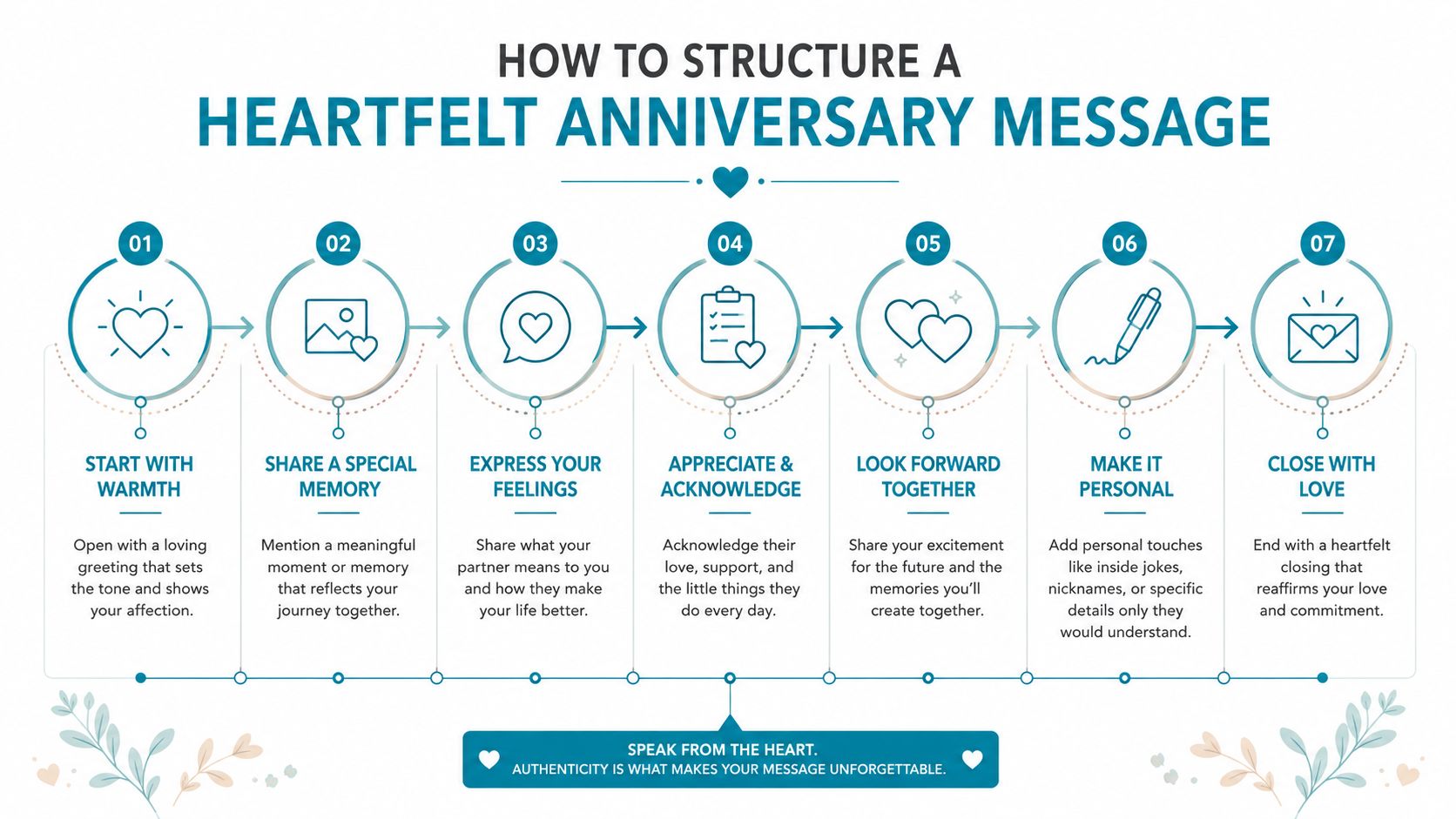
Start by naming the occasion
Open plainly. “Happy Ruby anniversary” or “Forty years of marriage is something special” gives the reader an immediate sense of celebration. You can use the traditional name without forcing the ruby metaphor into every sentence.
A weak opening relies on a phrase that could appear in any card, such as “Congratulations on your wonderful journey together.” A stronger version adds the relationship: “Happy Ruby anniversary to the two people who taught our family what patience and partnership look like.”
Add one memory or quality
Choose a detail that only you could have written. It might be the couple's Sunday routine, a family holiday, the way one always makes tea for the other, or a difficult period they faced together. You don't need to explain the entire story. A brief reference lets the couple supply the emotional meaning themselves.
If you're writing to your spouse, try: “I still think about the way you held everything together when life became difficult.” For parents, you might write: “We grew up watching you solve problems as a team.” For friends, a lighter observation works: “You still laugh at one another's terrible jokes, and we hope that never changes.”
Explain what their marriage means
This is the emotional centre. Say what their relationship has shown you or given you. Use direct language rather than inflated praise.
- For a spouse: “You're still the first person I want to tell good news to.”
- For parents: “Your marriage gave our family a steady place to return to.”
- For friends: “You've shown everyone around you that love can be both joyful and dependable.”
A message can be affectionate without becoming formal. If you'd like more ideas for balancing romance with everyday language, this anniversary card guide for a boyfriend offers useful examples of personal, relationship-led wording.
Close with the future
End with warmth and forward motion. “Here's to the years still ahead” is perfectly serviceable when it follows a specific memory. You can also write, “I'd choose you all over again,” or “May the next chapter bring you more laughter, calm mornings, and time together.”
Avoid adding a new anecdote in the final line. The close should feel like a gentle landing, not another subject.
A complete draft might read:
Happy Ruby anniversary to you both. Forty years of marriage is remarkable, but what stays with me is the quiet way you've always supported one another. Your patience, humour, and loyalty shaped the family around you. We're so grateful for the life you've built, and we're looking forward to celebrating all the memories still to come.
Choosing the Right Tone for Your Relationship
The same milestone needs different language depending on who's holding the pen. A spouse can be vulnerable and intimate. An adult child can be grateful and reflective. A friend can be affectionate without pretending to know every private part of the marriage.
| Recipient | Recommended Tone | Formality Level | Content Focus |
|---|---|---|---|
| Spouse | Intimate, affectionate, honest | Relaxed to personal | Shared memories, private humour, continued love |
| Parents | Grateful, admiring, family-centred | Warm and respectful | Their example, family life, patience and partnership |
| Friends or extended family | Celebratory, observant, lightly humorous | Friendly | Shared occasions, enduring qualities, memorable habits |
Writing to your spouse
Your spouse doesn't need a grand declaration that could belong to any couple. They need proof that you notice the life you share. Write about the ordinary detail that has gained meaning through repetition.
An opening such as “Forty years on, you're still the person I look for first in a crowded room” creates intimacy without sounding borrowed. You could follow it with a memory of a home, a journey, a family challenge, or a private routine.
For a more playful card, keep humour affectionate rather than critical: “Forty years together, and you still insist your way of loading the dishwasher is the only correct way. I love you anyway.” The joke should make both people smile, not expose an old grievance.
Writing to your parents
A card from adult children should acknowledge the marriage they created, not list family memories. “Thank you for showing us what commitment looks like in everyday life” keeps the focus where it belongs.
You can mention the family as evidence of their partnership, but don't make the card entirely about what they did for you. A balanced message might say: “We're grateful for the love and patience you brought to our family, and we admire the friendship you've maintained through every season of life.”
Writing to friends or relatives
Friends can use a lighter touch because they're writing as witnesses. Mention a shared holiday, a familiar story, or a quality everyone associates with the couple.
“Forty years, and you still make every gathering more enjoyable by arriving together” is warm and specific enough to feel personal. If the couple enjoys humour, add a gentle observation about their teamwork, competitive games, or famously different opinions. Keep the joke kind and make sure the affectionate meaning remains clear.
Designing a Ruby-Themed Card That Stands Out
A couple celebrating forty years should see their own relationship in the design. Start with a ruby palette, then connect the colours and details to the recipient. A spouse may respond to a private symbol, parents to a family landmark, and friends to an image linked to a shared story.
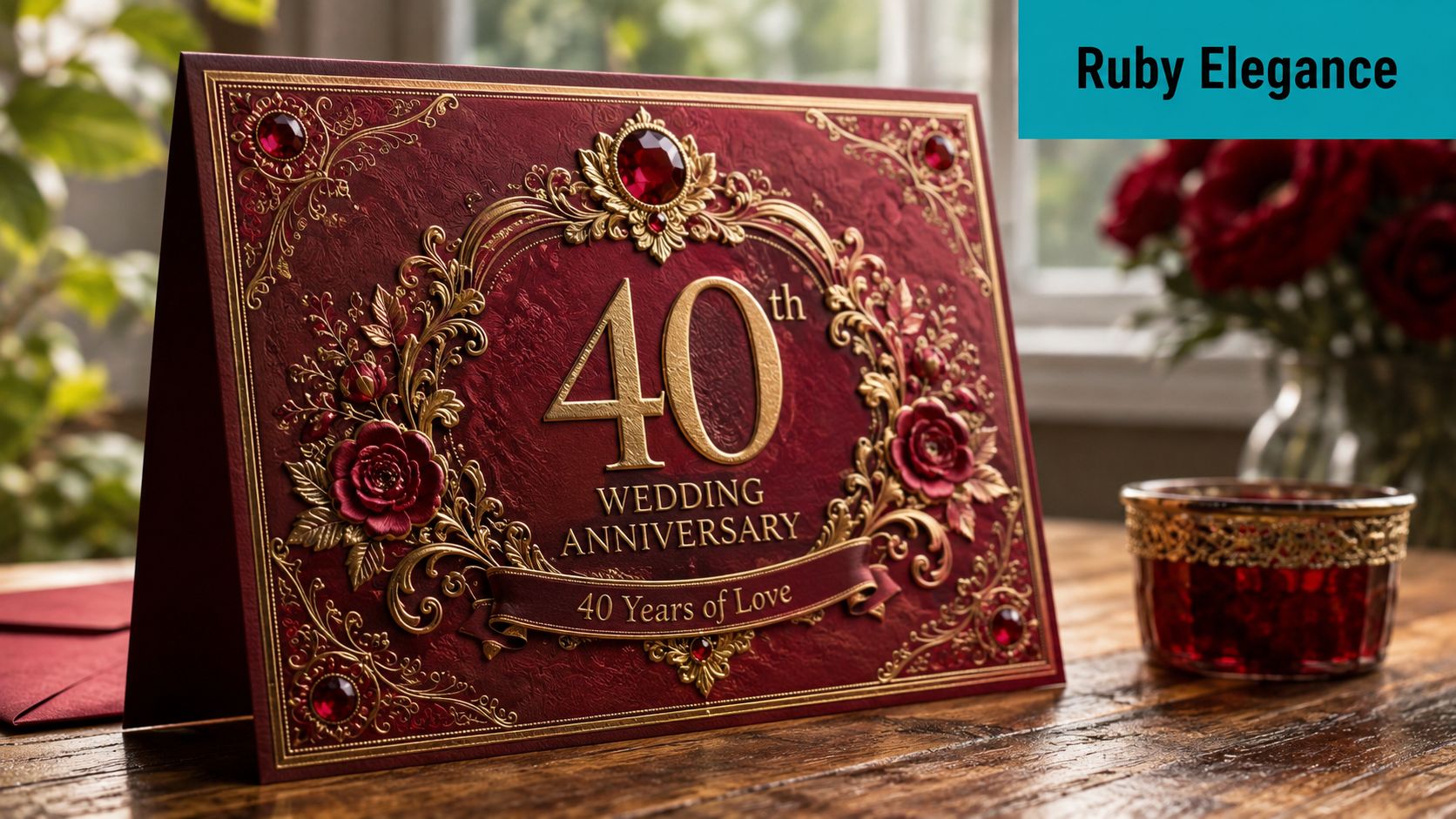
Use deep ruby, burgundy, or wine red with warm ivory and restrained gold. Keep a full red background only when the wording remains easy to read. An ivory card with a ruby border, a small gemstone illustration, or a single red monogram gives a cleaner modern result. Match the motif to the recipient's message, such as a ruby window for a spouse's private note or a botanical line drawing for parents who built a family home.
Make the type feel deliberate
Pair a refined serif display font with a simple sans serif for names and details. The serif gives the card a ceremonial quality, while the supporting font keeps the date and personal message legible.
Make 40 the visual centre without turning the card into a birthday design. A subtle gold “40”, surrounded by ruby botanical details or fine linework, feels mature. For a spouse, place the number beside a meaningful phrase. For parents or friends, let it introduce a message about the life they have shared.
Use texture where it adds meaning
UK greeting-card printers commonly offer premium finishes including foiling, embossing, debossing, spot UV, die cutting, laminates, and variable-data personalisation. UK special-occasion greeting-card printing options show how names, dates, and joint messages can become part of the design rather than an afterthought.
Choose finishes according to the card's personality:
- Gold or silver foil: Use it for the anniversary number, names, or a short front-cover phrase.
- Embossing: Suits a ruby gem, initials, floral border, or wedding date.
- Spot UV: Adds controlled gloss to selected details on a matt surface.
- Lamination: Protects a keepsake-style cover and gives it a polished feel.
- Die cutting: Works well for arches, botanical shapes, or a window revealing the message.
A folded card remains practical, while a gatefold design gives a longer spouse, parent, or friend message room to unfold. For display after the celebration, choose a framed print, acrylic sign, or card designed to sit inside a small stand. UK printers also advertise short runs from 10 cards upward, with one supplier listing design set-up at £12 including VAT per design. Foiling, lamination, trimming, and creasing provide further presentation options. These UK greeting-card benchmarks can help you plan a bespoke order without committing to a large quantity.
Personalisation Ideas That Turn a Card Into a Keepsake
Personalisation works best when it records something permanent, not when it adds a name to a pre-designed template. Use the couple's names, wedding date, a meaningful phrase, or a visual reference that belongs to their story.
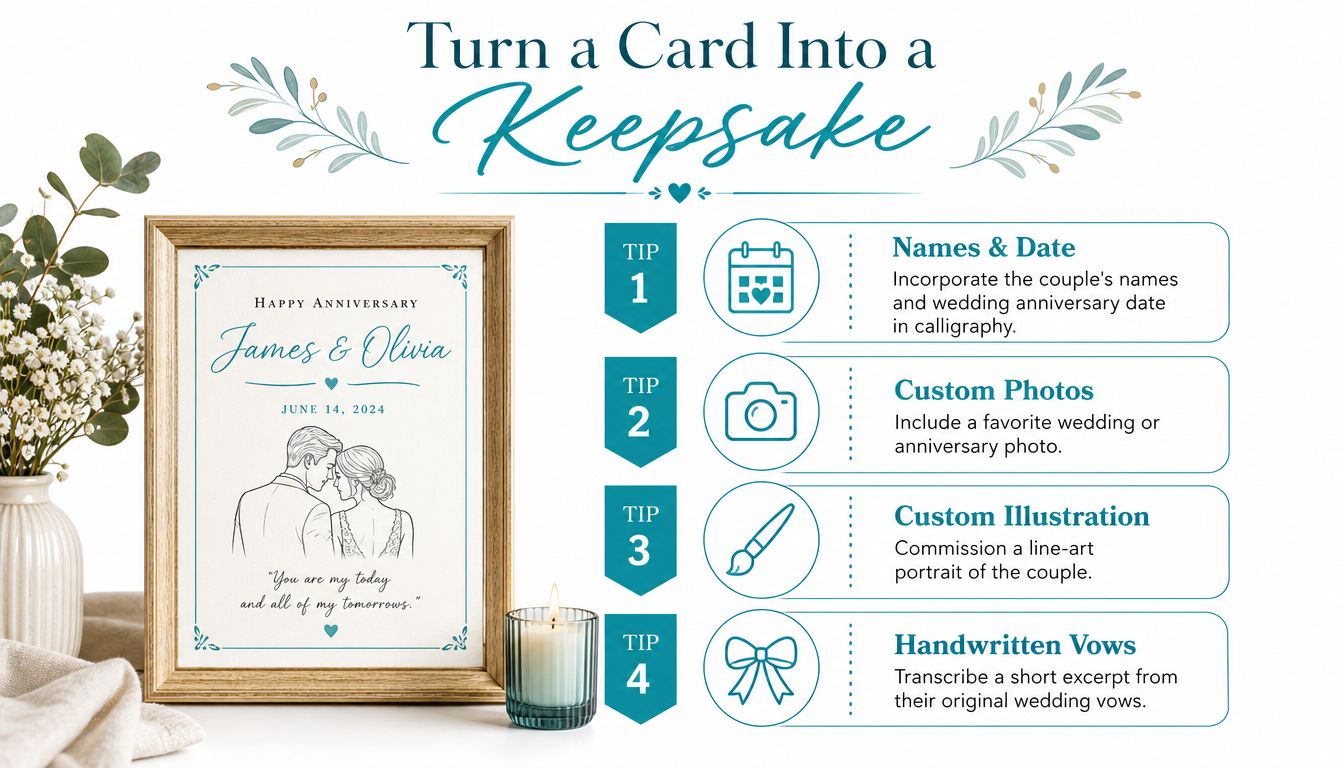
Start with names and the date
Place the couple's names on the cover or inside title, then add their wedding date beneath a ruby motif. Calligraphy-style lettering can make the design feel ceremonial, while a clean layout keeps it suitable for a modern home.
Variable-data printing makes this practical for family groups ordering several cards. UK printing suppliers note that recipient-name personalisation can reduce manual writing and make cards more directly relevant to the recipient. Personalised greeting-card production options are particularly useful when the design needs to carry names, dates, and a shared message.
Add a visual memory
A favourite wedding photograph, anniversary portrait, house illustration, or line-art drawing of the couple can carry emotional weight without filling the card with text. Choose one image with clear meaning rather than creating a crowded collage.
You might also commission a simple illustration of the church, registry office, first home, or holiday destination associated with their story. Keep the palette restrained, using ruby as an accent so the image remains timeless.
Build a displayable companion
A ruby-themed vinyl wall decal with the couple's names and wedding date can extend the card into the home. A personalised acrylic wedding sign offers another option, especially if the couple enjoys displaying meaningful objects on a shelf, sideboard, or hallway wall. A custom wall quote can preserve a short line from the card, such as a private phrase or a sentence describing the partnership.
For a broader explanation of why buyers respond to objects that reflect their identity, explore this guide to the power of personalisation in modern shopping. The principle is simple: the more closely the design belongs to the couple, the less likely it is to feel disposable.
A handwritten element adds warmth even to a professionally printed card. Leave a deliberate space for your own note, or transcribe a short excerpt from the couple's original vows. If you're pairing the card with wine, a thoughtful personalised bottle gift guide can help you choose a presentation that carries the same names-and-date treatment.
Pairing Your Card With the Perfect Companion Gift
A card carries the message, but a companion gift gives the couple something to keep, use, or experience together. Choose the gift after deciding what the card celebrates. If the message honours their home, choose décor. If it recalls shared evenings, choose a bottle, meal, or experience. If it praises enduring partnership, choose an object that will remain visible.
Affordable choices
Pair a handwritten ruby-themed card with a framed family photograph, a small red glass ornament, or a homemade booklet of memories from relatives. These gifts rely on thought rather than price, and a group of short personal notes can be more affecting than a generic luxury item.
Mid-range choices
A personalised acrylic sign, engraved bottle opener, or custom wall art can give the couple a lasting reminder without requiring jewellery. For practical guidance on choosing a gift specifically for parents, see this 40th wedding anniversary gift guide for parents.
A good watch can also suit a couple who values understated, useful presents. This guide to watch gift ideas for weddings offers a useful starting point when you want something enduring without relying on a traditional gemstone.
Premium choices
Ruby jewellery or a gemstone piece reflects the anniversary tradition directly, while a weekend experience, special meal, or professionally framed family portrait gives the couple something to enjoy together. Only choose an expensive item if it matches their taste. A costly gift that doesn't suit their home or habits will never feel as personal as a modest object chosen with care.
Wrap the card and gift as one presentation. Use ivory paper with a ruby ribbon, add a small gold tag with their names, and place the card where it will be opened first. The visual connection tells the couple that the message and gift were planned together.
Quote My Wall creates personalised wall decals, acrylic wedding signs, custom wall quotes, prints, and other bespoke gifts that can carry a couple's names, date, and ruby-inspired design. Visit Quote My Wall to turn your carefully written anniversary message into a keepsake the couple can display long after the card has been opened.