

Wall Vinyl Decals For Stylish Home Makeovers
Wall vinyl decals are large adhesive stickers that stick to your wall like a giant Post-it, no paint or wallpaper paste required. Perfect for shift-happy renters who crave a quick refresh.
Discover How Wall Vinyl Decals Transform Your Walls
These decals feel like peelable wallpaper. Crafted from durable vinyl film with a gentle adhesive, they come away cleanly when you’re ready for a new look. In this guide, we’ll cover:
- What materials and finishes suit different spaces
- Popular styles for nurseries, living areas and upcycled furniture
- Key perks such as removability, washability and renter-friendliness
- Custom options for colours, text and shapes
“Applying a wall decal is like sticking up a giant memo—only far more stylish.”
We’ll also put vinyl decals side by side with paint and traditional wallpaper to show you why they’re a low-risk décor choice. Picture swapping a lush botanical mural for sleek geometry in minutes, no residue left behind. Plus, you’ll discover easy hacks for measuring walls, aligning pieces with masking tape and nailing that perfect placement.
Why Renters Love Decals
Renters across the UK swear by decals for damage-free décor. Top reasons include:
- No holes to fill after removal
- Instant updates between tenancies
- A fraction of the cost of a full redecorate
Fancy something unique? We’ll share expert tips on commissioning bespoke designs. For an in-depth look at choosing the right graphic, check out our summary on expert wall stickers.
What To Expect Next
In the following pages, you’ll dive into vinyl grades, finish options and step-by-step installation advice. We’ll wrap up with maintenance hacks and personalisation pointers so your walls stay looking sharp for years to come. Get ready to unleash your creativity!
Understanding Wall Vinyl Decals
Wall vinyl decals look simple—almost like stickers—but they behave more like peel-and-stick wallpaper. Each decal comprises three layers: a release liner, the printed vinyl and a delicate adhesive. Think of the liner as a protective cover, the vinyl as a wipe-clean canvas and the adhesive like a Post-it that clings firmly yet lifts off cleanly.
- The release liner peels away to reveal the sticky surface
- The vinyl layer showcases vibrant, fade-resistant prints
- The gentle adhesive secures the decal without leaving residue
This clever construction makes decals ultra-thin, flexible and surprisingly easy to handle.
Layers Explained
The release liner shields the design during shipping. Peel it back gently to expose a smooth surface primed for sticking. The vinyl film holds the artwork and stands up to steam or splashes. Finally, the adhesive locks the decal in place, then peels away without tearing or marking your wall.
Comparing Decals With Paint And Wallpaper
If you’ve ever painted a room, you know about odours and drying times. Decals eliminate both—stick them up and you’re done.
Wallpaper can be a major commitment: messy installation, stubborn removal. Decals let you swap designs as readily as turning a page in your sketchbook.
| Feature | Paint | Wallpaper | Wall Vinyl Decals |
|---|---|---|---|
| Dry Time | 4–6 hours | 24 hours | Instant |
| Removability | Requires stripping | Often tears | Residue-free peel |
| Cost Example | £300/room | £500/room | £50–£100 |
Why Decals Feel Low Commitment
You won’t need to fill holes or sand surfaces. Decals resist minor spills and wipe clean with a damp cloth. Best of all, custom prints can transform a space in minutes—no decorator’s ladder required.
46.37% of the European self-adhesive vinyl film revenue came from UK wall vinyl decals
In the UK self-adhesive vinyl films market, wall vinyl decals captured 46.37% of revenue share, amounting to around USD 35.98 billion of Europe’s total USD 77.59 billion market, driven by strong demand from interior décor Learn more about these market findings.
Popularity Among DIY Enthusiasts
DIY fans across the UK adore decals for low-cost makeovers. A nursery can blossom with botanical motifs in seconds. In the living room, gallery-style accents or motivational quotes shift the atmosphere on a whim.
Furniture upcyclers wrap tired drawers in bold patterns, turning old cabinets into centrepieces. Decals let them play with colour and texture without splashing out on new pieces.
Common Misconceptions
Many think decals leave sticky residue—but top-grade vinyl peels away cleanly every time. Others worry about moisture, yet plenty of films shrug off bathroom steam and kitchen splashes. The key is applying them to smooth, clean walls so they stick properly and last for years.
Main Takeaways
Wall vinyl decals marry sticker-style simplicity with wallpaper-grade durability and paint-like versatility. Their layered design, removability and washability make them a renter’s dream.
Next, we will explore material choices and finishes to match any décor style.
You’ll find pre-cut decals in many UK high-street stores, reflecting growing demand for quick, budget-friendly updates. According to a UK home décor survey, over 60% of renters choose decals over traditional paint.
Independent online shops now offer bespoke layouts for unusual wall shapes. Here are quick tips before buying wall vinyl decals in the UK market:
- Check exact wall measurements to avoid waste
- Confirm surface compatibility regarding paint age
- Review removal process for your wall type
- Compare prices including delivery and duties
Always opt for reputable UK sellers with transparent return policies. Remember that decal size influences both visual impact and installation ease. Use painter’s tape and a spirit level to preview your layout before peeling off the backing. Finally, consider room lighting and sightlines so your decals truly shine.
A small investment in vinyl decals yields a big style upgrade with zero damage. With these insights, you’re ready to treat walls like sketchbook pages.
Comparing Vinyl Materials And Finishes
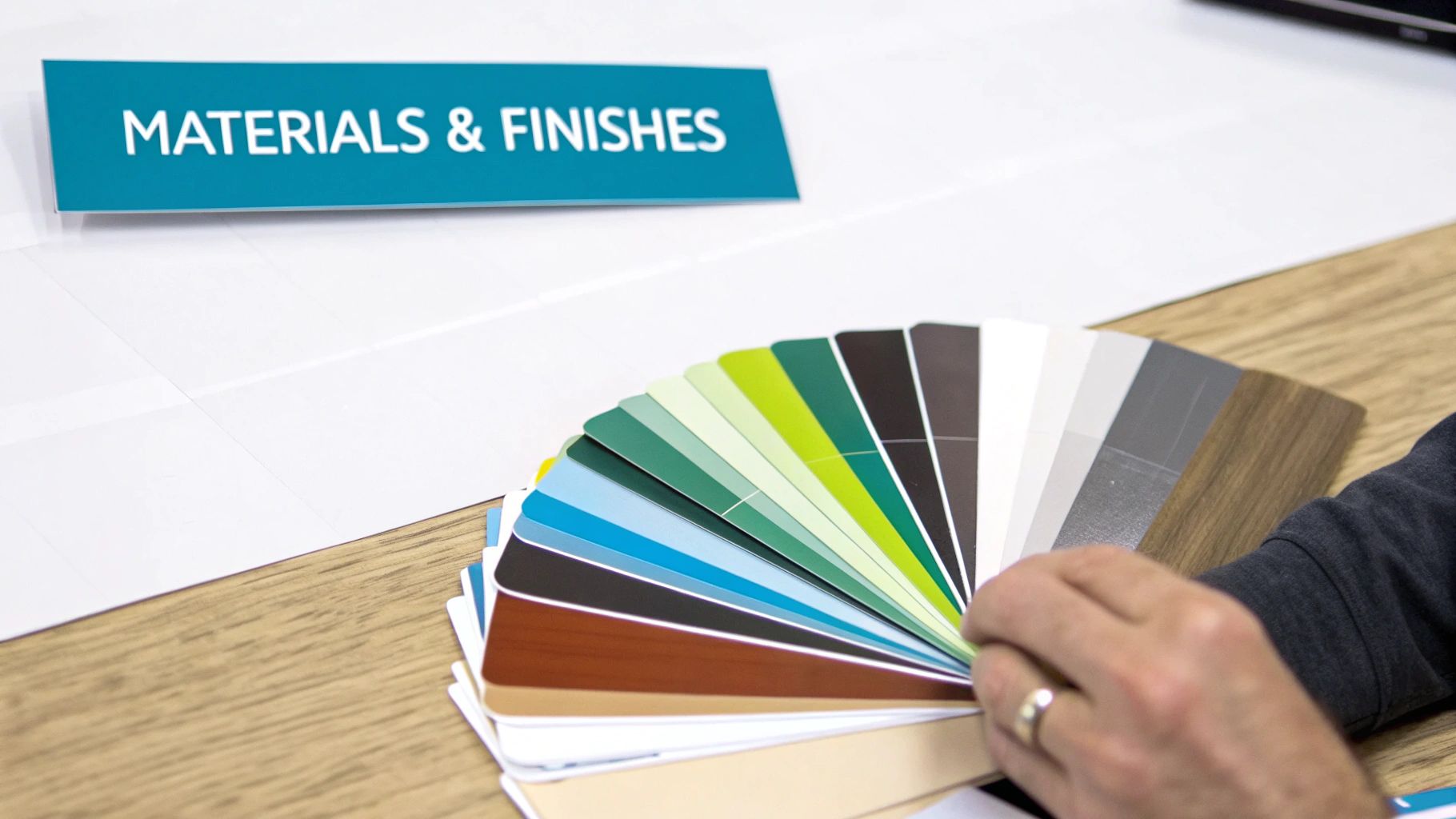
Choosing the right vinyl is a bit like picking the perfect fabric for a garment – the base film sets the tone. Standard PVC films cling firmly to smooth walls and shrug off splashes in kitchens and bathrooms. On the other hand, eco-friendly PVC-free options cut out chlorine, lowering environmental impact without sacrificing everyday performance.
Here’s a quick rundown of how each material stacks up:
Comparison Of Vinyl Material Types
| Material Type | Finish | Durability | Sustainability |
|---|---|---|---|
| PVC | Gloss, Satin, Matte | High resistance to moisture and wear | Low due to chlorinated composition |
| PVC-Free | Matte, Satin | Moderate resistance and reusable | Better, recyclable and low-VOC |
With this table in mind, you can spot at a glance which film suits damp zones, sunlit lounges or eco-conscious projects.
Selecting Finish For Different Rooms
Finishes aren’t just about looks—they influence glare, colour depth and cleaning ease.
- Gloss PVC: Perfect for steam-filled bathrooms in Birmingham. Water beads up and wipes away in seconds.
- Matte PVC-Free: A lifesaver in bright Edinburgh lounges, cutting reflections and revealing rich jewel tones.
- Satin PVC: Strikes a balance in living areas, offering soft sheen and subtle texture.
Key Insight: Match your finish to humidity levels and sun exposure for lasting vibrancy.
Custom Artwork And Colour Choices
Think of your design as a jigsaw puzzle—clear edges and precise shapes make all the difference.
- Save artwork at 300 dpi in CMYK to nail every shade.
- Convert fonts to outlines and embed linked images to avoid missing elements.
- Leave bleed and margin space so nothing gets chopped off during printing.
Check out our guide on custom vinyl wall stickers and furniture wraps in 2025 to explore creative possibilities.
Durability And Surface Compatibility
Vinyl films behave like dependable guests—some adapt to any surface, others need a smoother welcome mat.
- PVC decals cling strongly to painted plasterboard and sealed walls.
- PVC-Free may lift on aged paint or textured plaster; testing a small patch pays off.
- Both films tolerate moderate heat and wipe clean, but steer clear of harsh abrasives.
Always check eco-certifications and disposal guidelines if sustainability ranks high on your list.
Summary And Choosing Tips
By now, you’ll have a clear view of PVC versus PVC-free and how matte, gloss or satin will play out in your rooms. Remember:
- Test swatches under natural and artificial light to avoid colour surprises.
- Order a little extra: a 10 % overrun covers cutting errors and layout tweaks.
- Budget Note: PVC sheets typically cost £2–3 per square metre, while PVC-free films sit around £3–5 per square metre.
Statistic: PVC-free films reduce VOC emissions by up to 65 % compared to traditional PVC.
Armed with these pointers, you can choose wall vinyl decals that not only look great but also fit your home’s unique conditions.
Popular Designs and Real World Use Cases
Wall vinyl decals adapt to nearly every style, whether you crave sharp geometry or a calm botanical scene. You’ll find options that speak to playful nurseries, chic living rooms and even upcycled furniture projects.
Gallery Style Feature Walls
Imagine a plain living room wall in a London flat crying out for character. A mix of framed-look vinyl prints transformed it into a mini gallery—no nails or hammer needed.
By layering black-and-white portrait decals with metallic trims, the homeowner achieved a museum-worthy display in minutes. Local artisans often create bespoke motifs that suit the quirkiest of vintage tenement flats.
- Mix and match sizes to vary the focus
- Position decals near windows to catch natural light
- Swap prints seasonally for a fresh atmosphere
This method sticks equally well to painted plasterboard or sealed walls.
Upcycled Furniture Makeovers
A tired chest of drawers became a dorm-room star thanks to Moroccan-patterned adhesive film. Each drawer front wore matte vinyl so well that the piece looked handcrafted yet robust.
With a simple peel-and-stick approach, you skip the mess of paint and the hassle of dismantling.
All you need is a squeegee and a craft knife. Combine different motifs for a bohemian feel, or go for a single design to highlight the original wood. Many DIYers say they save up to £40 per item compared to buying new furniture.
Home Office Brand Statements
Decals aren’t just decorative—they can reinforce your company’s identity. One small marketing agency applied its logo and mission statement in gloss-black vinyl above the main desk.
Key advantages included:
- Instant visual impact with almost zero downtime
- Effortless updates when it’s time to refresh branding
- Professional ambience at a fraction of repainting costs
Material for a typical 3 m wall graphic came in under £20. Online sellers and local studios in the UK now handle over 60% of these custom jobs (Discover more insights about the vinyl sticker market).
Tile Stickers In Kitchens And Bathrooms
Specially formulated vinyl for tiles lets you change splashback colours without removing grout or tiles. It’s a quick, cost-effective kitchen facelift.
- Marble-effect stickers for that metro self-build appeal
- Geometric patterns that cleverly conceal grout discolouration
- Chalkboard panels perfect for jotting down shopping lists
- Heat Resistant up to 70 °C, so it survives near ovens and radiators
Nursery And Children’s Rooms
Soft pastel decals shaped like animals and alphabet letters can turn a blank wall into a playful learning zone. Little ones love repositioning the stickers, and parents value the spill-friendly wipe-down surface.
All designs meet UK toy safety standards and contain no heavy metals. Small boutique shops often swap themes with the seasons, showing how vinyl decals flex to evolving tastes and spaces.
These real-life examples demonstrate why wall vinyl decals have become must-have décor in UK homes. Why not pick up a set and start experimenting this weekend?
Benefits And How To Choose Sizes And Patterns
Wall vinyl decals are a clever mash-up of art and protection, giving your walls a stylish facelift without the usual commitment. Renters, especially, will appreciate how easily they transform a room while staying on good terms with landlords.
They also scrub clean with ease and act as a shield against nicks, scuffs and everyday wear. In short, these decals bring fresh energy and practical durability under one peelable layer.
Key Benefits Of Wall Vinyl Decals
- Easy Removability without leaving sticky residue
- Renter-Friendly upgrades that respect lease agreements
- Washable Surfaces that shrug off dust and spills
- Surface Protection guarding paintwork from accidental scratches
“Decals act like a protective film and artwork in one, keeping walls pristine.”
Beyond their protective charm, vinyl decals let you experiment with new looks as often as you like. They’re an affordable trick for breathing life into any space.
Measuring Wall Vinyl Decals
Getting the right size hinges on precise measurements. Picture wrapping a decal around a box—that’s how you’ll see how much wall it actually covers.
Grab a tape measure or laser ruler and note down your wall’s height and width in centimetres or millimetres. Then sketch a basic grid on paper, letting each square represent 10 cm on the real wall.
- Mark windows, switches and sockets
- Highlight clear zones free from furniture
- Leave breathing room with planned negative space
This simple grid removes the guesswork and aligns your design exactly where it belongs.
Planning Layout And Scale
Scale drives the overall feel of your design. A decal hogging 50% of a nursery wall may feel cosy there but overpowering elsewhere.
Outline your planned decal area with painter’s tape to get a feel for balance. Step back: does the arrangement look inviting or too busy?
Think in thirds. Divide the wall into three vertical slices and position larger motifs at the one-third mark for an eye-pleasing focal point.
| Wall Width | Decal Coverage | Visual Effect |
|---|---|---|
| < 2 m | 30–40% | Subtle accent |
| 2–4 m | 40–60% | Balanced focal point |
| > 4 m | 60–80% | Bold feature wall |
This guide shows how much wall to cover to match your mood and space.
Avoiding Common Mistakes
- Picking decals so small they disappear into the background
- Overdoing it with graphics that dominate every corner
- Ignoring natural light that can cast awkward shadows
- Forgetting to account for doors and windows when measuring
Experts say measuring twice and mocking up with tape can cut installation errors by 75%.
With thoughtful planning and grid methods, you’ll achieve a layout that feels both intentional and harmonious.
Final Tips For Perfect Patterns
- Test small vinyl swatches under your room’s actual lighting
- Leave at least 10 cm of clear wall around your design
- Mix and match complementary patterns for added texture and contrast
Also, consider how your furniture sits beneath the decal. Centre designs over a sofa or cot, rather than defaulting to the wall’s midpoint.
This level of attention to size, scale and pattern results in decals that look like they were made just for your home.
Choosing Pattern Styles
Different motifs set distinct moods. Geometric prints lend modern structure, while botanical leaves invite a sense of calm.
- Geometric: Crisp lines that bring visual rhythm to living rooms
- Botanical: Leaf and flower shapes for a fresh, organic touch
- Typography: Inspiring quotes and phrases that convey personality
- Illustration: Playful characters that make nurseries come alive
For example, slim vertical leaf decals can stretch a hallway’s height, while oversized motivational quotes above a desk inject energy into home offices. By pairing the right pattern with the ideal scale, every space achieves a seamless flow.
Installing Removing and Caring for Wall Vinyl Decals
Getting your wall vinyl decals to look crisp and smooth all comes down to preparation.
Skip the prep and you risk edges lifting or a skewed finish later on.
Start by wiping the wall with a lint-free cloth dampened in mild detergent or isopropyl alcohol.
Make sure the surface is dry before you even think about peeling any adhesive backing.
If your walls have texture, gently brush with a soft-bristle tool to lift away loose particles.
Preparing Wall Surface
Clean walls give you a bubble-free, secure bond.
Even a tiny grain of dust can raise the vinyl and create a visible gap.
- Wipe with a damp cloth and a mild cleaner to strip away dirt
- Sand or fill any flaking paint and smooth over cracks
- Leave the wall to dry completely—ideally for at least one hour
- Test a small corner by peeling it back to check how well it grips
Aligning And Applying Decals
A straight edge is your best friend when it comes to lining up designs.
Masking tape or a laser level will keep everything square and centred.
- Measure and mark your reference points at the top, bottom and centre
- Peel back a little of the backing, keeping the vinyl on its transfer film
- Use a squeegee or flat tool to press from the middle outwards
Take your time. A slow, steady approach prevents those tricksy air pockets.
Once the decal is flat, lift off the transfer film at a sharp, 45-degree angle.
Tip: Use a low-tack painter’s tape to create temporary registration marks
Below is a process flow infographic showing three key steps in accurate decal sizing and placement.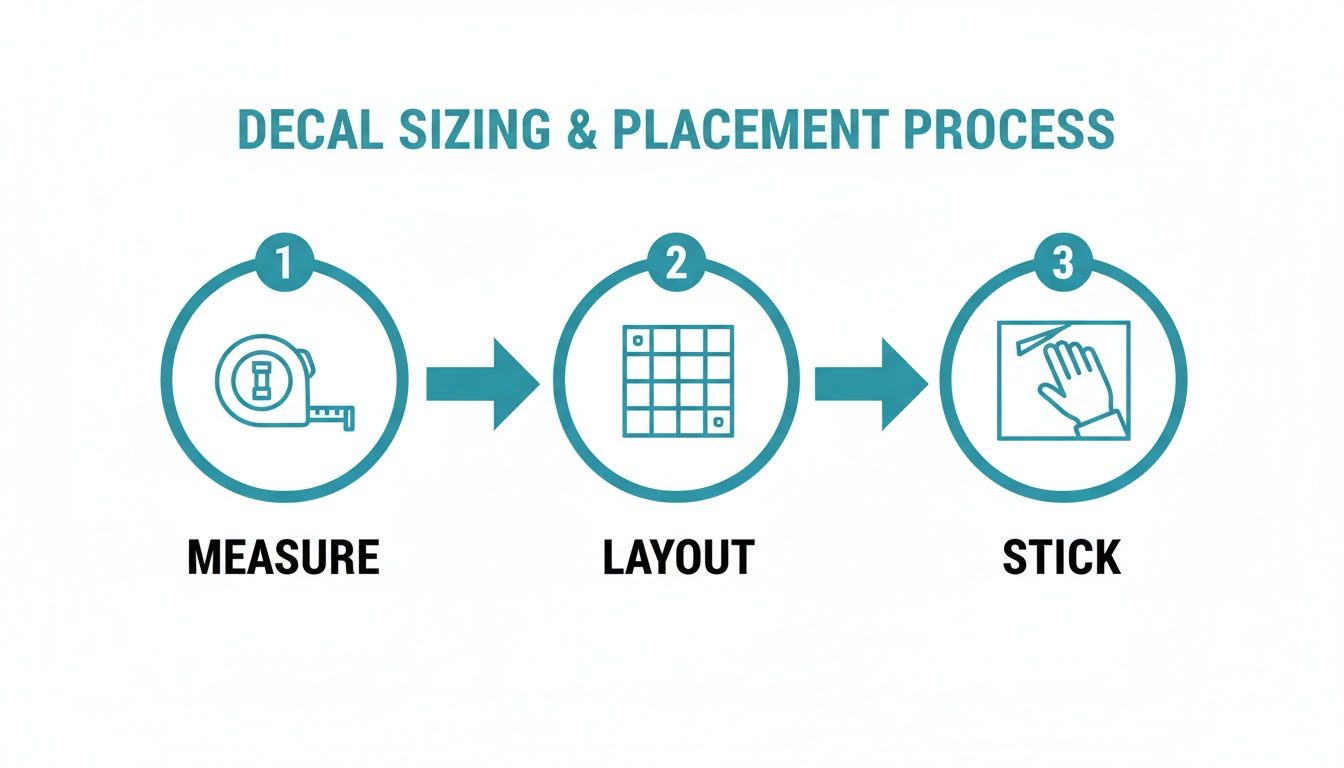
This visual guide highlights how measuring, layout and application steps work in concert for a bubble-free result.
Safe Removal Methods
Pull decals off too fast and you can peel away fresh paint along with the vinyl.
Heat makes all the difference—use a hairdryer or a heat gun on its lowest setting to soften the adhesive.
- Warm the surface evenly for about 20–30 seconds
- Lift a corner gently with a plastic scraper or your fingernail
- Treat stubborn spots with a citrus-based adhesive remover
Let any sticky residue stay put for a minute, then wipe it away with white spirit or rubbing alcohol.
Care And Maintenance Tips
A quick dust now and then keeps your decals looking as good as new.
For routine cleaning, a soft feather duster works brilliantly on any surface.
- Gently wipe with a damp microfiber cloth and some mild soap
- Never use abrasive pads or harsh chemicals—these will scratch the vinyl
- Keep any unused backing papers flat in a cool, dry spot
After cleaning, let the decals air-dry completely before touching them again.
Treat your decals like delicate wallpaper—they last longer if cared for gently.
For more details on removable wall stickers in the UK, check out our article on removable wall stickers in the UK for practical advice.
Preventing Edge Lifting
Changes in temperature or humidity can nudge edges loose over time.
A quick monthly check and a firm press with a small roller will keep borders sealed.
- Inspect edges every few weeks and smooth them down if they start to lift
With these simple steps, your decals can stay perfectly in place—and look fresh—for at least five years indoors.
FAQ
Do Wall Vinyl Decals Work On Textured Or Painted Walls?
Vinyl films usually cling best to smooth surfaces, though many will adapt to gentle textures. A light orange peel finish or eggshell sheen often poses no problem. For rougher surfaces like popcorn or stucco, fabric decals behave a bit like a bandage over coarse skin, stretching to grip uneven grooves.
Before you commit, try a small test patch. That quick check shows if the decal’s edges will lift or stay flat. Remember, walls in chillier UK months can sap the sticky power; a gentle blast from a hairdryer warms the surface and improves adhesion.
Wall Texture Compatibility
| Texture Type | Adhesion Tip |
|---|---|
| Smooth Paint | Apply directly with a squeegee |
| Light Orange Peel | Clean with a damp cloth, press firmly |
| Stucco/Popcorn | Opt for fabric decals |
For painted walls, make sure any fresh coats have cured for at least two weeks before you stick on vinyl.
How Do I Remove Stubborn Adhesive Without Damaging Surfaces?
A bit of heat and the right solvent can work wonders. Warm the decal edge with a hairdryer for about 30 seconds, then peel slowly at a 45-degree angle. If glue lingers, reach for a citrus-based gel or isopropyl alcohol.
Safe Adhesive Removal
- Warm the area with a hairdryer or heat gun
- Lift the corner gently with a plastic spatula or your fingernail
- Apply citrus-based gel or isopropyl alcohol on residue
- Test solvent in a hidden spot before full use
Tip: Let the solvent sit for a minute—this softens glue without scrubbing off paint.
If sticky bits remain, a soak of warm soapy water and a soft cloth usually does the trick. Patience and gentle pressure keep your walls looking fresh.
Are Vinyl Decals Safe For Children’s Rooms?
Absolutely. Most UK suppliers use non-toxic films that meet toy safety standards. They’re free from heavy metals, wipe clean without fuss and resist little fingerprints and marks.
Child Safety Measures
- Choose low-VOC or PVC-free materials
- Steer clear of decals with tiny detachable pieces
- Press down all edges to prevent curious nibblers
Decals shaped like letters, animals or simple shapes can double as playful learning tools. Pair them with themed bedding or cushions for a nursery that feels pulled-together and safe.
What Turnaround Times Can I Expect For Custom UK Orders?
Standard processing usually takes 5–7 working days, but simple ready-made styles often ship in 2–3 days. More elaborate artwork can stretch to 10–14 working days, especially if you request proof revisions.
Custom Order Timeline
| Order Type | Typical Lead Time |
|---|---|
| Ready-Made | 2–3 Days |
| Simple Custom | 5–7 Working Days |
| Complex Artwork | 10–14 Working Days |
Always check with your supplier on exact dates—factors like weather, shipping routes and approval delays all play a part. Most UK sellers ship via Royal Mail tracked services, adding around 2–3 days transit time.
Ready to transform your walls with hassle-free vinyl decals? Visit Quote My Wall to browse our vast range of designs and order your custom set today!