

Stickers for Fabric: Easy, No-Iron Labels and DIY Ideas
Of course! Fabric stickers are a real thing, and they're a surprisingly brilliant way to label or decorate clothes without ever touching a needle or an iron. They work using a super-strong, pressure-sensitive glue that bonds securely to textiles, making them perfect for everything from school uniforms and care home clothing to quick craft projects.
So, How Do Fabric Stickers Actually Work?
Think about labelling your child’s entire school kit or personalising a t-shirt in just a few seconds. That’s the beauty of fabric stickers. You simply peel, stick, and press down firmly. It’s a convenient, lasting solution that has made them a firm favourite for busy parents, crafters, and care homes across the UK.
But these are a world away from the paper stickers you might find in a craft box. They’re specifically engineered with an adhesive that’s designed to latch onto the tiny fibres in the fabric. It’s a bit like a high-tech, flexible plaster for your clothes – strong, able to move with the garment, and built to last.
What’s All the Fuss About?
The massive appeal of fabric stickers comes down to one thing: they solve a common problem with almost no effort.
- Saves So Much Time: You can apply a name label in a few seconds. This is a game-changer for parents facing a mountain of new school uniforms or for staff in care homes trying to keep track of residents' clothing.
- No Faff or Extra Kit: There's no need to dig out an iron or untangle a sewing machine. If you can use a normal sticker, you can use these.
- Kind to Clothes: Sewing leaves permanent holes, and ironing can sometimes scorch delicate fabrics. Stick-on labels are much gentler and won’t damage the material.
- Endlessly Versatile: Their uses are incredibly varied, from labelling clothes to stop them from getting lost, to adding a bit of creative flair to a plain cushion cover or tote bag.
This surge in popularity is part of a bigger picture in the UK's textile industry. The sector that includes label makers, known as Other Textile Product Manufacturing, is projected to have over 25,500 businesses by 2025. This growth fuels the development of clever products like the ultra high-tack, washable stickers for fabric that are quickly becoming a staple in modern households. If you're interested, you can see more stats on the UK's textile manufacturing growth on IBISWorld.
At their heart, fabric stickers are all about getting a strong, reliable stick with the least amount of work. They’re designed to almost become one with the fabric, creating a bond that can handle the rough and tumble of daily life, including the washing machine and even the tumble dryer. This makes them a genuinely practical tool for labelling, mending, and customising.
Finding the Right Fabric Sticker for Your Project
Not all stickers for fabric are created equal, and figuring out which one you need is the key to a project that lasts. It can feel a bit overwhelming, but the world of fabric stickers really boils down to three main players, each built for different jobs, materials, and levels of permanence.
Getting this choice right from the start saves you the headache of a label peeling off in the wash or a design that just doesn't look right. Let’s break down your options so you can pick the perfect sticker, whether you're labelling a school jumper or decorating a cushion.
The Main Types of Fabric Stickers Explained
The main options you’ll come across are modern stick-on vinyl labels, traditional iron-on transfers, and decorative fabric patches. Each one has a completely different way of bonding with fabric, which directly affects how easy it is to use and how well it holds up.
Think of a high-tack, stick-on vinyl label as having a gecko's grip. It uses a seriously powerful, pressure-sensitive adhesive that's been engineered to cling tightly to fabric fibres. The best part? It needs no heat and can survive countless trips through the washing machine, making it a brilliant, quick-fire solution for everyday labelling.
On the other hand, traditional iron-on transfers are all about the heat. An iron melts a special adhesive on the back, fusing it right into the fabric for a permanent bond. This method is fantastic for detailed designs and gives you that smooth, "printed-on" look. Then you have decorative patches, which are often thicker and can be either stick-on for a bit of temporary flair or iron-on for a more lasting statement piece.
This handy little decision tree can help you see which route to take in a matter of seconds.
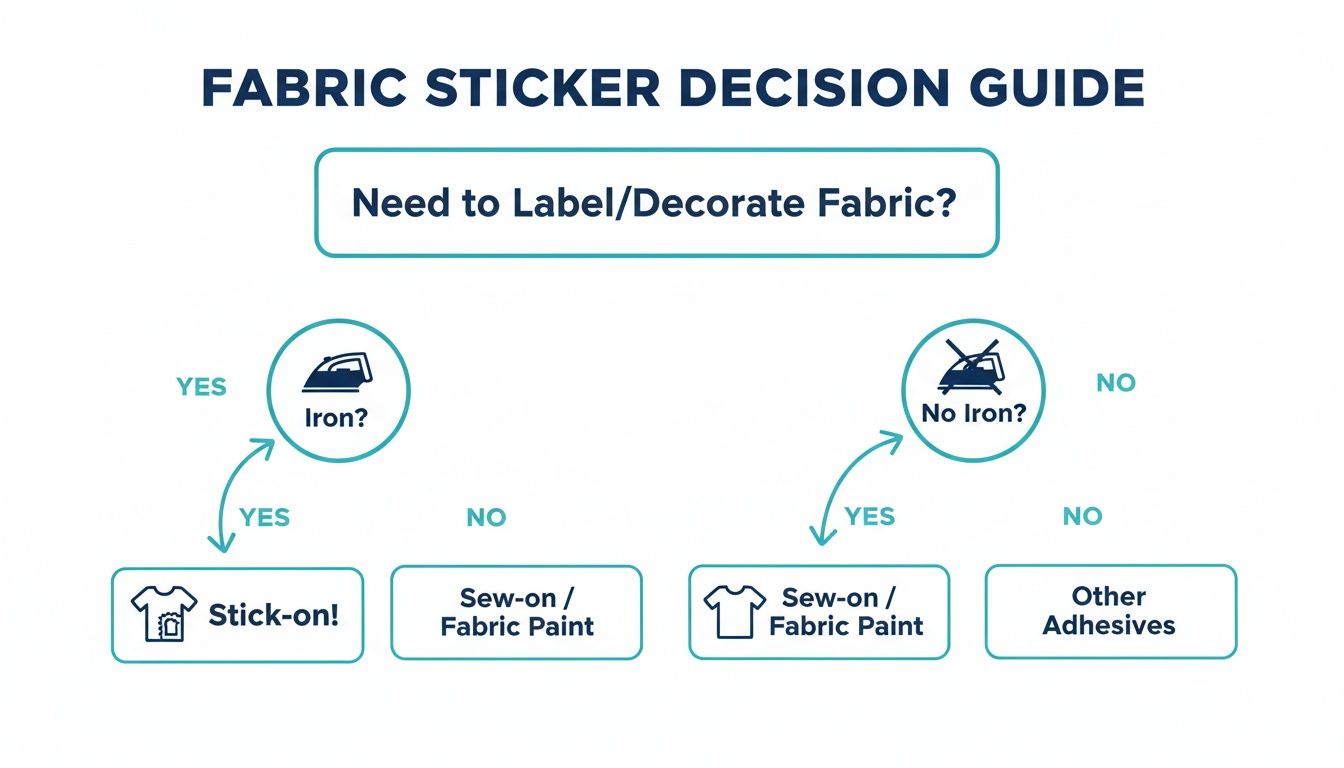
As the guide shows, it often comes down to a choice between convenience and permanence. For most labelling jobs, modern stick-on options have become a powerful, no-fuss alternative to getting the iron out.
Comparing Your Options Side by Side
To make things even clearer, let's put these sticker types head-to-head. A side-by-side look really shines a light on what each one does best, helping you match the right product to what you actually need to do. For busy parents or staff in a care home, for example, the sheer speed of a stick-on label often seals the deal.
Comparing Different Fabric Sticker Types
Here's a quick comparison to help you choose the right one for your needs.
| Sticker Type | Best For | Application Method | Durability | Removability |
|---|---|---|---|---|
| Stick-On Vinyl Labels | Name labels, care tags, quick identification | Peel and stick | High (Washable) | Semi-permanent |
| Iron-On Transfers | Custom T-shirts, detailed designs, permanent decor | Heat press or iron | Very High | Permanent |
| Decorative Patches | Covering holes, adding bold designs, upcycling | Stick-on or iron-on | Varies by type | Varies by type |
As the table shows, if you’re looking for durable, washable, and hassle-free identification for clothing, modern stick-on clothing labels are often the most practical choice. They hit that sweet spot between staying power and simplicity.
When to Choose Each Type
Knowing the difference is one thing, but knowing when to use them is what really matters. It all comes down to what you’re trying to achieve.
- Choose Stick-On Vinyl Labels when: You need to get lots of items labelled, and fast. Think school uniforms, PE kits, or clothing in a care home. Their no-iron application and impressive wash-proof durability make them the ultimate tool for convenience.
- Choose Iron-On Transfers when: You’re creating something with a permanent, custom design, like a one-off T-shirt or a personalised tote bag. The heat-fused bond literally becomes part of the fabric, giving you maximum longevity for creative projects.
- Choose Decorative Patches when: You want to make a bold statement, cover up a small tear, or add some texture to a garment. They’re absolutely perfect for upcycling old clothes and giving jackets, jeans, and backpacks a bit of personality.
Ultimately, the best sticker for your fabric is the one that fits your life and your project. For tackling those everyday labelling challenges, the peel-and-stick simplicity of a high-quality vinyl sticker is pretty hard to beat.
Getting Your Fabric Stickers to Stick (and How to Get Them Off Again)
Getting a fabric sticker to stay put, wash after wash, isn't magic—it's all in the technique. Think of it like painting a wall; you wouldn't just slap a coat of paint on a dusty, unprepared surface and expect it to look good or last. The same principle applies here. Proper prep is the secret to a flawless finish.
This guide will walk you through the simple, but crucial, steps for applying your fabric stickers. We'll cover how to make sure they hold firm, and also point out the common pitfalls that can weaken the adhesive, like applying them to damp fabric or not giving them enough time to 'cure'. Get this right, and you can confidently label school uniforms, care home clothing, and craft projects, knowing they're built to last.
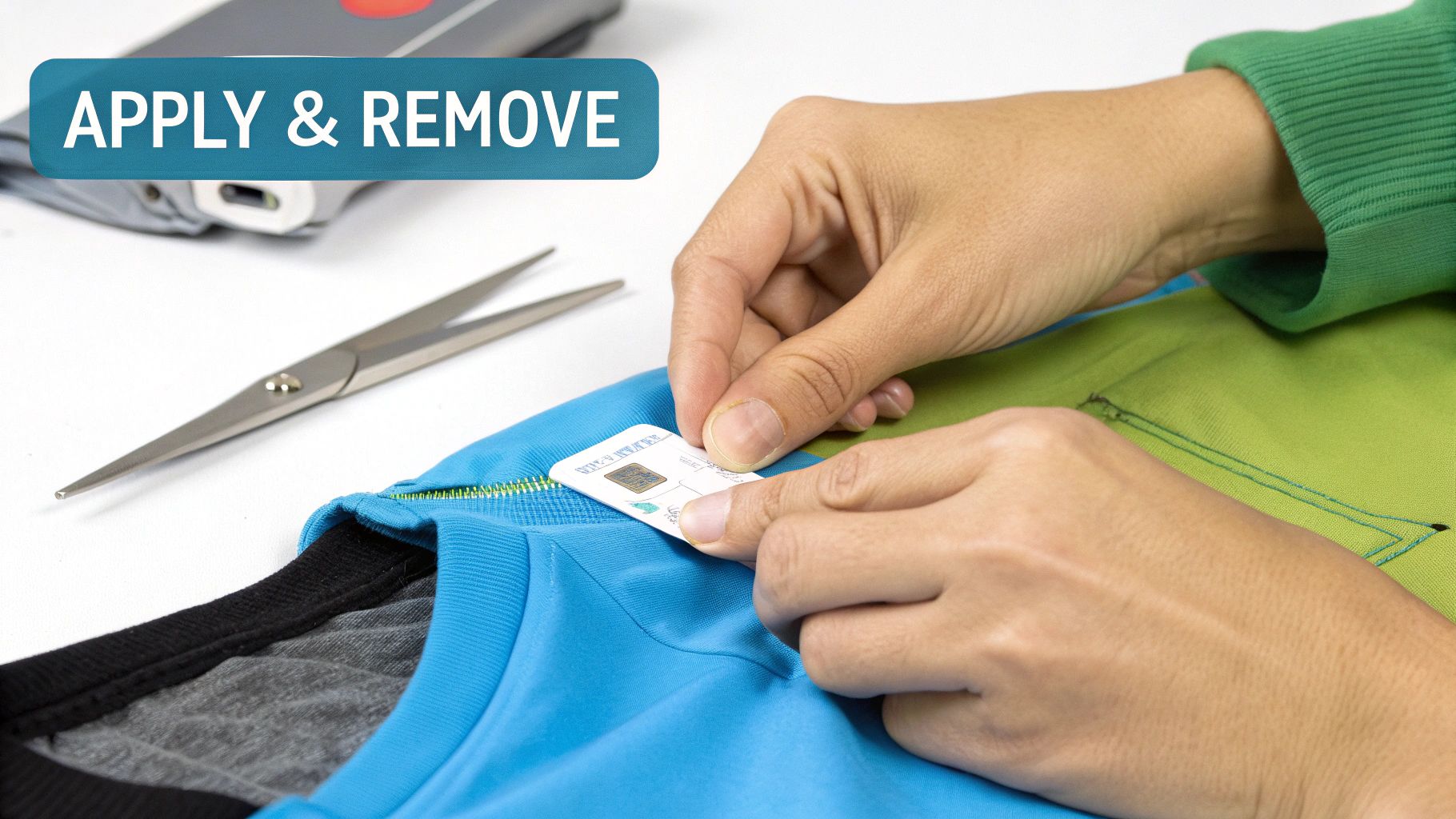
The Step-by-Step Application Guide
Getting the most out of your fabric stickers is really straightforward once you know the rules. It’s all about creating the perfect surface for that special adhesive to grab onto.
-
Prep the Garment: First things first, make sure the item is clean and completely dry. Any lingering dirt, dust, or moisture acts like a barrier, stopping the sticker's adhesive from properly bonding with the fabric fibres.
-
Pick Your Spot: Look for a smooth area. The garment's care label is often the perfect place—it’s flat and gives the sticker a great surface to adhere to. Try to avoid heavily textured materials like fleece, terry cloth, or ribbed cuffs.
-
Peel and Place: Carefully peel the sticker off its backing paper. Try your best not to touch the sticky side, as oils from your skin can weaken the glue. Position it exactly where you want it on the fabric.
-
Apply Firm Pressure: This is the most important step! Use your thumb to press down hard across the entire sticker for a good 15-20 seconds. This pressure is what activates the adhesive, pushing it deep into the fabric's weave to create a seriously strong bond.
-
Let it Be: Here’s the key to longevity—wait at least 24 hours before you wash the item. This 'curing' time is essential for the adhesive to fully set, making it tough enough to handle the washing machine and tumble dryer.
If there's one mistake people make, it's washing the garment too soon. Giving the sticker a full day to cure is genuinely the best thing you can do to make sure it stays put for good.
Common Mistakes That Make Stickers Fail
Even the best stickers for fabric can come unstuck if they’re not applied properly. Just be sure to sidestep these simple errors, and your labels won't peel, lift, or fade before their time.
- Applying to Damp Fabric: Moisture is the natural enemy of adhesive. A sticker applied to even slightly damp clothing will form a weak bond that’s almost guaranteed to give up in the first wash.
- Sticking to Bumpy Surfaces: The adhesive needs as much surface contact as possible to work. Fluffy, bumpy, or heavily ribbed fabrics leave gaps where the sticker can’t make contact, creating weak spots.
- Not Pressing Hard Enough: A quick tap just won't cut it. You need to apply firm, sustained pressure to properly activate the adhesive and get it to meld with the fabric.
How to Remove Fabric Stickers Without a Fuss
There might come a time when you need to remove a sticker, maybe when you're passing clothes down to a younger sibling or just need to update a label. How you do it depends on the sticker's age and type, but a little patience always helps.
For stickers that haven't been on for too long, you can often just gently peel them away. Start at a corner and use your fingernail to lift the edge. Peel slowly and steadily to avoid leaving behind a sticky mess.
If you're dealing with a stubborn label that's been on for ages, a bit of warmth can work wonders. Use a hairdryer on a low setting and gently warm the sticker for about 20-30 seconds. This softens the adhesive, making it much easier to peel off. Just be careful not to overheat the fabric, especially if it's a delicate material. If any sticky residue is left behind, a dab of rubbing alcohol on a cotton ball will usually clear it right up.
Keeping Your Fabric Stickers Looking Great
The real test for any sticker designed for fabric isn’t just about getting it to stick; it's about how well it holds up in the laundry basket. You’ve taken the time to apply your labels perfectly, so the last thing you want is for them to peel off after one wash. It all comes down to a few simple laundry habits and understanding what makes these little labels so tough.
Good quality vinyl stickers for fabric are built for this very job. They use a special adhesive that creates a strong, yet flexible, bond designed to handle heat, water, and the constant tumbling of a washing machine. It’s this resilience that makes them an absolute lifesaver for parents and carers who need labels that just refuse to give up.
Making Your Stickers Last in the Wash
You'll be pleased to know that getting your stickers to survive wash after wash is easier than you might think. A couple of small tweaks to your laundry routine can make all the difference, protecting the adhesive and keeping the labels looking fresh. Just think of it like caring for a T-shirt with a delicate print – a little bit of care goes a very long way.
Here are the golden rules for washing clothes with fabric stickers:
- Turn It Inside Out: Before you toss it in the machine, turn the garment inside out. This is a super simple trick that shields the sticker from rubbing against other clothes, zips, and buttons.
- Keep the Heat Down: Stick to a 30°C or 40°C wash cycle. While many high-quality stickers can take the heat, moderate temperatures are much kinder to the adhesive, helping it maintain its grip for longer.
- Avoid Harsh Chemicals: Try to avoid using bleach or aggressive stain removers directly on or around the sticker. These chemicals can break down the adhesive over time and cause the edges to start lifting.
Following these steps is the best way to maintain the integrity of your stickers for fabric, making sure they stay put for the life of the garment.
Tumble Dryer and Dishwasher Durability
"Can they go in the tumble dryer?" It's one of the most common questions we get, and for any premium-quality label, the answer is a big yes. They are designed to be tumble-dryer safe on a low-heat setting, which is a huge plus for any busy household.
And here’s something that might surprise you: they can often handle a spin in the dishwasher too. This makes them brilliant for labelling things like lunchboxes or water bottles that might have fabric straps, ensuring the name stays put no matter how you clean it.
The secret to longevity isn't complicated. It boils down to this: apply with firm pressure, wait 24 hours before the first wash, and then follow gentle laundry practices. This combination allows the adhesive to perform at its best, delivering the durability you need.
The demand for tough, reliable labelling solutions like these is growing fast in the UK. The market for coated fabrics—which includes the materials used in these durable labels—was valued at USD 1,900 million in 2025 and is projected to hit USD 2,600 million by 2035. This shows just how essential items like ultra-high-tack washable labels have become for UK families and care homes. You can read more about the UK's coated fabrics market on Future Market Insights.
By following these simple care instructions, you can massively extend the life of your fabric stickers. For an even more detailed breakdown, have a look at our guide on how to care for machine washable labels. It’ll help ensure your simple labelling system pays for itself for years to come.
Creative Ways to Use Fabric Stickers
While stickers for fabric are brilliant for labelling, their potential goes far beyond just a name on a tag. Think of them as your secret weapon for quick fixes, creative flourishes, and clever organisation. They give you the power to make everyday items uniquely yours, all without touching a sewing machine or needing any special gear.
This section is all about sparking your imagination. We'll kick things off with the practical, life-simplifying uses like keeping track of school uniforms or personal belongings in a care home. Then, we’ll dive into the more exciting world of DIY personalisation and upcycling, showing you just how much you can do with a simple peel-and-stick solution.
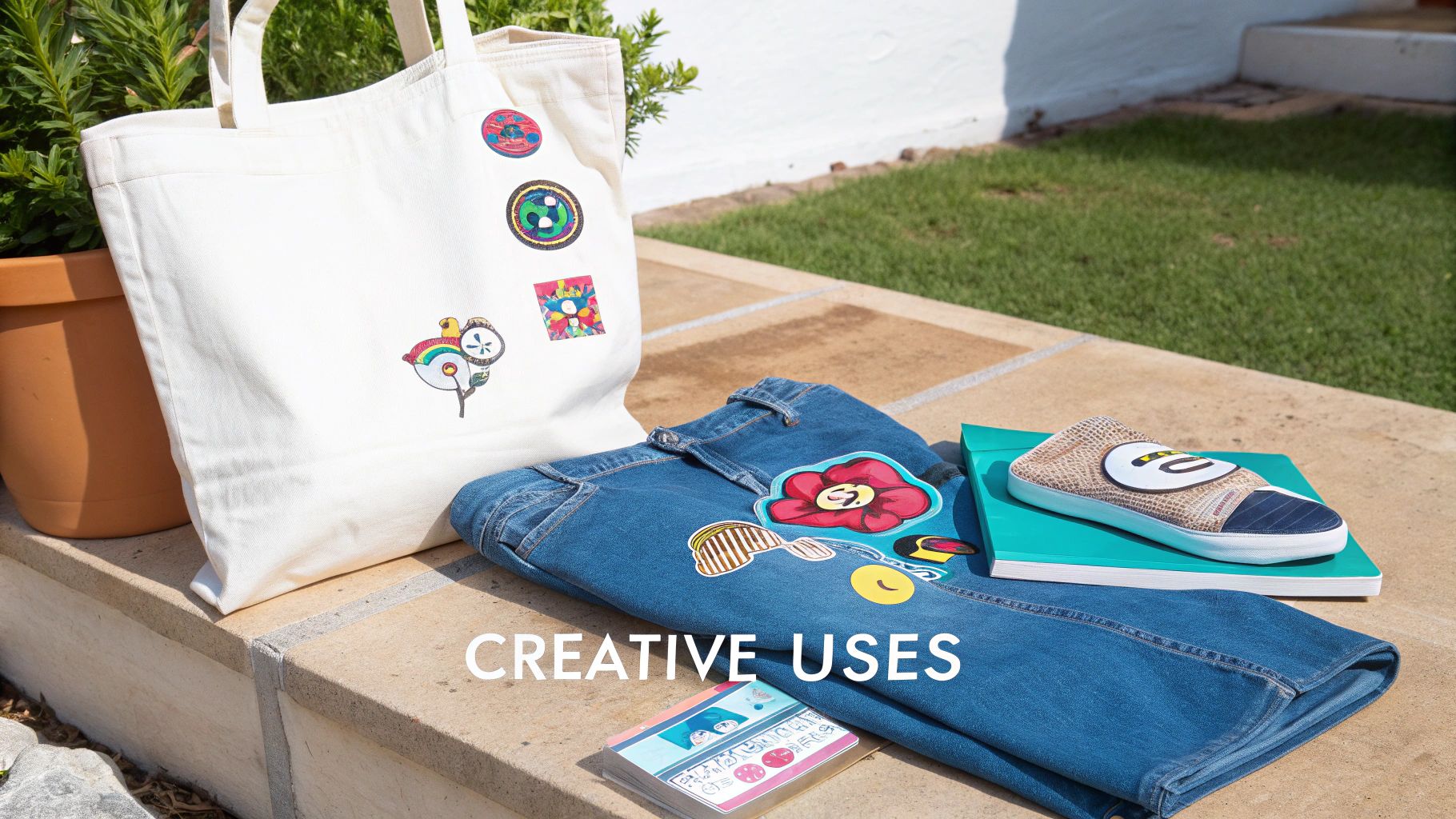
Everyday Problem Solvers
Before we get to the fun stuff, let's talk about the applications that make these stickers an absolute must-have in so many homes. Their most common job is rooted in simple, effective organisation that stops things from getting lost or mixed up.
-
School Uniforms and PE Kits: This is the classic. A quick, tough name label on a jumper, blazer, or pair of shorts can save you countless trips to the lost property box. For busy parents, they're a massive time-saver during the back-to-school chaos.
-
Care Home Clothing: In a care setting, clear labelling is essential. Stick-on labels offer a dignified and reliable way to make sure residents' clothes always find their way back to the right person after laundry day, which reduces stress for everyone involved.
-
Organising Your Linen Closet: Think beyond clothes! Use fabric stickers to label bedding sets ('King - Guest Room') or storage bags holding seasonal items like winter blankets. It makes finding exactly what you need a total breeze.
Unleash Your Creativity with Upcycling
This is where fabric stickers really come into their own. They let you breathe new life into tired items, cover up minor flaws, and add a splash of personality to otherwise plain textiles. It’s a fantastic way to be more sustainable and show off your personal style.
The desire for one-of-a-kind items is booming, and custom vinyl stickers for fabric are a big part of that trend. They feed into a huge market—the UK's custom printing industry generated USD 2,208.9 million in 2024 and is expected to more than double by 2030. With a massive 68% of consumers saying they prefer customised products, simple tools like fabric stickers are making personalisation easier than ever.
Upcycling isn’t just about saving a bit of cash; it’s about turning something ordinary into something meaningful. A simple sticker can transform a forgotten garment into a firm favourite, or a plain cushion into a statement piece for your living room.
Here are a few ideas to get you started:
- Patch a Small Hole: Found a tiny snag in a pair of jeans or a hole in your child's leggings? A decorative fabric patch or a cleverly placed sticker can hide it in seconds, giving the item a new lease of life.
- Customise a Tote Bag: Plain canvas tote bags are the perfect blank slate. Add your initials, a favourite quote, or a cool graphic to create a bag that’s truly yours for shopping or college.
- Revamp Home Textiles: Don't just stop at clothes. Stick decorative designs onto plain throw pillows, tea towels, or fabric storage boxes to match your room’s décor. It’s an instant, no-commitment style update.
If you're working on a project that needs a bit more sparkle than a sticker can provide, learning about the best glue for rhinestones on fabric can open up a whole new world of embellishment.
Quick and Easy DIY Project Ideas
Feeling inspired? The best thing about using stickers for fabric is that most projects take just minutes, giving you that brilliant feeling of instant accomplishment. You don't need to set aside a whole afternoon—just a few moments and a bit of imagination.
- Create a One-of-a-Kind T-Shirt: Grab a plain t-shirt and arrange a few small, themed stickers to create a unique pattern. It's a perfect activity for a kid's party or a fun weekend craft.
- Personalise Trainers or Plimsolls: Add small, durable vinyl stickers to the canvas parts of your trainers. It's a subtle pop of personality that will make your footwear stand out from the crowd.
- Label Handmade Gifts: If you knit, sew, or crochet, adding a small fabric sticker that says "Handmade with Love" or has your initials is a lovely, professional finishing touch.
These stickers are so much more than just labels; they're your entry ticket into the world of fabric customisation. For anyone interested in making their own from scratch, our guide on how to make name labels has plenty more tips and ideas.
Your Fabric Sticker Questions Answered
It's completely normal to have a few questions before you dive in. You want to know if these stickers will actually hold up in the real world of school playgrounds and busy laundry rooms. Let's tackle some of the most common queries we hear from people just like you.
Do Stick-On Fabric Labels Really Work Without an Iron?
They certainly do! High-quality stick-on labels are a game-changer, completely doing away with the need to drag out the iron. They’re designed with a powerful, pressure-sensitive adhesive that bonds directly to the fabric fibres when you press it firmly into place.
Think of it as the modern, hassle-free way to label clothes. It's a massive time-saver, especially when you're faced with a mountain of new school uniforms or a wardrobe's worth of clothes for a loved one moving into a care home.
What Kind of Fabric Is Best for Stick-On Labels?
You'll get the best results on fabrics with a smooth, tight weave. Most everyday clothing and school uniform materials are perfect for this. We're talking about fabrics like:
- Cotton
- Polyester
- Poly-cotton blends
It's best to steer clear of anything too textured, fluffy, or stretchy. Materials like fleece, chunky wool knits, or terry cloth don't give the adhesive enough flat surface area to get a solid grip. Stick to the smoother stuff for a bond that lasts.
How Long Do Washable Fabric Stickers Actually Last?
When you apply them correctly to the right type of fabric, good-quality stick-on labels are incredibly durable. They are built to survive dozens of trips through the washing machine and tumble dryer without peeling away, fading, or falling apart.
In fact, it's not unusual for a well-applied sticker to outlast the garment it's stuck to. That makes them a truly reliable and economical choice for clothing that gets a lot of wear and tear.
Are Fabric Stickers Safe for Sensitive Skin?
Absolutely. Any reputable brand will ensure their clothing labels are completely safe to be worn against the skin. The materials used are typically non-toxic and inert, and the adhesive is formulated to be skin-safe, so it won't cause any irritation.
This makes them a brilliant option for labelling everything from children's school shirts and underwear to items for anyone with sensitive skin. Just make sure to check the product description to confirm they meet safety standards.
Ready to make labelling simple? Discover the durable, no-iron Quote My Wall stick-on clothing labels, perfect for school uniforms and care home items.